No Sky.. No comment – VCSE’s Racing Digest #24

Paris Nice wrap up

If you’re one of the occasional readers of this blog you might be forgiven for thinking VCSE is a bit of a Team Sky fanboy. Certainly the team behind the Death Star crop up pretty often in these pages but that’s as much to do with the teams poor showing in one day races rather than the way they impose (or attempt to) themselves on stage races. Since the teams ‘difficult’ birth in 2010 where results didn’t match the hype and expectations Sky have proved to be a flagship example of the thoroughness that has made British Cycling and British cycling so successful. Winners of the last two Tour de France the team have also treated some of ASO’s other headline races as a Sky benefit in the last three years. Sky have delivered the last three winners of Paris Nice, previously seen as a warm up for the classics, but from Sky’s point of view an opportunity to drill their high tempo superdomestiques for the grand tours.

Big win for Colombia  & French cycling - Carlos Betancur
Big win for Colombia & French cycling – Carlos Betancur

The last week has seen a reversal of fortune for Sky. Not yet of terminal proportions, but a reminder of the unpredictable nature of road racing and the teams inability to go to a ‘plan B’ when their strategy unravels. Richie Porte, last years Paris Nice winner, was moved into Sky’s Tirreno Adriatico line up at short notice after Chris Froome was injured. This went down like a lead balloon with the ASO and things weren’t helped by Sky’s tacit disapproval of the parcours for this years edition that did away with the final day’s TT up the Col d’Eze and featured no summit finishes. ASO shouldn’t be criticised for changing the format; most people who have seen the race this week have said they have found it more exciting. The normally monosyllabic Sean Kelly, a seven time winner of the race and known as ‘Monsieur Paris Nice’ was probably at his most animated during commentary alongside Rob Hatch. We were treated to a weeks racing where the final outcome for GC could have been decided in the last few kilometres of the race. So, ultimately the race was won by a climber, but this was a racer’s race with the contenders at the sharp end at the death each day.

Sky elevated Geraint Thomas to team leader in Porte’s absence and the Welshman did take the overall at one point during the race, only to fall out of contention after a nasty crash on the penultimate stage. By then AG2R’s Carlos Betancur had taken the yellow jersey following back to back stage wins during the week. Betancur was well looked after by a team that aren’t that familiar with trying to control a race, but it was good to see a race being controlled using old school methods like covering attacks, rather than relentless drilling on the front that seems to have become the norm with Sky. A bit of an aside here; Movistar have taken to riding on the front this year too and AG2R should be grateful for that as the Spanish team kept the breakaway riders very honest today for the final stage.

Just as it’s too early to write Sky off, it’s far too soon to talk about the curse of the rainbow jersey. World champion Rui Costa had a couple of close finishes at Paris Nice, but the disappointment of missing out on those wins was probably less painful than the crash he got caught up in on today’s final stage. He looks like a great signing for Lampre and bike sponsor Merida are making the most of him too in their new TV advert.

Assuming Thomas is still being viewed as a classics specialist then his performance in Paris Nice, at least until his crash, was pretty decent. He still doesn’t look like someone who’s about to win a big one day race, let alone a stage race but taking the lead in Paris Nice is another step forward from holding the lead for a few days in the 2013 Tour Down Under.

Betancur ends the week as the leading rider on the world tour. The ‘big’ names; Froome, Nibali etc. are nowhere to be seen at the moment, but Froome rides in the Volta a Catalunya in a weeks time and it’s hard to imagine that the table will look like this by the end of July. Despite this, Betancur’s result is a big one for him and Colombian cycling, perhaps elevating him in front of Rigoberto Uran if not Nairo Quintana for now.

It’s also a massive result for French cycling; today’s win for AG2R was the first for a French team in Paris Nice since the 1980’s. If it’s also a sign that cycling is becoming ‘cleaner’ if a French team can win Paris Nice it’s no bad thing, but for now the real winners are ASO for showing how interest can be maintained in a race if you dispense with endless summit finishes.

Tirreno Adriatico – the story so far

If the parcours for Tirreno Adriatico suited Richie Porte more than that on offer at Paris Nice we will never know as he pulled out of the event after Saturday’s stage. Porte never really looked like he was in contention this week and if he really was suffering from a virus it might explain his feeble digs on the climbs this week.

The early part of the race belonged to Omega Pharma. With Tony Martin and Mark Cavendish in the line up, the world TTT champions took the leaders jersey after stage one with Cavendish eventually surrendering it to teammate Michael Kwiatowski. The Pole is in great form after a win at Strade Bianche and considering the mix in the OPQS squad between GC specialists like Kwiatowski and Uran and Cavendish’s lead out train the team did well to keep the lead for so long. Uran seems out of sorts at the moment, perhaps unsettled by the more established Kwiatowski’s performances so far this year.

Kwiatowski finally faltered on Sunday’s stage losing the lead to Tinkoff Saxo’s Alberto Contador who has looked stronger as the week has gone on. Contador looked like he was back to his best, teeing up his stage win and stealing the lead from Kwiatowski with an economical ride in Saturday’s stage. Ably supported by Roman Kreuziger, who also looked super strong yesterday the two teammates saw off rivals and got within a minute of Kwiatowski ahead of today’s (Sunday) stage. It’s hard to see Contador giving up the GC now with a flat stage tomorrow ahead of the final TT.

An in form Contador is good news for those of us that don’t want the grand tours to be just about when Chris Froome will take the lead this year. Let’s just say this once more; it is far too soon to write Sky off, but for those that want some drama at the head of a stage race a resurgent Alberto Contador and the continued emergence of good Colombian riders is a very good thing indeed.

Revolution series round 5 – London Velodrome

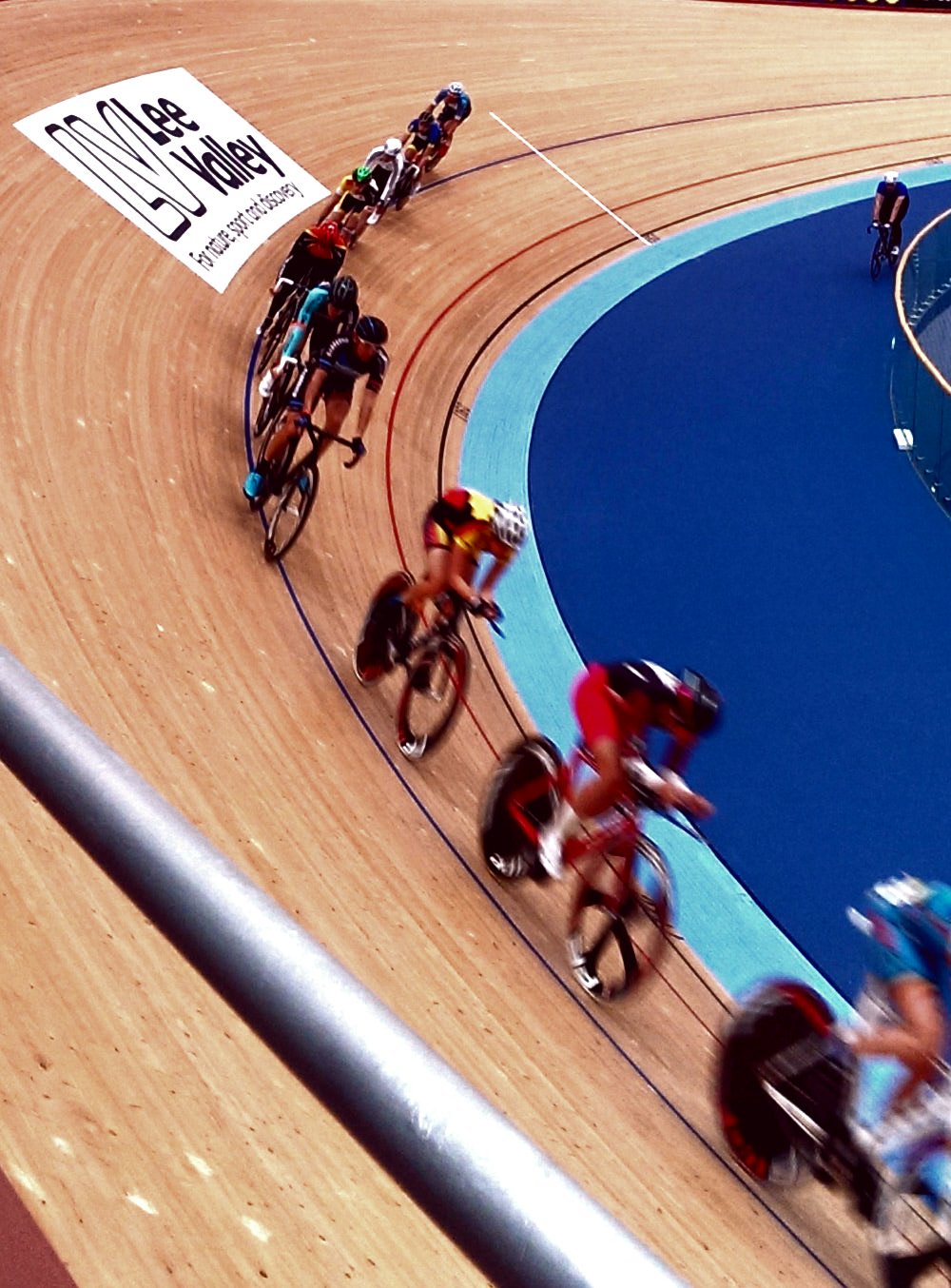
VCSE was lucky enough to attend one of the sessions at the Revolution series final round this weekend. This was the first competition to be held in the Velodrome since the Olympics and there’s was a pretty much a full house, even at the afternoon session we joined.
Revolution
Revolution

First, a bit of a confession. Track cycling doesn’t really do it for your correspondent. That’s not to say all of it, but some of the events and not necessarily the obvious ones, are a bit of a yawn. For example, where’s the excitement in watching a three lap track stand contest? That said, even up in the gods it was as interesting to watch the riders prepare and then wind down between events. Seeing Laura Trott calmly walk over and pick up a flip top bin before vomiting into it after her pursuit round is a visceral insight into what it takes to win. A semi-serious debate between track commentator Hugh Porter and the crowd (via Twitter) about why velodrome tracks always turn left mentioned the connection with the Roman chariot races. There is something gladiatorial about the track and some riders know how to involve the crowd and then exploit that to their advantage. World champion Francois Pervis was able to get the kind of reaction that belied the fact that here was a Frenchman beating a British Olympic champion in his own backyard.

Pervis was putting the hurt on Trott’s other half, Jason Kenny. You imagine that Trott is properly supportive of her boyfriend no matter how he performs, but it maybe another psychological hurdle to overcome if you’re partner is winning for fun and you’re struggling to make the final. Trott it seems is not fazed by anything, even being physically sick in front of thousands of fans and the going to sign autographs for an hour. Before the incident with the bin, Trott was able to remove her aero helmet and do a victory lap that gave no indication of what was to come.

The Olympic legacy seems alive and well with the turnout for the Revolution. The biggest cheers were always going to go for the riders that the crowd had heard of; there was surprise and a little dismay when Dani King was beaten by Katie Archibald in the pursuit. Hugh Porter whipped things up as much as a man in his seventies could do when the crowd went a little flat and eventually the men’s points race had the crowd hooked when each sprint came around.

Trott ended the event with a fantastic score of six points in the omnium, the lowest possible score being six points for six victories. There’s obviously strength in depth in British track cycling but Trott looks like someone who can become truly dominant. We’re left with a hankering to stand in the centre of the track at the Ghent six day; as exciting as the racing was from the stands with a diet coke, watching amongst the crowd with a beer sounds like the way to go!

Revolution @ London Velodrome

The all encompassing end of season round up – World Championships and UCI Election

2013 World Championships – Tuscany 

It’s been a while since our last post where Wiggo and Cav were leaving home shores to support Chris Froome in his tilt at the world championships in Tuscany. Ahead of that Sir Brad was heading for his seasons goal (if we all forget about the Giro) of the individual time trial. Would he assist Froome in the road race a few days later and what exactly would Cavendish be doing, other than proudly representing his country.

Individual Time Trial

VCSE isn’t aware if there was a representative from every nation on the globe at this years world championships, but in the category for ‘country with quite a lot going on at the moment..’ Syria managed to enter a rider in the men’s Elite TT on the fourth day of the week long cycling festival in the Tuscan hills. Nazir Jaser propped up the field in 77th place, which isn’t the point really. While you ask, “How does he manage to train?”, if not where it’s worth noting that last place was only a shade over 15 minutes behind the winning time of Tony Martin and his average speed over the 57.86km course was nearly 43kph. We will never know if would have beaten the two Ugandan entrants as unfortunately they did not start.

English: 2011 UCI Road World Championships – M...
World Champion – Tony Martin (Photo credit: Wikipedia)

The much trailed match up between the (relative) elder statesmen of the test, Wiggins and Cancellara, was won by the Englishman. This was the undercard though; Tony Martin was the man to beat from the earliest of time checks and Wiggins second place suggested both riders were peaking at just the right time. Cancellara had opted not to take time information (neither had Wiggins), but the battle for second and third places seemed to come down to his fast out of the starters hut approach verses Wiggins slow(er) build to a peak in the final quarter.

Wiggins has been less bullish as the sands of this years racing have ebbed away and seems more comfortable with the fact that he has been beaten by the better man, at least in terms of performance on the bike by Martin and perhaps psychologically earlier this year by Froome as he lost his number one status at Sky.

Cancellara had bested Martin in the Vuelta as Wiggins in turn had beaten the Radioshack rider in Poland shortly after the Tour. The edge that each protagonist sought over his rivals ebbed and flowed as the main event approached. There is a sense of drama, even in what is to some people the dullest of cycling disciplines when watching Wiggins or Cancellara. Martin however is a metronome, even if below the skinsuit and aero helmet the physical and mental toll is playing just as viscerally for him.

As Martin took more than 15 minutes out of our Syrian friend Jaser so he took the best part of a minute out of Cancellara and Wiggins. The Sky rider who had gone to Tuscany to win announced that he was “..happy with second”. Watching Tony Martin that day who could have doubted he meant it.

Women’s Road Race 

As it must have been when Eddy Merckx was at his peak Marianne Vos’ name on the start sheet casts a long shadow over the rest of the field. That she began the Elite Women’s Road Race as favourite was unsurprising. Of more interest as the race started was the race strategy of some teams to deploy almost their entire teams to try and beat the dominant rider in the field.

First the Americans and as the race reached the final stages the Italian team attempted to set a pace to try and split the field and tire out, if not Vos then her Dutch teammates. The climbs that suggested the possibility of a GC contender taking the men’s race the following day played their part in the womens’s race also as the sole remaining US rider Evelyn Stevens attacked on the penultimate climb. This wasn’t the final ascent of the Mur de Huy in the 2012 Fleche Wallone and the small advantage gained was soon gathered in by the remaining group.

Arguably it was the Italians who held the most cards, with three riders the largest group by nationality in the selection. But it was Vos who attacked on the final Salviati climb a short, straight and steep ribbon of freshly laid tarmac covered in so many fan’s messages they had become almost indecipherable. The ease with which Vos reached, overtook and then rode away from her rivals left you wondering if you had just seen every other rider drop the heads and concede the race there and then. There had been no shortage of effort thus far and the selection contained some of the greatest female riders currently racing. Did the fact that she made it look so easy, so effortless sow an immediate seed of self doubt that Vos could not be beaten.

You cannot dislike Marianne Vos, despite her dominance. Her joy as she crossed the line was not because of the margin or nature of her victory. In her mind this was another milestone, a back to back world title. Her search for the next milestone may take her into other disciplines next year (mountain biking is rumoured), but surely the next challenge for the road would be a hat-trick of rainbow jerseys on the road.

Men’s Road Race

Helicopter and wide angle tracking shots were not in evidence or in fact possible for Sunday’s Elite Men’s Road Race. The heavy rain that had characterised much of the Giro created conditions that meant that the selections and abandonments from the peloton came on each of the ten laps of the Florentine circuit the women had raced the day before.

Mark Cavendish’s role was of hare to the hounds of the peloton the strategy of the British team and those countries protecting a GC type rider to try and exhaust the classics specialists like last years champion Philippe Gilbert and Fabian Cancellara. The pace, perhaps more so the weather, led to the early abandonment of many of the field as riders got dropped and decided it was infinitely preferable to be inside and wearing something other than sodden cycling gear. Chris Froome’s tilt at the title was possibly not as serious as he suggested, although he hadn’t shown much form on his return to racing in the continental US. Ultimately, the entire GB squad got off their bikes and the suggestion afterwards that the race had been used as preparation for the Olympics two years hence was as welcome as the Italian weather. A Froome in better form might have been able to freelance to a better place, even if a win was unlikely.

The win was taken by this years medium mountain specialist, the winner of the Tour de Suisse and two stages at the Tour Rui Costa. He had been in a the select group of riders left contesting the race on the final lap that also included his Movistar teammate Alejandro Valverde (Spain), Italy’s Vincenzo Nibali and Valverde’s compatriot Joaquim Rodriguez. There was almost an even split of GC to classics riders with Gilbert and Cancellara joined by Peter Sagan and Simon Clarke.

As with the women’s race the day previously the Italian’s had some strength in numbers as the finish approached and Nibali seemed well placed if not in a position to dominate the selection. If anything there was an echo of his performances in the Vuelta where he seemed to lack that final 5% that had made him so strong in the Giro. Would this have told at the line? No, Nibali slipped off in the wet and was left to contest a placing. Ahead Rodriguez had attacked and was doing his approximation of time trialing to the finish with Costa in pursuit. Purito might have expected fellow countryman Valverde to cover Costa. Although they were trade teammates at Movistar, Costa had already announced a one year deal with Lampre. Surely, Valverde wouldn’t be complicit in letting Costa catch Rodriguez? Costa had shown his strength in the final kilometres of a race in France in July and he reached Rodriguez’s wheel with time to spare. The little Spaniard and the Portuguese engaged in conversation. It’s not unknown for one rider to offer an inducement (read bribe) at this point to throw the race. Purito may just have enquired if Valverde had put up any fight at all to prevent Costa from getting away.

Based on the relative ease with which Costa had caught him it wasn’t much of a surprise that the seemingly perennial runner up Rodriguez continued his run of podiums while Costa took the win. Purito, who can seem happier with a second or third than many race winners was more subdued this time, a mixture of bafflement and frustration with third place man Valverde. Nibali was an anticlimatic fourth with a “disappointed” Cancellara rounding out the top ten, one place behind last years winner Gilbert.

Brian Cookson wins UCI presidency

The world championships coincided with the UCI presidential elections, also held in Tuscany so delegates could be reminded of what it’s all meant to be about. VCSE hasn’t covered much of the political side of the sport and won’t subject you, the dear reader, to much more than a summary here.

Incumbent Pat McQuaid had been on shaky ground ever since the USADA ‘reasoned decision’ that led to Lance Armstrong’s lifetime ban and stripping of his Tour titles. Even if McQuaid’s handling of the Armstrong affair in particular and the wider question of doping in the sport had been blemish free he couldn’t escape his associations with the Armstrong era. His position was further undermined by the impressive grassroots campaign to overturn his presidential nomination in Ireland and the subsequent messy attempts to get an endorsement from other nations.

Brian Cookson had emerged as his rival after initally endorsing McQuaid. Cookson’s campaign looked well managed in comparison to McQuaid’s, but concerns surfaced about Cookson’s tactics as the contest drew closer. Ultimately, cycling decided on at least the appearance of a break from the past. The rise in prominence of the sport in the UK during Cookson’s time at the helm of British Cycling would be good news for potential sponsors if he is able to raise the profile of cycling in an equally positive way in the next few years.

Like McQuaid, he will be judged first and foremost by how he deals with the legacy, if not the current issues of doping within the sport. Early signs are good with the promise of a closer relationship with WADA and suggestions of some kind of ‘truth and reconciliation’ process. Cookson has shown himself to be a pragmatist by offering to reduce Armstrong’s lifetime ban in return for him lifting the lid on his doping (Armstrong, at least publically, has so far refused to name names). While Armstrong is the tip of the iceberg, it’s the lack of a coherent approach to previous and existing dopers like Danilo Di Luca that cause concern.

Should anyone caught doping get a lifetime ban? Precedent in other sports suggests not, although multiple offences equaling a life ban seem to be accepted as an appropriate response. The standards applied to ‘irregularities’ also seem inconsistent and many riders can be misplaced into the category of dopers where there can be other reasons for this. It’s interesting to compare the current situation of Sky’s Jonathan Tiernan Locke with that of Charly Wegelius for example.

If Cookson is unable to make progress on lifting the Omerta that still exists around doping during his presidency he may end up being viewed as much of poor steward of the sport as McQuaid. He will require the cooperation of the riders and the teams along with the former players, but earning that is what being a politician and administrator is all about surely?

He has at least shown signs of increased support for women’s cycling with the appointment of Tracey Gaudry to Vice President. The introduction of a 2.1 category women’s Tour of Britain from 2014 offers the prospect of a more equal footing for the women’s professional peloton, but more needs to be done to deliver marquee events alongside the men, with a high profile stage race in France being the obvious example.

The Cav & Wig Show – VCSE’s Racing Digest #20

Tour of Britain round up

In our last post we discussed then (plain old) Bradley, now Sir Bradley Wiggins performance at last years Tour of Britain. In what should have been a valedictory event for the 2012 Tour de France and Olympic time trial winner, the Sky rider instead abandoned the race at the halfway point after a bizarre performance during which time he turned round and rode back the way he came in search of teammate Mark Cavendish.

Français : Bradley Wiggins, vainqueur du Crité...
Back to his best:  Bradley Wiggins(Photo credit: Wikipedia)

Wiggins stated aim this season, to win the Giro d’Italia, had looked in doubt from the outset as the Wigan based rider was unable to repeat his imperious form of the previous year and he often struggled to make the top five on GC in his preparation events like the Giro de Trentino. Wiggins hopes in the Giro went down the drain with the heavy rainfall that was such a feature at the event. A seemingly innocuous crash in the first week seemed to damage his confidence and he withdrew before the race finished. Pre Giro there had also been the debate, often fueled by Wiggins, about leadership of the Sky team at this years Tour de France. His performance at the Giro was probably the confirmation that the Sky hierarchy needed that Chris Froome, as well as being more suited to the parcours, was now the number one rider at the team.

And so it was a different Bradley Wiggins that emerged from the aftermath of Team Sky’s celebration of a second successive Tour win, making a low key return a week after the Grand Boucle in the Tour of Poland. He was entered in this event to target the individual time trial stage, pitching himself against one of his chief rivals for the world TT championships. Interviewed in the build up to the race the world’s TT was held up as the now 10kg heavier Wiggins goals for the end of season. And there, quietly in the background, was the announcement that in addition to the individual test, he would lead Sky at this years Tour of Britain and it was a race he intended to win.

There has been some critical mass building to Wiggins performance in last weeks race. His actual race form hadn’t sparkled after winning the stage in Poland, but he was finishing races and becoming a decent interviewee again. It can’t have been easy for Wiggins to admit that the reason he didn’t call Chris Froome to congratulate him in Paris was his fault as he didn’t have his mobile number. Both Wiggins and Sky had kept things low key when commenting on his participation in Poland and the following Eneco Tour, but as far as his home race was concerned the talk was of targeting the GC. Perhaps critically here, in addition to a strong supporting line up including Stannard, Eisel and Lopez, Shane Sutton was back in the fold after early season announcements that he would no longer play an active role in the Sky set up.

The first couple of stages held in typically wet British weather had been a sprinters party, despite an uphill finish on stage 2 in the Lake District. Milan San Remo winner Gerald Ciolek would have been reminded of the weather on the Italian coast earlier this year as he overhauled An Post’s Sam Bennett to win and take over the leaders gold jersey. Sky had kept Wiggins protected and near the front for these stages and there was a suggestion that he was in for the long haul when even he admitted that he “..would have climbed off” because of the conditions if he wasn’t motivated for the overall. Confirmation of this came the following day when Wiggins made several runs around the TT course at Knowsley. Tellingly rival Alex Dowsett, getting over a cold, chose to reconoittre the route from his team car. Dowsett was out of the starting hut before Wiggins, but any contest with his Sky rival was soon made academic as other riders went faster. Wiggins, the only rider to break 20 minutes for the test, was into the lead.

The following day brought the first of three stage wins for Mark Cavendish. Sunday’s misfire of the Omega Pharma sprint train was forgotten as the world tour teams began to impose themselves on the peloton. Another world tour squad were making their presence felt in the other competitions. Movistar’s Angel Madrasso was a permanent fixture in the breaks all week and thanks to an infringement on the final stage was able to claim both the KOM and sprinters prizes. For the smaller teams the pickings were pretty slim. The chance to feature in the break or a bunch sprint was the best that most could hope for. With talk of the ToB moving up to HC status in the future many of the British squads will feel disappointed that they didn’t come away with a better result. There would have been mixed feelings among the 3rd level teams at Simon Yates stage win on Dartmoor. The British U23 squad had appeared the previous year, but Yate’s win following both his and his twin brothers performances in the Tour de Avenir will have put both riders first in the queue for a contract with the world tour squads. The emphasis on shorter criterium style events seems to blunt the opportunity for some of the young riders in the British conti squads to shine.

Despite the bad weather earlier in the week, crowds at this years race if anything seemed even bigger than the year before. Certainly the final stage around central London had a last day of the Tour feel and Cavendish served up the perfect result, winning convincingly. Wiggins was lost in the bunch over the line, but maintained a comfortable lead at the finish. Both riders had demonstrated their respect for the race in interviews all week, Cavendish showing his pride at winning the final stage at his home race and Wiggins describing that there are “..no easy stages on the Tour of Britain” earlier in the week. Inevitably, talk is already turning to what will Wiggins do next. The rider is focused on the world championship time trial, what comes next will be interesting. A stated aim is to win another gold medal at the Olympics in 2016. That still leaves at least one season where, perhaps, Wiggins will target another race with ‘history’. Paris Roubaix perhaps?

We will be sharing our fans eye view of the penultimate stage from Epsom to Guildford shortly. Don’t forget to visit our Facebook page where you can bid for a T shirt signed by Tour of Britain legends including Tour de France 2013 stage winner Dan Martin! 

World Championships – Team Time Trial

Omega Pharma successfully defended the TTT title in Florence on Sunday. Sky, denuded of Wiggins due to the ToB still managed to take 3rd place reinforcing their reputation as one of the strongest TTT outfits. Runners up were winners of the TTT at this years Tour Orica Greenedge. The women’s TTT was also defended successfully with Specialized Lululemon taking the win.

No domestic broadcasters are taking the live pictures from the event, so you will need to check out UCI TV for live streaming.

More teams to fold 

In addition to the loss of Vacansoleil it was rumoured over the weekend that second tier French outfit Sojasun would also be folding due to a lack of sponsorship for 2014. VCSE had reported the apparent saving of Euskatel by Fernando Alonso a couple of weeks back, but both parties have officially announced that they were unable to reach agreement on the structure of the team for 2014. Alonso has vowed to build a team from scratch which suggests that he still intends to pursue a world tour licence. However, he is suggesting that this team will not appear until 2015 at the earliest so there will be a lot more Spanish and French riders looking for rides next year. Expect to see a lot of animation from these riders at the worlds and at the Giro di Lombardia as they look to catch the eye of a prospective employer.

A fourth grand tour

This is the starting line of the Amgen Tour of...
Tour of California – can two go into one? (Photo credit: Wikipedia)

A moment of clarity while watching the USA Pro Challenge this week; could the US hold a ‘fourth’ grand tour? Let’s deal straight away with the Tour of California. Now VCSE doesn’t think that the TOC refers to itself any more as the ‘fourth grand tour’, but it was certainly touted as such when the race was born a few years back. Even the organisers (the ASO are heavily involved too) have realised that particular joke (they weren’t joking) isn’t funny anymore and the grand tour nomenclature has slipped quietly from view.

This isn’t to say that California doesn’t possess some great roads to race over. This years parcours was no exception and the decision to race from south to north in the state paid dividends as far as the weather was concerned too. For a race supposedly taking place in the sunshine state, previous editions run in the opposite direction have often been subject to the kind of weather we would expect in northern Europe.. in winter! Delusions of (literal) grandeur have not been the only thing stacked against the TOC ambitious marketing. An obvious issue is that the race is a week long only; perhaps more Paris Nice than Tour de France. The TOC could reasonably describe itself as the second ‘race to the sun’. The key point is that what makes a grand tour grand is its length and the distance involved predicates a route that covers a whole country rather than one US state. California as evidenced by its changing scenery is bigger than many countries, but the US is bigger still and this is what provides a challenge but also perhaps an opportunity for that fourth grand tour.

There are more stage races in the US than the two that appear on this years UCI World Calendar; the TOC and the USA Pro Challenge. The latter takes place days after another week long stage race the Tour of Utah. For the sake of argument lets say that a case could be made for combining the TOC on the west coast and the USAPC in Colarado. Both races currently take in mountain and sprint stages and can feature TT and summit finishes very easily. Run over two weeks rather than one or stretched into a third week with rest / transfer days and additional stages in each state it’s not such a great leap of imagination to see that of all places the US is best placed to deliver a genuine grand tour status event, rather than an over ambitious marketing claim.

From an infrastructure perspective it’s hard to imagine a country better equipped to transfer riders and teams from one state to another. While host TV coverage is often characterised by its hyperbole it has to be said that the timings and on screen information often exceeds that of the other races on the world tour (Tour of Poland time gaps anyone?). Provided there is no interference on the satellite feed (Tour of Utah is a good example of this) the HD quality of the US races is generally superb also.

The final ‘tick’ in the box for VCSE is the racing. The US continental teams at the TOC and the USAPC are always motivated to race and more importantly win. There was a genuine possibility of a US based team winning the TOC this year. OK, so having this and that team ‘presented by’ so and so doesn’t exactly trip off the tongue, but these teams are producing riders who are capable of moving up to a world tour team. There a more riders like Joe Dombrowski, a Sky neo pro this year after riding with US conti outfit Bontrager last year than journeymen in the peloton. Even the US riders who for obvious reasons return home for these events are super motivated to race hard. If you hadn’t watched the US stage races this year you would have thought that the highlight of Tejay Van Garderen’s year was getting beaten on Alpe d’Huez in the Tour. At home he has looked if not super strong, then definitely the most consistent GC rider, although he totally buried himself to with the uphill TT in the USAPC last week.

Money is a huge consideration even looking at a week long event, but these US races are a marketeers dream for any bike manufacturer. The fans cannot get enough of riders like Jens Voight and Peter Sagan and it seems like a safe bet to suggest that a two week race would provide many more opportunities to promote your wares.

Timing could be the biggest stumbling block. The TOC overlaps with the Giro and the USAPC front ends the Vuelta. It feels like the right time to schedule a two week race would be around the time of the Tour of Utah / USAPC as this would at least guarantee the weather. ASO having a foot in both camps as far as the TOC and the Vuelta are concerned could actually turn out to be a good thing in terms of scheduling. Consider the riders not at the Vuelta who could have starred in a two week ‘Tour of the Wild West’. Froome, Porte, Sagan, Rogers, Millar, Schleck, Van Garderen and Voight. With proto grand tour status it’s hard to dispute that more world tour teams would be in attendance swelling the ranks of top pros further.

The somewhat fragile nature of cycling economics will probably mean it will never happen. VCSE would rather see additional investment from the likes of ASO and the teams going into funding expansion of women’s professional cycling. However this does feel like an idea that could take off purely on the marketing potential for the bike manufacturers and the chance for the US television networks to sustain the interest that spikes with the Tour in July. Will there be a fourth grand tour and will it be held in the US. Perhaps it’s not such a daft idea.

Rise of the inflatable sponsorship mushroom – VCSE’s Racing Digest #15

Tour de Pologne 

That this was the seventieth or so edition of the Tour of Poland may have escaped you if you didn’t realise that this is the UCI’s reincarnation of the iron curtain era Peace Race. A Cannondale benefit for the last two years with overall victories for Peter Sagan and Moreno Moser, a lack of interest in defending the crown this time around was visible in the selection of Ivan Basso as team leader. Speaking of faded glories, who was that on the start list? Only Sir Bradley Wiggins making his first appearance since the Giro but hinting at something low key by taking the last of six places in the Sky team.

Bradley Wiggins at the 2010 Giro d'Italia.
Bradley Wiggins in time trial mode (Photo credit: Wikipedia)

Taking place almost immediately after this years Tour de France there was inevitably an absence of riders from the that race, but this was made up for by the return of the faces from the Giro; Wiggins and Vincenzo Nibali and from the distant past of the spring classics, Fabian Cancellara. There was a notable refugee from the Tour present. Christophe Riblon called into the AG2R squad due to injury and missing out on a stack of invitations to the post Tour criteriums that demand the presence of the French hero du jour. The post Tour Crits, essentially exhibition races with pre-ordained outcomes are extremely lucrative for their participants. They do require a suspension of disbelief on the part of the spectator however finely balanced or unpredictable the outcome may appear the star attraction must win.

The UCI are considering their own devices that might ensure their sanctioned races avoid the possibilty that one or two teams can force the outcome of a race. The experiment in Poland was smaller teams of six riders. The VCSE view would be that the idea seemed to work quite well. Some things remained the same; there were the normal politics of who could or couldn’t go in the break. Smaller teams appeared to lessen the amount of time one team could stay on the front and whether by accident or design chasing down a break required cooperation. The need for versatility when choosing six rather than nice riders allowed the all rounders like Riblon and Thor Hushovd who won two stages here to come to the fore.

BMC had a good Tour of Poland following neatly on from their overall at the Tour de Wallonie the week before. Hushovd looked in his best form of this year and may even fancy his chances at the world championships on the strength of this week. Win of the week and not just for BMC was Taylor Phinney’s cheeky late break on stage 4. It was strange to think that this was Phinney’s first professional win.

Did the UCI’s novelties extend the the inflatable sponsors mushrooms (or were they light bulbs) or was this an invention of the race organisers. The same organisers had an interesting approach to on screen information with blink and you’ll miss it time gaps. Perhaps the plan was give the viewer an idea of what it was like without race radios. Keen eyed armchair fans will often see a hire van and a couple of hi viz wearing staffers waiting at the side of the road who will dismantle the races road furniture after the peloton has passed. You had to feel sorry for the students who nabbed a summer job on the Tour of Poland and found that they would be spending their time inflating the many hundreds (thousands?) of sponsors mushrooms that adorned the route. Can’t see them catching on really.

The second rank stage races often throw up the most entertaining and animated races with the smaller teams in Poland adding to the mix and ensuring the yellow leaders jersey changed riders several times. Riblon justified his selection with a stage win and just missed out on the overall by seconds on the final stage time trial. He was demonstrably frustrated with losing the race lead on the final day but with his stage win over a tough profile in Trentino decorating his Alpe d’Huez Tour victory Riblon looks like the real deal. Unlike last years hero Thibaut Pinot, Riblon has form with another Tour stage win in 2010.

Christophe Riblon
Christophe Riblon (Photo credit: Petit Brun)

We have too often found that our new gods have feet of clay this year with riders appearing to hit rich form only to discover later it was illegally enhanced. It’s practically impossible to believe this could be the case with Riblon, a French rider in a French team, with the severe anti doping laws in that country. Unlikely to be a factor in grand tours if nothing else Riblon’s performances cement AG2R’s place as the preeminent French world tour team of 2013. Whatever the expectations of the nation that produced Anquetil and Hinault, the teams probably set their bars lower and Riblon’s recent performances coupled with Carlos Betancur’s in the Giro would certainly be envied by FDJ this year. With the race starting in Italy for two stages it was not surprising to see the Italian based and managed Columbia team make an appearance that was rewarded with a stage win and second place for Darwin Atapuma on stages six and one respectively.

Of the returning Giro protagonists there was little sign early on in the race. VCSE spied Bradley Wiggins popping out the back on stage 1 but what became clear from reports if not the coverage was that he was working hard earlier in the stage in support of Sergio Henao. On stage 5 we actually got the evidence for ourselves, treated to Wiggins riding a massively determined turn that destroyed any hopes that the breakaway could stay ahead. As the race went on it became clear that things were getting tee’d up neatly for Wiggins to have a tilt at the win in the final stage time trial. All of the talk now is of him going for the TT in the world championships. Current title holder Tony Martin was absent but Wiggins put the best part of a minute into Fabian Cancellara and more into third place man Phinney. There seems to be a collective sigh of relief that Wiggins has finally hit form, but for VCSE it’s more important that he looks motivated again. Vincenzo Nibali was very much in training mode, dropped on the climbs and reportedly focusing on the world championships only. For Nibali the Vuelta will be a chance to ride into form for Florence at the end of the season.

The overall? A win for Peter Weening of Orica Green Edge who overcame Riblon’s seconds advantage with the time trailing equivalent of winning ugly. His winning ride lacked any souplesse but was at least effective; he took the victory by 13 seconds.

Omega Pharma for GC? 

As the cycling ‘transfer window’ opens the first team to get riders to put pen to paper was Omega Pharma. The much rumoured move from Sky of Rigoberto Uran has been confirmed and the debate about what kind of team Omega Pharma want to be has re-started.  This has been fuelled further by the (again much trailed) signings of Alessandro Petacchi and Mark Renshaw to bolster Mark Cavendish’s lead out train. VCSE’s take would be that Uran will be given more support in the grand tours that Cavendish misses. That said, Uran is probably better able than most to freelance in the mountains and if the plan is to get more Omega Pharma jerseys at the sharp end of the peloton on the climbs it’s probably a good move for team and rider.

On the other end of the scale one of the two world tour teams at risk of not appearing in 2014 Euskatel have told their riders to start looking for new teams. With 25% unemployment in Spain it was inevitable that the team would be at risk of losing their funding and a less than stellar set of results has probably sped up the decision to pull the plug. All the same it’s hard to see a team folding when they could kept afloat for a fraction of the amount that Real Madrid are thinking of paying for one player this summer.

After Katusha were reinstated to the world tour after their CAS appeal earlier in the season losing one team from the world tour would not have been too much of an issue if a second rank team was ready to move up in their place. The team most likely, swiss registered IAM have said they don’t intend to make the jump, perhaps burnt by the fact that Fabian Cancellara has re signed with Trek. If no teams make the jump it means another wild card place for the grand tours and the potential for some of the continental squads to get invitations to the second rank races also. If this means that the default invitations of only Italian or French teams to the Giro and Tour can be avoided it’s probably no bad thing. The loss of Euskatel and possibly Vacansoleil also will be felt hardest by the riders and support staff and their families.

Ride London  

No doubt the organisers of the Ride London professional race would like the event to become a regular fixture on the world tour. Run a couple of hours after the 20,000 rider had begun to cross the finish line in The Mall the was a decent sprinkling of teams including Sky, Cannondale and Garmin. With the BBC showing the start and finish of the race live the ‘big name’ being used to batter the casual viewer into showing interest was Peter Sagan. How the Beeb’s commentators would have loved a Chris Froome or Mark Cavendish to have been on the start list. Cycling gets next to no exposure on the BBC but its a shame that the editorial line is always pitched so low with no opportunity missed to mention the Olympics or someone that viewers may have heard of. In fairness the BBC deserved a ‘Chapeau!’ for showing a decent highlights package of the women’s Crit from Saturday night. Laura Trott continued her rivalry with Hannah Barnes in the sprint finish winning the race to make it all square in head to heads between the two this year.

The men’s race was fairly typical for a bumpy parcours; a breakaway that was never allowed to get so far ahead and a bunch finish. The script wasn’t followed as Sagan rode an anonymous race; the only time he appeared on camera was getting bottles from the team car. The circuits of Leith Hill were also largely processional, with the real digs coming on the single ascent of Box Hill. David Millar’s attempt to get another group across to the break was drowned out by the apathy of his companions. When it came to sprint, Parliment Square proved to be too much of a bottle neck for some teams leaving FDJ, who had shown their jersey in the break all day, to be the best organised for the finish. Arnaud Demare took the win with teammates in close attendance.

The men’s race inspires some international interest in the event. The close links between Ride London and the London Marathon would suggest that the format will continue with a professional event book ending the main event which is the sportive. Compared to the hundreds of thousands who take part in the Marathon it’s hard to see why a ceiling of 20,000 was put on the sportive. With 80,000 applying for a ballot place it does seem strange that more riders aren’t able to take part. Obviously the infrastructure needed to close roads through the capital and the Surrey stockbroker belt costs but given that the Marathon is able to support the ‘fun runner’ element surely something could be done to allow more cyclists of all standards to take part next year. This year everyone was given the same start location with any riders struggling to make the 4.00pm cut off directed onto short cuts back to the capital. Perhaps in true sportive style a shorter route could be incorporated next year.

Final thoughts. How many capital cities dedicate their centre’s to mass participation cycling events and professional road races on the same day? Chapeau to London and the organisers. I expect the sportive will be massively over subscribed when registration opens later this month. Last year the BBC showed an hours highlights programme for the men’s and women’s world championship road races. This in the same year as the first ever British Tour de France win and the Olympics. As the BBC programming closed today they announced that they would be showing this years world championships live. For dedicated fans of the sport the low brow coverage maybe frustrating, but we should all celebrate the increased coverage the sport is now getting on the national broadcaster.

The real heroes of cycling are the heroines

The surge in the popularity and reach of women’s cycling in the UK in recent years has been driven by the successes achieved in the velodrome by riders like Victoria Pendelton. A new generation of female track cyclists repaid the investment from lottery funding by taking home several golds at the London 2012 Olympics. Sixty years ago a pair of pioneering women were achieving greatness in very different circumstances.

A recent convert to the sport, perhaps inspired by the prominent results of a Cavendish or a Wiggins, could be forgiven for thinking that Britain has always  been a hotbed of road racing talent. The opposite is true, mainly as a result of the long standing ‘ban’ imposed on mass start racing by the predecessor of today’s British Cycling. Ever the improvisers, the early cyclists with sporting desires found new ways to vent their need for competition. In the absence of a stage race or criterium, the staple of the continental rider came the race against the clock. Time Trialing remains a staple of the club riders calender, although the long distance record attempts belong to a much earlier era.

In the age of lottery funding an athlete of potential might look forward to a lengthy sabbatical from the chosen profession without the anxiety of how to pay the bills. Many of the sportsmen and women competing in the events where Britain has become very successful (read Track Cycling) move seamlessly from education to competition without the need to consider a career elsewhere. This was not always the case. Outside of sports like football, becoming a professional in your chosen sporting pastime was an end to your chances of actually competing. This was certainly the case with cycle sport after the second world war and riders who were offered a professional contract needed to accept that they would earn their keep, at least within the UK outside of sanctioned competitions.

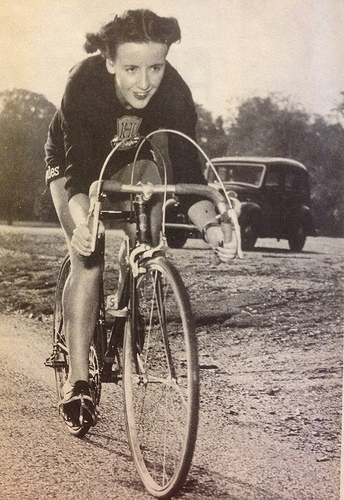
Eileen Sheridan
Eileen Sheridan

Eileen Sheridan was a successful time trialist or tester and track racer when, in 1951,  she was approached by the Hercules cycle company about becoming a professional. She won her first national title in 1945, aged 21 and had taken several titles and records in the years that followed both against the clock and for a set distance.

Hercules were something of a trendsetter, being the first British manufacturer to sponsor a professional men’s team as well as testers like Ken Joy. Unable to race in sanctioned events, Eileen Sheridan would target the long distance UK records in particular Lands End to John O’ Groats. She was not the first female professional to attempt this and not the first woman to ride professionally for Hercules. In fact Hercules had sponsored Marguerite Wilson  to do in 1939 what they wanted Eileen Sheridan to do now and it would be Wilson’s Lands End John O’ Groats record that Sheridan would attempt to beat. Wilson’s own professional career was short lived, with war intervening in the Autumn to curtail further record breaking. It’s tempting to think that the Hercules board were just waiting for the emergence of another talented woman to allow them to pick up where they had left off.

Certainly Eileen Sheridan had been thinking of the record. She preferred longer events and was a record holder for the ’12’, the amount of miles covered in a twelve hour period. Lands End to John O’Groats or LEJOG as it is shortened is the long distance place to place event that still resonates. It’s place within contemporary cycling is often as the epic route for a charitable cause. These rides generally allow a week to complete the distance and even this timescale represents a challenge for a seasoned rider. The record breakers look to achieve the distance in a little more than two days (women) and a little less than that (men).

The time that Eileen Sheridan was attempting to beat in 1953 was Marguerite Wilson’s; two days and nearly twenty three hours for the 871 miles distance (LEJOG covers less distance now since the Forth Road bridge was not built when both attempts took place). Sheridan had beaten the record by a matter of minutes in 1952, but this was not recognised due to an arcane ruling banning publicity for an attempt prior to the start. Her equipment for the race was a Hercules badged lightweight as even her sponsor recognised that riding a stock machine would have put the diminutive Sheridan at a disadvantage. Running three gears only, she would have been unable to keep up with the pedals on a descent whilst climbing remained more of a push than a spin. The ratios were the same as Wilson had used years previously.

With sports science in its infancy Sheridan,  who had already experienced the perils of sleep deprivation prepared as well as she could. This involved a regime of hardening her contact points with surgical spirit, while breaking in saddles and riding shoes. Her diet would consist of chicken breasts, bananas and Ribena.

The start was delayed as Sheridan and her support team waited for a favourable wind and weather forecast. As things turned out the forecast was wrong and she was battered by wind and rain within a few hours of leaving Lands End. By the end of the first day she was climbing the fearsome Shap Fell in Cumbria with over four hundred miles completed. Only now did she take a rest in the accompanying support caravan, for all of fifteen minutes. More than six hundred miles were down when she needed her lights for the second night of the attempt.

Now tiredness had Sheridan in its grip. She needed to stop twice more in the next hundred miles and had snatched only twenty five minutes sleep when she was woken at 7.30am to get back on the bike. She was going to complete the ride on another bike, with a slightly lower gear to help her over the hills to come. This was the slightest concession, fatigue was now forcing her to walk her bike over the steeper climbs.

Eileen Sheridan arrived at the John O’Groats hotel around 9pm. She had completed the ride in two days, eleven hours and seven minutes*. This wasn’t the end of her ride though. In addition to setting the LEJOG record in ’39 Marguerite Wilson had continued and set the benchmark for 1,000 miles also. With less than two hours sleep Sheridan was back on her bike. The lack of rest caused her to hallucinate; she saw people she knew and talked to them and polar bears. By the morning there were local supporters to keep her going, singing songs and running beside her. Completely exhausted she fell off her bike with 4o miles to go. Her support team cut up her breakfast and fed her like a baby and needed to lift her back on. She rode the last few miles weaving uncontrollably and lapsing from laughter to tears. She arrived back at the hotel an hour into the third day of riding.

It’s a testament to Eileen Sheridan’s achievement 60 years ago that the current record, set nearly 50 years later, is less than seven hours faster. Without seeking to diminish the mark set by L E A Taylor (also the mixed tandem record holder), what Sheridan achieved on a comparatively heavy steel bike (with three gears remember) was incredible.

Hercules made the most of it portraying her as an ordinary Coventry housewife and mother, when she was anything but ordinary. What was true was that she was a professional and the record she had beaten belonged to another professional rider. That record (Wilson’s) had already been beaten before Eileen Sheridan beat it again and further. Ironically, it was another Coventry housewife and mother of two who lowered the time by four hours in 1953, just ahead of Sheridan’s attempt. Edith (Edie) Atkins was an amateur however, starting her racing career a year later than Sheridan and still racing aged 76 in time trials. She was killed on her bike in 1999.

Britain’s next female cycling star arrived at the start of the sixties, although Beryl Burton won her first significant award a year after Sheridan retired as a professional in 1956. VCSE will cover Beryl’s story in the future.

There was article about Eileen Sheridan’s record breaking in issue 33 or Rouleur Magazine (details here) http://www.rouleur.cc/issue-33

Eileen Sheridan’s own biography is available as a reprint (details here) http://tinyurl.com/nvqo2j3

The writer who brought the story to life for VCSE in his own memoir ‘One more kilometre and we’re in the showers’ is Tim Hilton. The link to that book is available via our Facebook page (follow the link on the right hand side of the VCSE website).

And finally, there’s a very short clip of Eileen Sheridan on the VCSE YouTube channel (follow the links on the right hand side of the page).

* It seems appropriate to use (for example) twenty rather than 20 when listing Eileen Sheridan’s record breaking

Where’s Wiggo? – VCSE’s Racing Digest #6

So the Giro is the first grand tour of the year and with that a slightly different spin on the Racing Digest. The Digest is normally put together on a Sunday (or Monday latest) to reflect on the previous weeks racing or for the classics the same day. The challenge with a grand tour and even with some stage races is to try and reflect the big stories without missing the fractional elements that can later be described as ‘this was the moment when..’ etc. For now, we’re going to continue with the weekly post but this will be a compilation of the notes made on the actual day of the stage. This might lead to the kind of unforeseen circumstances where a rider can be described as super strong on one day, only to be out of contention the next. For a stage by stage narrative VCSE thinks it will make more sense to leave the notes on each stage unedited each day, instead of applying hindsight perspective at the end of the week.

Is this the right approach? If you would like to see daily grand tour updates please comment at the foot of the post.

As promised in the Giro preview VCSE will also be posting Giro highlights on our dedicated playlist. Where possible we will use footage with commentary in English but in some cases the best footage available is the official Giro video and this has Italian comms only. The playlist can also be viewed at the foot of the post.

Giro Stage 3 – Sorrento to Marina di Ascea 

The Giro’s fourth longest stage at 222km is just an aperitif for the second longest the day after. Leaving Sorrento Eurosport picked up the live feed before the stages two principal climbs sparing VCSE 70k’s of mostly straight roads (good choice!).

Français : Présentation des coureurs au départ...
Luca Paolini (Photo credit: Wikipedia)

The peloton had chased down the break by the start of final climb at Catona. Maglia Rosa Salvatore Puccio was minutes down at this point but the main contenders were all at the head of the race. Ryder Hesjedal looked super strong and made a solo break on the climb but sat up pretty quickly, perhaps just laying down a marker. The race got really animated on the descent. When a rider in the Kazak turquoise sped off everyone thought; Nibali. But no, it was Agnoli closely followed by Hesjedal. Hesjedal’s attack on the climb, followed by him leading on the descent fermented debate that went from pure speculation to pretty well informed. Garmin have ex pro Charly Wegelius as DS for the Giro and Twitter stalwart and Garmin owner Jonathan Vaughters pointed out that the safest place to be on a descent is often out front.

As the race came together again Het Nieuwsblad winner Luca Paolini pushed on. As opportunistic a win as his sub zero semi classic earlier in the year Paolini was more concerned with celebrating his victory than taking time off the rapidly closing pack. Nevertheless his advantage at the line (plus time bonuses) was enough  to put him into the leaders jersey. On a satorial note Paolini’s win was the first in a grand tour for the new style of ‘aero’ helmets* (well since the late 80’s). Most people have accepted the ‘science’ that there’s some kind of performance advantage to wearing one but are equally in agreement that they are not a good look.

With additional time bonuses on offer for the first finishers there was something to Paolini’s pursuers still to race for. Winner of the bunch sprint for non sprinters was.. Cadel Evans! A canny result and a few of the BMC leaders critics silenced. Evans remained outside the top 10 on GC but there’s lots of racing left. The biggest loser on the day was Lampre’s Michele Scarponi, losing his front wheel and ending up at the side of the road with a broken rear mech for his trouble. Your worst nightmare as a GC rider becoming reality and shared with a global television audience. Scarponi can shrug off the road rash but will need to dig deep to make up the time.

Bradley Wiggins remained in second, 17 seconds down on Paolini maintaining his 14 second advantage on Nibali. Hesjedal rode himself back into contention and was only 3 seconds down on Nibali in seventh.

*This may or may not be a fact. VCSE hasn’t seen one of the ugly things cross a line first this year but we are open to correction!

Giro stage 4 – Policastro Bussentino to Serra San Bruno 

With the benefit of hindsight this was probably not the best stage to watch live. Picking up the race with around 100 kilometres to go the remainder of the stage was run along the coast on pretty much entirely straight roads until the final two climbs at 40km from the line. Was the modern black top following the route of some ancient Roman road? We weren’t enlightened and made do with spotting ‘things you can see in the peloton’ for the first hour or so of Eurosport’s coverage. Even the moto’s were looking for ways to keep themselves amused and we were treated to an upside down shot of the field at one point. With Paolini in the Maglia Rosa, Sky were happy to let another team do the work on the front for a change and Katusha put in a big effort. Wiggins was able to sit back in the pack and catch up with Cavendish; cue much conversation on social media about whether or not Cav would be asking about the leadership at the Tour this year.

There was an early break which included the Giro’s first ever Greek entrant; Euskatel’s Ioannis Tamouridis. The main excitement this caused was when Androni’s Emanuele Sella was unceremoniously sent back to the peloton in disgrace for daring to take the virtual GC lead. The stage came back together with around 40km to go as the road began to climb properly. There were a number of brave solo efforts on the stage that warrant a mention. Euskatel’s Miguel Minguez Ayala managed to stay away the longest out of the original break, despite being handicapped at one point by his DS’s bizarre decision to hand him half a dozen bidons. As the final climb wound its way up around near 180 degree hairpins AG2R’s Sylvain George made a bid for a glory gaining nearly a minute twenty at one stage.

These two solo’s were topped by Vini Fantini veteran Danilo Di Luca (he does have an older teammate actually) who showed some class to get over the summit with something to spare and then provided a lesson in how to descend at speed in very wet conditions. It was always going to be touch and go for Di Luca to take the win and he bowed to the inevitable with a few hundred metres left and was overhauled by the group that included Paolini, Evans and Hesjedal.

The irony for Di Luca and Vini Fantini was that the stage was won by another Italian from a pro-conti team, this time a rider at the start of their career: Bardiani Valvolve’s Enrico Battaglin. A big win for the team after losing a major sponsor last year and a massive one for the rider. Paolini could look forward to another day in pink, but the big GC mover was Nibali who recovered from a late wheel change and picked up 17 seconds on Wiggins who dropped to 6th on the same time as Hesjedal*. Cadel Evans, who was in the mix at the finish picked up more places and moved into the top 10, 42 seconds down.

* Wiggins got caught up in someone else’s crash with less than 3km to go. Ordinarily he would have been awarded the same time as the group he had been in (Paolini etc.) but transponder info suggested Wiggins had already been dropped by the leading group at this point. The time lost could be crucial over a 3 week race.

Giro Stage 5 – Cosenza to Matera 

A similar profile to the previous days stage albeit shorter by 40 kilometres. The penultimate climb at Montecaglioso wasn’t worthy of a profile in the road book but proved enough of a challenge to shell some of the big names in sprinting. Beforehand the stage was at its most animated at the finish in Matera as torrential rain turned the finish straight into a fast flowing river.

There was a break up ahead but the peloton were in a relaxed mood on pretty much straight roads. The lack of action provided ample opportunity to discuss the ‘controversy’ of Bradley Wiggins losing time on yesterdays stage. Wiggins later admitted that he had been gapped on the run in which meant that one of the more lurid theories, Rigoberto Uran in league with Nibali to upset his team leader, could be discounted.

The English TV feed has featured a DS from each of the teams speculating on what types of rider the day’s stage will favour. Today’s representative Dirk Demol of Radioshack fancied a sprint finish and as the break was reeled in ahead of the final climbs it was the sprinters teams leading the chase. The best laid plans of Omega Pharma and Orica Greenedge fell apart going up Montecaglioso. Mark Cavendish, despite the attentions of three teammates was reduced to riding zigzags as the peloton split apart.

The riders had endured a downpour of their own at this point and the run in the finish in the hilltop town of Matera was still wet. With a series of 90 degree corners into the final uphill finish there was always the chance of a crash. The final bend featured rather more white road markings than you would choose if you had to take them at speed in the wet. One of John Degenkolb’s Argos Shimano lead out was down and in trying to avoid him another (larger) crash ensued. On the finishing straight it looked for a moment that a Bardiani rider was going to take another win but Degenkolb who had avoided the carnage too overtook and was a clear winner at the line. After yesterdays win by one of the new generation of pros; Battaglin it was fantastic to see Degenkolb take his first win since his anti doping statement issued last weekend.

With the final corner crash occurring within 3km of the finish the same time was applied to all finishers in the first group and with no splits the GC did not change from yesterday so Luca Paolini remains in pink for a third day.

Giro Stage 6 – Mola di Bari to Margherita di Savioa

A plan flat stage run on arrow straight roads in warm sunshine had the the peloton in end of term mood. One for the sprinters then, but John Degenkolb didn’t figure today, perhaps the Argos tactic will be to wait for something a bit more lumpy. So the contest would be between Cavendish and chief rivals; Bouhanni, Goss and Viviani.

Some scenes from the first 130 kilometres. Taylor Phinney in recovery mode at the back of the peloton performing the now obligatory ‘let’s do something amusing with the new Giro aero helmet’ with one of the Garmin riders. Not intentionally so, but much funnier were the three riders whose misplaced route saw them on the wrong side of some impressive looking central reservation barriers. The televison director delighted in providing lingering pull back shots from the helicopter to illustrate the hopelessness of their situation. Likely to find themselves needing to dodge oncoming traffic when the closed section of carrigeway was reopened the three eventually surrendered at the feed station and clambered over after handing their bikes over first.

The all Australian breakaway of Cameron Wurf (yes, him again) and Jack Bobridge (Blanco) were reeled in as the stage entered its criterium phase with two laps of a circuit around Margherita di Savioa. Taking in a tight turn before a narrow finishing straight a big crash involving most of the rear of the peloton created a real brain teaser as mechanics worked out how to unpick the interlocked riders and bikes from the pile blocking the road. Caught up in this was most of Team Sky who had gone back to escort Bradley Wiggins after a bike change. As the other teams realised that unblocking the road and matching bikes to riders was going to take some time, shuttle diplomacy began at the head of the race as riders with teammates back in the crash took turns to slow the peloton down. There’s a link to video of the crash below.

http://tinyurl.com/bpljkzd

Things had sorted themselves out as the final lap started. Wiggins mindful of what had happened a few kilometres earlier and of the 17 seconds lost on stage 4 provided the lead out for the sprinters until the race entered the final straight. It’s an aside, but seeing Wiggins like this; really pushing for the line, is a reminder of just how good he looks on a bike. With a big look of his shoulder to confirm that, yes he had gone under the 3km banner Wiggins relaxed guaranteed the same time as the first finisher.

And first over the line wasn’t really in much doubt as Mark Cavendish had Omega Pharma teammates in front of him. Unlike stage one, Cavendish didn’t really have to work for this one, only launching when the line was in touching distance. Elia Viviani was second again, but convincingly beaten this time. With Matt Goss third, the rider bashing the bars on the line was Nacer Bouhanni of FDJ who had been blocked on the run in. With no change in the GC Paolini retained the Maglia Rosa.

Giro Stage 7 – San Salvo to Pescara

Saturday’s individual time trial was meant to be the day when the Giro really started. Instead it was Friday’s stage to Pescara on a hilly route through the Abruzzo region that served up the drama. With no more than a category three climb to deal with the 177 kilometre stage could have been seen as fairly innocuous, but this is a part of Italy often crossed by the Tirreno Adriatico and what the hills lack in size they make up for gradient. For this stage changeable weather conditions added to the potential for error, unforced or otherwise, that could derail the GC chances of any of the main contenders.

With a six man break up the road including Lotto’s Adam Hansen the peloton were happy to let locally sponsored Vini Fantini do the work at the front. With one rider in contention for the GC and a local rider in Danilo Di Luca early expectations where for Vini Fantini to try for the stage win. For Maglia Rosa Luca Paolini this was a virtual last stage of the race as he fully expected to lose the lead after the time trial. Planning to ride the stage “..like a one day race” Paolini entertained hopes of retaining the leaders jersey for one more day.

As the break away began to ride into the showery weather there were more and more riders sliding off on a combination of hairpin descent and greasy road surfaces. The climbs were having an impact too with the break fragmenting and the peloton shelling riders out the back with regularity. With 20km left Adam Hansen, one of handful of riders to have ridden all three grand tours in a single year was alone after his last breakaway companion crashed. Riders were attempting to escape the peloton with varying degrees of success as the lead group became strung out on the climb.

With around a 4km descent after the final climb it was no surprise to see Vicenzo Nibali attempt to get away from his rivals. The favourites had got up the last climb with varying levels of support as team members had fallen away after doing their turn. Sky had looked less organised than normal, seldom running at the front and Uran falling off after touching Wiggins wheel at one point. Watching Hansen on the same roads minutes earlier it was clear that the descent was sketchy. First, Nibali slid off on a bend but he was back on his bike within seconds. Wiggins someway back negotiated this corner without difficulty, but came to grief on a hairpin further down. Getting back on slowly, he was all alone by the time he reached the bottom of the hill such was his speed in comparison to the other riders. As the road levelled out Wiggins began to push the pedals again and rediscovered his teammates who prepared to pull him to the finish.

While all of this was happening Adam Hansen was crossing the line for a fantastic solo win. In the break for nearly 150km and on his own for the last 20km for VCSE this was the win of the first week. Chapeau! The chasing group came in over a minute down but included Evans, Hesjedal and Nibali. It also included the new Maglia; Benet Intxausti of Movistar who had been ‘sitting’ unobtrusively in 3rd place @ 26 seconds since stage 4. Nibali moved into second with Hesjedal third. Evans cemented his place in the top 10 and Robert Gesink moved into the top 10 from 12th.

And Wiggins? 23rd place @1.32. The plan must have been to not lose any time on his rivals today so that he could press home his advantage over them in the time trial on Saturday. Instead there is the real possibility that any time gained will be needed just to get back on terms with Nibali. Added to the 17 seconds ‘lost’ on stage 4 it’s fair to say it hasn’t been a great week for Sky, with the result in the TTT on Ischia squandered through mostly bad luck, but potentially some tactical errors too. Wiggins has often found himself alone after a problem and the team have appeared to be slow to react. At least Wiggins will know that, barring a mechanical, what happens in stage 8 is down to him. In the time trial you’re racing against yourself as much as the other riders on the road and it’s not known as the ‘race of truth’ for nothing.

VCSE will have more updates after the weekends stages with a rest day coming up on Monday. Check out our YouTube channel for a dedicated playlist with all of the action from week 1.

Lucy Garner wins Stage 1 of the Tour of Chongming

472804_528135950555527_675732761_o

Argos Shimano had more than one thing to celebrate this week with Britain’s double world champion Lucy Garner winning stage 1 of the Tour of Chongming in China. Still only 18, Lucy out sprinted Emma Johansson and Shelley Olds to take the win.

The photo (from Argos Shimano) really captures Lucy’s elation at her victory; seeing a rider without their sunglasses in this case really helps to communicate the emotion and excitement she was feeling. Speaking afterwards Garner said; “I’m so happy I took the win today”

Yet another women’s world champion Giorgia Bronzini of Wiggle Honda took the second stage in bad weather with the final stage to be run in criterium format.

Someone to boss Vos?

From Central Park to the Peloton – Evie Stevens

picture – http://www.wellandgoodnyc.com

To the uninitiated it can look as if Marianne Vos is unbeatable, such is her win rate on the women’s pro tour and as we recently covered at VCSE, XC mountain biking. Vos remember has been in the sport competitively since she was a teenager and already possesses a palmares that  rider on the verge of retirement would kill for, let alone someone who probably has at least another ten years left at the highest level.

In the UK people who have become interested in the sport through the successes of the British track cycling team could be forgiven for thinking that riders have always enjoyed a clear path to international competition from an early age. In fact it was as recent as the late 90’s until there was a level of investment in track cycling in the UK that provided the platform for riders like Victoria Pendleton and more recently Laura Trott. Trott in particular benefited from the scouting that now takes place in schools up and down the country to identify potential track stars. Note that the emphasis here is on track cycling. The haul of cycling medals taken in Bejing in 2008 and London last year, in addition to many more won in world championship and world cup track events is reflective of a focus on the track that hasn’t always been shown towards the road. While the medals won on the track in Bejing grabbed most of the headlines not many remember that the first cycling gold for Britain (the first medal for the entire GB team in fact) in 2008 was won on the road by Nicole Cooke.

In pouring rain Cooke rode a superb race against a quality field that included Vos , who finished 6th, and Judith Arndt the 2004 Olympic champion. Cooke retired from road racing before the start of this season making and her open letter to the press and fans vented some of her frustrations at the differences between the way road racing is structured and perhaps more importantly funded in comparison to the men’s tour*. Cooke’s teammate in 2008  Emma Pooley has voiced similar concerns. It’s hard to imagine a rider of Pooley’s class within the men’s peloton having to deal with two of their teams collapsing through lack of sponsorship.

Cooke was perhaps Vos’ biggest rival during the late ‘noughties’ and while some of their competitors span both era’s the latest rider to try and topple Vos wasn’t even racing in 2008 despite being older by three years. Evelyn (Evie) Stevens had followed an outstanding academic career at a US Ivy League college and a spell at Oxford. From there she had gone to Wall Street leaving Lehman Brothers shortly before the bank collapsed and was working at another bank when she had her cycling epiphany. She had acquired a bike among all of the other things you accumulate when you live in a loft in Manhattan but a trip to a cycling workshop in Central Park rekindled her interest and she was soon taking on a coach.

Stevens became an amateur racer in 2009 although she can thank her sister for entering her into her first event; cyclo cross. Early on her coach found that Stevens had the power output of an elite level cyclist and as the global financial crisis began to make her question her future in banking she took the plunge to become a professional. The loft, along with the rest of the trappings of a Wall Street banker went and she was left with her bike and a bag and wondering “..what have I done?”

Turning pro in 2010 with HTC Highroad she moved to Specialized Lululemon last year following the collapse of her first team after (you’ve guessed it) they lost their sponsor. For someone who was the most successful stage race winner on the women’s world tour Stevens is also a talented time trialler winning the US national title twice and finishing runner up at last years individual world championship. Her strengths in the discipline also helped Specialized Lululemon to the team prize in Limburg. Perhaps her biggest win of the year came at the Fleche Wallone where she out climbed Vos on the Mur de Huy to win convincingly.

Absent from this years race (won by Vos, natch) due to a nasty accident in Italy Stevens showed her determination by returning and winning a stage a month later at the Gracia Orlova stage race in the Czech Republic. She finished 2nd overall this year after winning the overall in 2012 but announced herself “..back to racing, back to smiling”. No doubt disappointed to have missed the opportunity to defend her ‘classic’ Stevens will be looking to retain her stage racing titles from last year in the US and in France and perhaps to go one (or even two) places better and win the overall at the Giro Donne.

Like Marianne Vos, Evie Stevens retains a humility that belies her status as one of the top female sportswomen in the world. Like Vos the overriding sense is that she is doing what she loves and Stevens has described how her enforced absence has made her “hunger and love” for racing grow even stronger. As to who is going to be the stronger rider this year Stevens describes Vos as an “incredible athlete”. Rather like Lizzie Armitstead at last years Olympics however, Steven’s believes Vos is “human”. It will be interesting to see how the Stevens / Vos match up plays out this year. Both riders win for fun but will it be the late comer who left the world of high finance and Manhattan lofts behind for the joy of two wheels who comes out on top? What does Stevens think?

“I still haven’t found my boundary”

* The letter also covered Cooke’s views on doping in the sport


California Girl

Not content with winning the women’s Fleche Wallone on Wednesday Marianne Vos hopped on a plane and flew out to the west coast of the United States to take part in the Sea Otter Classic races. The Sea Otter event is one of the traditional curtain raisers for the mountain bike season made more high profile as the event used by the industry to showcase new models and innovation via their teams and riders. After collapsing onto her bars after winning up the climb of Mur de Huy most onlookers could be forgiven for thinking that the prospect of a transatlantic flight and less than two days recovery would have prevented Vos from competing let alone winning the short track event in California.

Not unfavourably compared to Eddy Merckx for her amazing palmares Marianne Vos is a throwback to the days when professional racers expected to take part and were expected to do well in all types of races rather than the specialists seen today. While it’s true that the women’s pro tour does not feature stage races equivalent in length to the grand tours the men race there is enough variety in the parcours the women race over to allow some specialists to emerge like Kirsten Wild.

Vos is special because she is strong across a range of disciplines and not just her ability to climb and sprint (among other strengths she has) within road racing. Where Merckx was nicknamed ‘The Cannibal’ because of a need to win for Vos it’s more that she enjoys winning.

A key rival and last years winner at Fleche Evie Stevens of Specialized Lululemon was missing from the race this year due to injury but the rider who is emerging a potential threat to the Vos train this year and in the longer term is Trofeo Alfredo Binda winner Elisa Longo Borghini who finished on the podium here.

VCSE has secured some footage of Marianne at Sea Otter. It’s a little light on race action (the track itself doesn’t look especially challenging) but you can judge for yourself how well she copes with jet lag!

New content on the Veloclub Sud Eglise YouTube Channel

We have been adding lots of new content to our YouTube channel over the last week or so. There are some new uploads including a brief clip showing Bernard Hinault winning Liege Bastogne Liege in appalling weather in 1980. Supposedly, Hinault has never regained the feeling in two fingertips after getting frostbite during this epic.

There’s another clip to inspire us to get up and get out during the cold and wet weather. It centres on a Triathlete preparing for an Ironman event but we think it hits home for cyclists too.

As part our mission to bring you more from the women’s scene we are seeking out the best stories and background articles from YouTube to give more of an insight into the sport. For starters there are a couple of videos from Specialized Lululemon rider Evelyn Stevens. Evie recounts how she left her career as a Wall Street banker to become a professional women’s cyclist in this short but inspiring clip.

We have also added the final two episodes from Beyond the Peloton series two. It was disappointing that it took the producers until the end of season two to bring anything from the women’s Cervelo Test Team. Ironically, it was the women’s team that preceded the men’s outfit. The footage here is from the World Championships in 2010. As we’re nearly three years on from this event, hopefully it isn’t too much of a spoiler to say that Cervelo swept the board.

We will continue to add to this playlist as we come across more great content, so stay tuned!

Staying on the Cervelo theme, albeit tenuously is Behind the Peloton. VCSE recently came across this series from the US. These guys are clearly steeped in cycling (particularly Flandrian) culture. This short series of films play with the Beyond the Peloton look with a tongue in cheek homage to the in race footage from that series (indeed any pro teams video content). Those of you who have seen the ‘S**t Cyclists Say’ video will appreciate this one.

All this and more great video content can be found by following the links on the homepage to the VCSE YouTube channel. Don’t forget to subscribe or comment!