Froome dogged by doping questions

Tour de France 2015 

Chris Froome looked the strongest of the pre-race quartet of favourites for this years Tour de France going into the first rest day. The yellow jersey had survived a potentially risky week of classics lite stages and if anything done better than just survive even if some of the time gained on rivals was as a result of their misfortune. If anyone looked like cracking it was 2014 champion Vincenzo Nibali who has suffered the ignominy of having his attacks ignored by Sky so much time he has lost. Alberto Contador found that he couldn’t follow Froome’s wheel as early as stage 3 climbing the Mur de Huy. Only Nairo Quintana has seemed able to go toe to toe with Froome; Movistar employing Alejandro Valverde as a very attacking domestique deluxe has at least ensured there’s a semblance that this year is not over yet.

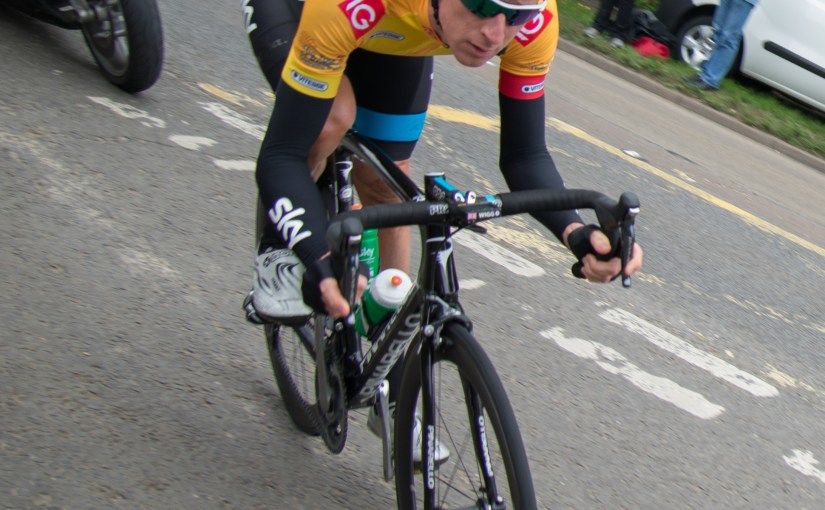
Chris Froome - in yellow after stage 3
Chris Froome – simultaneously avoiding piss wielding fans while answering doping questions

The risk for anyone describing Froome’s performance and daring to use a superlative has become the narrative for this years Tour. Just as in 2013  Froome’s performances have been accompanied by noises off about whether or not said performances have been achieved legally. It’s certainly ironic, given what we learned about the team in the off season, that Vincenzo Nibali’s 2014 victory received nothing like as much vitriol. I have a theory about this.

Froome and Sky have already effectively negated any possibility in a change in the outcome of this years race, such is his superiority over the rest of the field. Because he has ‘killed’ the race it’s inevitable that people want to know how it’s been done. Froome is dominant; his rivals appear unable to respond; the GC becomes a battle for second place and into the vacuum come the doping questions. Here’s another irony. When Froome was losing ground to Alberto Contador in last year’s Vuelta did anyone ask any doping questions then? So perhaps it’s about the rider and maybe the team too?

Let’s start with Froome. As a commited member of Team Wiggo I have never really warmed to him but I have massive respect for his performances. He still looks awful to me on his bike and maybe that’s another reason why he attracts the questions. In a sport and a country where they have a word for smoothness on a bike; souplesse, Froome is the souplesse antichrist. But should winning ugly mean that the performances should be doubted? The answer of course is ‘no’ but Froome has made the odd remark (as recently as Sunday) that adds fuel to the never ending debate. If I have a problem with Froome and the doping questions it’s this; undisclosed asthma and the use of TUE’s. I covered the subject in enough posts before but the asthma / TUE thing has provided enough smoke to allow the doping conspiracy theorists a pretty big bonfire that certainly won’t abate if Froome retains his lead and wins the Tour.

Which leads us on to his team. I felt the Sky selected a really interesting team for this years Tour. The make up of the team has a really strong British core and this seems to have engendered a bit of a bunker mentality from the team that trickles down to the predominantly British fans that support the team. I get that answering what appears to be the same question again and again becomes wearing after two weeks but this is what Sky signed up for when the entered the sport in 2010. It’s 100% down to the stated aim of winning clean that subliminally sets such a high bar for the team in the eyes of cycling fans as a whole. It’s almost as if with any other team there’s an expectation that they could be using PED’s. But with Sky things seem turned upside down in that if they say they’re going to win clean their performance is compared to teams that we tacitly set lower standards for and QED Sky must be doping.

This week the debate has evolved into how someone can use Froome’s power data to ‘prove’ he’s doping verses Froome releasing his data to ‘prove’ he isn’t. It’s all pretty unedifying stuff and I can only hope that Froome’s rivals can come up with something to animate the race this week otherwise the narrative will continue to be centred around does he or doesn’t he?

Based on what we have seen so far I’m not convinced that Froome can be challenged however. Quintana seems the rider most likely at this point but no one has really put in an attack that they have managed to make stick or to shake off Froome’s key lieutenants; Richie Porte and Geraint Thomas. Thomas has been man of the match so far for me. The versatility shown be the Welshman in navigating his team leader through the tricky opening stages and then often being the last man standing on the climbs has been superb.

Away from the circus surrounding Froome I was cheered by MTN Quhbeka taking their maiden Tour stage win through Steve Cummings. Whether or not his victory topped the team taking the KOM jersey earlier in the race doesn’t really matter. The team have thoroughly deserved their wild card.

So we go into the mountains again. I’m hoping we’ll have some racing to talk about at the end of it.

Unhealthy connections

Tour de France 2015 – First Rest Day 

I had planned to write a short(ish) post ahead of the second full week of this year’s Tour on the speculation (confirmed by the rider himself yesterday) that Richie Porte would leave Team Sky at the end of the season. Ivan Basso opening the Tinkoff press conference with the news that he had been diagnosed with testicular cancer pushed possible Porte moves off the metaphorical VCSE ‘front page’.

Ivan Basso
Ivan Basso

Getting the Basso announcement more or less hot off the press on my timeline I was disconcerted by my own (initial) reluctance to ‘say’ something on my own feeds. My immediate reaction, born out of my closest family having suffered was empathetic. No one deserves to suffer with this disease. Then I started to wonder. Basso is a rider with a ‘past’, part of the generation of pro cyclists that ‘competed’ when the doping arms race was at it’s height. How long would it be before people started to join the dots between today’s news; Basso; cancer and Lance. Having seen the very dignified way that he handled the press conference I’m glad that I didn’t think for too long about putting out my own (very small) message of support for Ivan Basso.

The dots have been joined however. It’s perhaps only been 5% of the commentary, but it’s out there. If Lance’s cancer was caused by doping then could the same be true for Basso? The aptly named ‘Tin Foil Hat’ brigade thought that this was the story today. There has been a LOT written about Lance, his cancer and his doping. There has been a lot written about whether or not the former was brought about by the latter. I don’t think I have actually read anything conclusive in the many iterations of the Lance Armstrong morality tales that litter my bookshelf.

I am something of a contrarian about doping. As much as I support a ban for anyone caught using PED’s I would equally advocate that it’s possible for a rider to return to the sport following said ban. I am more exercised by the misuse of TUE’s (an ongoing issue in the peloton) that I am about a confessed (and one hopes ex) doper riding and racing. Ivan Basso might represent the worst of pro cycling as someone who doped but there is (for me at least) much to be said for his subsequent repentance. Some might argue that he shouldn’t have been given the chance of a couple more years ‘in the sun’ with Tinkoff. Today’s news may bring about retirement sooner than expected but I hope that this isn’t the last we have seen of Ivan Basso on his bike.

Forza Ivan! 

Continue reading Unhealthy connections

So far, so unpredictable – TdF 2015 stage 1-3

Tour de France 2015

Inevitably predictions have a horrible habit of returning to bite the lightly informed pundit on his chamois; and so it proved to be the case on the opening stages of the 2015 Tour de France.

Chris Froome - in yellow after stage 3
Chris Froome – in yellow after stage 3

My pick of Alex Dowsett for the opening stage, a short TT around the centre of Utrecht, was some way off but Alex’s reaction afterwards suggested that he had left the starters hut thinking he was in with a chance. I was reminded of the head to head with Bradley Wiggins at Knowsley Safari Park in the 2013 Tour of Britain over a ‘classic’ 10 mile TT stage. The battle promised much but the outcome was rather more one sided as Wiggins delivered a masterclass in the conditions. I was further reminded of Dowsett’s breakthrough ride (prior to this year’s hour record success) in the 2013 Giro. In the hot seat for much of the stage Dowsett had the beating of Wiggins (in what was probably his best day of an otherwise nightmare week and a half in Italy) and Vincenzo Nibali on that Saturday. Dowsett described feeling in awe of the sheer scale of the Tour last weekend but I also feel that there was a certain weight of expectation on him to get a result that wouldn’t have been there two years ago at the Giro. Movistar will want their rider to deliver in TT’s if they select him for grand tours; he will (no doubt) get better at coping with the unique pressures of races like the Tour just as he dealt with the mental challenge of the hour. It’s a measure of his character that he got on with his ‘other’ day job shepherding Nairo Quintana over the windswept polders and dykes on stage 2.

The Peloton left Utrecht on Sunday in fine weather with the locals doing the best to out do the crowds that lined the Buttertubs and Jenkin Road last year in Yorkshire. I suspect that everywhere that hosts a grand tour start look to Yorkshire’s 2014 grand depart as the template now. While they basked in sunshine the TV cameras kept cutting to the finish line where the recently assembled promotional furniture was being dismantled all over again in case a sudden gust took it into the North Sea. In some ways it was good that the wind  did blow on stage 2 as the it looked as if the finishing straight had been situated atop of a vast sewage sluice gate. It looked brutal and somewhat dramatic but if there hadn’t been an ever changing wind to contend with the stage might have ended up fast but dull to watch. As it was things did blow up and in another throw back to 2013 Movistar found themselves caught out by poor positioning and an opportunistic attack by Etixx Quick Step. Quintana and Valverde lost time on the day and further compounded the time lost on the previous days TT. Vincenzo Nibali wasn’t immune to the dangers either; he was gapped after getting caught behind a crash.

Continue reading So far, so unpredictable – TdF 2015 stage 1-3

It’s that time again; here’s the lovingly tooled VCSE Tour preview

Tour de France 2015

Why bother shelling out a tenner for 228 pages of official guide when you can get the VCSE lowdown on this years Tour for nothing? 

Last year we had Yorkshire. Everyone said it was going to be good; even me (although I added a typically English caveat; weather permitting). And the sun did shine and it seemed like anyone who had ever shown the slightest interest in riding a bike decided to find a spot by the roadside. I know, I was there. The grandest of Grand Departs has spawned its own three day stage race and made Utrecht’s job of hosting this years edition twice as hard. So why then as a (proud) Brit am I feeling a greater sense of anticipation ahead of this year’s Tour than last?

There might be another British* rider in yellow besides Chris Froome

While a lot of Brit fans were waiting to see who would be backing Froome over the next three weeks here in Essex we were looking to see if ‘our’ World Tour rider was going to France (via Holland). It’s easy to forget that Alex Dowsett’s ‘day job’, when he’s not breaking hour records is riding for Movistar. In the last couple of weeks the more eagle eyed among you might have spotted him on the flatter stages at Dauphine and the Route du Sud providing close protection for Alejandro Valverde and Nairo Quintana. I still suspect Dowsett smarted from his omission from the Movistar squad for last years race that would have passed through some very familiar Essex roads on stage 3. Poor health was cited at the time but other than the obvious home ties last year it was harder to see why he would have been selected. This year is a completely different story. Besides the ‘obvious’ item on his 2015 palmares, Dowsett took overall at the Bayern Rundfahrt and he’s coming off another national TT championship win. The opening stage prologue isn’t quite the quintessential ‘ten’ of the Brit club scene but I think Movistar have picked him to have a go at taking the jersey. It won’t be easy but other than Giant’s Tom Dumoulin I can’t think of another rider that stage 1 couldn’t have been better scripted for.

A wide open green jersey / points competition

ASO have tweaked the points allocation again this year and that should suit the ‘pure’ sprinters like Mark Cavendish and Nacer Bouhanni. The big blonde German elephant in the room though is the missing Marcel Kittel. Is it illness? Lack of form? There have even been suggestions that Kittel has succumbed to the cyclist’s illness; depression. Whatever the reason, the rider that looked set to dominate the bunch gallops is absent and that means that the metaphorical sprinters ‘crown’ is up for grabs. Of course Kittel’s absence doesn’t automatically mean that Cavendish will reclaim the number one spot. There’s as much depth among the fast men as there is in this years GC field.

Let’s start with Alexander Kristoff. I posed the question of who could beat the Katusha rider after he claimed his second monument of his career by winning the Ronde earlier in the season. He’s been kept under wraps in the last few weeks (he didn’t contest his home championships) but you have to think he’s going to be tough to beat as it has felt at times as if all Kristoff has to do is turn up to a race in order to win. Not unlike a Mark Cavendish of old in fact. Cav looks like he’s in good touch too though; he rode an extremely untypical but nevertheless inspired solo effort in last weekends nationals in Lincoln. He looks as if he is peaking at the perfect time and isn’t July a good time to get your mojo back?

Another rider who could lay claim to that is Peter Sagan. A rider who has had to endure a stream of motivational messages that his team owner shares with the wider social media audience and possibly the worst national champs kit of recent years could be forgiven for crumbling under the weight of a $15M salary and expectation in the classics. Sagan took the GC along with bagging a stage win or so at this years Tour of California going head to head with Cavendish and I would expect Sagan to have to take the points where he has the advantage over Cavendish (on primes etc.) if he’s serious about another green jersey.

While it has been enjoyable to see Sagan in a place where he’s feeling like popping wheelies again I think this could be Kristoff’s year. I’m not as sure about the final showcase in Paris though; that one i’m giving to Cav.

Enough already.. what about the GC?

Dowsett in yellow. Kristoff v Cav. Mere aperitif’s to the main course that is this years GC battle. Last year we had Contador v Froome. This year we can add Nairo Quintana to the mix and that’s before we even mention last year’s winner Vincenzo Nibali. I’m sure someone has got the ‘stat’ that says when these four last raced against one another (together). Me? Haven’t a clue, but whenever that was a lot has changed not least that each rider is now a grand tour winner.

Continue reading It’s that time again; here’s the lovingly tooled VCSE Tour preview

Now for the Tour – VCSE wraps up the 2015 Giro

Giro d’Italia 2015 

While the final outcome never looked in doubt, the final week of the 2015 edition of the Giro d’Italia served up some epic stages as the race wound its way from the Dolomites to the Alpes via the Italian lakes.

Alberto Contador - Now for the Tour?
Alberto Contador – Now for the Tour?

Alberto Contador took the GC without relinquishing his grip on the Maglia Rosa he had worn since stage 5 (other than the briefest of loans to Fabio Aru). Contador had taken a lead of 2.35 into the final week over Aru but the 42 seconds that the Astana rider took back by the end of the race didn’t begin to tell the story of the mixed fortunes for the GC contenders as week 3 progressed.

In my previous post covering the first two weeks of the race I highlighted the potential risks for Contador if Astana were able to isolate him on the mountain stages that would dominate the final week. Aru and his teammate (this year’s Aru if you like) Mikel Landa had been ably supported by the rest of the Astana line up whereas Contador had often gone from having his Tinkoff domestiques alongside him one minute and gone the next. It’s been a theme of this year’s Giro for the GC riders to lose and gain time based on another’s misfortune and as the peloton regrouped after the rest day for a stage featuring the Mortirolo as its centrepiece Contador was about to be tested. It’s a bit of an unwritten rule that the race leader won’t be attacked if he suffers a mechanical although Contador has ‘form’ for ignoring this particular convention*. When he punctured ahead of the Mortirolo Astana attacked and Contador found himself at the bottom of the climb isolated and losing time to Aru. Contador leaves the Giro for the next leg of his grand tour ‘double’ without a stage win but his ride over the Mortirolo to overhaul Aru and end his hopes of taking his maiden grand tour victory was surely one of the most memorable performances in stage racing. Aru hadn’t ever looked like he could capitalise on the collective strength Astana held over Tinkoff but that shouldn’t diminish Contador’s ride. Fuelled perhaps by anger that he had been attacked, whatever Contador was on clearly worked as he passed Aru and began to put time into him. The tongue in cheek suggestion that Landa could become the GC hope for Astana looked to be solidifying into a genuine consideration as he road clear in the final km’s to take his second stage win in a row. As he leapfrogged Aru on GC, Contador had increased his lead by more than four minutes.

Contador increased his lead further on stage 18, won in a fine breakaway by Philippe Gilbert as people began to speculate just how much time might Aru lose on the final two stages so out of sorts did he seem.  Contador described passing Aru and seeing he had “..an ugly face” (the literal translation from Spanish) so great was his suffering on the climbs. Now Astana gave the outward appearance of turning to Landa but there was a sting in the tail for Contador as Aru went from seemingly a beaten man to world beater in the space of 24 hours. Would Contador have lost as much time (without the GC ever being seriously in doubt) if he had the support of a teammate on the last two stages? Perhaps not, but I can’t help wondering what might have happened if there had been one more mountain stage after Sestriere on Saturday.

Continue reading Now for the Tour – VCSE wraps up the 2015 Giro

Vino & Valverde don’t care (for a while I wasn’t sure that I did)

So this is my first post for getting on for a month. In previous years I would have written about the Ardennes classics, the Tour of Turkey and would be previewing the Giro about now. There’s even been an extra race added to the calendar with significant interest for British fans with last weekends Tour de Yorkshire. Trouble is I have found it really difficult to find anything good to say about the last month since Roubaix and I am going to try and explain why in this post.

Ardennes Classics

I find it a little hard to get too jazzed about the Ardennes races with the possible exception of Liege Bastogne Liege as they tend to be decided in the final few kilometres and even I can pass on the preceding 90 minutes of live coverage where nothing much will happen. Both Amstel Gold and Fleche Wallone will have their outcome determined by what happens on their signature climbs; the Cauberg and Mur de Huy respectively. OK the few minutes the riders feint, attack, fade or go clear on the ascents is often exciting but the results this year have been sadly predictable.

Alejandro Valverde
Alejandro Valverde

With the exception of Michael Kwiatowski timing his move to perfection on the finishing straight at Amstel the Ardennes races in 2015 have been about one rider alone; Alejandro Valverde. Valverde was second in Amstel and went one better at both La Fleche midweek and LBL the following Sunday. I have written about Valverde many times and in particular about his public lack of contrition about his ban following Operation Puerto. Interviewed in Pro Cycling this month he remains unwilling to tackle the subject of doping (past and present) and maintains a position that he was banned despite “..his arguments” that the presence of a bag of his blood didn’t indicate wrong doing. Of course it’s a bit of a leap to suggest that because Valverde was banned in 2010 he’s doping now, but it does stick in the throat that the rider who has figured so prominently in this years hilly classics is the poster boy for unrepentant dopers.

Only one other rider featured in the top ten finishers for all three Ardennes races; Etixx Quick Step’s Julian Alaphilppe who was runner up in La Fleche and LBL and 7th in Amstel. Obviously Valverde is a grand tour rider who is capable of hanging with the best of them through the Alps and Dolomites on a three week stage race but to deliver a second place and two wins says he was in the form of his life.. Or something.

So Valverde winning didn’t put me in the greatest of moods to crank out a thousand words extolling the virtues of the Ardennes classics. At least my bad luck was just confined to having to watch him take his victories. Previous LBL winners Dan Martin and Simon Gerrans didn’t even figure after a crash that took out several key contenders early on during the live feed. Neither rider is having a great season so far with early season injuries and illness getting compounded by these latest mishaps. Kwiatowski’s win in Amstel cements his versatility as a rider although I think he will need to decide if he’s going to be a GC rider or a one day specialist fairly soon as I think he will need to shed some timber if he’s going to become a genuine contender in the grand tours.

Continue reading Vino & Valverde don’t care (for a while I wasn’t sure that I did)

Wiggo – exit with a bang or a whimper?

Paris Roubaix 2015

So that’s that then. Bradley Wiggins final race in Team Sky colours ends in 18th place in Paris Roubaix, nine places lower than his finishing position last year. Should this be seen as a failure? Many will answer “yes” but I’m not sure I agree with that. When the mainstream media show any interest in a cycling story the hyperbole is cranked up to maximum level and and Wiggins found himself cast in the role of favourite as anything less wouldn’t have sold the story. Of course Wiggins himself had talked up his chances for the race and it has often proved to be the case that he will get a result in an event that he ‘targets’. With Paris Roubaix falling at the end of the cobbled classics a review of what has transpired over the last few weeks left me thinking that whatever Wiggins thought of his own chances; no matter how well he and the Sky classics squad had prepared and considering the results so far this year, he would need to ‘go long’ to win.

In my last post I talked about how the order of things in this year’s cobbled races had been upset by injuries to riders like Tom Boonen and Fabian Cancellara and the improvement in the fortunes of Sky and Katusha. Boonen and Cancellara between them have dominated the recent history of Paris Roubaix (and last week’s Tour of Flanders) and Cancellara’s absence in particular has had a huge impact on how each race has evolved tactically this year. I don’t think that Alexander Kristoff would have been able to win in Flanders if Cancellara had been fit and I think that rival teams have struggled to adapt their race plans to the emergence of the Norwegian as a factor. With Kristoff in the form of his life I felt that the best way for Wiggins to counter his threat would be to attack at any point between 50 and 20 kilometres to go off the end of one of the cobbled sectors and time trial everyone off his wheel.

There was the briefest of flashes that Wiggins might do this with 32km to go when he broke free from the peloton and overhauled Stijn Vandenbergh who was ahead at the time. Although the remains of the breakaway were still further up the road I think if Wiggins had pushed on this point he could have won. Of course this is just one of several ‘what ifs?’ but Wiggins had enough left in the tank to attack again (by the time the race was effectively lost) at the roundabout outside Roubaix where Niki Terpstra went away last year. So if Wiggins had the legs; what else let him down?

Continue reading Wiggo – exit with a bang or a whimper?

A game of two halves, chicken & egg and sundry other cliches…

Spring classics opening weekend

After the aperitif that was the desert races the season got under way with moules and frites at the weekend with Het Nieuswblad on Saturday followed by Kuurne Brussel Kuurne 24 hours later. For all the hyperbole that’s generated ahead of a cobbled classics campaign by the other teams in the peloton about ‘this’ being ‘their’ year to shine, if there’s such thing as a ‘supergroup’ (to use a musical analogy) for these races it has to be (Etixx) Quick Step. From now until the end of April, this year won’t be any different to the last few with the expectation that Tom Boonen and co’ will deliver the results that the team demands and expects.

Tom Boonen
Tom Boonen

For Boonen there’s a sense of time running out on what has been an illustrious career even if he doesn’t add another Tour of Flanders or Paris Roubaix to his palmares. OHN remains an omission from his list of titles after he missed out to repeat winner from 2014 Ian Stannard on Saturday last. The widely held view in the immediate aftermath was one of disbelief that Etixx had allowed the Team Sky rider to snatch victory after they (Etixx) had gone into the final km’s in a group that had the kind of numerical advantage that should have nullified any threat posed by Stannard. Boonen backed by Stijn Vandenbergh and Niki Terpstra seemed nailed on for the win but he was unable to respond when needed, seemingly ‘cooked’ and leaving Terpstra to contest a sprint with Stannard who had shown that he has a clean pair of heels when needed last year to beat Greg Van Avermaet.

The Etixx OHN debacle was exaggerated further by the bizarre spectacle of Patrick Lefevere singling out Stannard for winning ‘dirty’ by not taking his turns on the front. It’s interesting watching Boonen in the classics now for as much as I want to see him take another monument it just doesn’t seem that likely. Certainly he’s had his share of misfortune with injuries and a number of issues off the bike but even when on form there seems to be that final few percent missing in his performance. I didn’t see much of OHN but on Sunday during Kuurne Brussel Kuurne Boonen seemed to expel a lot of energy on challenging other riders to work rather than focusing on his own race. With Mark Cavendish already pre-destined as the rider Lefevere needed to win KBK, Boonen would have been numero uno for OHN, as mentioned previously a race he’s yet to win. It seemed that the Etixx game plan for Boonen would play out similarly to the dominant team performance that saw Boonen and four teammates go clear when he won last years KBK. As with 2014 though, Stannard played the joker and it was the Sky man’s presence at the sharp end of the race at the crucial moment that upset a maiden OHN victory for Boonen. Etixx undone by an individual ‘pesky kid’ in the form of Stannard.

Lefevere’s OHN sized hangover only lasted a day as Etixx the team grabbed a repeat result in KBK, this time won by Cavendish. In practice this was as much of a close run thing as the previous days race as Boonen, leading out Cavendish, needed to display superb bike handling skills as Alexander Kristoff moved in front of him in the sprint. Etixx had come pretty close to cocking things up again when they allowed the peloton to catch a break that featured all of their key players with km’s to spare. As I mentioned here Cavendish needed to win this race and while Kristoff is no Kittel, he’s very much a rider in form and possibly the third fastest man in the world tour at present. Cavendish was up against Elia Viviani too, Sky’s new sprinter taking the final podium place. This was a good result for the Italian, his new team doing well to keep him in contention for the win.

Etixx ought to go away from the weekend not allowing victory in KBK to take the edge off what has been a pretty rotten weekend tactically for them. It’s possible that only a rider like Ian Stannard could have overturned the odds against him on Saturday, but the fact is that Etixx had winning positions earlier in both races that they failed to realise. They may be grateful for the salvation that Sunday’s victory provided in the shorter term, but they will need to do better if they want Boonen to deliver against Cancellara and Sagan next month.

Stannard was lost to injury soon after his breakthrough win last year so it’s going to be interesting to see how Sky play him for the rest of the spring races. As with 2014, it’s too early to say whether or not this win will provide a breakthrough for rider or team. As much as I enjoyed Stannard’s double I think it’s still difficult to see the team landing one of the monuments this spring.*

Continue reading A game of two halves, chicken & egg and sundry other cliches…

How do you televise cycling during a sandstorm? – VCSE’s Racing Digest #38

2015 Desert races – Dubai & Oman

Mark Cavendish doesn’t have a lot of time for armchair cycling commentators and even assuming that the Etixx Quick Step sprinter had stumbled upon this I don’t think it was just me that Cav was trying to prove a point to in Dubai at the start of this month. Cavendish took two stage wins and the overall GC in what was always likely to be another sprint fest on the Arabian Peninsula. Of course the win here won’t (read hasn’t) silenced the speculation over whether or not he can reclaim the throne from Marcel Kittel or, perhaps more importantly, earn another lucrative contract with his team. Even Patrick Lefevere is suggesting that Cavendish needs results if he wants to be re-signed by the erstwhile OPQS squad. Of course Kittel was absent from Dubai this year, so all bets are currently off over who has come into the season in better form, the key showdown likely to come at the Tour. However Lefevere indicated that Cavendish needed to perform in the early season races like this weekend’s Kuurne Brussel Kuurne and the first monument of 2015; Milan San Remo. The Belgian squad can’t change its spots as far as wins in the classics being the priority despite the investment in GC riders like Uran and emergence of Kwiatowski (admittedly no slouch in the one day races either). The impression I get is that a repeat of Cavendish’s 2009 MSR victory will be enough to ensure his continued employment with the potential size of his contract dictated by continuing that form into the summer.

A winner in 2015 - Mark Cavendish
A winner in 2015 – Mark Cavendish

One of the riders that Cavendish will need to beat in MSR is Kittel’s teammate John Degenkolb. The Giant sprinter was the main threat to Cavendish on GC in Dubai and while the Manxman impressed with his 17th place on the one stage that offered an opportunity for the climbers, Degenkolb showed his versatility by scaling the steep sides of the Hatta Dam faster than Alejandro Valverde to take victory and briefly hold the overall lead. Giant have an abundance of sprinters, but it’s to their advantage that each of them bring something different to the party. Degenkolb can do the out and out bunch sprinter thing, even if he isn’t quite at the level of Kittel or Cavendish for outright speed. He’s emerging as a rider who is potentially more valuable in terms of world tour points however as he will be in the mix on (more than just) a pan flat sprinters stage and he can figure in one day races too. Even last year with his podium in Paris Roubaix and remaining at the sharp end on the Ronde until the last few km’s showed that Degenkolb could prove to be the more intriguing Giant sprinter to watch in 2015.

The other take out for me in Dubai was Elia Viviani taking stage 2 and his first win in Sky colours. I think Viviani will be a great signing for Sky as they haven’t had a pure speed guy since Cavendish left. Of course it’s possible that Viviani will end up feeling just as frustrated as Cavendish if he’s selected for the Tour as Sky will be entirely focused on getting Chris Froome back into the yellow jersey, but if instead the Italian is picked for the Giro I expect he will claim wins. Sky also had Ben Swift in Dubai, but he’s morphed into a Degenkolb style rider and will be hoping to improve upon his third place at last years MSR. Most of the column inches will be given over to Bradley Wiggins tilt at Paris Roubaix this season and as much I would like to see Wiggins feature there I’m hoping that Swift is able to build on his return to form last year and get a big win in 2015.

It was a shame that we didn’t get to see any of the action from the Tour of Oman this year. Since I started the blog I have enjoyed getting an early look at the grand tour contenders in what is the only one of the desert races that isn’t all flat stick racing. It’s often a good guide to form for the summer too, although Froome’s repeat win in 2014 ultimately didn’t guarantee a repeat in the Tour. Whether or not it was to do with the TV coverage this year (or lack of) the big names were absent from this years edition with Valverde and Tejay Van Garderen the pre-race favourites. Vincenzo Nibali was in Oman (and Dubai) but his presence has been decidedly low key and at this point his form is as much of a closed book as it was ahead of last years Tour.

The eventual winner was Lampre’s Rafael Valls (no, me neither). Valls won the key stage with the summit finish on the Green Mountain from Van Garderen and this was enough to ensure the overall. From the VCSE sofa Valls looks like one of those riders who could be (infamously) described as ‘coming from nowhere’. He’s been with Lampre since Vacansoleil folded at the end of 2013 and this win is by far his biggest to date. Lampre, who didn’t exactly see much of a return on investment from Chris Horner last season and have finally parted company with perennial under achiever Damiano Cunego no doubt will wish Valls’ victory heralds the dawn of something big. If he does build on the result this could mean big things for Spanish cycling too as Alberto Contador is discussing retirement and Valverde isn’t getting any younger.

It’s hard to say why there wasn’t at least a daily highlights package from Oman this year. Of the three desert races Dubai, the upstart, has by far and way the best coverage in so much as you can watch it live. The Tour of Oman is an ASO supported race and no less than Eddy Merckx is on hand to glad hand the press and yet it has been possible only to follow ‘live’ on social media in 2015. Oman doesn’t have the riches of Dubai (or Qatar) but surely it’s the quality of the racing that should take precedent as far as coverage is concerned? Oman’s demotion in the TV stakes is a bit of an uncomfortable example of what happens in a sport where there is (comparatively) little money around. If the future of the early season racing (at least as far as TV is concerned) is that armchair fans can only see the ‘action’ in Dubai because that’s where the money flows it will be a change for the worse.

Continue reading How do you televise cycling during a sandstorm? – VCSE’s Racing Digest #38

Velon – Can cycling do a Premier League? (and do we want it to..)

Waking up to press reports about the launch of Velon this morning. With a good percentage of the world tour (including Sky) signed up already it’s looking like an attempt by the teams to exert greater control over the way the sport is currently organised.

In itself, a greater say for the teams, isn’t an obviously ‘bad’ thing. Some team principals have bemoaned the lack of a transfer system for example that could introduce a vital revenue stream for teams at all levels. Then there’s the race calendar that prevents the world’s best riders competing against each other due to events clashing. A powerful bloc in the sport negotiating to ensure future financial viability could (in theory) transform cycling for the better.

Velon - big changes for the peloton?
Velon – big changes for the peloton?

While a transfer system isn’t explicitly mentioned in today’s news story, one of the Velon co-signatories Dave Brailsford is a proponent of team’s receiving a benefit from the movement of riders they have developed elsewhere. VCSE agrees that a reorganisation of how riders move between teams is long overdue. Looking at the UK for example where even successful teams disappear almost overnight for lack of a sponsor, revenue from a transfer (Adam Blyth from NFTO to Orica say) could ensure a smaller teams survival. This has been part of the operating model in football for years. However, there’s a risk that a transfer system within cycling could also lead to some of the same outcomes ‘enjoyed’ within football, with the teams with the biggest budgets snapping up the best riders to the detriment of competition. Sure it’s unlikely that a transfer system would produce a different grand tour winner to the default Contador, Froome or Nibali, but it could result in a dominance among certain teams that (potentially) damages the spectacle. On the whole though if one of the aims of Velon is to instigate a framework that provides teams with another revenue stream besides sponsorship this can only be a good thing.

The challenge for Velon is to ensure that the stated aim at the heart of the project; to have ‘fans’ at the ‘centre’ is actually delivered. While there are some obvious beneficial parallels to the introduction of the Premier League (EPL) there are other aspects that cycling shouldn’t be seeking to replicate. For the moment cycling is a relatively accessible sport for someone who wants to start a team, with even some world tour teams able to operate on a budget of just a few million euros. In football, the EPL in particular but also the top leagues in Spain and to a lesser extent Italy require annual investment of hundreds if not billions of dollars. In the case of the EPL much of this money has come from an ever increasing amount of cash from Sky as the main broadcaster of live matches. Over the years as Sky have bid ever more for the TV rights the clubs who have managed to stay in the top flight have become in turns bloated and (yet) increasingly reliant on the moneytrain. While it can be argued that Sky’s involvement has been good for the fans in that it has forced every broadcaster to raise their ‘game’ as far as showing football is concerned, there remains a small but vocal minority who feel that it hasn’t always been for the best. The loss of the ‘traditional’ 3 o’clock kick off and the price of a ticket to a game are just two of the complaints often levelled at the EPL host station and clubs.

What does any of this have to do with Velon? The EPL started as a group of football club chairman (who in those days were as likely to be the owner of the club too) getting together to discuss a breakaway league. This was in response to their perceived viewpoint that the terrestial (and free to air) networks weren’t giving them (the clubs) full value for money in what was at the time a nascent live football environment. The launch of the EPL on Sky was certainly sold to fans and viewers as football with the fans at the centre, although it would be harder to make that claim now.

On the very day that Velon is announced it might seem cynical to question its aims, particularly as it has the opportunity to make the sport more sustainable for its participants and that can only be a good thing. It will be interesting to see how Velon can operate in the (now) three way space between the UCI and the race organisers. There would appear to be no obvious benefit in holding key early season races like Paris Nice and Tirreno Adriatico at the same time for example, although whether a move to non clashing dates would see riders take part in both races is harder to imagine. Then there’s the question of TV money. Within the UK, cycling is not so mainstream that many races are shown free to air. For the committed cycling fan some kind of subscription to a satellite or cable provider is essential to be able to see the spring classics or each grand tour ‘live’. Long before donning their Velon hats team principals have volunteered that they don’t feel that get enough of the benefits derived from the biggest races by the organisers. It’s difficult to see a ‘turkeys voting for Xmas’ scenario whereby ASO surrenders a share of their earnings from the Tour. Might some of the teams push towards a television model that requires the armchair fan to reach further in their pockets to watch ‘their’ chosen sport? One of the reasons why races like the Vuelta have seen such an increase in support by fans at the roadside in recent years is the fact that cycling is one of the few (if not the only) professional sports that’s free for spectators. It would be good to see Velon enshrine a commitment to having ‘fans at the centre’ that would guarantee that this state continues. Cycling does not need to introduce ticketing into the final kilometre.

If Velon can deliver a sustainable model where there’s an incentive for all teams to develop young riders (and while we’re at it a women’s team for every world tour outfit), a racing calendar that avoids date clashes for the biggest races while (at least) retaining the current level of accessibility for fans we should all be celebrating in a few years time. However, it’s so instructive to look at the examples from other sports and perhaps, at least a little, to be careful what we wish for..