Giro d’Italia 2014 – final week and round up

Giro d’Italia 2014 week 3 – stages 17 through 21 

After the Stelvio ‘controversy’ the peloton awarded itself a fourth rest day on Wednesday’s stage to Vittorio Veneto. As riders placed their feet in bowls of hot water and nursed a Cup a soup overnight a collective hissy fit was aired officially (between the team’s organisation, the UCI and RCS) and unofficially on social media about the legitmacy of Nairo Quintana’s stage win and capture of the race lead from Rigoberto Uran. The likelihood of teams withdrawing enmasse was never that much of a possibility and by the end of the race any lingering indignation looked academic.

Grio d'Italia 2014 winner - Nairo Quintana
Grio d’Italia 2014 winner – Nairo Quintana

From VCSE’s vantage point on the sofa it seems that any suggestion that the race ‘coulda, woulda, shoulda’ be neutralised disappeared when Sky’s Dario Cataldo said ‘no thanks!’ to the offer of an extra layer of clothing and his musette and went charging off on the descent. Yes, riders did stop at the top of the Stelvio, but at random. VCSE didn’t see a single example of an entire group of riders coming to a halt. The apparent ‘smoking gun’ evidence against the Quintana group, that included other GC contenders like Ryder Hesjedal, was the photo of the Columbian descending behind a moto with the pillion holding a red flag. It wasn’t altogether clear what the flag signified but it certainly wasn’t to indicate that the race had been neutralised. Whether it was safe (or not) to continue to race the descent off the Stelvio seems a moot point. Were there any crashes? In the (undoubted) confusion that followed the sum up seems to be those that chose to race, did and anyone else suffered the consequences of that.

The lack of interest shown by the new Maglia Rosa and his GC rivals the following day bore testimony at the difficulty of the previous day however. No one watching, let alone taking part, could deny it hadn’t been a tough stage with the addition of the climb to Val Martello added a 14% insult to the Stelvio / Gavia injury. The peloton crossed the line more than 15 minutes down on eventual stage winner Stefano Pirazzi. Last years KOM winner had been out of contention for that prize since the carnage of the Cassino stage but he salvaged some pride for himself and further built on Bardiani’s success at this years race.

A break of sorts was allowed the win the following day as well as the Giro returned to the mountains for its penultimate summit finish. This years KOM and (yet another) Columbian, Trek’s Julian Arredondo took the stage from compatriot Fabio Duarte reinforcing the thought that the race was rapidly becoming some kind of South American benefit. Quintana arrived with Uran, but it was Cadel Evans who was the biggest loser of the day falling off the podium and almost out of the top ten.

This years edition of the Giro was well and truly back loaded with climbs and if the Stelvio / Gavia double wasn’t enough there was still the Zoncolan to look forward to and possibly shake the GC up further. Ahead of that an uphill TT, 27km in length of which more than two-thirds averaged nearly 8% maxing out at 14%. No TT bikes here then and the climbers and GC boys to the fore. Breakaway fixtures Cataldo and Lotto’s Tim Wellens performed well for their top ten placings but the podium spots went to the GC contenders. Very nearly the ride of the stage went to Fabio Aru, just missing out on the win, but claiming a podium place from Pierre Rolland. The home crowd showed partisan support to a home rider who was now in with the best chance of a repeat Italian victory, but Quintana was the expressionless asassin of local hopes as he put 17 seconds into Aru at the line.

And so to the ‘final’ GC stage; Zoncolan. Actually, the profile shared a reasonable amount with Tuesdays three peak extravaganza adding a cat 1 and 2 climb into the mix ahead of the summit finish. A decent sized break had got away here as well and the finale provided a race within a race as we waited to see who would take the stage and could anyone threaten Quintana’s lead. The latter really wasn’t ever in doubt. While Quintana rode much of the climb unsupported, Uran hasn’t really looked capable of attacking anyone over the three weeks and certainly not since he took the Maglia Rosa. It was an OPQS rider who did the damage to split the final group to pieces, but that was Wout Poels.

Up the road stage 11 breakaway winner was involved in a dual with emerging Bardiani (yes, them again) rider Francesco Bongiorno. In truth, Rogers looked the stronger of the two even if Bongiorno hadn’t lost out when an attempt to ‘help’ him hadn’t backfired and pushed him into Rogers wheel and out of his pedal. If Rogers first win had been unexpected then a second on this stage and this climb was perhaps even more so. Rogers had more help on this one, crucially Tinkoff Saxo had two experienced men in the break, but even so the win wasn’t universally accalaimed.

Five minutes behind and below, while Rogers was helped from his bike by team owner Tinkoff, Quintana was making serene progress up the Zoncolan in attendance with a trio of QPQS outriders. If there wasn’t going to be a fight between the two Columbian’s there wasn’t much of a battle between those riders contending for the final podium place. Aru had already done the damage to Rolland and stealing a few more seconds on the line was just proving a point. You almost hoped for a Hinault, Lemond style Alpe du Huez celebration by Quintana and Uran as the line approached but despite being awarded the same time the wasn’t any overt sign of cameraderie. In the final analysis it was the Zoncolan itself that provided the drama on the day with unruly fans and the riders fighting the climb more than each other.

The final day’s parade into Trieste was always likely to finish in a sprint, although quite a few riders had a stab at winning from a break. At one stage three time stage winner Nacer Bouhanni looked like he would be out of contention, but his stalwart lead out man Sebastien Chavanel managed to pull him back to the front only for Giant’s Luka Mezgec to show once again that the team have depth behind Degenkolb and Kittel.

Giro d’Italia 2014 wrap up 

So what does this years Giro tell us about the state of play in 2014 and looking ahead to the rest of this season and the next? Nairo Quintana justified his favourite status and everyone (in particular his rivals) admits he would have won the race without needing any advantage that might have been stolen on the Stelvio stage.

It’s a leap further to suggest, as Movistar have done, that Quintana was right to target the Giro over the Tour following his second place in France last year. Of course, having made the point that Quintana was an unknown quantity going into the Giro and thus wasn’t an automatic favourtite as a result the same could be said of Chris Froome going into this years Tour. If Quintana has been so strong at the end of May it does make you wonder how good he could have been at the start of July. Movistar look like the team best placed to control a race from the front too. Without taking anything away from Quintana’s win it does feel a little like the easier option has been taken in not pitting the Columbian against Froome this  year. Of course, the Tour lacks the really steep (in sections) parcours of the Giro but it’s a shame that we will have to most likely wait until 2015 to see a Froome, Quintana match up.

The VCSE view on Rigoberto Uran ahead of the Giro was (to paraphrase Eminem) that the real Uran needed to stand up. Uran had looked second best against established OPQS rider Michael Kwiatowski  so far this year and other than the stage win where he took the Maglia Rosa didn’t look as if team leadership sat well on his shoulders. Of course, there’s no shame in finishing on the podium at a grand tour but it does look as if Uran lacks the final few percent that separate the contenders from the champions. The OPQS team selection plays a part too though, lacking enough strong climbers to go with Poels and Pauwels to match up against Movistar and the distractions of the team management making too much of the Stelvio incident.

Perhaps a bigger disappointment, at least for the home fans, was Domenico Pozzovivo. The AG2R rider carried form into the race and at the end of the first week looked like the form rider. He flattered to deceive however and while a top ten was the VCSE prediction ahead of the race, Pozzovivo didn’t fulfil his own prophesy that he would “..attack”. Cadel Evans faded sharply in the final week, his strategy of sticking with the leader during each stage back firing completely on the Stelvio stage as he got caught with Uran as Quintana rode away. Once Quintana had taken the jersey Evans looked less and less likely to not lose time. This is likely to be his last time as a challenger for GC in a grand tour.

Fabio Aru had been touted as a climbing talent ahead of the Giro, but Astana had him in a supporting role to Michele Scarponi who had joined the team to become the number two GC rider behind Vincenzo Nibali. Third place, some strong climbing performances and his win on stage 15 puts Aru into ‘great white hope’ category for Italian GC hopes in the next five years and for now the heir apparent to Nibali. It will be interesting to see now if Astana give Scarponi another shot at a grand tour in this years Vuelta or will Aru be elevated to team leader without having the role handed to him by events. Of course, Aru isn’t the only young Italian rider who has grand tour credentials in the peloton, but he has looked the most convincing this week and everyone will always take notice of an apparent ‘surprise’ emergence, just as they did with a certain Columbian last year.

Nacer Bouhanni’s win of the points jersey is an interesting one. This blog lauded Mark Cavendish’s victory last year as a triumph in a contest that doesn’t tend to favour sprinters. Does Bouhanni’s win put him on a par with Cavendish or was the competition less this year? Certainly, as mentioned in the Giro preview the first rank of sprinters were largely missing (Kittel went home after the Irish stages). If nothing else Bouhanni, out of contract this year, has put himself in the shop window and if he can take Chavanel with him could bring some much needed sprint credentials to somewhere like Sky next year.

Perhaps the happiest team in terms of results would be Bardiani with three stage victories in this years Giro. Bardiani took a stage last year, but the team that featured most at the front of the race was Vini Fantini only for them to fall foul of positive drug tests. There’s been no such suspicion about the Bardiani team this year and with the emergence of riders like Aru it’s to be hoped that scandal doesn’t engulf what could be the start of a brighter era for Italian cycling that isn’t tainted by doping.

This years Giro will be remembered as a Columbian renaissance . Amongst the crashes and manufactured controversy Quintana’s win and strong showing from Columbian riders from teams throughout the peloton (as well as the ‘national’ team) it feels as if naturally talented riders are once again coming to the fore. The most numerous nation represented in the top 30 on GC outside of the hosts, Columbian riders took the KOM (Arredondo) as well as four stage wins (Quintana two, Uran and Arredondo one each). Quintana has made the leap in little over a year from a climber to grand tour winner and is the strongest evidence yet of a cleaner doping free peloton.
The trouble with remembering Marco – Giro 2014 week 2 round up

Giro d’Italia 2014 week 2 (ish) – stages 10 through 16

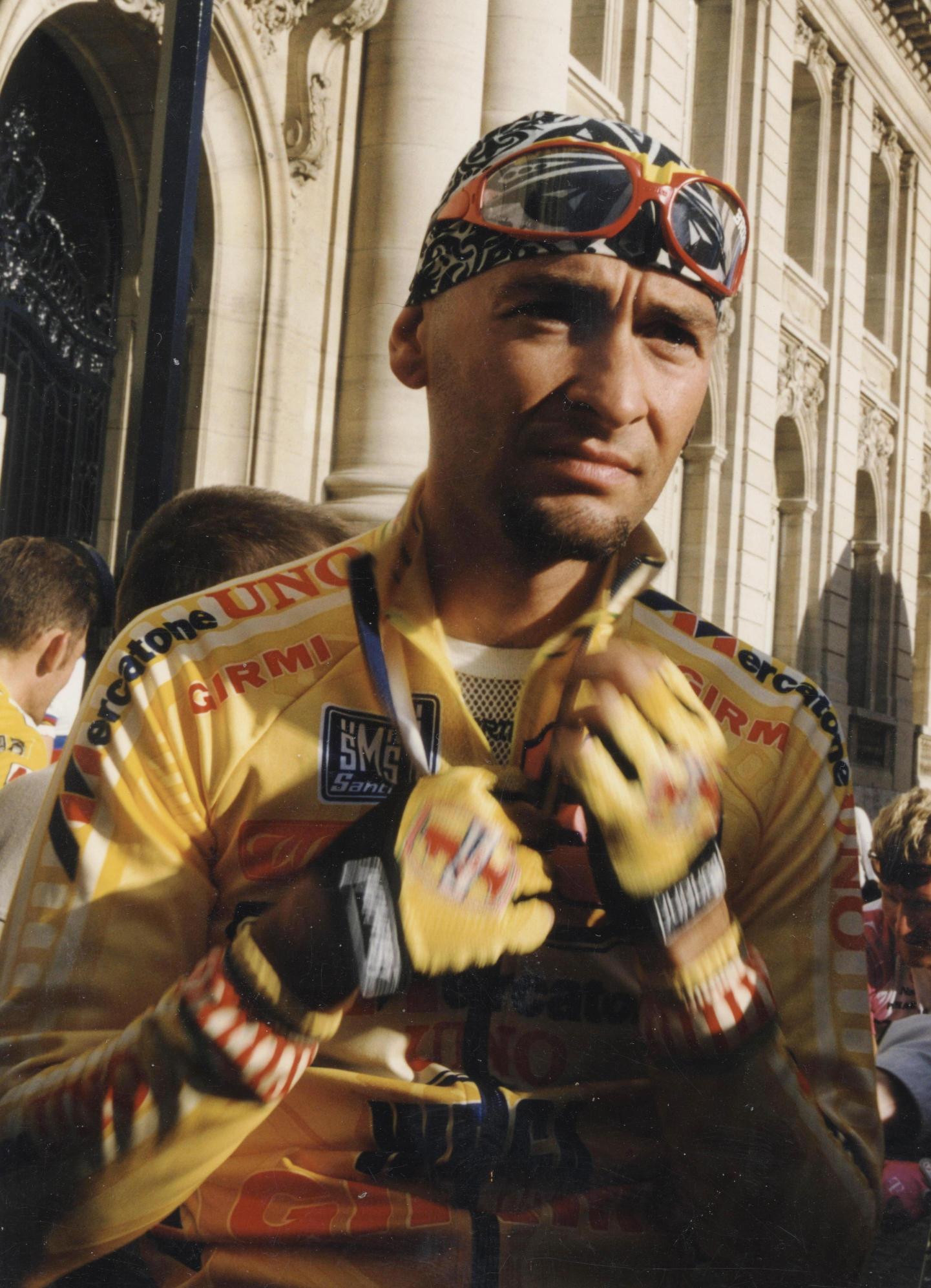
Before we look at the racing consider the unhappy anniversary that was ‘celebrated’ during the second week of this years Giro; Marco Pantani died ten years ago. If the circumstances surrounding Pantani’s death in a Rimini hotel room weren’t uncomfortable enough to remember the sense of awkwardness has been increased as todays riders and commentators have tried to walk the line between recognising his talent while acknowledging his doping.

Marco Pantani - Saint or Sinner?
Marco Pantani – Saint or Sinner?

Marco Pantani’s legacy seems to exist in an in between state, like some kind of lycra clad fallen angel. On the one hand a climber (albeit EPO fuelled) of verve and passion who, at least at the time, was the antithesis of Lance Armstrong. On the other a tragic case who struggled to cope with the literal and figurative come down of his ban (for a high hematocrit rating)  during the ’99 Giro. It might seem ghoulish to wonder how Pantani would be regarded now if he had lived, but it’s reasonable to assume he wouldn’t be venerated quite as much as he is by certain sections of cycling fans and the media. You only have to look back at last years Giro and the subsequent ban of Danilo Di Luca to see that there are no pedestals for the majority of grand tour winners who are Italian and have a chequered history of PED use.

Pantani’s death however tragic and some would argue avoidable has also provided his reputation with the kind of metaphorical cleansing that a Di Luca or Ballan would (if you will allow it) die for. Pantani remains a hero for many, particularly in his native land. Even if the organisers hadn’t pitched this years edition as a Pantani celebration the graffiti that adorns the climbs of the Giro would still have appeared. Not everyone has appreciated the retrospective however. Knowing Pantani’s past, it’s difficult to look at the footage that has been served up as an example of the rider at his best without asking “Could he have done the same thing clean?”. Certainly there are sections of fans out there that feel that Pantani isnt a rider that should be celebrated. Thus after criticism came their way after one Pantani ‘epic’ was shown, commentators had to admit that the celebration was at the very least dividing opinion.

In many ways Marco Pantani reminds VCSE of a (Paul) Gascoigne or (George) Best type figure. Undoubtably talented but how much more or less was achieved due to his substance abuse can never be known. He probably deserves his elevated status as cycling icon as much as he should be condemned as another rider who doped to win. In a Giro where it’s looking increasingly likely that a rider from the new generation will win, might the organisers reflect on the irony of 2014 being the year of Pantani.

This years race entered week two with Cadel Evans in the Maglia Rosa, closely followed by Rigoberto Uran and Rafal Majka around a minute or so further back. Stage 10 following the rest day didn’t offer much of interest for the GC but did see another win for Nacer Bouhanni who continued as the chief beneficiary of Marcel Kittel’s early exit. It was business as usual for the GC on stage 11 too, but in this Pantani year an interesting ‘doping’ (or not) vignette played out when Tinkoff Saxo’s Mick Rogers attacked off the final climb and managed to stay away for the stage win. Rogers has just returned to racing after being cleared of taking a banned substance following a positive test in last years Tour of Bejing. The story behind why Rogers left Sky at the end of 2012 for the then Saxo Bank squad is one we will leave for another day, but it was clear to see that the win meant a lot to the Australian and demonstrates that for many riders who were active in the 2000’s the act of winning has changed.

All of which took us to the individual TT and a change in the lead. Colombian riders have been known to surprise in TT’s and this year it was Uran’s turn to show he had the speed. Evans had a test to forget losing the over a minute on the stage and the GC lead to Uran. Diego Ulissi missed out on a third stage win so far in this years Giro after occupying the hot seat for much of the stage. Nairo Quintana, last years Columbian TT surprise package was further down the order and trying to shift a cold before the peloton reaching the mountains at the weekend.

After two stage wins for wild cards Bardiani, including a repeat stage win for Enrico Battaglin the peloton moved on to the Pantani stage to Montecampione. Winner here was Astana’s new team leader Fabio Aru, just going to show that being tipped for a low profile performance by this blog is the perfect ingredient for serving up a stage win. The curse of VCSE similarly struck Domenico Pozzovivo who dropped to 6th on GC after struggling on this stage and the one before. The home fans, eager to pin their hopes on someone, thus transferred the allegiance from Pozzovivo to Aru after the star performer of the previous weekend saw his form dip. Uran remained in the Maglia Rosa, but his grip seemed as unconvincing as Evans’ had done before him.

And so to today’s (Tuesday) stage. Featuring the Gavia and Stelvio passes that had proved so snow bound the previous year that the race enjoyed another (unscheduled) rest day, this year the peloton would be forced to negotiate not only these two, but a finishing climb to Val Martello, a 14% series of S bends.

The weather almost conspired to neuter the stage. The descent off the Gavia had proved difficult although (for such a injury strewn race) crash free. Snow falling at the top of the Stelvio led to confusion over a neutralised descent. What appeared to happen is that some riders wanted to race despite the conditions and did so. Notable among the hardest of the hard men (everyone was today) was Sky’s Dario Cataldo, first over the top and eschewing dry clothes and food to race away to the valley floor 25km below.

Behind Cataldo a split had developed between the Maglia Rosa group that included Evans and Pozzovivo and an elite selection that included Quintana, Pierre Rolland and Ryder Hesjedal. Quintana was always going to be the strongest climber out of this group and as Uran fell further behind and out of the race lead it was Rolland who cracked first. Hesjedal who had abandoned his decidedly retro eyewear somewhere in a Stelvio snow drift had seemed to be suffering back on the pass yet somehow managed to stay on Quintana’s wheel until almost the bitter end. For all of that, his reward was only to get back into the top 10, Rolland did better to jump from 8th to 4th at Aru’s expense.

So the lead has passed from one Columbian to another. VCSE suggested that Uran needed to prove his worth as a GC contender to his Omega Pharma team at this Giro and to an extent he has. Taking the jersey on the TT shows another side to his climbing and with another (uphill) TT to follow Uran may have another card to play. If he’s to have any chance of wresting the Maglia Rosa from Quintana however, his team need to do a much better job of protecting him. Uran is currently using too many matches trying to match the pace and tactics of his rivals who often have a rider to spare.

Evans somehow remains third and may yet stay there if he can continue to hold a wheel. This is pretty much the tactic he employed at last years race, but the suspicion has to be that he will be less succesful doing this with Quintana than he was with Uran. Uran, until today, managed to ride into the lead and keep it by riding conservatively and not losing much time. He has enough of a lead over Evans in third that suggests that a repeat of last years second place is possible if not the outright win. Quintana, over his cold, looks like the man to beat.

Third place is harder to call. There’s less than a minute between Evans in 3rd and Hesjedal in 9th. It’s easy to see Rolland, Majka or Aru having a good day or two and taking the final podium place, but for all that he has disappointed in week two Pozzovivo is well placed to strike at 3.49 in 7th place.

Tomorrow’s stage should be a bit of a rest day for the GC, but it’s followed by two mountain stages bookending the uphill ITT stage 19. We will see the final GC shake out on Saturday on Monte Zoncolan and if first and second places looked nailed on, the minor places are still wide open. But this is the Giro and the weather and the race may still have some surprises in store. The key stage may yet prove to be the TT on Friday.

And the Oscar goes to.. VCSE’s Racing Digest #31

Tour or California 2014 

Just as he said he would Bradley Wiggins won the Tour of California yesterday. Although his lead had been seconds rather than minutes a Wiggins victory hadn’t really looked in doubt after he took a convincing TT win on stage two. The expected challenger for the stage BMC’s Taylor Phinney had finished a disappointing (for him if not the race) 52 seconds down and two places down on the Team Sky rider. Second place on the day had gone to Garmin’s Rohan Dennis and it was the Australian who was expected to provide the competition for Wiggins for the GC. There’s a changing of the guard at Garmin now as some of the team’s aging roster head into retirement and new younger riders come to the fore. Dennis had gone out fairly early on the stage and set a time, but Wiggins destroyed the field and was the only rider to go sub 24 mins over the 20.1km course.

AToC 2014 winner - Bradley Wiggins
AToC 2014 winner – Bradley Wiggins

If Wiggins looked impressive over a short TT stage it wouldn’t be much of a surprise. There was a similar outcome in the last TT stage in a week long stage race he targeted; last years Tour of Britain. Confirmation of just how strong Wiggins was riding came 24 hours later as the race headed to Mount Diablo in a repeat of one of the 2013 editions summit finishes. For everyone that was saying how lean Wiggins was looking in pursuit of the GC (he reputedly lost five kilos between finishing Paris Roubaix and starting the race) there would be someone else, including pointedly BMC DS Max Sciandri, saying that Sky would struggle to support Wiggins on the climbs. On the climb of Mount Diablo Wiggins showed that he wasn’t going to need supporters, he would make the selection himself. For much of the climb on a gradient that suited him Wiggins rode off the front at high tempo shelling riders easily. Only in the final few hundred metres did he begin to lose out as riders, notably Dennis, took up the pace. Dennis took seconds out of the lead, but crucially Wiggins still held it and once the euphoria of the stage win for Dennis died down it was hard to see how Wiggins could be toppled.

Dennis, the closest of his rivals, and the others could attack the lead on stage 6 to Mountain High but if anything Wiggins was stronger at the end as he managed to gap the Garmin rider and add another couple of seconds to his advantage. With two stages left, both of which were likely to end in a bunch sprint Wiggins looked safe and indeed that proved to be the case. He won the Tour of California by less than a minute, but his margin of superiority was far greater than the time gap showed.

So, mission accomplished then. Naturally, post race questions wondered if the win would have implications for Wiggins’ plans come July. The question was inevitable, even if it was just viewed as a US interviewer aggrandising their race. The so called ‘fourth grand tour’. Wiggins answered with a straight bat; if he was going to do the Tour it would be in support of Froome. The significant part of his answer was the ‘if’. Let’s indulge in fantasy for a second and state that Wiggins looks like the rider who one the Tour in 2012 and based on that why not let him lead Sky in the Tour. From a marketing perspective this would make total sense as Wiggins is far more popular than Froome with the wider (non-cycling) audience. Only Wiggins has the reach that could push the World Cup off the back pages.

However, Team Sky management have a strategy that is centred on Froome and everything else has to take second place to that. If Froome stamps his feet and says he doesn’t want Wiggins at the Tour then Wiggins will not be selected. Shrewder heads, like erstwhile Sky insider Shane Sutton have already indictated that could be the case even though it would seem inexplicable to many. An understanding of the thinking behind a decision like this is required. Based on performances so far this year Wiggins is arguably the stronger rider of the two. But, but Sky made their choice last year. Both riders need careful handling, but Froome has the kind of single mindedness  that Wiggins can’t maintain, particularly in a team which, even if it was once, is no longer centred on him.

It will take a massive drop in form and or fitness by Froome for Sky to look again to Wiggins for the Tour as leader, even if he could be a favourite again. Everything that Sky have done so far indicates that they have bet the house on Froome to defend his title. Wiggins may yet be selected as a superdomestique for the Tour, but VCSE suspects that there will be a few more twists yet.

The Tour of California feels like there are races within the race as it always seems to manage to throw up an unusual result or two besides the GC battle and the sprint stages. This years edition was no different. In fact stages 4 and 5 provided two different outcomes that wouldn’t have been predicted ahead of the race. Stage 4 was a bit of a comedy of errors as the sprinters teams miscalculated the catch for the break and it was left to the third division US based teams to duke it out for the win. Taylor Phinney redeemed himself from the TT by soloing off the front on the final climb of stage 5 to take the win in Santa Barbara. Phinney’s only other stage win came in similar, if less relaxed, circumstances last year in Poland. He had the time to bow theatrically this time around and it’s no surprise that a win for a marquee US rider goes down very well at this race.

The leftovers were divided between Mark Cavendish and Peter Sagan. Cavendish appearing at the race for the first time in Omega Pharma Quick Step colours bookended the race with a win in the first and then the final stages. Cannondale probably breathed a huge sigh of relief that Sagan was able to take at least one stage. As good as he is, in an out and out sprint with Cavendish it’s really no contest. Cavendish’s first win has been replayed more than normal following the release of video from the on bike camera of runner up John Degenkolb. The UCI have suggested that cameras could be allowed in some races and based on the footage below it should be adopted as quickly as possible, albeit on a similar delay to the radio clips used on F1 coverage.

Giro d’Italia 2014 – week one stages 4 through 9 

One word to sum up the Giro so far; attritional. After losing Dan Martin before the first (TTT) stage had even finished, Marcel Kittel was gone as well and we weren’t even in Italy yet. The first stage on Italian soil in the far south of the country and finishing in the port city of Bari good weather might have been expected. Instead with the race visiting the area for the first time in thirty years we had rain, the difference being that this was as unusual in Bari as it was common in Ireland. Cue a pretty much neutralised stage that was eventually taken by FDJ’s Nacer Bouhanni after the Giant team, trying to win in the absence of team leader Kittel, suffered a mechanical.

With Kittel gone it’s almost worth Bouhanni staying on at the race as it’s hard to see who will offer much opposition in the sprints. Bouhanni, to use a football analogy is a Europa league rider with ambitions to join the Champions league with Cavendish, Kittel and Griepel. Now that the Giant rider has abandoned he’s facing the equivalent of the lower divisions, although it’s strange that Elia Viviani hasn’t challenged more.

That story is a bit part as far as week one of the Giro is concerned. The big story has been the decimation of the field; a combination of bad weather and accidents (caused by the bad weather) robbing the race of contenders and / or key support riders. Biggest victims of misfortune are Katusha who have lost Joaquim Rodriguez, Giampolo Caruso and Angel Vicioso. It emerged that Rodriguez had started the race with tow broken ribs, sustained during Ardennes week. Added to that a broken finger during stage 7 to Monte Cassino and J Rod was out. If that was bad news and the accident that caused Caruso to abandon looked worse during prolonged camera shots in the aftermath of the crash what happened to Vicioso is truly tragic. He has been forced to retire, not just from the race but from the sport after suffering a triple fracture of his femur on the same stage.

Orica’s Michael Matthews won the stage in the Maglia Rosa having held the lead since the race left Ireland the previous weekend. Matthews had fancied his chances the previous day, but had managed to avoid the carnage on stage 7 and get away with a select group for the climb to Cassino. The key beneficiary as far as the GC was concerned was Cadel Evans. There was some mutterings that Evans shouldn’t have pressed the advantage with so many riders effected by the crash, but wiser heads dismissed it as a racing incident. It wasn’t as if Matthews teammates weren’t impacted either; Orica lost two riders on the stage due to the crash.

Evans takes a lead of around a minute into week two. At this point in the race it’s probably not enough of a lead, particularly with the final weeks climbs to come. Evans at least has a strong rider in support inside the top 10 and this could pay dividends if the likes of Rigoberto Uran or, more likely, Nairo Quintana decides to attack. Quintana has the most time to make up, 1.45 back on Evans and if the places were reversed you would suspect that the Movistar rider would feel more comfortable defending that lead than the Australian who will suffer on the steeper climbs to come. Uran will probably fulfil a watching brief for now, although a similar attack to the one that brought his stage win in last years race could really shake up the GC. Like Evans, Uran has some strong domestiques who he can use to cover attacks if they come.

For home fans the top ten has three Italians who might well feature on the podium if not the top step. Of the three the one with the most to celebrate on todays rest day is Lampre’s Diego Ulissi who has already taken two stage wins. He’s a versatile rider and both of his wins have come from late surges in the last few hundred metres. He’s unlikely to be given the chance to attack for a breakaway win, but if he can hang with the best climbers in the next couple of weeks he might nick another win or two, even if the top prize is likely to elude him. Fabio Aru has inherited the Astana team leadership now that Michele Scarponi has lost time following the week one carnage. He’s least likely of the three in VCSE’s view. Which leaves AG2R’s Domenico Pozzovivo. Tipped in the VCSE Giro preview, Pozzovivo looked strong is yesterdays stage and put time into Evans to move within a minute and a half of the lead. What he lacks however is a really strong set of domestiques to back him and this could be the difference between a podium finish or just a stage win or two this year. Like Aru, Rafal Majka has ‘benefited’ from the demise of his team leader at Tinkoff Saxo Nico Roche. Majka currently sits third and could build on a strong performance in last years race.

The week ahead has a 42km TT and two mountain stages over the weekend. With another (uphill) TT and three more mountain stages to come it’s unlikely that this week will see the final selection as far as GC is concerned but any pretenders will be eliminated by the time the race reaches Montecampione on Sunday afternoon.

Wet, Wet, Wet – VCSE’s Racing Digest #30

Giro 2014  Stages 2 & 3 Belfast to Belfast & Armagh to Dublin

With crowds lining the route in what has been pretty much awful weather it’s fair to say that bringing the 2014 Giro d’Italia to Ireland has been a huge success. The residents of Belfast and Dublin and towns and villages elsewhere on the route were always going to get into the spirit of the event and it will be interesting to see if there’s quite as much yellow being worn as Pink when the Tour de France arrives in Yorkshire in a month or two. There was a real sense that for three days at least the Giro belonged to Ireland rather than Italy and the weather couldn’t dampen those feelings.

Whether the teams enjoyed the three stages quite as much is probably more open to debate. The stages didn’t throw up many stories and in many ways (as flat stages often are) were less than exciting. The spectators found much more to enjoy than the actual participants. The opening TTT had some human interest with Dan Martin’s cruel exit, the suspected broken collarbone now confirmed and Svein Tuft getting handed a leaders jersey for his birthday. Taking in some the most beautiful coastline in the UK along the Antrim coast it was unfortunate that the weather just made it appear so grim. The view might have given some respite had the weather been better as the racing itself was pretty flat. The peloton was content to put in the miles in return for a fresh (or in this case dry) jacket from the team car.

Marcel Kittel’s presence meant that the sprint, at least in stage two, was a forgone conclusion and the Giant rider manage to survive even the disintegration of his lead out train to win easily as the race returned to Belfast. Ninety five percent of today’s stage from Armagh to Dublin was the same sleep inducing procession as the previous day, interspersed with accidents as riders nodded off through boredom. There was much speculation about a tricky S bend on the run into the line in Dublin, but as the race approached the roads had begun to dry out in the strong winds and it was negotiated with little fuss.

The peloton had already been funnelled onto a narrower section of a couple of kilometres earlier and by the time they went through 1k to go were very strung out. Kittel on his own at this point was some way back from Sky’s Ben Swift and Cannondale’s Elia Viviani. Swift, who had recovered his place at the head of the race was led out by Edvalt Boasson Hagen and right up to the line you would have thought he had won it. But in a superhuman effort it was Kittel who nicked the win by no more that a wheel. The big German collapsed afterwards demonstrating just how much he had put into the effort to overhaul Swift who finished a disappointed but worthy second.

The teams now go into a rest day as the Giro transfers down to southern Italy. Assuming Michele Scarponi is injured from his accident today, the race could have shrunk its group contenders already with Martin already out. The teams and riders will be hoping that no one has picked up a bug from three days of riding in almost continuous rain. There aren’t many conclusions to be drawn from the Irish stages. That Orica Green Edge are great TTT riders is hardly news any more than Marcel Kittel is the worlds fastest sprinter in the world right now. Of the world tour teams those with the least ambition look like Belkin and Lotto who have stuck riders in the breakaways on both days.

The peloton may not look back on the Irish stages of this years Giro with much fondness (almost entirely due to the weather) but for the fans at the roadside the memories will linger on and hopefully inspire a new generation of Kelly’s and Roche’s.

Tour of California 

The Tour of California gets underway later tonight (UK time) with a stage starting and finishing in the state capital of Sacremento. The big story from the race is Sky’s entry. It’s a mixture of marketing for team and rider with Sky now sponsored by another News Corp company 21st Century Fox and Bradley Wiggins, who is now represented by agent to the stars Simon Fuller. The logic of the teams appearance in a marketplace so important for one of their title sponsors make sense, what isn’t so clear is whether or not Wiggins is the kind of character that American fans will take to their hearts. The possibility that Wiggins will make it big in the US is a question to be answered another day. Right now we have the rider’s stated aim of winning the GC over the course of eight stages that will follow the ToC’s traditional north to south trajectory after last years ‘experiment’ with a south to north parcours.

The north to south route has often seen the early stages run in the sort of weather that the 2014 Giro Peloton has ‘enjoyed’ in Ireland and this was part of the motivation for the switch to a southern start in the ToC last year. The law of unintended consequences as far as the route change was concerned was that the early stages saw riders suffering dehydration and heat stroke with some of the rouleurs who had spent the previous weeks in the wind and rain of northern France and Flanders collapsing in the intense heat of the Californian desert. North, south or south to north is of less concern to Wiggins than stage two’s TT around Folsom a town whose previous and let’s be honest greater claim to fame is for its prison immortalised in the Johnny Cash live recording. The TT is short at 20km, but this isn’t much more than the archetypal 10 miles distance used for most club TT’s and will be a distance that Wiggin’s should be comfortable with. The bigger question in terms of his GC ambitions will be whether or not he can eke out enough of an advantage (assuming he actually wins the stage) to be defended for the remainder of the race. Sky have selected a squad that draws heavily on its US riders and it does look a little light on riders who will set the kind of pace over the climbs that feature later in the race that will be essential for a Wiggins win.

The Sky / Wiggins appearance continues a trend seen before in the ToC which see’s riders integral to the marketing of bikes in the US making an appearance. Jens Voigt, a stage winner last year. is a case in point and continues his ‘farewell tour’ in the US. home of his bike sponsor Trek. The other marquee name worth mentioning is Peter Sagan. Sagan often has the sprints in the US as a bit of a benefit, but Omega Pharma Quick Step have bought Mark Cavendish and Tom Boonen this year, so Sagan won’t have things quite his own way in 2014 VCSE suspects. Keep an eye out also for young British rider Tao Geoghegan Hart who’s racing in the US this year and is likely to feature in at least one of the breakaways.

Women’s Tour 

Winner of the Women's Tour - Marianne Vos
Winner of the Women’s Tour – Marianne Vos

 Some might say that the rise in popularity in cycling in the UK has been driven by the success of the aforementioned Sky and Wiggins. Actually the growth in popularity has been as much if not more so because the successes have crossed the gender barrier and riders like Lizzie Armitstead and Laura Trott are as popular as the mod knight of the realm. Announced last year by Tour of Britain organisers Sweetspot the maiden Women’s Tour has been run around the east of England this week and has attracted the cream of the women’s peloton including Marianne Vos and Emma Johansson.

It goes without saying that the chances of running an event for the first time, where the take up and interest from new fans will be so important to its ongoing success, needs good weather. Typically, as this is the UK it’s rained and when it hasn’t rained it’s been windy. The positive news is that this doesn’t seem to have dampened the spirits of the riders or, more importantly, the crowds who have turned out along the entire route to provide scenes that the women’s peloton aren’t always used to. Whether these same crowds will turn out again next year remains to be seen, but with a stage of the Tour coming through Cambridgeshire and Essex in July the locals are getting their fair share of professional road cycling this summer.

In trying to create a narrative to the race the organisers and media had attempted to talk up the race as face off between Vos and Armitstead. There was a grain of truth in this as Armitstead has enjoyed a successful start to the year with a win in the opening round of the women’s world cup, backed up by a series of podium places in the following rounds. With Vos only returning to the world cup at Fleche Wallone, Armitstead leads the world cup standings and from this the supposed rivalry with Vos emerged. The fantastically matter of fact Armitstead nipped this in the bud ahead of the first stage but the opening couple of stages did provide flashes of how much she has improved this year. Vos looked as if she was trying (and failing) to beat Armitstead in the intermediate sprints but the evidence of the final three stages would suggest she was just riding herself in.

After Johansson took the opening stage, we were treated to a breakaway win from Rossella Ratto in stage two, the peloton getting a bit huffy with one another over who should be putting in an effort to catch Ratto. From then on Vos took over taking the next three stages and the overall comfortably. No doubt the supposed Armitstead / Vos rivalry was swept under the carpet at the end of the race; Armitstead didn’t even start the final stage. There was good news for British riders with two of the next generation of women Hannah Barnes and Lucy Garner finishing in the top 10, less than a minute down on Vos in the final standings.

Whether or not the Women’s Tour is judged to be a success depends less on the crowds who turned out to what was a free event than the commercial success of the race. The title sponsor Friends Life was a late signatory and the some of the sponsors, familiar from the Tour or Britain, suggested that the organisers had been going around with the begging bowl to an extent. Getting a global brand like Strava involved was a bit a coup though. Is it the right thing to hold the Women’s Tour as a race in its own right as opposed to piggy backing the women’s event on to the Tour of Britain. This seems to work successfully at the Tour of Flanders and Fleche Wallone and there are some women in the peloton who want to race on a level playing field with the men. That the race exists is a good thing, but like the Tour of Britain itself has grown from its latest incarnation of ten years ago, The Women’s Tour needs to evolve.

The Panda’s Revenge – VCSE’s Racing Digest #29

Ardennes Classics 

Interesting that Amstel Gold was moved to the Sunday this year. Pressure from the sponsors maybe? It can’t help any race in search of an audience to be shunted into a weekday spot and weekends have to be the way to go. And before we go any further; confession time. Your correspondent didn’t manage to see the race live. Providing a decent summary of what happened was further compounded by a very short highlights slot later in the day on Eurosport that was basically the last 15km. Hardly a problem with Amstel Gold and while we’re on this subject Fleche Wallone as the races are pretty much decided on their final ascents of their signature climbs.

LBL 2014 winner - Simon Gerrans
LBL 2014 winner – Simon Gerrans

The organisers have tried to make Amstel a bit more interesting by shifting the finish line a little further up the road from the crest (you can hardly call it a summit) of the Cauberg, but with no breaks allowed to remain from earlier in the race and no one able to get off the front towards the end the race was effectlively decided in the final couple of kilometres. The was still a pretty decent sized peloton that sped down into Valkenberg and onto the Cauberg for the final time. The Cauberg is pretty much owned by Phillipe Gilbert with his previous Amstel wins and 2012 world championship and although he (still) doesn’t hold the record for most Amstel victories there isn’t a single Ardennes preview that won’t give him a mention as a potential winner.

Chief rival this year was the rider everyone loves to hate Alejandro Valverde who had stated his aim to challenge for all three races. Let’s consider this for a moment; three hard one day races in the space of seven days and Valverde is unrepentant (as he is in so many ways) that he’s going to go for the win in all three! Almost a week after the races took place and the facts are that the Movistar rider was as good as his word and he was a feature at all three. Whether or not this was the result of fantastic preparation or fantastic “preparation” remains a bit of a mystery but the facts are (for now) that for the 2014 Ardennes Classics Alejandro Valverde came away with a first, a second and a fourth.

He was beaten in Amstel by Gilbert who knows better than anyone else ‘when to go’ on the Cauberg. The feint from new for 2014 BMC teammate Sammy Sanchez may have taken the sting out of an attack by any of his rivals, but in shades of his world champs win Gilbert attacked, went clear and looked comfortable by the end of the race.

Missing at the mid week Fleche Wallone but on the podium at Amstel was Orica’s Simon Gerrans, perhaps unnoticed at the time but a portent of the Aussie national champs ability to be in the right place at the right time in a one day race. Another rider showing form ahead of the weeks headline race and one day ‘monument’ was 2013 Liege Bastogne Liege winner Dan Martin. Martin looked like he might have snatched the win in Fleche Wallone after steeing a path through his rivals up the Mur du Huy for the last time. Omega Pharma Quick Step’s Michael Kwiatowski who joined Martin on the podium looked a reasonable bet as the riders weaved up the Mur’s 19% ramp but the disappointment was all over the Poles face as Valverde skipped by talking on his mobile and eating an ice cream (OK I lied about that bit, but you get what I mean). Valverde demonstrated he’s a man without irony when he couldn’t understand why a section of the crowd booed as he took the victory garlands.

And so to LBL. Martin who famously won the race the year before chased by an inebriated steel worked in a Panda costume (spawning a bizarre marketing tie in for Garmin) looked as if he was catching the late breaking juniors race otherwise known as Domenico Pozzovivo and Giampolo Caruso. As he turned the final corner though Martin was down. OK, there wasn’t a Panda nearby, but even that sounds more plausible than the suggestion that Martin lost his wheel due to someone leaving a pen in the road. This left fans in Birmingham and Ireland cheering for ABV (anyone but Valverde). The juniors were spent, but Gerrans popped up to save the crowd (who were probably at least as lubricated as the Amstel lot) having to boo and hiss at Valverde.

An interesting aside (can’t remember who tweeted it) was that Gerrans didn’t win a thing in two years with Sky. This is possibly mischief making at the expense of both Orica and Sky, but VCSE would interpret the comment as a dig at Sky’s inabilty to make data mining work as strategy and tactics for a one day race. Sky fielded a reduced team at Fleche Wallone and didn’t have a single rider in the top 40 at LBL. Ian Stannard’s win in Het Nieuwsblad now confirmed as another false dawn for the team as far as the classics go (not withstanding strong rides from Geraint Thomas and Bradley Wiggins in Flanders and Roubaix). Orica haven’t had the best of time in the classics this year, but of the two teams you suspect they will feel happier with their return of three monuments for Sky’s bust over the same period.

Tour of Turkey

A race that was really enjoyable last year and then marred by the revelations that GC winner Mustafa Sayer had doped his way to victory. The Torku squad had been dogged by doping issues the previous year as well and were apparently only invited to this years race by agreeing to have all of their riders tested every day (something like that anyway).

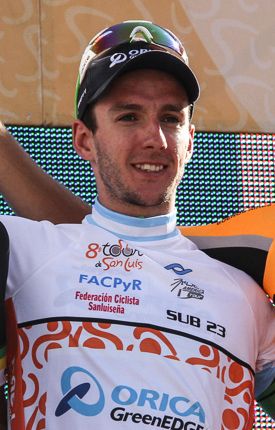
Adam Yates - Top prospect
Adam Yates – Top prospect

So the race is a couple of stages that feature summit finishes bookended by sprint stages. Mark Cavendish had turned up with pretty much an A team of lead out men including Petacchi, Renshaw and Steegmans. Andre Greipel was back again, albeit to act as some kind of sprinting Yoda to his Lotto teammates while he still recovers from his seperated shoulder injury. With Marcel Kittel missing as he preferred to ride in the rain in Yorkshire it looked like the sprint stages would be a Cavendish benefit.

It looked as if Cav had messed things up on stage one, but he popped up at the end to take the win, before winning straightforwardly on stage two. A further win after the queen stage to Elmali came Cav’s way before things came unstuck and he was beaten not once, but twice by Cannondale’s Elia Viviani. No disrespect to Viviani, but even he looked surprised to have beaten Cavendish who tweeted after his second loss that he had even managed to lose his Garmin. With the final stage, another sprint finish, still to come there’s the enticing possibilty of Viviani levelling the win tally at 3-3 assuming Cavendish doesn’t decide to reassert his authority. It’s not the easiest of finishes in Istanbul so Cav will need his train to keep him out of trouble if he’s to secure victory.

Perhaps of greater interest is Kittel going to Yorkshire. It’s a pretty pointed reference to Cavendish that he can’t expect any favours from Kittel if he’s going to take a yellow jersey this (or any other) year. Kittel is setting out his priorities really  clearly and there’s obviously a determination to unseat Cavendish from his ‘king of the sprinters’ throne. Cavendish is by no means busted as far as winning races is concerned but its beginning to look like a new generation is taking over where the really big races are concerned. Maybe the losses this week are down to looking over his shoulder at what the man who wants his crown is doing.

The other big story out of Turkey is Adam Yates. Capping a successful start to the week with Gerrans Orica have Yates in the leaders jersey in Turkey after a second in stage 3 and a win on Fridays stage to the summit finish at Selcuk. With only a sprint stage left Yates should be safe for the overall and this would represent a massive win for the British rider in his rookie year. He reminds VCSE of a Richie Porte or Joaquim Rodriguez is style and stature and he could prove to be a massive signing for Orica as far as GC ambitions go. After the teams strong showing at last years Tour it’s possible that we could see Yates targeting at least one of the stages for a win this year.

Tour de Romandie

Obviously we can’t watch this one so look for insight elsewhere! Chris Froome is a second down on Katusha’s Simon Spilak. It’s entirely possible that Froome will overhaul Spilak on tomorrrows final stage, but then again he might not. Sky’s preparation for domination at this years Tour is looking somewhat wonky so far and without an out and out leader for the Giro and the disdain with which they normally treat the Vuelta this could be a year where they actually don’t have to field US Postal style doping questions. OK, we’re ignoring Tiernan-Locke and Henao here, but you know what I mean!

The VCSE view is that anything that means we have a more animated Tour in 2014 is a good thing, whether that’s teams working out how to counter the Sky high tempo approach or stages over the Paris Roubaix route.

Now that the dust has settled – VCSE’s Racing Digest #28

Paris Roubaix 2014

That Omega Pharma Quick Step have been the team of this years cobbled classics would not have been disputed ahead of last Sunday’s Paris Roubaix. Sure the Belgian outfit had celebrated a couple of individual wins for Tom Boonen and Niki Terpstra respectively in Kuurne Brussels Kuurne and Dwars door Vlaanderen but the most noticeable aspect of the team’s performance had been their ability to get numbers into the final selections in each of the races. Besides Boonen and Terpstra, riders like Stijn Vandenbergh, Zdenek Stybar, Three days of De Panne winner Guillaume Van Kiersbulck and Matteo Trentin had all been part of the action as races entered the final kilometres. The problem was that strength in numbers hadn’t delivered a result in the races that mattered and often it looked like having more than one rider capable of winning was creating confusion among riders and in the team car about who to back for the win.

Niki Terpstra - 2014 Paris Roubaix winner
Niki Terpstra – 2014 Paris Roubaix winner

Through no fault of his own Tom Boonen hasn’t been able to turn his form from February when he took KBK into further wins. It seems unfair to speculate how much of an impact his girlfriends miscarriage had on his racing, after all Boonen would be forgiven if he chosen to withdraw from more than one event under the circumstances. In Flanders and at E3, he didn’t look like he had the legs to challenge his greatest rival Fabian Cancellara leaving the team wondering which horse to back from Boonen’s many lieutenants. VCSE covered in previous posts, but the facts are that the QPQS strategy of backing Boonen, meant that the team appeared unable to think tactically when he faded and other riders should have been given the chance to go for the win. One trick pony Vandenbergh was always going to be an outside bet for the win in Flanders, but given the nod to go at E3, it’s entirely possible Terpstra could have nicked the win.

Of course, Terpstra would take missing out on the semi-classic as he’s now the proud owner of one of the weirdest trophy’s in any sport; the Paris Roubaix cobble (the weirdness continues as the PR winner also gets his name recorded for posterity on a shower cubicle in the velodrome). Boonen had talked about giving a teammate the opportunity to go for the win, even of setting someone else up if he wasn’t well placed on Sunday. The likelihood is that by the time Terpstra attacked with less than 10k to go, Boonen’s legs had gone.

He had attacked early, further out than even his 50k plus solo break in 2012. Watching Boonen was seeing a rider who seemed to know where every cobble lay, every gully that could be followed to avoid the bone shaking pave or to eke out some more speed. He was able to get across to a starry group that included Sky’s Geraint Thomas and later BMC’s Thor Hushovd, but what he couldn’t do was get them to work with him. With the gap to the peloton hovering around the 30 second mark Boonen spent his time between the cobbled sectors either caning it on the front of the break or shouting and gesticulating at his companions to take a turn. It’s hard to imagine a scenario in which riders on any of the other teams would work for a four-time winner of this monument, but Boonen’s vain attempts for some collective effort from the breakaway were not helped by the presence of riders from BMC (Hushovd) and Belkin who were riding for Taylor Phinney and Sep Vanmarcke.

While all of this was going on Fabian Cancellara had survived a near miss with a falling teammate and was lurking within the chasing group. He was happy to let first BMC and then Belkin make the running to try to catch group Boonen and didn’t appear to engage anything like top gear until Vanmarcke decided to bridge. Boonen who had stretched the gap to 50 seconds at one point, now saw it plummet until eventually the break was caught. If Boonen and co had still been ahead when they reached Carrefour de l’arbe it’s possible we could have been looking at the first rider to win five Paris Roubaix and possibly the greatest ever.

With such a stellar selection to contest the final stages it was still an outside possibility that Boonen might win at this stage, but with Cancellara now in the lead group there was also a sense that he would find a change of pace and go. When Boonen’s act had played out we had also seen a little cameo from Peter Sagan. Great rider that he undoubtedly is Sagan doesn’t seem at home in Paris Roubaix and his attack never seemed that determined. The rider that left you feeling “could he?” was Bradley Wiggins. Much had been made of Wiggins riding Paris Roubaix and he hadn’t exactly disgraced himself at Flanders the week before. At one stage he even led the race. Yes, you read it here (assuming you didn’t watch it!) Bradley Wiggins led Paris Roubaix. Let’s be clear the Wiggins that showed up on Sunday isn’t the grand tour winner of 2012, but he’s the first grand tour winner of any stripe to have ridden the cobbles for over twenty years. Outside of Terpstra’s win, Wiggins was the ride of the day.

Terpstra’s winning break had something of the Cancellara’s about it; a sudden injection of pace, the extra gear that no one can quite match. While everyone else was going “No, after you” Terpstra was gone. Wiggins and Thomas (yeh, he was still there) had a bit of a chat and based on Wiggins post race comments about “..having the legs” maybe it was Thomas who felt he couldn’t do much more. Rather like what might have happened with Boonen, VCSE can’t help thinking about what might have been if Wiggins and Thomas had gone into pursuit mode and chased Terpstra down. As it was the gap was soon too big and Terpstra was able to enjoy his lap of the velodrome before falling into the arms of his doris once he crossed the line.

The win will put some gloss on OMQS classics season and in Terpstra there’s the potential for a successor to Boonen as their go to man in the classics. Can Boonen win a fifth Paris Roubaix (or even a fourth Flanders?)? VCSE thinks probably not, even though we would love it if he did. He will be 35 next year and while Cancellara has been there or thereabouts himself this year, a second successive Flanders win masks a significantly less successful year than last. This is likely to mean a stronger Cancellara challenge in 2015 and with riders like Vanmarcke improving all the time it’s likely that Boonen’s days as the unofficial King of Flanders are numbered.

Vuelta a Pais Vasco 

A couple of lines from our favourite stage race of last year. This year’s Tour of the Basque country was held in relatively fine weather and perhaps this made for a less exciting race. The GC contest was pretty much settled on day one as Alberto Contador sailed up the least likely cat 2 climb on this years world tour to take a 14 second lead over Alejandro Valverde. The line up for the race had suggested that the GC would be more widely contested but with Carlos Betancur withdrawing after stage one the attrition rate took place each morning rather than on any of the climbs as one by one the GC boys packed their bags. Contador looked as good as he did in Tirreno Adriatico in that he delivered one spectacular ride and was then unspectacular in holding onto his lead. Valverde was marked tightly by Contador’s Tinkoff teammates and you felt that he was never going to beat his compatriot in the contest that mattered.

Omega Pharma had a great week with two stage wins for Tony Martin and one for Wout Poels. The first of Martin’s wins was a watered down version of his all day solo breakaway at last years Vuelta except here he went one better and actually one the stage. Martin’s winning margin in his specialist event wasn’t anything like as convincing but unlike Rui Costa, Martin has broken the curse on his rainbow jersey.

Unlikeliest win of the week came from Sky’s Ben Swift who showed a hitherto unknown capacity for climbs to win the penultimate stage. Take a look at the top 10 for the day and the complete absence of sprinters demonstrates the parcours that Swift needed to negotiate to take the win. The irony that Swift could win the stage ahead of so many GC riders is that in all likelihood if the stage had come down to a bunch sprint among sprinters he would probably finished top 10 at best (Swift was fourth in stage 3’s bunch sprint). After a fine showing in Milan San Remo, Swift might be an outside contender for one of the Ardennes classics, although it’s hard to imagine him sprinting up the Mur de Huy somehow. Perhaps the emergence of Swift as a classics option might see Sky finally pull the plug on poor old Edvald Boasson Hagen who continues to serve up poor performances in the races where he is a supposed ‘protected’ rider.

Froome’s ‘Lance’ moment

And so we inevitably turn to Sky. Chris Froome chose to ignore Ron Burgandy’s advice to “Stay classy” on Sunday by posting a picture from his training ride on Tenerife. OK, so it’s possible that Froome ‘dog’ still lets his missus post on his behalf but nothing says I don’t give a toss about what my teammates are doing right now in northern France than a picture of a snowcapped mountain and the admission that you have spent your day on a long training ride. This is the kind of self awareness that Lance Armstrong showed when he posted his Tour jersey photo after USADA and suggests that its Froome who had the problem with Wiggins before Wiggins had a problem with Froome. If there are teams within this team, VCSE is in team Wiggins.

In other news, Sir Dave Brailsford has stepped down from British Cycling to concentrate full time on Sky. Whether or not this is good news for Team GB and the track cycling unit remains to be seen (say in 2016) but it’s likely to mean good news for Sky. There isn’t any sign of the wheels coming off the Sky juggernaut yet, but this year hasn’t been particularly overwhelming either with Froome’s repeat win in Oman they only major success. For one reason or another Sky haven’t been the team riding on the front in stage races and while the classics outfit has enjoyed more success than last year, they’re still to land a major one day success. Brailsford bringing his laser focus full time to Sky is likely to bring fresh successes, but don’t be surprised to see the team winning races differently to the methods employed in 2012 and 2013.

Swiss roll over – VCSE’s Racing Digest #27

Tour of Flanders 2014

“I’ve got this.. I’ve got this..” or words to that effect was Sep Vanmarcke’s message to his team car as he approached the finish line after 250 kilometres of racing at the Ronde. “No I haven’t” is what he should have said after he crossed the line in third place to Fabian Cancellara (OK, let’s be honest it was probably some Franco / Belge expletives).

Can I win Roubaix too? - Fabian Cancellara
Can I win Roubaix too? – Fabian Cancellara

Vanmarcke wasn’t the only one kicking himself. BMC’s Greg van Avermaet had gone away late on and it felt like he could go one better than his Het Nieuwsblad 2nd place from earlier in the year. This years Ronde came down to a sprint of the track variety (missing only track stands) and it was 2013 winner Cancellara who out foxed his rivals. A week away from Paris Roubaix his rivals must be wondering what they can do to deny Cancellara another win in next weeks race. Whether or not you think Spartacus possesses a sprint, the fact is Vanmarcke and van Avermaet (in particular) are decent quick men. Stijn Vandenbergh, an analogue rider against digital rivals recognised that in a four way sprint he would be favourite for fourth place and attacked first. Indicative of his place as Tom Boonen’s bag carrier, Vandenbergh gave up almost as soon as he started, sacrificing a lead that looked as if it could stick, as a lack confidence manifested itself immediately. Vandenbergh’s bid to escape might have lacked conviction but it looked most likely to succeed. Instead as the final few hundred metres disappeared beneath their wheels it was Cancellara who got the drop on the other three. Unlike last year, this wasn’t a victory to savour in the final kilometre’s Cancellara had to work for this one and the emotions weren’t released until he crossed the line and began punching the air.

Vanmarcke and van Avermaet rolled over in second and third and in disbelief; “what just happened”. The result is potential hex on both riders, experiencing another loss snatched from the jaws of victory. The positives are that both riders (and in fairness Vandenbergh too) have been consistent performers in the classics so far this year, but the fact is that this was a race both men could have won. It cannot be disputed either that Cancellara is the srongest rider in the classics right now and in the monuments when it really counts. It’s hard to see who’s going to beat him this year and Trek must feel vindicated in pulling out all of the stops to deny Sky taking him on last year when Radioshack finished as headline sponsor.

Having the numbers when the selection had taken place was no advantage for Omega Pharma Quick Step. The problem for QPQS was tactical. By the time it was clear that Tom Boonen was coming up short again, they lacked a rider who could take up the challenge of beating Cancellara. Boonen’s heavyweight shadow Vandenbergh had been sent up the road to cover van Avermaet’s late break, but as is so often the case he lacks the speed and guile to carve out a win for himself. Boonen, chasing a fourth Ronde victory may have believed until the last and that might be why the in form Niki Terpstra was released too late to catch the leading four.

Boonen wasn’t the only pre-race favourite who popped. Peter Sagan looked like he wished that the race distance had been about 50km less and was unable to go with Cancellara when the Trek team leader attacked. Given the choice Sagan would swap his E3 victory and the win that almost wasn’t in stage 1 of the Three Days of De Panne for a win in the Ronde. At 24 he can potentially be a classics contender for another ten years, but it seems that Sagan is subdued by the pressure to deliver a monument win. At least he will have a week to recover ahead of Paris Roubaix; the De Panne stage win looks extremely poor value if it was this that left Sagan without legs today.

This years edition was a bit of a crashfest with accidents ranging from the typical for a cobbled classic to the bizarre, such as Trek’s Yaroslav Popovych getting unseated by a female spectator’s handbag. His teammate Stijn Devolder who had proved so valuable to Cancellara at E3 seemed to only feature on camera immediately after another mishap in an accident prone afternoon for the Belgian champion.

And so to your VCSE predictions. We tipped Cancellara and Vanmarcke in the our last post (http://tinyurl.com/pvkebup) and predicted that OPQS would be the strongest team. Geraint Thomas was an unlikely podium for Sky, but he was their best finisher in 8th place. Can we keep it up for Paris Roubaix next week? If you want to find out, follow the blog! Here’s a thought though; late entry to the Ronde Bradley Wiggins finished in 32nd place. Can he go better in the ‘hell of the north’ next Sunday?

Your world cup leader is..

Great to see Lizzie Armitstead leading the points table in the women’s World Cup. She finished second to Bols Dolmans teammate Ellen van Djik in the women’s Tour or Flanders today after winning the opening round at the Ronde van Drenthe. It’s been a great week for Lizzie as she signed a contract extension to 2016 with her Boels Dolmans team.

Tour of the Basque Country

Starts tomorrow! Last year’s edition was one of the highlights of the 2013 season with biblical rain and some outstanding rides from eventual winner Nairo Quintana and KOM Caja Rural’s Amets Txurruka. Quintana is missing this year; Movistar will be led by Alejandro Valverde. Ag2R have a potential double team in Jean-Christophe Peraud and Carlos Betancur to match up against previous grand tour winners Cadel Evans, Ryder Hesjedal and Alberto Contador. There’s a strong Basque presence including (interestingly) Sky led by in form Mikel Nieve in the absence of Froome or Porte in what’s often seen as an important tune up for the Giro. With Quintana absent too, we shouldn’t read too much into this, but the race could be an opportunity for one of Sky’s new GC orientated signings (Phil Deignan is racing too) to raise themselves up the pecking order on the death star.

Who’s going to run the Ronde? – VCSE’s Racing Digest #26

E3 Harelbeke / Gent Wevelgem 

Fabian Cancellara looked pretty unhappy with second place at Milan San Remo and he was probably just as miffed at the two fingers held up to him by the peloton while defending his E3 title last Friday. Cancellara had ridden pretty much side by side with Tom Boonen for much of the race before an incident saw him get gapped by the leading group of riders.

Can he beat Spartacus? - Peter Sagan
Can he beat Spartacus? – Peter Sagan

OK, so not winning MSR counts as a failure if you’re in the first rank of classics specialists, but for anyone else second place in the longest one day classic would be something to celebrate (ask Ben Swift how he feels about finishing third!). Cancellara rolled in at E3 inside the top 10, over a minute down on winner Peter Sagan, but the way that he tore up the field trying to get back in touch with the leaders was incredible even for a rider like Spartacus. After passing through the middle of some groups as if they were going backwards, Cancellara eventually came across a teammate Stijn Devolder who put in his own monster turn to try and get his team leader back in the game.

Up the road were two Omega Pharma riders; the in form Niki Terpstra and Stiyn Vandenbergh, Sky’s Geraint Thomas and Sagan. Terpstra was on and off his radio like an anxious mum waiting for her teenage son to come home. Boonen, no doubt out of sorts owing to the terrible news of his girlfriend miscarrying had lost touch and was slipping out of contention. Or was he? At one point Cancellara and Devolder had cajoled the chasers into life and got within 40 seconds of the leading four, but Boonen seemed to be a spent force.

While the OPQS boys were told to hurry up and wait, Sagan was doing his own Cancellara impression judging by the gesticulations he was making to his fellow escapee’s. As Cancellara often wonders, Sagan couldn’t see why Thomas, Terpstra and Vandenbergh weren’t riding with, if not for him. Obviously there was an advantage for Thomas (and the two Omega Pharma teammates depending on the message they were currently getting from their team car) to stay away, but if it came to a bunch sprint there was only ever going to be one winner. Terpstra and Vandenbergh were undone by the conflicting messages and perhaps the Dutchman by his win earlier in the week. Thomas didn’t have that excuse to use and if he had anything in the tank as the race entered the final kilometres surely he should have attempted a break of his own, rather than covering the ones tried by Terpstra and Vandenbergh. Surely he didn’t think he could take Sagan in a sprint to the line? Whatever he did think, the outcome was always going to be a Sagan win.

You might think that winning on Friday would have given the Cannondale rider a hall pass for Sunday’s Gent Wevelgem, the race he won in convincing fashion last year with the famous wheelie over the line followed by the infamous bottom pinching incident a week later at the Ronde. OK, so Sagan didn’t win, but third place isn’t to shabby (ask Ben Swift how he feels about third place again). The race was won by Giant Shimano’s John Degenkolb who had been much fancied for MSR. Its tempting to wonder if Degenkolb was feeling the possibility of getting usurped by yet another product of the Giant sprint programme who was winning for fun in Catalunya. Second went to VCSE MSR tip Arnaud Demare; the race being something of a sprinters classic after all.

So ahead of this weekends Tour of Flanders who’s likely to figure and who’s likely to win? Let’s deal with the contenders first. The best team will be Omega Pharma. Boonen doesn’t look his best, but Terpstra and the rest of the supporting cast look super strong. They will have riders at the front with or without Boonen, but if Boonen does falter they will need to think a lot faster to get the win. A good each way would be Sep Vanmarcke who’s been in touch in a lot of the races and has a couple of top 10’s in E3 and Gent going into the race. Sky won’t be anywhere, unless Thomas can deliver an unlikely podium. It’s not really a race for Ian Stannard who’s also injured after a crash at Gent.

Which leaves us Sagan and Cancellara. If Cancellara hadn’t been held up at E3 VCSE suspects he would have rode away from the field in a repeat of last years race. It’s hard to imaging Cancellara would have waited for Sagan if he had been in the group of four last Friday. This isn’t to say Sagan’s not strong. A win and third place in three days is a great performance by any standard, but for all of his ability to read a race and to ride unsupported he needs a sprint to win. Cancellara won’t give him that opportunity on Sunday.

Volta a Catalunya / Criterium International

So Giant have yet another sprint talent in their ranks to go with Marcel Kittel and John Degenkolb. Luka Mezgec took three out of the seven stages available, albeit against a second / third rank of sprinters in Catalunya. The race had promised much with top BC talent lining up including Froome, Contador and Rodriguez.

Froome had missed Tirreno Adriatico with back problems so this was his first race since defending his Tour of Oman title back in February. Stage 3 was the first mountain stage and the winner was Rodriguez with a trademark late dig to outdistance his rivals and take the race lead overall. Froome had attempted to ride away himself but was soon caught and then overhauled by Purito, Contador, Nairo Quintana and perhaps the biggest surprise Tejay Van Garderen.

Van Garderen was the winner the following day in the weather effected (at least if you were trying to watch it on TV) stage to Vallter 2000 (why do they give ski resorts names like this?). Froome slipped further down the GC to 7th and by the time the race had ended  with a final rain swept stage in Barcelona was off the GC table altogether.

Contador looked like his mission was to strike a psychological blow to Froome. He let Rodriguez go once he had overhauled Froome on stage 3 and didn’t really try that hard to snatch the GC despite only having a few seconds gap between him and the leader for the remainder of the race. Does this tell us much about the likely fortunes of the contenders for the grand tours? Possibly not, although Sky have tended to want to exert a vice like grip on the races they enter their Tour de France team leaders in over the last few years. Despite this mishap, it should be remembered that Froome looked the class of the field in Oman and lost his key lieutenant Richie Porte early on to illness here. If Froome is vulnerable, if Contador is back on form, if Van Garderen is clear team leader at the Tour then 2014 won’t go entirely Sky’s way. At this point, however, Froome probably remains the man to beat.

Weight of expectation also seems to be taking its toll on Quintana who hasn’t looked good in his last two outings. He won the Pais Vasco last year and it will be interesting to see how he fares in the remainder of his preparation races for the Giro. Porte is Sky’s nominated team leader in Italy and he’s lacking in form and fitness. With the favourites running out of time to get in shape it could play into the hands of someone like Rigoberto Uran or Michele Scarponi for the honours this time around in the fight for pink.

Sky were absent from the Criterium International this year with Froome electing to ride in Catalunya instead. The race had a resultant French feel and French winner in the unluckiest rider from last years Tour Jean-Christophe Peraud. Peraud along with Pierre Rolland, Thibaut Pinot and Warren Barguil in Catalunya look in good form this year and this bodes well for an improvement in French fortunes at their grand tour in July.


Swift Returns – VCSE’s Racing Digest #25

Milan San Remo 2014

In exchange for a perfect ribbon of smooth tarmac it’s probable that residents living alongside the Poggio, the final climb of the Milan San Remo route, can leave with the inconvenience of the race one day in early spring each year. The road is deserving of it’s pristine status as it by the time reaches it’s summit with 6 kilometres to go the race is either won or about to be.

Winner MSR 2014 - Alexander Kristoff
Winner MSR 2014 – Alexander Kristoff

This is, depending on your point of view, the beauty or the problem with Milan San Remo. The longest classic at almost 300km in length and with a largely benign profile it’s the ‘monument’ that is seen as offering the best chance of a sprint finish. The Poggio and it’s predecessor climb on the route, the Cipressa have been included over the years to try and keep interest in a race that can see the winning rider take 7 hours to complete the distance. The idea is that the climbs will force a selection or provide a breakaway with the kind of gap they would need to stay away to the line. It’s true that each ascent has thinned out the peloton over the last couple of years, but even as the race has entered the final kilometre it’s been anyone’s race.

Last year through up a surprise winner in MTN Quebeka’s Gerald Ciolek. The race had been part neutralised after heavy snow had fallen on the route and the remainder of the race was run in the kind of conditions you might expect in Belgium, rather than hugging the Mediterranean. Ciolek was unfancied ahead of the race in MTN Quebeka’s first season racing in Europe. This might have been the deciding factor that allowed him to burst to the head of the race at the crucial point, producing a sprint that beat a high profile podium comprising Fabian Cancellara and Peter Sagan.

Milan San Remo receives live television coverage as the first of the five ‘monument’ one-day classics. It’s hard to imagine a broadcaster taking any more than the final couple of hours though as the first 200km are pretty dull viewing. Not quite as inclement as last year, the early part of this years race provided interest in deciding who has the worst helmet design in the peloton if nothing else. Trying to predict a winner from the riders showing themselves, even with 60km to go, is speculation at best.

The fancied riders this year were the pure sprinters like Cavendish, Degenkolb and Greipel. Sagan, of course, was in the mix too, but a later change to the route had much of the pre-race discussion centred on the likelihood of a bunch sprint finish. The first firm potential race winning attack came from Vincenzo Nibali who attacked ahead of the Poggio and overhauled the remains of the break ahead of the final climb. Can you imagine a GC style rider from Sky putting in attack like that? The Nibabli cameo lasted 15km and by the time the Poggio was reached the Sicilian was out the back suffering from a lack of legs or lack of support for the final push.

The group that was left was larger than last year and included Ciolek, hinting that he might not be a one hit wonder as far as the race was concerned. Sagan and Cancellara were in the mix too but so were the some of the sprinters, Cavendish included. There was much post race discussion on social media about eventual winner Alexander Kristoff who had odds that would have reflected Ciolek last year at 100-1. What sparked the discussion was that Kristoff had been tipped figuratively if not literally by some commentators as someone who “..loves long races”.

Led out for much of the finale by Luca Paolini, in truth Kristoff didn’t look to be in much difficulty of losing in the sprint to the line. The race was for the podium places, although judging from Cancellara’s reaction on the line he must have thought he was closing. The top 10 had some interest lines though. Ben Swift’s third place finish is the Sky riders biggest result for some time. Like a number of his teammates, VCSE hasn’t really been convinced of Swift’s chances against the world’s best sprinters, but yesterday’s result will probably be heralded as something of a breakthrough. It was the first time Swift has run MSR and it’s a race he has suggested he would do well in. Whether that’s based on more than just a feeling he has isn’t clear, but Swift was on the front of the peloton riding in support of Edvald Boasson Hagen late in the race and it was his supposed team leader that faded and not Swift. Following Ian Stannard’s win at OHN this podium will add to the theory that Sky are beginning to show more form in the classics, but at this stage the VCSE view remains that they’re just having a better year. Stannard was praised for his 6th place in last years MSR, so Swift can expect to get some favourable press and more importantly for the rider more chances to ride this year.

Sagan scraped into the top 10 and didn’t look like the rider described in pre-race discussions. Is he feeling the pressure to deliver this year? Cancellara picked up another podium and possibly one that was looking less likely. With Tom Boonen absent from MSR for personal reasons it’s not possible to draw to many conclusions about the match up to follow at E3 this Friday and looking further ahead to the Ronde and Paris Roubaix. Whether Boonen is able to put personal tragedy aside (will he want to?) may determine the direction of the remaining spring races.

Quick look ahead to the Tour of Catalunya

Dan Martin will defend his title but all eyes will be on Chris Froome in his first race back since missing Tirreno Adriatico with a back injury. The line up is pretty starry actually with Joaquim Rodriuez, Nairo Quintana, Alberto Contador and Chris Horner all riding. There will be lots of interestin sub plots including the Columbian match up between Quintana, Rigoberto Uran and Carlos Betancur.

Obviously, the race is a warm up for all involved, but with Betancur and Contador coming off strong wins in Paris Nice and Tirreno Adriatico respectively the prospects for some punches to be traded on the mountain stages on Wednesday and Thursday look good.

Froome will be supported by Sky’s normal roster of super domestiques with David Lopez and Mikel Nieve already lookin strong this year. Froome will also have Richie Porte, his closest ally from last years success at the Tour. Might Sky throw us all a curve ball this year and back Porte for GC? Porte hasn’t looked that strong yet this year and the Giro is nearer on the horizon. However, Froome will want to show that his injury is just a bump on the road if he’s to maintain the psychological advantage he enjoyed over his rivals last year.

Whatever happens, it’s looking like a good race to watch. It’s just a shame that Martin will probably be outgunned in his title defence. It’s hard to see him being allowed to escape and win the queen stage like he did last year and from there the overall.

No Sky.. No comment – VCSE’s Racing Digest #24

Paris Nice wrap up

If you’re one of the occasional readers of this blog you might be forgiven for thinking VCSE is a bit of a Team Sky fanboy. Certainly the team behind the Death Star crop up pretty often in these pages but that’s as much to do with the teams poor showing in one day races rather than the way they impose (or attempt to) themselves on stage races. Since the teams ‘difficult’ birth in 2010 where results didn’t match the hype and expectations Sky have proved to be a flagship example of the thoroughness that has made British Cycling and British cycling so successful. Winners of the last two Tour de France the team have also treated some of ASO’s other headline races as a Sky benefit in the last three years. Sky have delivered the last three winners of Paris Nice, previously seen as a warm up for the classics, but from Sky’s point of view an opportunity to drill their high tempo superdomestiques for the grand tours.

Big win for Colombia  & French cycling - Carlos Betancur
Big win for Colombia & French cycling – Carlos Betancur

The last week has seen a reversal of fortune for Sky. Not yet of terminal proportions, but a reminder of the unpredictable nature of road racing and the teams inability to go to a ‘plan B’ when their strategy unravels. Richie Porte, last years Paris Nice winner, was moved into Sky’s Tirreno Adriatico line up at short notice after Chris Froome was injured. This went down like a lead balloon with the ASO and things weren’t helped by Sky’s tacit disapproval of the parcours for this years edition that did away with the final day’s TT up the Col d’Eze and featured no summit finishes. ASO shouldn’t be criticised for changing the format; most people who have seen the race this week have said they have found it more exciting. The normally monosyllabic Sean Kelly, a seven time winner of the race and known as ‘Monsieur Paris Nice’ was probably at his most animated during commentary alongside Rob Hatch. We were treated to a weeks racing where the final outcome for GC could have been decided in the last few kilometres of the race. So, ultimately the race was won by a climber, but this was a racer’s race with the contenders at the sharp end at the death each day.

Sky elevated Geraint Thomas to team leader in Porte’s absence and the Welshman did take the overall at one point during the race, only to fall out of contention after a nasty crash on the penultimate stage. By then AG2R’s Carlos Betancur had taken the yellow jersey following back to back stage wins during the week. Betancur was well looked after by a team that aren’t that familiar with trying to control a race, but it was good to see a race being controlled using old school methods like covering attacks, rather than relentless drilling on the front that seems to have become the norm with Sky. A bit of an aside here; Movistar have taken to riding on the front this year too and AG2R should be grateful for that as the Spanish team kept the breakaway riders very honest today for the final stage.

Just as it’s too early to write Sky off, it’s far too soon to talk about the curse of the rainbow jersey. World champion Rui Costa had a couple of close finishes at Paris Nice, but the disappointment of missing out on those wins was probably less painful than the crash he got caught up in on today’s final stage. He looks like a great signing for Lampre and bike sponsor Merida are making the most of him too in their new TV advert.

Assuming Thomas is still being viewed as a classics specialist then his performance in Paris Nice, at least until his crash, was pretty decent. He still doesn’t look like someone who’s about to win a big one day race, let alone a stage race but taking the lead in Paris Nice is another step forward from holding the lead for a few days in the 2013 Tour Down Under.

Betancur ends the week as the leading rider on the world tour. The ‘big’ names; Froome, Nibali etc. are nowhere to be seen at the moment, but Froome rides in the Volta a Catalunya in a weeks time and it’s hard to imagine that the table will look like this by the end of July. Despite this, Betancur’s result is a big one for him and Colombian cycling, perhaps elevating him in front of Rigoberto Uran if not Nairo Quintana for now.

It’s also a massive result for French cycling; today’s win for AG2R was the first for a French team in Paris Nice since the 1980’s. If it’s also a sign that cycling is becoming ‘cleaner’ if a French team can win Paris Nice it’s no bad thing, but for now the real winners are ASO for showing how interest can be maintained in a race if you dispense with endless summit finishes.

Tirreno Adriatico – the story so far

If the parcours for Tirreno Adriatico suited Richie Porte more than that on offer at Paris Nice we will never know as he pulled out of the event after Saturday’s stage. Porte never really looked like he was in contention this week and if he really was suffering from a virus it might explain his feeble digs on the climbs this week.

The early part of the race belonged to Omega Pharma. With Tony Martin and Mark Cavendish in the line up, the world TTT champions took the leaders jersey after stage one with Cavendish eventually surrendering it to teammate Michael Kwiatowski. The Pole is in great form after a win at Strade Bianche and considering the mix in the OPQS squad between GC specialists like Kwiatowski and Uran and Cavendish’s lead out train the team did well to keep the lead for so long. Uran seems out of sorts at the moment, perhaps unsettled by the more established Kwiatowski’s performances so far this year.

Kwiatowski finally faltered on Sunday’s stage losing the lead to Tinkoff Saxo’s Alberto Contador who has looked stronger as the week has gone on. Contador looked like he was back to his best, teeing up his stage win and stealing the lead from Kwiatowski with an economical ride in Saturday’s stage. Ably supported by Roman Kreuziger, who also looked super strong yesterday the two teammates saw off rivals and got within a minute of Kwiatowski ahead of today’s (Sunday) stage. It’s hard to see Contador giving up the GC now with a flat stage tomorrow ahead of the final TT.

An in form Contador is good news for those of us that don’t want the grand tours to be just about when Chris Froome will take the lead this year. Let’s just say this once more; it is far too soon to write Sky off, but for those that want some drama at the head of a stage race a resurgent Alberto Contador and the continued emergence of good Colombian riders is a very good thing indeed.

Revolution series round 5 – London Velodrome

VCSE was lucky enough to attend one of the sessions at the Revolution series final round this weekend. This was the first competition to be held in the Velodrome since the Olympics and there’s was a pretty much a full house, even at the afternoon session we joined.

Revolution
Revolution

First, a bit of a confession. Track cycling doesn’t really do it for your correspondent. That’s not to say all of it, but some of the events and not necessarily the obvious ones, are a bit of a yawn. For example, where’s the excitement in watching a three lap track stand contest? That said, even up in the gods it was as interesting to watch the riders prepare and then wind down between events. Seeing Laura Trott calmly walk over and pick up a flip top bin before vomiting into it after her pursuit round is a visceral insight into what it takes to win. A semi-serious debate between track commentator Hugh Porter and the crowd (via Twitter) about why velodrome tracks always turn left mentioned the connection with the Roman chariot races. There is something gladiatorial about the track and some riders know how to involve the crowd and then exploit that to their advantage. World champion Francois Pervis was able to get the kind of reaction that belied the fact that here was a Frenchman beating a British Olympic champion in his own backyard.

Pervis was putting the hurt on Trott’s other half, Jason Kenny. You imagine that Trott is properly supportive of her boyfriend no matter how he performs, but it maybe another psychological hurdle to overcome if you’re partner is winning for fun and you’re struggling to make the final. Trott it seems is not fazed by anything, even being physically sick in front of thousands of fans and the going to sign autographs for an hour. Before the incident with the bin, Trott was able to remove her aero helmet and do a victory lap that gave no indication of what was to come.

The Olympic legacy seems alive and well with the turnout for the Revolution. The biggest cheers were always going to go for the riders that the crowd had heard of; there was surprise and a little dismay when Dani King was beaten by Katie Archibald in the pursuit. Hugh Porter whipped things up as much as a man in his seventies could do when the crowd went a little flat and eventually the men’s points race had the crowd hooked when each sprint came around.

Trott ended the event with a fantastic score of six points in the omnium, the lowest possible score being six points for six victories. There’s obviously strength in depth in British track cycling but Trott looks like someone who can become truly dominant. We’re left with a hankering to stand in the centre of the track at the Ghent six day; as exciting as the racing was from the stands with a diet coke, watching amongst the crowd with a beer sounds like the way to go!

Revolution @ London Velodrome