500 channels and there’s nothing on – VCSE’s Racing Digest #21

It’s the beginning of the road racing season with the traditional (at least of recent years) season openers; the Tour Down Under (TDU) and the Tour de San Luis. It really doesn’t seem that long ago that VCSE was tuning into the Tour of Lombardy the last race of note each year. ‘The race of the falling leaves’ might be more accurately nick named ‘The race of the falling rain’. If 2013 was anything to go by it didn’t seem that a race could be held in Italy without an accompaniment of torrential rain. The UCI’s choice to stage the early world tour races in far from the european winter has less to do with a search for warm weather as a money making opportunity; witness the introduction of a stage race for Dubai this year. The ‘desert’ races in Qatar and Oman are worth a watch for the chance to see which sprint train is functioning the best and an early indicator of GC form respectively.
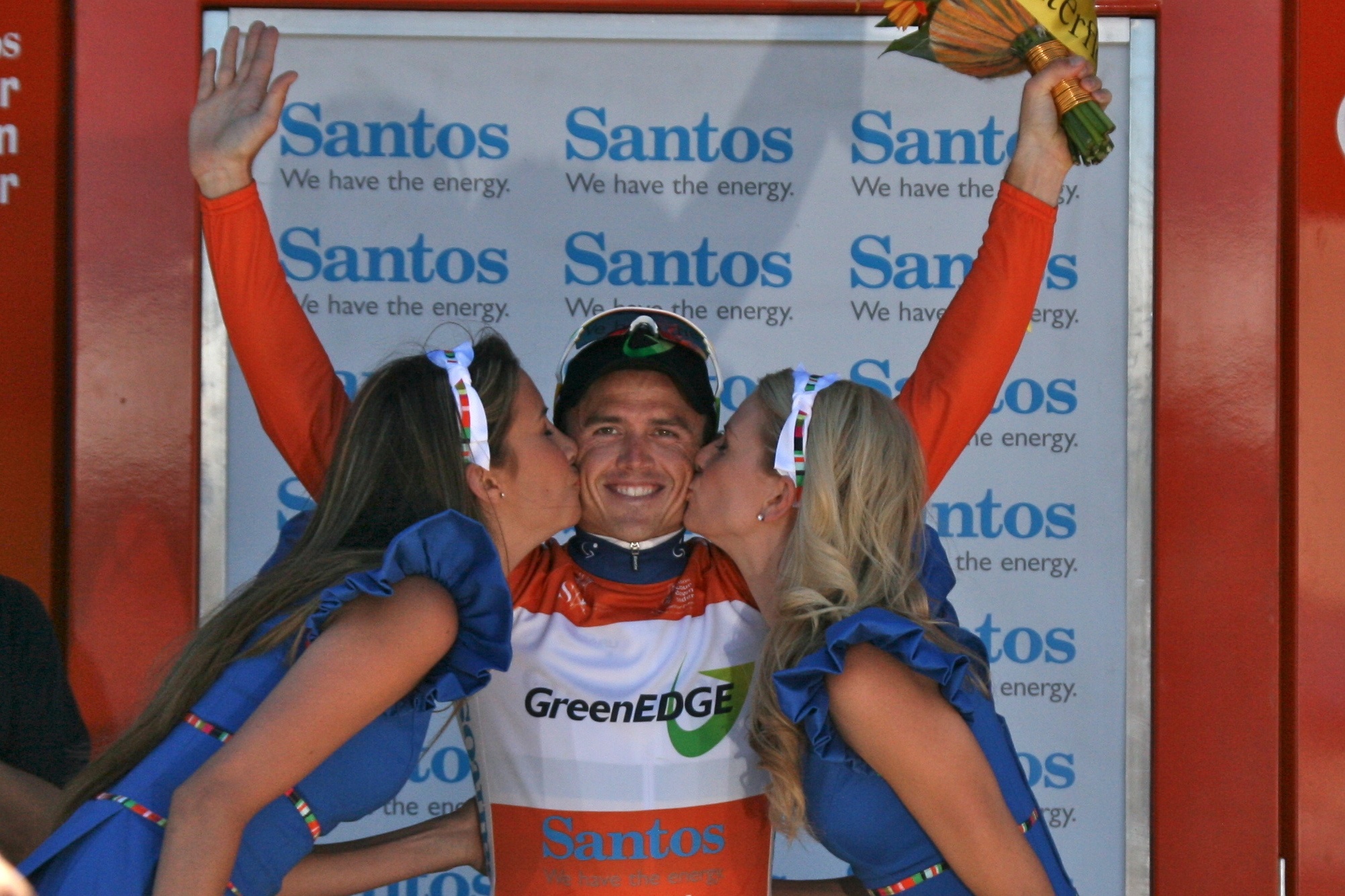
Simon Gerrans - TDU GC winner
Simon Gerrans – TDU GC winner

Before the peloton gets sand blown however they must journey south for the world tours solitary visits to the South American and Australian continents. Both races feature a mixture of stages with options for breakaway or sprint finishes. We say all this with the proviso that we haven’t actually watched any footage from either event! If you’re a cycling fan and want to watch races, either live or highlights, then it’s pretty much essential to have Eurosport. Whether that’s via some kind of TV or cable subscription or via the channels own web app Eurosport will have more coverage of more races than any other channel. Part of Eurosport’s charm is that they don’t just cover the races you expect like Paris Roubaix of the Tour. It’s often possible to tune in randomly and find that their live coverage of an obscure cat 2 race from some French back water. These are often the best races to watch if you yearn for a dominant team performance from FDJ or AG2R, who often appear to be there just to fill gaps in the peloton in the major races.

The TDU and San Luis aren’t covered by Eurosport so getting to see either race can involve some difficulties. Correction, getting to see the TDU is easy if you shell out further for Sky Sports. Sky seem to be taking a wait and see approach to snapping up the rights for the races that are currently covered by Eurosport. This might seem surprising considering their four year old and ongoing sponsorship of a world tour team, but for now at least, they have contented themselves with one or two races lower profile stage races shown live and highlights from the Giro. It may yet happen that Sky outbid ITV for their live rights to the Tour in 2015 and that may in turn have implications for those of us that rely on Eurosport. Sky don’t appear to be concerned at the likely loss of viewers if the Tour moves from its current terrestrial berth, no doubt reassured that they will recoup any investment via advertising revenues. It would be ironic if the one professional sport that doesn’t require a ticket to watch live would require an increasing level of subscription for the armchair fan.

So what are the options for the non Sky endowed to keep up with the action from down under? Ironically, the local broadcasters do offer a very good live web stream. The problem for the UK viewer is that accessing this directly from someone like SBS is blocked; this even applies to their YouTube highlights. Just as VCSE used to sit glued to teletext in the days before rolling 24 hour sports news, the (comparatively) low tech way to follow a race live is often via social media. Ironically Sky provide one of the best live feeds via their Twitter, if restricted to the races where they are competing. More of the world tour teams are starting to pick up on this idea of keeping the fans updated and it isn’t exclusive to the big outfits with smaller teams like Madison Genesis doing the same from the Tour series last year.

A constantly updated timeline from Sky works wonderfully when you can’t get closer to the action. It comes into it’s own when you’re actually at the side of the road during a race too, helping to work out when the race will flash by. The only time Sky’s regular Twitter updates during a stage can frustrate is when you are planning to watch ‘as live’ from a recording later in the day. VCSE’s evening in front of the telly has been ruined on more than once by inadvertently seeing a Sky tweet on our timeline. Less likely to appear for every race, but always around for the key ones is NYvelocity (@nyvelocity) if you want to laugh along with a race.

In race social media commentary from the riders might provoke controversy, although it would be interesting to have some open mics around to listen in to the conversations through the window of the team car. VCSE doesn’t claim to slavishly follow the output of every member of the peloton, but pre and post race some riders are better value than others. Jens Voigt and Taylor Phinney spring to mind as two that can be relied upon to say something a little less anodyne.

When it comes to stats there’s plenty to choose from. VCSE is never too many clicks from Steephill.TV during the season (see the links page) for details of who finished where and aggregation of the best reporting and video. Innrg (go to the links page again) does a regular feature about where the race was won. Cycling News is probably the best news source within the UK, but there are often (more) interesting perspectives from elsewhere in the world. Velonews (US) and Cycling Tips (Australia) are worth a bookmark.

So, what is the VCSE take on the opening week of 2014 road race season? Orica’s Simon Gerrans won a record third TDU title to go with his second Australian road race jersey. The Aussie outfit had a bit of breakthrough year in 2013 with Gerrans wearing yellow at the Tour. That Matt White’s return as DS after his doping ban coincided with this suggests that the team could be one to watch in the classics this season. Gerrans is a previous winner at Milan San Remo and if his form continues could be worth a punt in 2014.

Five seconds off the GC and a stage winner during the week was Lampre’s Diego Ulissi. The Italians have under performed in the last few years but a management shake up in the off season might suggest that Ulissi’s podium could be the first of many. Lampre have the world champion Rui Costa on their Merida’s this season and he’s a rider capable of freelancing some wins in 2014. The fact that the new team uniform is less lairy than recent years (the fluro pink has been turned down) must help too surely! With a further stage win taken by Sacha Modelo on the final stage at San Luis Lampre start the year at the dizzy heights of 4th in the UCI team rankings.

Is Marcel Kittel’s misfiring sprint cause for concern? This early in the season; probably not and it isn’t as if Kittel hasn’t won already this year (at the TDU prequel). Andre Greipel took two stage wins but takes the VCSE award for the best team kit of this year in Lotto’s homage to Merckx and Molteni. Talking of sprinters Mark Cavendish wasn’t able to repeat a stage win in Argentina with Tom Boonen finishing the stronger in the bunch sprints. Last year Cav went from San Luis to the overall in Qatar. Last year was a disaster for Boonen. Cavendish has complained in the past that his Omega Pharma team need to make up the mind what kind of team they want to be. Could it be that everything will be focused on getting Boonen in top condition for the classics at the expense of early season wins for Cavendish?

In a nutshell then, the VCSE predictions for the early season; another tilt at Milan San Remo for Gerrans, Lampre resurgent and all for Boonen at Omega Pharma.

Should be an interesting watch..

“That’s a bit of a turn up…” – The (inevitable) VCSE 2013 season review

Team of the Year 

When the BBC shows (what for it) is a minority sport like cycling on the annual Sports Review of the Year the coverage tends towards the lowest common denominator. The assumption is that most viewers will have a vague idea of a race around France each summer although that is possibly based on the arrogant view that if the BBC don’t cover it then people won’t find an alternative way to watch the event. In this environment there’s a certain amount of inevitability that Team Sky would be discussed (and nominated) as Team of the Year.

From a (slightly) more informed position it’s hard to imagine why Sky could be considered the team of this year, although last year’s was perhaps a reasonable choice. They retained their ability to set a tempo at the head of the peloton in stage races, up until the Giro seemingly able to impose this tactic on the supplicant opposition. Increasingly though those teams and riders who wanted to bring the fight to Sky began to find ways of overcoming the British team’s game plan. There were early hints that the Sky train could be derailed at Tirreno Adriatico when Astana and Vincenzo Nibali ganged up on Chris Froome to deny him victory for the only time in a major stage race this year. Sky didn’t have things their own way at the Tour either when it seemed like the entire peloton had decided it was payback time on Sunday’s stage in the Pyrenees. Forced to defend attacks from the outset, Sky had burnt their matches long before the days live TV coverage began.

In shorter stage races Sky had already demonstrated that if they didn’t have the strongest team they could easily fall prey to other teams (often) superior racecraft. They were even more exposed in the classics where their ‘protected’ riders couldn’t even deliver the squads best result. The criticism that followed the lack of results in one day races was fuelled by the fact that Sky had invested so much in a training program based at altitude in Tenerife rather than the ‘traditional’ preparation of early season stage races.

So if not Sky, then who? Certainly not fellow moneybags team BMC. Other than the quiet resurgence of Cadel Evans at the Giro BMC achieved little before the mid point of the season and their lacklustre performance was characterised by their attempt to back two riders at the same time in the Tour and have neither achieve. Perhaps the most significant event of BMC’s season was the shake up of their back up team with Allan Peiper taking over as race director after the Tour. The start of Peiper’s reign coincided with the team beginning to win again. A team to watch in 2014 maybe?

Vincenzo Nibali’s decision to move to Astana gave the Kazakh team the kind of marquee rider to deliver grand tours it had been lacking since Alberto Contador left. Dominant at the Giro, they were less involved at the Tour in Nibali’s absence. Reunited with ‘The Shark’ at the Vuelta the teams tactics on the penultimate stage were supposed to deliver Nibali victory on the day and the overall. Astana had riders in the break and in poor weather they had managed to stay away on the final climb to the top of the Angrilu. The strategy seemed telegraphed; as the peloton caught the break Nibali’s domestiques would be in the perfect position to support their leader as he went for the win. The script didn’t quite go as planned and the third grand tour went instead to Chris Horner riding for VCSE’s pick for the team of 2013, Radioshack.

RadioShack-Nissan - Eneco Tour 2012
Team of the Year – Radioshack (Photo credit: Wouter de Bruijn)

Horner’s squad began the year arguably as a lame duck team. The team’s association with Johan Bruyneel and Lance Armstrong hung over the 2013 outfit like a bad odour and then there was the announcement that title sponsor Radioshack would be pulling out at the end of the season. Would Fabian Cancellara have been as dominant in the classics if he had been up against a fit Tom Boonen? Academic now, but at the start of the year no one would have known that Boonen would have been struggling for form following his off season injury or that his year would have ended just as it was starting thanks to a crash in the early miles of the Ronde. The manner of Cancellara’s wins in E3 Harelbeke, the Ronde and Paris Roubaix might not have been quite so emphatic with an in form Boonen against him, but just as 2012 was the Belgian’s year so 2013 belonged to the Swiss.

Cancellara faced competition, in particular with the emergence of Peter Sagan as a real threat in the classics. At an individual level there were times when Sagan was maybe the stronger rider, but Cancellara was able to make an impact in races when it counted thanks to the tireless work of the Radioshack domestiques like Hayden Roulston who covered every attack and were never far from the front if in fact they weren’t heading the peloton.

Thanks to Cancellara then Radioshack were the team of the classics. Figuring at the grand tours was probably not part of the plan and this might have remained the case but for the intervention of the Orica Green Edge team bus on stage one of the Tour. Confusion surrounding where the stage would finish extinguished Mark Cavendish’s chances of taking the yellow jersey but left Radioshack’s Jan Bakelants in a position where he would inherit the jersey the following day in Corsica. Bakelants put Radioshack on the map at the Tour but it took the final grand tour to provide a triumphant end to the team’s season. Absent since Tirreno Adriatico where he had delivered a top five finish Chris Horner arrived at the Vuelta with a stage win on home soil as an indicator that he was coming back into form following injury.

A stage win early in week one was news enough for a rider about to celebrate his 42nd birthday but as the race progressed and Horner began to take more time out of the race leaders people began to realise he might actually win the whole thing. Once again the team leader was ably backed by his domestiques, including for part of the race Cancellara and Croatian champion Robert Kiserlovski. For many onlookers a Horner victory was not something to be celebrated and it’s fair to say doubt remains that a rider of 42 can win a three week grand tour ‘clean’. In the absence of a revelation that Horner’s victory actually was unbelievable, writing now it cements Radioshack as VCSE Team of the Year based on team and individual performances in the classics and grand tours.

Honourable mentions go to Movistar for delivering some memorable stage wins in the Giro and Tour and Orica for the irreverent custody of the maillot jaune during the first week of the Tour. Argos Shimano threaten to become the number one sprint team with Marcel Kittel and John Degenkolb. They have some of the leading young talent on their roster with double Vuelta stage winner Warren Barguil.

Rider of the Year

After dismissing Team Sky as a contender for Team of the Year it might seem contrary to pick Chris Froome as VCSE Rider of the Year. Froome deserves his place as the year’s top rider for the way he was able to surpass anything his team were able to do collectively, even when riding in support of him.

Christopher Froome at the prologue of the Tour...
Christ Froome (Photo credit: Wikipedia)

This couldn’t have been made any clearer than on stage nine of this year’s Tour. The previous day it seemed as if Sky’s rival teams and Froome’s GC opposition had run up metaphorical white flags as the British team delivered a crushing one two as the race entered the Pyrenees. With his closest rival over a minute behind Froome had taken over the Maillot Jaune and the discussion was not would he win the Tour, but how big would his winning margin be. The following day as the peloton continued to traverse the cols of the Pyrenees the script was ripped up as first Garmin and then Movistar attacked Sky from the outset. By the time live TV coverage began Froome was alone at the head of the race. In truth, the sting had probably gone out of the stage by this point. Nevertheless Froome had no option other than to cover any attempt made by Movistar to attack the race lead.

Sky recovered the composure after the rest day and Froome survived another collapse in his teams inability to deal with the unexpected in the winds on stage thirteen. It was no coincidence that he came under greater scrutiny on the stages that he won in the Alps and the Pyrenees but the trajectory Froome followed in 2013 was in many ways similar to that of Bradley Wiggins in 2012 with victories in the Tour de Romandie and Criterium du Dauphine. Froome was in dominant form from the outset and VCSE speculated as early as the Tour of Oman (his first ever overall stage race victory) that the pattern for the season could be emerging. The only rider who looked able to unsettle Froome on the road in 2013 was Vincenzo Nibabli but other than their early season encounter in Tirreno Adriatico they did not meet head to head until the world championships at the end of the racing year. It could be argued that Wiggins unsettled Froome also, particularly with his interview ahead of the Giro where he speculated that he wanted to defend his Tour title. With hindsight it’s clear that Wiggins was never going to be allowed to do this and the axis of power has definitely shifted within Sky now with Wiggins unlikely to renew his contract after 2014.

While VCSE suspects an on form Nibali would edge Froome (we will have to wait for next years Tour to find out) the Sicilian was the nearly man this year as his tilt at a second grand tour victory and the world championships ended in anticlimax. Fabian Cancellara dominated the northern classics, but maintained a lower profile after that. The most successful rider in terms of outright wins was Peter Sagan. Judged purely on his ability to put bums on seats Sagan had a successful year. He won the points competition at the Tour with weeks to spare, reminding everyone that the green jersey is awarded not to the best sprinter but the most consistent finisher. Sagan is probably the closest rider in the current pro peloton to an all rounder. He is a factor against all but the quickest sprinters, yet is able to mix it in the classics.

If someone had to finish runner up to Froome this year VCSE would go for Tony Martin. His heroic failure to win stage six of the Vuelta after a monster solo break was VCSE’s moment of the year. Martin was possibly forgotten about at the world TT championships as Cancellara and Wiggins seemed like the form riders, but it was the Omega Pharma rider who dominated.

Race of the Year 

The early season stage races Paris Nice and Tirreno Adriatico got things off to a great start. Richie Porte emerged as possible third GC contender for Sky at Paris Nice and it will be interesting to see how he goes at the Giro this year. Sky backed Sergio Henao at the Vuelta but his performance as a team leader was in inverse proportion to his effectiveness as a domestique. If Sky hadn’t been so abject in the classics, their GC performance in Spain could have been the teams low point, soothed only by a Kiryenka stage win. Of the two, it was the Italian race that captured the imagination with a taste of the Giro to follow with punishing climbs and equally punishing weather. As the team’s Giro build up continued the Tour of the Basque country highlighted the decline of Euskatel as riders like Amets Txurrucka offloaded for mercenary ‘talent’ showed what we will miss about the riders in orange next year. The race also heralded the arrival of the latest crop of Columbian riders with Movistar’s Nairo Qunitana (the eventual winner) and AG2R’s Carlos Betancur featuring alongside Sergio Henao. As the season wound down it was hard not to enjoy a return to form (and happiness?) for Bradley Wiggins in the Tour of Britain.

Biblical weather disrupted Milan San Remo forcing the neutralisation of part of the race and the withdrawal of many of the peloton. Sky’s Ian Stannard demonstrated why he is one of the teams best hopes for a classic win as the race entered the final few kilometres, but it was Gerald Ciolek’s win that had the greatest impact, catapulting MTN Quebeka onto the world stage with a massive win for the African squad. Paris Roubaix had it all with spectacular crashes (search FDJ’s Offredo on YouTube) and Sepp Vanmarcke’s tears as he was beaten by the wilier Fabian Cancellara. In the Ardennes classics Garmin showed their tactical ability again (how Sky must want some of this magic to rub off on them) with Ryder Hesjedal providing the platform for a Dan Martin win.

Each of the grand tours had a claim for the race of the year crown. Marcel Kittel ursurped Mark Cavendish in the Tour, but perhaps more impressive was Cav’s win in the points competition at the Giro meaning he had one this contest in all three grand tours. Seeing Bradley Wiggins undone by bad weather and sketchy descents at the Giro and Nibali looking head and shoulders above all comers provided the character stories a three week race needs, although some of the drama was lost as stages were truncated if not cancelled altogether due to snow. Add in another British rider to cheer in Alex Dowsett (winner of the TT) and the Giro probably edged the Vuelta as the VCSE grand tour of 2013.

VCSE’s races of 2013

One day classic – Paris Roubaix                                                                                                                                                                                                                                  

Stage Race – Tirreno Adriatico                                                                                                                                                                                                                                      

Grand Tour – Giro d’Italia                                                                                                                             

Lance.. Are we done yet?

Have just finished reading Wheelmen (http://tinyurl.com/othmek6) the latest in a long series of books dealing with doping in cycling. The book was written by two Wall Street Journal reporters and while that doesn’t sound like the obvious place for cycling stories the paper does have its place in the timeline. It was the WSJ that published a copy of the email Floyd Landis wrote in 2010 revealing his own doping and the systematic use of performance enhancing drugs by the US Postal team. 

Lance Armstrong in the prologue of the Tour de...
Lance Armstrong in the prologue of the Tour de France in July 2004 in Liege, Belgium (Photo credit: Wikipedia)

Wheelmen isn’t the Landis story, but his is inextricably linked to the books main character Lance Armstrong. It was a question of sticking with Wheelmen initially as the first few chapters have been done before by many writers (including those directly collaborating with him) on Lance’s early life growing up in Texas and emerging as a talented junior cyclist. The book has also been edited to try and explain the sport to the lay reader. Would Wheelmen have any appeal to a non cyclist? The writers clearly think so as they believe that the Armstrong doping story is the ‘greatest sports conspiracy ever’. Considering that this is one the books key strap lines the premise isn’t that obvious when reading it. What underscores the narrative is Armstrong’s place as a cancer survivor as much as the fame he achieved as a cyclist. As a cycling fan the story of Lance the cancer survivor is more often secondary to the tale of the erstwhile 7 times TdF winner and in placing as much emphasis on his role within the cancer community it might explain the spoon fed cycling insights.

Wheelmen begins to come alive once you have read the early biographical chapters. As soon as the subject matter is doping the pace picks up and the book starts to read more like a police procedural. It’s not that much of what is told hasn’t been said before. There are however some insights that even if unsubstantiated provide more context and understanding of some of the allegations that remain, particularly about the UCI. Take for example the suggestion that Lance ‘paid’ for drugs tests to be covered up. In detailing Armstrong’s financial arrangements and the structure of the organisations built around the USPS team, the book reveals that Thom Weisel provided investment advice for Lance and Hein Verbruggen (UCI President at the time). The implication seems to be that a stock tip from someone in Armstrong’s inner circle could have given Verbruggen the potential for great returns. With profits described as 40% and higher elsewhere in the book it doesn’t take much to join the dots. Rather like saying that he had never failed a drugs test as opposed to saying I have never doped.

In unpicking the wreckage of Armstrong’s lost endorsements it also becomes clear that what seems most important to him is to be able to return to competitive sport. Over the last couple of weeks Lance has been back in the public eye dropping less than subtle hints about what he is prepared to offer up in order to get a reduction in his lifetime ban.

Obviously it would be good to see Armstrong confirm all of the stories that remain in the ‘believed to be true’ category. Wheelmen quotes Armstrong telling a friend “..I never ratted anyone out”. In this mindset it’s hard to see how progress can be made if Lance believes it isn’t for him to name names. While the situation would be better served by a ‘truth and reconciliation’ type process being established by the UCI under Brian Cookson it is hard to see Armstrong achieving the goal of a reduced ban if he remains equivocal about what he knows.

Although he has walked away from the sport Tyler Hamilton, arguably almost as divisive a character as Armstrong, achieved some kind of redemption in many people’s eyes by his warts and all approach in The Secret Race (http://tinyurl.com/qac7e9m). Hamilton has publicly encouraged Armstrong to take a similar path. although in Twitter exchanges the enmity between the two remains clear.

Another disgraced rider has just published his own tell all story from the darkest days of cycling. In a flurry of leaks and interviews Michael Rasmussen described his own doping while revealing several high profile past and present riders who he alleged had doped also. One, Ryder Hesjedal was quick to confirm that he had doped in the past and it was quietly slipped out that he had already spoken to the Canadian anti doping agency and would serve a six month ban.

In the absence of truth and reconciliation the possibility of riders having their previous or even current doping exposed by way of tell all book seems the most likely way that use of PED’s  will be exposed. There is cynicism that ex riders like Hamilton and Rasmussen are only telling their truth’s now as they have nothing left to lose. There is some irony in that the lies of their pasts stretch with fans their credibility now.

If we interpret Wheelmen a certain way Armstrong comes over as a man who will sacrifice everything to compete. Whether this was his morality when trashing the reputations of people like Betsy Andreu or Greg Lemond while doping his way to flawed victories in the Tour or accepting the losses of his endorsements now to compete in Triathlons. Perhaps he will go down the book route himself like his nemesis Hamilton.

The context for this post is not to be for or against a reduction in Armstrong’s lifetime ban. As things stand it seems appropriate that as he has reaped he has sown. Should that be reviewed in the event of Lance bringing something meaningful to the debate? Potentially yes. However, he is right about one thing; he was not the only rider to dope. Ultimately it needs to be some kind of truth and reconciliation process to allow the least savory aspect cycling’s recent history to be laid to rest.

As for Wheelmen, it’s possibly best read in a triumvirate with Hamilton’s The Secret Race and Jeremy Whittle’s Bad Blood (http://tinyurl.com/ptzhbvy) which sets the scene for the later revelations that followed nicely. Bad Blood conveys the Omerta that continues to exist in the peloton today and provides an insight into the scandal that shaped Armstrong’s first Tour win, the Festina affair.

The all encompassing end of season round up – World Championships and UCI Election

2013 World Championships – Tuscany 

It’s been a while since our last post where Wiggo and Cav were leaving home shores to support Chris Froome in his tilt at the world championships in Tuscany. Ahead of that Sir Brad was heading for his seasons goal (if we all forget about the Giro) of the individual time trial. Would he assist Froome in the road race a few days later and what exactly would Cavendish be doing, other than proudly representing his country.

Individual Time Trial

VCSE isn’t aware if there was a representative from every nation on the globe at this years world championships, but in the category for ‘country with quite a lot going on at the moment..’ Syria managed to enter a rider in the men’s Elite TT on the fourth day of the week long cycling festival in the Tuscan hills. Nazir Jaser propped up the field in 77th place, which isn’t the point really. While you ask, “How does he manage to train?”, if not where it’s worth noting that last place was only a shade over 15 minutes behind the winning time of Tony Martin and his average speed over the 57.86km course was nearly 43kph. We will never know if would have beaten the two Ugandan entrants as unfortunately they did not start.

English: 2011 UCI Road World Championships – M...
World Champion – Tony Martin (Photo credit: Wikipedia)

The much trailed match up between the (relative) elder statesmen of the test, Wiggins and Cancellara, was won by the Englishman. This was the undercard though; Tony Martin was the man to beat from the earliest of time checks and Wiggins second place suggested both riders were peaking at just the right time. Cancellara had opted not to take time information (neither had Wiggins), but the battle for second and third places seemed to come down to his fast out of the starters hut approach verses Wiggins slow(er) build to a peak in the final quarter.

Wiggins has been less bullish as the sands of this years racing have ebbed away and seems more comfortable with the fact that he has been beaten by the better man, at least in terms of performance on the bike by Martin and perhaps psychologically earlier this year by Froome as he lost his number one status at Sky.

Cancellara had bested Martin in the Vuelta as Wiggins in turn had beaten the Radioshack rider in Poland shortly after the Tour. The edge that each protagonist sought over his rivals ebbed and flowed as the main event approached. There is a sense of drama, even in what is to some people the dullest of cycling disciplines when watching Wiggins or Cancellara. Martin however is a metronome, even if below the skinsuit and aero helmet the physical and mental toll is playing just as viscerally for him.

As Martin took more than 15 minutes out of our Syrian friend Jaser so he took the best part of a minute out of Cancellara and Wiggins. The Sky rider who had gone to Tuscany to win announced that he was “..happy with second”. Watching Tony Martin that day who could have doubted he meant it.

Women’s Road Race 

As it must have been when Eddy Merckx was at his peak Marianne Vos’ name on the start sheet casts a long shadow over the rest of the field. That she began the Elite Women’s Road Race as favourite was unsurprising. Of more interest as the race started was the race strategy of some teams to deploy almost their entire teams to try and beat the dominant rider in the field.

First the Americans and as the race reached the final stages the Italian team attempted to set a pace to try and split the field and tire out, if not Vos then her Dutch teammates. The climbs that suggested the possibility of a GC contender taking the men’s race the following day played their part in the womens’s race also as the sole remaining US rider Evelyn Stevens attacked on the penultimate climb. This wasn’t the final ascent of the Mur de Huy in the 2012 Fleche Wallone and the small advantage gained was soon gathered in by the remaining group.

Arguably it was the Italians who held the most cards, with three riders the largest group by nationality in the selection. But it was Vos who attacked on the final Salviati climb a short, straight and steep ribbon of freshly laid tarmac covered in so many fan’s messages they had become almost indecipherable. The ease with which Vos reached, overtook and then rode away from her rivals left you wondering if you had just seen every other rider drop the heads and concede the race there and then. There had been no shortage of effort thus far and the selection contained some of the greatest female riders currently racing. Did the fact that she made it look so easy, so effortless sow an immediate seed of self doubt that Vos could not be beaten.

You cannot dislike Marianne Vos, despite her dominance. Her joy as she crossed the line was not because of the margin or nature of her victory. In her mind this was another milestone, a back to back world title. Her search for the next milestone may take her into other disciplines next year (mountain biking is rumoured), but surely the next challenge for the road would be a hat-trick of rainbow jerseys on the road.

Men’s Road Race

Helicopter and wide angle tracking shots were not in evidence or in fact possible for Sunday’s Elite Men’s Road Race. The heavy rain that had characterised much of the Giro created conditions that meant that the selections and abandonments from the peloton came on each of the ten laps of the Florentine circuit the women had raced the day before.

Mark Cavendish’s role was of hare to the hounds of the peloton the strategy of the British team and those countries protecting a GC type rider to try and exhaust the classics specialists like last years champion Philippe Gilbert and Fabian Cancellara. The pace, perhaps more so the weather, led to the early abandonment of many of the field as riders got dropped and decided it was infinitely preferable to be inside and wearing something other than sodden cycling gear. Chris Froome’s tilt at the title was possibly not as serious as he suggested, although he hadn’t shown much form on his return to racing in the continental US. Ultimately, the entire GB squad got off their bikes and the suggestion afterwards that the race had been used as preparation for the Olympics two years hence was as welcome as the Italian weather. A Froome in better form might have been able to freelance to a better place, even if a win was unlikely.

The win was taken by this years medium mountain specialist, the winner of the Tour de Suisse and two stages at the Tour Rui Costa. He had been in a the select group of riders left contesting the race on the final lap that also included his Movistar teammate Alejandro Valverde (Spain), Italy’s Vincenzo Nibali and Valverde’s compatriot Joaquim Rodriguez. There was almost an even split of GC to classics riders with Gilbert and Cancellara joined by Peter Sagan and Simon Clarke.

As with the women’s race the day previously the Italian’s had some strength in numbers as the finish approached and Nibali seemed well placed if not in a position to dominate the selection. If anything there was an echo of his performances in the Vuelta where he seemed to lack that final 5% that had made him so strong in the Giro. Would this have told at the line? No, Nibali slipped off in the wet and was left to contest a placing. Ahead Rodriguez had attacked and was doing his approximation of time trialing to the finish with Costa in pursuit. Purito might have expected fellow countryman Valverde to cover Costa. Although they were trade teammates at Movistar, Costa had already announced a one year deal with Lampre. Surely, Valverde wouldn’t be complicit in letting Costa catch Rodriguez? Costa had shown his strength in the final kilometres of a race in France in July and he reached Rodriguez’s wheel with time to spare. The little Spaniard and the Portuguese engaged in conversation. It’s not unknown for one rider to offer an inducement (read bribe) at this point to throw the race. Purito may just have enquired if Valverde had put up any fight at all to prevent Costa from getting away.

Based on the relative ease with which Costa had caught him it wasn’t much of a surprise that the seemingly perennial runner up Rodriguez continued his run of podiums while Costa took the win. Purito, who can seem happier with a second or third than many race winners was more subdued this time, a mixture of bafflement and frustration with third place man Valverde. Nibali was an anticlimatic fourth with a “disappointed” Cancellara rounding out the top ten, one place behind last years winner Gilbert.

Brian Cookson wins UCI presidency

The world championships coincided with the UCI presidential elections, also held in Tuscany so delegates could be reminded of what it’s all meant to be about. VCSE hasn’t covered much of the political side of the sport and won’t subject you, the dear reader, to much more than a summary here.

Incumbent Pat McQuaid had been on shaky ground ever since the USADA ‘reasoned decision’ that led to Lance Armstrong’s lifetime ban and stripping of his Tour titles. Even if McQuaid’s handling of the Armstrong affair in particular and the wider question of doping in the sport had been blemish free he couldn’t escape his associations with the Armstrong era. His position was further undermined by the impressive grassroots campaign to overturn his presidential nomination in Ireland and the subsequent messy attempts to get an endorsement from other nations.

Brian Cookson had emerged as his rival after initally endorsing McQuaid. Cookson’s campaign looked well managed in comparison to McQuaid’s, but concerns surfaced about Cookson’s tactics as the contest drew closer. Ultimately, cycling decided on at least the appearance of a break from the past. The rise in prominence of the sport in the UK during Cookson’s time at the helm of British Cycling would be good news for potential sponsors if he is able to raise the profile of cycling in an equally positive way in the next few years.

Like McQuaid, he will be judged first and foremost by how he deals with the legacy, if not the current issues of doping within the sport. Early signs are good with the promise of a closer relationship with WADA and suggestions of some kind of ‘truth and reconciliation’ process. Cookson has shown himself to be a pragmatist by offering to reduce Armstrong’s lifetime ban in return for him lifting the lid on his doping (Armstrong, at least publically, has so far refused to name names). While Armstrong is the tip of the iceberg, it’s the lack of a coherent approach to previous and existing dopers like Danilo Di Luca that cause concern.

Should anyone caught doping get a lifetime ban? Precedent in other sports suggests not, although multiple offences equaling a life ban seem to be accepted as an appropriate response. The standards applied to ‘irregularities’ also seem inconsistent and many riders can be misplaced into the category of dopers where there can be other reasons for this. It’s interesting to compare the current situation of Sky’s Jonathan Tiernan Locke with that of Charly Wegelius for example.

If Cookson is unable to make progress on lifting the Omerta that still exists around doping during his presidency he may end up being viewed as much of poor steward of the sport as McQuaid. He will require the cooperation of the riders and the teams along with the former players, but earning that is what being a politician and administrator is all about surely?

He has at least shown signs of increased support for women’s cycling with the appointment of Tracey Gaudry to Vice President. The introduction of a 2.1 category women’s Tour of Britain from 2014 offers the prospect of a more equal footing for the women’s professional peloton, but more needs to be done to deliver marquee events alongside the men, with a high profile stage race in France being the obvious example.

The Cav & Wig Show – VCSE’s Racing Digest #20

Tour of Britain round up

In our last post we discussed then (plain old) Bradley, now Sir Bradley Wiggins performance at last years Tour of Britain. In what should have been a valedictory event for the 2012 Tour de France and Olympic time trial winner, the Sky rider instead abandoned the race at the halfway point after a bizarre performance during which time he turned round and rode back the way he came in search of teammate Mark Cavendish.

Français : Bradley Wiggins, vainqueur du Crité...
Back to his best:  Bradley Wiggins(Photo credit: Wikipedia)

Wiggins stated aim this season, to win the Giro d’Italia, had looked in doubt from the outset as the Wigan based rider was unable to repeat his imperious form of the previous year and he often struggled to make the top five on GC in his preparation events like the Giro de Trentino. Wiggins hopes in the Giro went down the drain with the heavy rainfall that was such a feature at the event. A seemingly innocuous crash in the first week seemed to damage his confidence and he withdrew before the race finished. Pre Giro there had also been the debate, often fueled by Wiggins, about leadership of the Sky team at this years Tour de France. His performance at the Giro was probably the confirmation that the Sky hierarchy needed that Chris Froome, as well as being more suited to the parcours, was now the number one rider at the team.

And so it was a different Bradley Wiggins that emerged from the aftermath of Team Sky’s celebration of a second successive Tour win, making a low key return a week after the Grand Boucle in the Tour of Poland. He was entered in this event to target the individual time trial stage, pitching himself against one of his chief rivals for the world TT championships. Interviewed in the build up to the race the world’s TT was held up as the now 10kg heavier Wiggins goals for the end of season. And there, quietly in the background, was the announcement that in addition to the individual test, he would lead Sky at this years Tour of Britain and it was a race he intended to win.

There has been some critical mass building to Wiggins performance in last weeks race. His actual race form hadn’t sparkled after winning the stage in Poland, but he was finishing races and becoming a decent interviewee again. It can’t have been easy for Wiggins to admit that the reason he didn’t call Chris Froome to congratulate him in Paris was his fault as he didn’t have his mobile number. Both Wiggins and Sky had kept things low key when commenting on his participation in Poland and the following Eneco Tour, but as far as his home race was concerned the talk was of targeting the GC. Perhaps critically here, in addition to a strong supporting line up including Stannard, Eisel and Lopez, Shane Sutton was back in the fold after early season announcements that he would no longer play an active role in the Sky set up.

The first couple of stages held in typically wet British weather had been a sprinters party, despite an uphill finish on stage 2 in the Lake District. Milan San Remo winner Gerald Ciolek would have been reminded of the weather on the Italian coast earlier this year as he overhauled An Post’s Sam Bennett to win and take over the leaders gold jersey. Sky had kept Wiggins protected and near the front for these stages and there was a suggestion that he was in for the long haul when even he admitted that he “..would have climbed off” because of the conditions if he wasn’t motivated for the overall. Confirmation of this came the following day when Wiggins made several runs around the TT course at Knowsley. Tellingly rival Alex Dowsett, getting over a cold, chose to reconoittre the route from his team car. Dowsett was out of the starting hut before Wiggins, but any contest with his Sky rival was soon made academic as other riders went faster. Wiggins, the only rider to break 20 minutes for the test, was into the lead.

The following day brought the first of three stage wins for Mark Cavendish. Sunday’s misfire of the Omega Pharma sprint train was forgotten as the world tour teams began to impose themselves on the peloton. Another world tour squad were making their presence felt in the other competitions. Movistar’s Angel Madrasso was a permanent fixture in the breaks all week and thanks to an infringement on the final stage was able to claim both the KOM and sprinters prizes. For the smaller teams the pickings were pretty slim. The chance to feature in the break or a bunch sprint was the best that most could hope for. With talk of the ToB moving up to HC status in the future many of the British squads will feel disappointed that they didn’t come away with a better result. There would have been mixed feelings among the 3rd level teams at Simon Yates stage win on Dartmoor. The British U23 squad had appeared the previous year, but Yate’s win following both his and his twin brothers performances in the Tour de Avenir will have put both riders first in the queue for a contract with the world tour squads. The emphasis on shorter criterium style events seems to blunt the opportunity for some of the young riders in the British conti squads to shine.

Despite the bad weather earlier in the week, crowds at this years race if anything seemed even bigger than the year before. Certainly the final stage around central London had a last day of the Tour feel and Cavendish served up the perfect result, winning convincingly. Wiggins was lost in the bunch over the line, but maintained a comfortable lead at the finish. Both riders had demonstrated their respect for the race in interviews all week, Cavendish showing his pride at winning the final stage at his home race and Wiggins describing that there are “..no easy stages on the Tour of Britain” earlier in the week. Inevitably, talk is already turning to what will Wiggins do next. The rider is focused on the world championship time trial, what comes next will be interesting. A stated aim is to win another gold medal at the Olympics in 2016. That still leaves at least one season where, perhaps, Wiggins will target another race with ‘history’. Paris Roubaix perhaps?

We will be sharing our fans eye view of the penultimate stage from Epsom to Guildford shortly. Don’t forget to visit our Facebook page where you can bid for a T shirt signed by Tour of Britain legends including Tour de France 2013 stage winner Dan Martin! 

World Championships – Team Time Trial

Omega Pharma successfully defended the TTT title in Florence on Sunday. Sky, denuded of Wiggins due to the ToB still managed to take 3rd place reinforcing their reputation as one of the strongest TTT outfits. Runners up were winners of the TTT at this years Tour Orica Greenedge. The women’s TTT was also defended successfully with Specialized Lululemon taking the win.

No domestic broadcasters are taking the live pictures from the event, so you will need to check out UCI TV for live streaming.

More teams to fold 

In addition to the loss of Vacansoleil it was rumoured over the weekend that second tier French outfit Sojasun would also be folding due to a lack of sponsorship for 2014. VCSE had reported the apparent saving of Euskatel by Fernando Alonso a couple of weeks back, but both parties have officially announced that they were unable to reach agreement on the structure of the team for 2014. Alonso has vowed to build a team from scratch which suggests that he still intends to pursue a world tour licence. However, he is suggesting that this team will not appear until 2015 at the earliest so there will be a lot more Spanish and French riders looking for rides next year. Expect to see a lot of animation from these riders at the worlds and at the Giro di Lombardia as they look to catch the eye of a prospective employer.

A victory for old men and baldies – VCSE’s Racing Digest #19

Vuelta a Espana final week

What a difference a week makes. In our last post we wondered whether or not Chris Horner would have be able to continue to bring the fight to (at that time) race leader Vincenzo Niblai in the final week of Spain’s grand tour. Horner was lying in second place, 50 seconds behind as the race entered its final week and its final day in the Pyrenees. 

Français : Christopher Horner au Tour de Calif...
Christopher Horner (Photo credit: Wikipedia)

The weekend stages from week 2 suffered the misfortune of poor weather in proportion to how much they had been built up by the organisers and in previews. Inclement weather had a similar impact on the high mountain stages in the Giro earlier this year also and there was a slight feeling of anticlimax as the Vuelta entered its final week. The second week of the race had lacked some of the drama of the first week too. With one stage to go before the second rest day Nibali looked comfortable and unlike the earlier stages when the leaders jersey had seemed like a burden he was unwilling to shoulder by the end of the second week the Sicilian and his Astana teammates were geared to defend the lead.

If the wheels didn’t completely fall off for Nibali on stage 16 they were severely loosened. Horner far from fading was showing signs of being the stronger of the two GC rivals as Nibali cracked for the first time.

But first we had more signs of potential renaissance for French Cycling as Warren Barguil won a second stage. In the break again as with his earlier stage victory Barguil was caught as the ramps of the final climb steepened. It’s perhaps crediting Barguil with the experience of, say, a Chris Horner to suggest that his second win was planned that way. Maybe Sky’s Rigoberto Uran burnt to many matches catching the Frenchman. Whatever the tactics, or sheer good fortune on display it was Barguil that outsprinted everyone to the line, if you can sprint up a 10% ramp.

As Barguil crossed the line to yet more ‘the new Hinault’ comparisons there was drama unfolding in the GC further down the climb. Joaquim Rodriguez attacked and only Horner could respond. Nibali found himself on the back of the small group of remaining GC riders. As Horner extended the gap the Astana rider was being overhauled by the lower reaches of the top 10 like Net App’s Leopold Konig. In what would become a bit of a theme for the race Alejandro Valverde, unable to match the sharp bursts of acceleration of a Rodriguez or Nibali, often got back on as normal speeds resumed. He and Thibaut Pinot, having something of a grand tour rehabilitation on the Vuelta, were with Horner as he crossed the line. As Nibali finished the stage Horner was 22 seconds closer to the man that, for now at least, retained the race lead.

The final ‘flat’ stage came on Wednesday and the last chance for the sprinters before the finale in Madrid on Sunday. However, another theme of this years race has been the unexpected happening and stage 17 was no different. With so many of the first line sprinters missing from the race a winner emerging from an unheralded source or a win for someone less recognised for their fast leg was a distinct possibility. As the teams tried to get themselves organised with all of the coordination of herding cats a Belkin rider sprang clear from the bunch with some way still to go. There seems to be a collective blink from the peloton when this happens along the lines of “He didn’t? Did he?”. That the man going clear was Tour top 10 finisher and sometime GC contender Bauke Mollema explains the collective surprise of the bunch. By the time the peloton had pinched themselves and got into gear the damage had been done and Belkin had their prize to take home from Spain.

The GC would be decided on the next three stages that all featured summit finishes. Sky were another team who had quickly shed their GC ambitions with Sergio Henao looking exposed pretty much as soon as the race started going uphill on stage 2. With his compatriot (and probably the better hope for GC) Rigoberto Uran bound for Omega Pharma Sky refocused their ambitions towards stage wins. Sky’s domestiques have looked a bit more human since the Tour and it was surprise Tour withdrawl Vasil Kiryenka that delivered a consolation for Sky at the Vuelta. Kiryenka at least looked as if he found the going harder than he seemed to while riding like a metronome on the the front of the peloton in the early season races. Teams don’t hire riders like Kiryenka for stage wins and he actually smiled as he crossed the line. Nibali’s race was beginning to fall apart in a repeat of stage 16 as the GC approached the finish. As Horner rode away from him again the cushion that had lost a significant amount of stuffing on Monday was left almost empty by the end of stage 18.

Further down the GC Saxo’s Nicolas Roche was enjoying the sort of positive press the English speaking media often transfer to the Irish in the absence of a homegrown rider to cheer. Roche did a lot to generate this goodwill by being a willing and very open interviewee even when he had lost time during the second week. He was engaged in his own battle with Domenico Pozzovivo, riding for Roche’s old team AG2R, for 5th place. Vying with Roche for most cooperative with the media was Horner, always ready with something quotable, homespun or both. Inevitably for Horner, his age, the fact that he’s an ex teammate of Lance Armstrong and most importantly his performance led to questions about whether or not his race was something we should believe in. Unfortunately for the American this is where he has been less at ease in front of the microphone. Jens Voight commentating on ITV’s coverage suggested that Horner was perhaps “..less tired” than his rivals but the questions and doubts will probably continue to run parallel to the plaudits that have come Horner’s way.

Horner overhauled Nibali’s 3 second advantage on stage 19 and took the same margin into the penultimate day on the Alto de L’Angliru. Rodriguez had taken a few seconds back on Valverde by winning the previous day and the race to decide the podium positions would be the under card for the battle for the red jersey between Horner and Nibali. In the current issue of Pro Cycling magazine Nibali and his teammates talked about how they had upset the science of Sky’s attempt to win Tirreno Adriatico for Chris Froome by old fashioned tactics. This resonated during the stage as Astana put so many riders in the break an observer could have been forgiven for thinking that Nibali had already thrown in the towel. The Angliru represented less than 10% of the total distance of the stage but all the action took place on its unforgiving gradients. As riders from the break began to come back to the leaders Nibali attacked. Initially Horner and the others appeared to have nothing in response but slowly they were able to get back on to Nibali’s wheel. Nibali put in a number of accelerations as the climb went on but he never had the same distance he took in his first attack. At this point his teammates who had gone in the break should have come into play. Sean Kelly commented that he expected the Astana domestiques to “..stop and wait” for their team leader. No doubt part of the Astana post race inquiry will be to ask why they didn’t play their cards in hand better but the moment and advantage was lost.

The Angliru shrouded in fog represented something of war zone, sheer numbers of fans and the gradient preventing the camera bikes from keeping up with the action. As another French rider, FDJ’s Kenny Elissonde claimed the win and France’s best grand tour performance at least in terms of stages wins since 1990 we waited to see who would emerge from the clouds for the GC. Horner wasn’t able to maintain his out of the saddle for the entire climb but he was able to put 30 seconds plus into Nibali and all but confirm his victory in the Vuelta 2013.

Horner entered the race without a contract for next year; given his age this was not surprising. He has apparently been offered a year by Trek now and it’s not hard to imagine that they will want to milk the marketing opportunities that a ‘farewell’ race program for Horner and Voight could bring. This assumes that there won’t be any skeletons in the cupboard. Horner wants is to savour something that “…you may never see again”. Some commentators already see this as hubris. It says so much about the a current levels of trust in the sport that a ‘surprise’ win cannot be enjoyed as just that. Horner has won one of the premier events in the cycling calendar and the questions that come with that are inevitable. It’s also probably incumbent on anyone winning a major race these days to set out their position on doping. This may yet come, but VCSE suspects that questions will remain, sadly, about the provenance of the victory of the oldest ever grand tour winner.

Tour of Britain begins 

The week long Tour of Britain has begun and VCSE will be at the race again this year. There’s a really strong line up this year, surpassing even last year’s when the country was basking in Bradley Wiggins Tour victory and gold medals at the Olympics. Wiggins features again and is supposedly “motivated” for this years race. Sadly, Wiggins has been quoted similarly for his other ‘comeback’ races this year and he treated last years event with  a certain amount of disdain, riding back down the route at one point in search of a teammate before climbing off and abandoning.

The teammate that Wiggins was seeking to round up on that stage last year was Mark Cavendish and he is present again this year with Omega Pharma. Cav’s attempts to win opening stages of races hasn’t been going well of late and today’s finish in Scotland was no different. Omega Pharma’s latest incarnation of the Cavendish sprint train was present with Alessandro Petacchi. The misfires that have effected the squad all year were present too unfortunately and Cavendish had given up the chase long before the line. Petacchi was second and may expect to be reminded of what he’s been hired to do if Cav isn’t in the philosophical mood he was in after losing the last stage of the Tour.

Last years winner Jonathan Tiernan Locke is absent, Sky have selected him for the races currently taking place in Canada and JTL is in a team including Froome and Porte. They will no doubt argue that putting him in that squad is an indication of the importance of that series to them but for VCSE it’s perhaps another example of Sky’s PR mismanagement. Surely they can’t suggest that given the choice Tiernan Locke wouldn’t rather be in the UK. It wouldn’t be a surprise if the rider leaves the team at the end of his contract, if not sooner.

An interesting match up for the GC and certainly the time trial at the TOB will be Wiggins verses Movistar’s Alex Dowsett. Much is being made of the TT stage being run over the same 10 mile distance that is used by cycling clubs across the land. Dowsett attacked towards the end of today’s stage and VCSE suspects that he’s up for the challenge of beating the illustrious Sky team leader in their home race.

We will be at the race for the start of the penultimate stage on Saturday and will look to bring you pictures, video and comment from the day in our next post.

Curses! – VCSE’s Racing Digest #18

Finally! - Philippe Gilbert lifts the curse on stage 12
Finally! – Philippe Gilbert lifts the curse on stage 12

He got away with it; despite those pesky kids! (apologies for the Scooby Do reference). After losing out by a tyre’s width to Zdenek Stybar last week Philippe Gilbert finally managed to do what has so far eluded him this season and win something in the world champion’s rainbow jersey. Gilbert had shown real class last week by not having a dig at Stybar who hadn’t exactly worked for his win, so it did feel like there was some karma chi love in the air for the Belgian in Tarragona. Staying with the whole ‘curse’ theme, the guy that Gilbert beat to the line was erstwhile Norwegian champ Edvald Boasson Hagen. Sky, who give the impression of a team that have pretty much given up on sprinters have allocated (or should that be allowed) EBH a bit of a roving brief for the flatter stages at the Vuelta. This was also the case at the Tour and if the opportunity presents itself then Boasson Hagen can freelance a bit in search of a win. Gilbert of course had other ideas, but he needed to bury himself to first catch and then overhaul the Sky rider at the line. It says a lot about the last gap nature of the BMC team principal’s win that there were no time gaps shown for the first 40 riders over the line.

Philippe Gilbert’s win is probably one of the biggest victories that BMC will take this year. The team have shown more form in recent months with only Cadel Evans podium at the Giro as the early season highlight. Since the Tour we have seen a return to form for Thor Hushovd in addition to Taylor Phinney’s maiden win and Tejay van Garderen’s second US victory of the season at the USA Pro Challenge. Gilbert won a stage at last years Vuelta, the uphill finish to Montjuic in Barcelona and of course the world champs in Valkenburg offered a similar profile. BMC have thrown their efforts in this years race behind Gilbert and it’s clear that he is great form in Spain. In addition to last weeks near miss he also featured in yesterdays stage to Andorra finishing 15th having been in second place at one point on the final climb. There’s talk now of a possible defence of his world champions jersey but VCSE suspects the course will not suit him as much as current Vuelta leader Vincenzo Nilbali or Chris Froome.

VCSE’s own curse of hyperbole struck this week as the racing has felt a little lacklustre after the excitement of the first week. A rest day followed by the individual TT probably didn’t help things. The TT saw Chris Horner lose the lead to Nibali again, although this time the Italian was happier about taking it over with the prospect of some heavy mountain stages at the weekend. Nibali rode a decent time trial as did GC rival Nico Roche who was a similar vein of confidence to Gilbert. Horner was the big loser on GC and while pre TT he might have seen the benefit of being able to see everyone else’s times on the stage itself he was the rider who was stopping everyone from being able to go home. Part of this was down to the contest for the win being decided by two riders well down on GC; Fabian Cancellara and Tony Martin. In the sparring between the rivals for the world TT champs this was a convincing victory for Cancellara. Although some are now questioning Martin’s solo break training ride as not quite the best practice for defending his world crown VCSE predicts that the German will probably hold sway in Italy.

Friday’s stage was likely to be the sprinters last chance of a win before the race entered the high mountains. Unfortunately for them the peloton did not get organised in time to chase down a quality and numerous break away that included Bauke Mollema, Benet Intxausti and Michele Scarponi. Unfortunately for the break they seemed to forget just who and how many were in their escape and as the course wound its way through a series of bends on the way to the line Argos Shimano domestique Warren Barguil slipped off the front. As he dug for victory the remainder of the break were busy looking at one another and metaphorically saying “No.. I insist.. You go first..”. End result a win for the 21 year old Barguil. By the time Mollema and co’ had realised the error the damage was done and the victory sealed.

The first of a double header of high mountain stages came on Saturday with the race due to cross the highest point of this years Vuelta over the Port de Envalira and into a summit finish in Andorra. Bad weather had closed in earlier than expected and Vincenzo Nibali was asked how he would cope. He described conditions “..like everyday in the Giro” but the stage took a heavy toll of riders with 14 abandoning including Cannondale’s Ivan Basso who was dropped and then succumbed to the cold. Such are the difficulties for the host broadcaster that much of what would have been seen as prime stage for TV was lost due to low cloud over the climbs, the Envalira being described to pictures from a fixed camera at the finish line.

When live pictures were restored we were greeted by the prospect of a remarkable solo win by Cannondale rider Daniele Ratto. Just 23 Ratto joins the list of first time winners from this years Vuelta, that if nothing else highlight the unpredictable nature of the race. Ratto’s face was a picture as he crossed the line and savoured the win, particularly as he made the final kilometre look incredibly hard such was his exhaustion by this stage. Alejandro Valverde who had lost key lieutenant Pablo Lastras the day before was dropped at one stage but he staged an amazing fight back on the last climb that saw him overhaul many of his GC rivals who had been shelled, including Nico Roche. At the head of the leaders group it was Chris Horner and Vincenzo Nibali going toe to toe. At one stage Horner looked as if he could put some time into Nibali but as the line approached it was the Italian who was stronger gaining a time bonus as putting a couple of seconds into the American. Horner definitely had the appearance of the one who blinked first and with similar weather forecasted for today’s race it was going to be interesting to see if he had anything left to throw at the race leader.

As it was the weather didn’t do much and the leaders played nicely with one another. With a finish across the border in France it was a French rider on a French team who took the win; FDJ’s Alexandre Geniez. After the televisual anticlimax of the previous days stage, today’s didn’t offer a lot of drama either. Nibali at this point seems to be only looking at Horner and it was interesting to hear the American interviewed confirming that he is more anxious about attacks from Joaquim Rodriguez and Valverde. Horner didn’t look troubled today, but neither did he look able to put in an attack that would unsettle Nibali. Nico Roche gained some time back on the stage and is now a few seconds of 5th after tumbling out of his podium place yesterday.

As the race enters its final week there’s another day to come in the Pyrenees before the second and final rest day. The penultimate stage on Saturday on the Angliru may yet perform the task that the race organisers always wish and decide who ultimately wins the 2013 Vuelta a Espana.

So close – VCSE’s Racing Digest #17

Vuelta a Espana week 1 

For a rider who suggested he might use the final grand tour of the year as preparation for the world championship Vicenzo Nibali spent the first week of the Vuelta as a somewhat reluctant race leader. The Shark had indicated that he felt he had a strong Astana team supporting him and that he was feeling good ahead of the race, but he was still adopting a ‘wait and see’ approach. Astana’s victory in the team time trial was still something of a surprise though. Radioshack and Omega Pharma were being marshalled by Fabian Cancellara and Tony Martin respectively. If the rumours are to be believed Cancellara is targeting both the road and TT world’s and he has been showing more of an interest in TT’s since returning to racing after the spring classics. With Astana winning the question was who would be donning the red leaders jersey. Anyone but Nibali was the answer, although a rider of his skill wouldn’t be seen obviously hitting the brakes to avoid crossing the line first.

English: Nicolas Roche (IRE) at stage 17 of th...
Vuelta stage winner and wk 1 leader Nico Roche in AG2R days(Photo credit: Wikipedia)

The first week has thrown up some stage wins that the neutral fan can enjoy. Leopold Konig leading wild card invitee’s Net App Endura almost snatched victory on stage two only to be overhauled in the closing metres by Katusha’s Dani Moreno. Moreno in turn was caught at the moment the final climb leveled out by Saxo Bank rider Nicolas Roche. Moving to Saxo from AG2R caused many people to question the motivation in this son of a grand tour winner. Roche has seemed happy riding in support of Alberto Contador at this years Tour and he appears to have come out of that race in better shape than Saxo’s nominal team leader for the Vuelta Roman Kreuziger. While Kreuziger hasn’t really started this week Roche has collected jersey’s as well as stage wins wearing the combined and KOM jerseys before taking the ultimate prize of the leaders red jersey ahead of today’s stage from Nibali.

Nibali wished the leader was anyone but him earlier in the week. Chris Horner who took over the GC after winning stage 3 was upset to find himself handing the jersey back to Nibali after stage 4. Nibali’s response was that the Radioshack rider was “..welcome to it”. Horner’s win proved that he wasn’t the only ‘old man’ in Radioshack colours that could win a stage.* The sprint stages over the next three days were quiet for the GC but anything but for the viewers. Actually, that’s not entirely true; the stage 7 finish was good, stage 6 will live long in the memory. The curse of the rainbow jersey seems well settled on Philippe Gilbert’s shoulders and with this years championship imminent he remains without a win. He probably would have had one after staging a late break in the last few kilometres on Friday but for Zdenek Stybar his co-escapee. Stybar opportunistically set off in pursuit of Gilbert and after doing a few turns to ensure their break ‘stuck’ left the hard work to the world champion. As things stood the gap on the line was a tyre’s width and you were left with the sense that if Stybar had taken his turn Gilbert might have won. He was gracious in defeat, philosophical even and that elevates him in VCSE’s opinion.

As exciting as Gilbert’s near miss was Tony Martin’s result the day before is probably the greatest 7th place pro cycling will ever see. Martin had set out to achieve a solo break on stage 6 as a very public training ride for the world TT championship. As the end of the stage approached his lead had fallen to a matter of seconds as the sprinters teams lined up to lead out their fast men. Then the lead was going back up; Martin riding between 65-70 KPH was average 5-10 KPH faster than the peloton. It was out of the seat stuff as Martin summoned his last reserves of energy to go for the line. It’s a bit of a cliche to say that riders should never look back and it’s more likely that Martin was already so far into the red that he didn’t have anything left to counter the onrushing sprinters. Of course, they were never going to pull up before the line and let Martin have the glory of what would have been one of the most incredible stage wins ever seen. Respect came later, for the riders like actual stage winner Michael Morkov there was their moment in the sun to enjoy first. Martin later revealed he received more messages of support, condolence.. whatever following this result than any of his world championships. Check it out for yourself at the bottom of this post.

Konig, remember him? The Net App team leader had his revenge on Saturday. With a near 1000 metre ascent to the finish even Nibali struggled on the final climb of the stage. Net App had ‘done a Sky’ on the front of the bunch all day but it was a question of timing for Konig after his stage 2 attempt had been squashed by Moreno. The Katusha rider had a dig here too, but Konig had the legs to take a major win for his division two outfit to go with his last stage victory at this years Tour of California. Nibali’s difficulties handed the race lead to Roche and capped a week that even he would not have dared to dream about at the start of the race. With Kreuziger picked as leader following his strong showing at the Tour it’s clear it wasn’t part of Saxo’s plan either.

Moreno keeps popping up though. Today’s stage with a uphill finish through town of the kind that Joaquim Rodriguez specialises in. With a gradient of 27% in places it was Moreno who powered ahead of his Katusha team leader and into the race lead as the race enters it’s second week. Added to his stage win earlier in the week Saxo might not be the only team switching priorities.


A fourth grand tour

This is the starting line of the Amgen Tour of...
Tour of California – can two go into one? (Photo credit: Wikipedia)

A moment of clarity while watching the USA Pro Challenge this week; could the US hold a ‘fourth’ grand tour? Let’s deal straight away with the Tour of California. Now VCSE doesn’t think that the TOC refers to itself any more as the ‘fourth grand tour’, but it was certainly touted as such when the race was born a few years back. Even the organisers (the ASO are heavily involved too) have realised that particular joke (they weren’t joking) isn’t funny anymore and the grand tour nomenclature has slipped quietly from view.

This isn’t to say that California doesn’t possess some great roads to race over. This years parcours was no exception and the decision to race from south to north in the state paid dividends as far as the weather was concerned too. For a race supposedly taking place in the sunshine state, previous editions run in the opposite direction have often been subject to the kind of weather we would expect in northern Europe.. in winter! Delusions of (literal) grandeur have not been the only thing stacked against the TOC ambitious marketing. An obvious issue is that the race is a week long only; perhaps more Paris Nice than Tour de France. The TOC could reasonably describe itself as the second ‘race to the sun’. The key point is that what makes a grand tour grand is its length and the distance involved predicates a route that covers a whole country rather than one US state. California as evidenced by its changing scenery is bigger than many countries, but the US is bigger still and this is what provides a challenge but also perhaps an opportunity for that fourth grand tour.

There are more stage races in the US than the two that appear on this years UCI World Calendar; the TOC and the USA Pro Challenge. The latter takes place days after another week long stage race the Tour of Utah. For the sake of argument lets say that a case could be made for combining the TOC on the west coast and the USAPC in Colarado. Both races currently take in mountain and sprint stages and can feature TT and summit finishes very easily. Run over two weeks rather than one or stretched into a third week with rest / transfer days and additional stages in each state it’s not such a great leap of imagination to see that of all places the US is best placed to deliver a genuine grand tour status event, rather than an over ambitious marketing claim.

From an infrastructure perspective it’s hard to imagine a country better equipped to transfer riders and teams from one state to another. While host TV coverage is often characterised by its hyperbole it has to be said that the timings and on screen information often exceeds that of the other races on the world tour (Tour of Poland time gaps anyone?). Provided there is no interference on the satellite feed (Tour of Utah is a good example of this) the HD quality of the US races is generally superb also.

The final ‘tick’ in the box for VCSE is the racing. The US continental teams at the TOC and the USAPC are always motivated to race and more importantly win. There was a genuine possibility of a US based team winning the TOC this year. OK, so having this and that team ‘presented by’ so and so doesn’t exactly trip off the tongue, but these teams are producing riders who are capable of moving up to a world tour team. There a more riders like Joe Dombrowski, a Sky neo pro this year after riding with US conti outfit Bontrager last year than journeymen in the peloton. Even the US riders who for obvious reasons return home for these events are super motivated to race hard. If you hadn’t watched the US stage races this year you would have thought that the highlight of Tejay Van Garderen’s year was getting beaten on Alpe d’Huez in the Tour. At home he has looked if not super strong, then definitely the most consistent GC rider, although he totally buried himself to with the uphill TT in the USAPC last week.

Money is a huge consideration even looking at a week long event, but these US races are a marketeers dream for any bike manufacturer. The fans cannot get enough of riders like Jens Voight and Peter Sagan and it seems like a safe bet to suggest that a two week race would provide many more opportunities to promote your wares.

Timing could be the biggest stumbling block. The TOC overlaps with the Giro and the USAPC front ends the Vuelta. It feels like the right time to schedule a two week race would be around the time of the Tour of Utah / USAPC as this would at least guarantee the weather. ASO having a foot in both camps as far as the TOC and the Vuelta are concerned could actually turn out to be a good thing in terms of scheduling. Consider the riders not at the Vuelta who could have starred in a two week ‘Tour of the Wild West’. Froome, Porte, Sagan, Rogers, Millar, Schleck, Van Garderen and Voight. With proto grand tour status it’s hard to dispute that more world tour teams would be in attendance swelling the ranks of top pros further.

The somewhat fragile nature of cycling economics will probably mean it will never happen. VCSE would rather see additional investment from the likes of ASO and the teams going into funding expansion of women’s professional cycling. However this does feel like an idea that could take off purely on the marketing potential for the bike manufacturers and the chance for the US television networks to sustain the interest that spikes with the Tour in July. Will there be a fourth grand tour and will it be held in the US. Perhaps it’s not such a daft idea.

Vuelta Apathy – VCSE’s Racing Digest #16

Eneco Tour

You remember Zdenek Stybar don’t you? No? He’s the eight year professional with Omega Pharma Quick Step last seen being nerfed out of the race at Paris Roubiax. After an injury blighted season the cyclo-crosser come road racer resurfaced at last weeks Eneco Tour and not only won two stages but the overall as well. It could well have been three stage wins out of the seven on offer, but the Czech rider just missed out to Team Sky’s David Lopez who won stage 6 on the legendary La Redoute climb. Describing his win as “..dream come true” after knee surgery that forced him to miss this years Tour de France Stybar triumphed across a parcours that featured many of the ascents that feature in the Belgian spring classics.

Ian Stannard
Ian Stannard (Photo credit: Brendan A Ryan)

Winning the final stage was the icing on the cake but the party was almost spoiled by another member of the Sky squad bidding for a stage win. Ian Stannard may be developing a bit of a reputation as a bridesmaid after hard graft results in someone else taking the glory, but ‘Yogi’ has enhanced his reputation again here following his dogged pursuit of the win at this years Milan San Remo and a strong support role at the Tour. Stannard is without doubt an ‘engine’ which may not be to his advantage in the cat and mouse game that is the final kilometre of a stage. However, he does look like a rider that can do a job for Sky on this type of terrain. He’s likely to have protected status for the classics next season, but Sky’s team leader may yet have to show his face. INRNG suggests that Sylvain Chavanel will be riding for a Pinarello shod team next season. It’s hard to imagine Movistar prioritising the classics and Sky need a ‘face’ who’s a proven winner in the Juan Antonia Flecha mould (ah.. hold on a sec.. should say potential winner). With Sky rumoured to have courted Fabian Cancellara before he re-signed with Trek, the need for a marquee classics signing increased and Chavanel fits the bill.

Unfortunately for Sky, the UK is more likely to inspire stage race and grand tour wannabes as the country continues to ride on the wave of interest sparked by multiple Tour de France wins. In the short term they may have to rely on brought in talent from overseas to realise their goal of a classics win.

The had been talk of that student of road racing history and folklore Sir Bradley Wiggins bulking back up for a tilt at Paris Roubaix. Wiggins followed up his low key return to racing in the Tour of Poland with a similarly disinterested appearance at Eneco. In Poland intentions were clear with Wiggins surrendering his leaders position to Sergio Henao. A week or so later in the low countries and with a strong team around him, the sight of Wiggins going out the back on stage one was a pretty strong indicator that he wasn’t focused on the GC. The often mis-firing Sky PR machine was wheeled out with the big reveal that he would be going for victory in the TT, further preparation for the world championships in September.

The TT stage over a not quite prologue like 13 or so kilometres was technical, not the length or route that Wiggins would chosen, but expectations would have been high for a win. A sense that the wheels were coming off at least figuratively became apparent when Radioshack’s Jesse Sergent crossed the line 15 seconds faster. Ironic if Chavanel is Sky bound as it was the French TT winner who ended up taking the stage.

Taking everything into account about the distance and technical nature of the course this is more of a bump in the road as opposed to the kind of setback that Wiggins endured in the Giro. There’s a sense that he is still something of a fragile character after Italy, so the focus on his strongest discipline is understandable. While Chris Froome was arguably the stronger on the climbs during Wiggin’s Tour win in 2012, Froome is yet to beat him against the clock. If anything Wiggins seems to become more reconciled to his position in the team with interviews over the last few weeks describing how he wouldn’t expect to lead a GC assault if Froome was in the same squad and now indicating a return to track cycling for the 2016 Olympics.

The weeks racing was interesting also for the ability of individual riders to upset the bunch sprint. This was played out to greatest effect in stage 1 with a sprinter actually causing the break. Whether by accident of design Omega Pharma destined Belkin rider Mark Renshaw pulled off an enjoyable (for this viewer anyway) upset that seemed to surprise most of the peloton and maybe even some of his teammates. There’s a link to Renshaw’s power data for the stage on our Facebook site.

Wiggins isn’t the only rider having a year to forget. Current world road race champion Philippe Gilbert had another week to forget at Eneco and is without a win this year. If there is a ‘curse of the rainbow jersey’ there aren’t many better ways to illustrate it. Gilbert won a stage at last years Vuelta with a similar uphill finish to his favourite Fleche Wallone. How he (and BMC) will be hoping for a similar result for this years race.

Which leads us neatly on to..

VCSE’s 2013 Vuelta a Espana Preview 

After the hype ahead of this years Giro and the 100th Tour the 2013 edition of the Vuelta a Espana is facing an uphill struggle for attention every bit as steep as the Alto de L’Angliru. Last years edition benefited from Alberto Contador’s return to grand tour racing. Not surprisingly, Spanish riders are always up for the home races and last year was no exception with Alejandro Valverde and Joaquim Rodriguez joining Contador in the GC battle. Hard as it is to imagine after his dominant form this year that the 2012 Vuelta was the first race for Chris Froome as an official team leader.

Froome, fatigued from his efforts supporting Bradley Wiggins in the Tour, faded as the Vuelta’s climbs became steeper and eventually finished far from disgraced in 4th. The early leader was Rodriguez, but he was to experience disappointment again as with his runner up spot in the Giro earlier the same year. Rodriguez was expected to lose his lead to Froome or Contatdor during the TT, but he survived until Contador attacked on a relatively innocuous looking stage 17 and rode away for the stage win. Rodriguez left exposed on the stage took another kick as a resurgent Valverde overhauled his 2nd place. Contador, whatever anyone might think of his provenance looked imperious and anyone watching would have predicted that 2013’s strongest rider was likely to be the recently returned Spaniard.

The race was notable for the emergence of John Degenkolb, who dominated the sprint stages for Argos Shimano, taking five altogether.  VCSE’s stage of the race was the solo win by local pro-conti Caja Rural rider Antonio Piedra at the iconic Lagos de Covadonga.

So, what of this years version? Just as the Tour, last years winner is missing. Contador pulled out from the race before the Tour had even finished and Saxo Bank will be led by Contador’s ‘shadow’ at the Tour Roman Kreuzinger. Froome has massively transcended his situation from last year, where team leadership at the Vuelta was his reward for helping Wiggins at the Tour. Based on that train of thought might we have expected Richie Porte to lead Sky in Spain? No, Froome and Porte are in the US for the Pro Challenge. Sky as they are minded to do will probably select their Spanish riders like Lopez and Xandio in support and lead with the Columbian’s Rigoberto Uran and Sergio Henao. Team leader will probably be Henao. Uran’s departure to Omega Pharma will be a mark against the rider who if not physically stronger, seems to have the psychological edge over his compatriot.

Although they have had a month to recover it remains to be seen if Rodriguez or Valverde can summon up the reserves to take them two or one place further respectively this time around. Valverde’s Tour fell apart after the wind effected stage from Tours in week two. Shorn of team leaders responsibilities he was able to animate the race in the final week, peaking similarly to the Vuelta last year. For all of the success Valverde’s Movistar team have achieved with several stage wins in this years Giro and Tour, it’s the Vuelta that is the biggest prize for a Spanish sponsored and based team. The Columbian connection continues with AG2R bringing Carlos Betancur. Betancur’s performances in the Giro have been overshadowed by Quintana’s Tour successes, but the AG2R man should come into the race with fresher legs. Rodriguez looked ecstatic with third place in the Tour but surely has ambitions beyond a podium place at every grand tour.

Dan Martin will lead Garmin and has said that he is going for GC, but may be better placed for stage wins, the aim of Orica Green Edge. With extinction looming riders from Euskatel will be looking to put in some strong performances in their home race to reinforce their pitch for a new berth next season. It’s disappointing that so many riders have publicly declared that they are using the Vuelta for training but this should at least allow for allow for some open racing. There’s some interest in the wild cards too with Net App Endura securing an invitation to this years race to provide some Anglo German interest.

So, we have mentioned riders returning to major action since the Giro like Betancur and Uran, but what of the Giro winner. Vincenzo Nibali, the only rider to have beaten Chris Froome in head to head competition this year has performed in almost as low a key as Wiggins since his Giro win. Knowing the Italian was missing the Tour this year to focus on the Giro it was reasonable to think that he would tilt at a Giro Veulta double. Since then Nibali has announced his late season focus is on the world championships being held in Florence in September. A Nibali in form, the same form as he showed in the Giro and earlier in the season, would be an easy prediction for the overall. Nibali is a pretty straight shooter so if he says he isn’t going for GC it will be pretty clear if it’s a smoke screen when the race starts going uphill.

VCSE’s GC Prediction – 1. Valverde 2. Rodriguez 3. Betancur (unless Nibali decides to ride and then all bets are off!)

For the second year ITV4 will be showing an hour long highlights show. Live coverage will be on Eurosport (this obviously applies for UK viewers).

VCSE’s Vuelta stages to watch

Stage 8 (Saturday 31st August) Jerez de la Frontera to Estapona – Actually a cat 1 summit finish with the race visiting the far south of the country.

Stage 14 (Saturday 7th September) Baga to Andorra – Features the highest climb of the race, the 2380m Port de Envalira

Stage 15 (Sunday 8th September) Andorra to Peyragudes – The longest stage of the race crossing into France and over the Col de Peyresourde and 3 more 1st Cat climbs.

Stage 20 (Saturday 15th September) Aviles to Alto de L’Angliru – The traditional penultimate stage with the Hors Category summit finish.

And here’s the GCN view