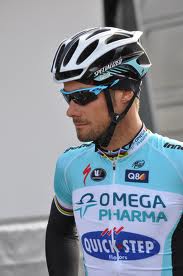
After the aperitif that was the desert races the season got under way with moules and frites at the weekend with Het Nieuswblad on Saturday followed by Kuurne Brussel Kuurne 24 hours later. For all the hyperbole that’s generated ahead of a cobbled classics campaign by the other teams in the peloton about ‘this’ being ‘their’ year to shine, if there’s such thing as a ‘supergroup’ (to use a musical analogy) for these races it has to be (Etixx) Quick Step. From now until the end of April, this year won’t be any different to the last few with the expectation that Tom Boonen and co’ will deliver the results that the team demands and expects.
Tom Boonen
For Boonen there’s a sense of time running out on what has been an illustrious career even if he doesn’t add another Tour of Flanders or Paris Roubaix to his palmares. OHN remains an omission from his list of titles after he missed out to repeat winner from 2014 Ian Stannard on Saturday last. The widely held view in the immediate aftermath was one of disbelief that Etixx had allowed the Team Sky rider to snatch victory after they (Etixx) had gone into the final km’s in a group that had the kind of numerical advantage that should have nullified any threat posed by Stannard. Boonen backed by Stijn Vandenbergh and Niki Terpstra seemed nailed on for the win but he was unable to respond when needed, seemingly ‘cooked’ and leaving Terpstra to contest a sprint with Stannard who had shown that he has a clean pair of heels when needed last year to beat Greg Van Avermaet.
The Etixx OHN debacle was exaggerated further by the bizarre spectacle of Patrick Lefevere singling out Stannard for winning ‘dirty’ by not taking his turns on the front. It’s interesting watching Boonen in the classics now for as much as I want to see him take another monument it just doesn’t seem that likely. Certainly he’s had his share of misfortune with injuries and a number of issues off the bike but even when on form there seems to be that final few percent missing in his performance. I didn’t see much of OHN but on Sunday during Kuurne Brussel Kuurne Boonen seemed to expel a lot of energy on challenging other riders to work rather than focusing on his own race. With Mark Cavendish already pre-destined as the rider Lefevere needed to win KBK, Boonen would have been numero uno for OHN, as mentioned previously a race he’s yet to win. It seemed that the Etixx game plan for Boonen would play out similarly to the dominant team performance that saw Boonen and four teammates go clear when he won last years KBK. As with 2014 though, Stannard played the joker and it was the Sky man’s presence at the sharp end of the race at the crucial moment that upset a maiden OHN victory for Boonen. Etixx undone by an individual ‘pesky kid’ in the form of Stannard.
Lefevere’s OHN sized hangover only lasted a day as Etixx the team grabbed a repeat result in KBK, this time won by Cavendish. In practice this was as much of a close run thing as the previous days race as Boonen, leading out Cavendish, needed to display superb bike handling skills as Alexander Kristoff moved in front of him in the sprint. Etixx had come pretty close to cocking things up again when they allowed the peloton to catch a break that featured all of their key players with km’s to spare. As I mentioned here Cavendish needed to win this race and while Kristoff is no Kittel, he’s very much a rider in form and possibly the third fastest man in the world tour at present. Cavendish was up against Elia Viviani too, Sky’s new sprinter taking the final podium place. This was a good result for the Italian, his new team doing well to keep him in contention for the win.
Etixx ought to go away from the weekend not allowing victory in KBK to take the edge off what has been a pretty rotten weekend tactically for them. It’s possible that only a rider like Ian Stannard could have overturned the odds against him on Saturday, but the fact is that Etixx had winning positions earlier in both races that they failed to realise. They may be grateful for the salvation that Sunday’s victory provided in the shorter term, but they will need to do better if they want Boonen to deliver against Cancellara and Sagan next month.
Stannard was lost to injury soon after his breakthrough win last year so it’s going to be interesting to see how Sky play him for the rest of the spring races. As with 2014, it’s too early to say whether or not this win will provide a breakthrough for rider or team. As much as I enjoyed Stannard’s double I think it’s still difficult to see the team landing one of the monuments this spring.*
Tour Down Under launches the 2015 road racing season
It doesn’t seem like a year ago that I was bemoaning the lack of television coverage (at least in the UK) of the Tour Down Under. Some of that discussion neatly ties in with a recent post I wrote about the launch of Velon and the possible implications that will have for armchair fans in the future (you can read about that herehttp://tinyurl.com/k3w6poo). If i’m honest I haven’t paid that much attention to the goings on in Australia and even less to the race about to start in Argentina (until today that is). I guess it’s because the TDU takes place during the (Australian) summer and we’re still ‘enjoying’ the coldest part of the year in Europe. I’ll watch the races in Qatar and Dubai, but for me anyway the season doesn’t properly start until the weekend of Het Nieuwsblad and Kuurne Brussels Kuurne where the riders will at least be similarly dressed to me.
Cav v Heino – in the news for different reasons
Anyway, back down under for a moment and firstly I will point you to an article by Lee Rodgers AKA Crankpunk (read that here http://tinyurl.com/m7q8hqs). The interesting point CP makes is that the timing of the TDU and the Aussie National Road Race Champs’ can give a bit of a distorted picture of riders form going into the season proper. It’s an interesting theory and the article looks at Richie Porte’s prospects for 2015 as he’s currently saying how good he’s feeling at the moment. The only way for Richie ought to be up as last season can’t have gone any worse for him really. He’s already got the Aussie TT jersey but I don’t think it’s either important or significant if Porte wins the TDU. What will be interesting is how Sky intend to use him this year. Before everything went pear shaped for Porte in 2014 he was lined up to defend his Paris Nice title until Sky withdrew him at the eleventh hour to ride for Chris Froome at Tirreno Adriatico. With the benefit of hindsight Sky’s desire to protect their star rider made sense but at the time it seemed like a strange decision and for all of the physical problems that dogged Froome’s BFF last year I wonder if having his programme messed with had a negative impact psychologically on Porte.
There was a lot of speculation last year, some of it stoked by the rider himself, that Richie would need to consider life away from Sky if he was to really fulfil his potential as a GC rider in the grand tours. I think the way Sky handle Porte this year will have a huge influence on whether or not he decides to stay with the team. I wonder if the stars are poised to align at some point in the next year or so that will see Porte move to Australia’s team Orica Green Edge, with one or both of the Yates brothers moving in the opposite direction to Sky.
Talking of Aussie riders I was super happy to see Heinrich Haussler take the Aussie road race title last week. I have been a massive fan of Heino since his Cervelo days and while it has been a while coming it’s great to see him getting a result like this for IAM cycling in their first year at the highest level. Haussler has been out of the limelight for a long time and he wasn’t wrong when he described his win as the biggest of his career. I hope that Heino can kick on from this result; he’s due a better showing in the spring classics too. I remember meeting him during his first year with IAM and he seemed genuinely surprised that anyone would have sought him out when the big crowds were surrounding the Sky Death Star. Hopefully in 2015 Haussler can remind a few more people of just how exciting he was to watch back in 2009.
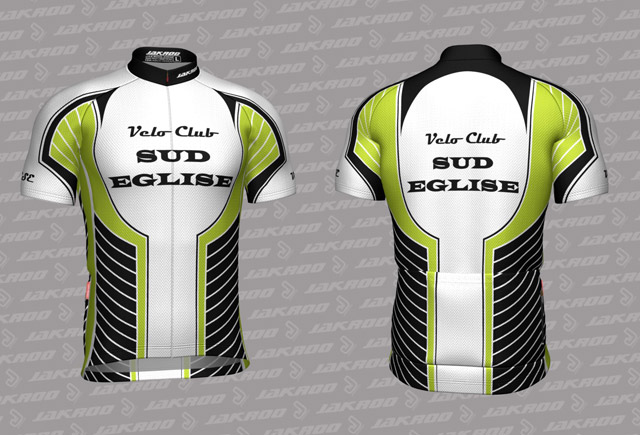
After the demise of the VCSE t shirt store last year it was probably about time we had something to sell again (and here it is). VCSE has teamed up with West Coast (that’s USA rather than Virgin Trains) design company Jakroo to launch our first cycling jersey. It’s a bit of homage / tribute / rip-off (delete as applicable) to the HTC kit of yesteryear and has a (hopefully) classic design in black and white with (so on trend) flouro yellow accents.
New VCSE Race S/S Jersey
There should be more products to follow in the new year and at the very least we’re hoping to add a winter jacket and two types of bibs. Individual orders can be done with Jakroo directly in the US but there are significant savings to be made by ordering in bulk so please check in with us first and I will advise on pricing. There’s more info via the link on the right hand side of the page (if you’re reading this on a laptop) or scroll to the bottom of the post if you’re on a tablet or mobile. There’s a (new) dedicated page ‘VCSE store’ at the top of the page (or via the menu on mobile devices) that has all of the links and info you need.
Waking up to press reports about the launch of Velon this morning. With a good percentage of the world tour (including Sky) signed up already it’s looking like an attempt by the teams to exert greater control over the way the sport is currently organised.
In itself, a greater say for the teams, isn’t an obviously ‘bad’ thing. Some team principals have bemoaned the lack of a transfer system for example that could introduce a vital revenue stream for teams at all levels. Then there’s the race calendar that prevents the world’s best riders competing against each other due to events clashing. A powerful bloc in the sport negotiating to ensure future financial viability could (in theory) transform cycling for the better.
Velon – big changes for the peloton?
While a transfer system isn’t explicitly mentioned in today’s news story, one of the Velon co-signatories Dave Brailsford is a proponent of team’s receiving a benefit from the movement of riders they have developed elsewhere. VCSE agrees that a reorganisation of how riders move between teams is long overdue. Looking at the UK for example where even successful teams disappear almost overnight for lack of a sponsor, revenue from a transfer (Adam Blyth from NFTO to Orica say) could ensure a smaller teams survival. This has been part of the operating model in football for years. However, there’s a risk that a transfer system within cycling could also lead to some of the same outcomes ‘enjoyed’ within football, with the teams with the biggest budgets snapping up the best riders to the detriment of competition. Sure it’s unlikely that a transfer system would produce a different grand tour winner to the default Contador, Froome or Nibali, but it could result in a dominance among certain teams that (potentially) damages the spectacle. On the whole though if one of the aims of Velon is to instigate a framework that provides teams with another revenue stream besides sponsorship this can only be a good thing.
The challenge for Velon is to ensure that the stated aim at the heart of the project; to have ‘fans’ at the ‘centre’ is actually delivered. While there are some obvious beneficial parallels to the introduction of the Premier League (EPL) there are other aspects that cycling shouldn’t be seeking to replicate. For the moment cycling is a relatively accessible sport for someone who wants to start a team, with even some world tour teams able to operate on a budget of just a few million euros. In football, the EPL in particular but also the top leagues in Spain and to a lesser extent Italy require annual investment of hundreds if not billions of dollars. In the case of the EPL much of this money has come from an ever increasing amount of cash from Sky as the main broadcaster of live matches. Over the years as Sky have bid ever more for the TV rights the clubs who have managed to stay in the top flight have become in turns bloated and (yet) increasingly reliant on the moneytrain. While it can be argued that Sky’s involvement has been good for the fans in that it has forced every broadcaster to raise their ‘game’ as far as showing football is concerned, there remains a small but vocal minority who feel that it hasn’t always been for the best. The loss of the ‘traditional’ 3 o’clock kick off and the price of a ticket to a game are just two of the complaints often levelled at the EPL host station and clubs.
What does any of this have to do with Velon? The EPL started as a group of football club chairman (who in those days were as likely to be the owner of the club too) getting together to discuss a breakaway league. This was in response to their perceived viewpoint that the terrestial (and free to air) networks weren’t giving them (the clubs) full value for money in what was at the time a nascent live football environment. The launch of the EPL on Sky was certainly sold to fans and viewers as football with the fans at the centre, although it would be harder to make that claim now.
On the very day that Velon is announced it might seem cynical to question its aims, particularly as it has the opportunity to make the sport more sustainable for its participants and that can only be a good thing. It will be interesting to see how Velon can operate in the (now) three way space between the UCI and the race organisers. There would appear to be no obvious benefit in holding key early season races like Paris Nice and Tirreno Adriatico at the same time for example, although whether a move to non clashing dates would see riders take part in both races is harder to imagine. Then there’s the question of TV money. Within the UK, cycling is not so mainstream that many races are shown free to air. For the committed cycling fan some kind of subscription to a satellite or cable provider is essential to be able to see the spring classics or each grand tour ‘live’. Long before donning their Velon hats team principals have volunteered that they don’t feel that get enough of the benefits derived from the biggest races by the organisers. It’s difficult to see a ‘turkeys voting for Xmas’ scenario whereby ASO surrenders a share of their earnings from the Tour. Might some of the teams push towards a television model that requires the armchair fan to reach further in their pockets to watch ‘their’ chosen sport? One of the reasons why races like the Vuelta have seen such an increase in support by fans at the roadside in recent years is the fact that cycling is one of the few (if not the only) professional sports that’s free for spectators. It would be good to see Velon enshrine a commitment to having ‘fans at the centre’ that would guarantee that this state continues. Cycling does not need to introduce ticketing into the final kilometre.
If Velon can deliver a sustainable model where there’s an incentive for all teams to develop young riders (and while we’re at it a women’s team for every world tour outfit), a racing calendar that avoids date clashes for the biggest races while (at least) retaining the current level of accessibility for fans we should all be celebrating in a few years time. However, it’s so instructive to look at the examples from other sports and perhaps, at least a little, to be careful what we wish for..
Have you had your say in the Cyclingnews 2014 awards yet? OK so we’re likely to see the usual suspects winning but it’s at least a truly democratic selection and representation of armchair fans’ views. For what it’s worth the VCSE voting form went something like this..
Moment of the year? – Grand Depart 2014
Best rider – Vincenzo Nibali
This was a bit of a toss up between Contador and the Shark. We held our nose about picking Chris Froome as pre-race Tour favourite this year even though Bert looked like the stronger of the two. What most people didn’t expect was that Vicenzo Nibali would take advantage of those two marking each other on stage 2 and attack for the stage victory and race lead before the race had even reached France. Following their respective injury led departures from the Tour it was Contador that claimed the ‘I probably would have beaten you at the Tour’ prize by knocking Froome over at the Vuelta. But the crucial point for Nibali in getting the VCSE nod over the Spaniard was his assured ride over the cobbles on stage 5 of the Tour. Surely the award of best rider has to go the one who demonstrated the greatest versatility and on a day where Contador appeared to be going backwards at times it was Nibali who emerged as the consummate bike handler.
Best female rider – Lizzie Armitstead
Legend that she is 2014 was not the greatest year for Marianne Vos. True there were victories in the races she outright targeted; the inaugural Women’s Tour and Le Course but she was more of a peripheral figure this year. Lizzie Armitstead may not have expected to win the World Cup after her stunning early season consistency but win she did, further raising he profile outside of the UK. Then there was her Commonwealth Games gold against a field where (unlike the men’s race) Lizzie was up against a genuinely classy peloton. She may still rue the tactics that threw away an opportunity to win the worlds in September but looking back this has been a great year, no question.
Best track rider – Francois Pervis
Based purely on seeing him perform at the final round of the Revolution series earlier this year (he had already won the worlds by this time). With the British teams focus on the four year ‘cycle’ towards Rio 2016 it’s perhaps not surprising that Pervis made Jason Kenny look (if not) ordinary, then certainly not the reigning Olympic champion.
Rider of the year – Alberto Contador
A vote here for Contador might look a bit strange after picking Nibali earlier but Contador gets the nod for his results over the entire season. For starters Contador beat Nibali (winner of the previous two editions) easily in Tirreno Adriatico as the season was getting underway and long before his return from injury to claim his second Vuelta in three years. Throughout the year, Contador had the edge over his main rivals and he looked like the rider to beat ahead of this years Tour. We really only saw the briefest of flashes that Alberto was stronger than Nibali with his dig in final metres of stage 9, but by the next day he was gone. Of course, Nibali was not really seen as much of a threat before the race got underway, chief rival Froome never looked as if he had the confidence to seriously challenge Contador at the Tour. The gap between the two (in 2014 at least) was emphasised at the Vuelta. Winning his home grand tour may have provided some satisfaction after the disappointment of injury at the Tour but that’s the race you have to suspect Contador will want more than anything in 2015.
Stage race – Vuelta a Espana
Considering that it has provided more drama than the Tour (if not the Giro too) in the last few years the Vuelta remains the poor relation of the grand tours; threatened with a reduction in length or used as a training block for the world championships that follow. So the final stage was a bit of anti climax, what preceded it had it all with a GC contest going to the wire again. OK, it’s true that we probably wouldn’t have seen Contador or Froome at the race without their respective Tour exits but the fact is they were. The resulting battle the Sky power meter and Tinkoff street fighting provided the kind of stage racing the Tour often lacks. The Vuelta has to be the antidote to the Tour if it’s to survive in this format. The parcours and the field can throw up an unusual result (as with Chris Horner in 2013) and while it won’t ever enjoy the sheer scale of the Tour, at the moment at least, it’s the better race to watch.
One day race – Tour of Flanders
A close run thing with Paris Roubaix but on the basis of the Ronde literally going down to the final kilometre it has to be Flanders. With at least one more year of the Cancellara and Boonen rivalry to enjoy it’s going to take a Wiggins win in Roubaix to knock Flanders off the top step in 2015.
Team – Tinkoff
Grand tour winner? Check. Colourful team owner? Definitely. Up and coming new rider? Another tick. Strength in depth? In spades. Tinkoff Saxo showed that they could do most things better than their rivals in 2014. Losing team leader Alberto Contador on the Tour didn’t see the implosion that overcame Sky who lost Chris Froome almost a week earlier. Instead Tinkoff took stage wins and claimed the KOM with Rafal Majka. Bjaarne Riis selling up to Oleg Tinkoff pre season was just one of the ingredients that made Tinkoff the team of 2014. Astana might have had a look in but that outfit looks increasingly schizophrenic with Nibali and Aru struggling to balance out a slew of failed drug tests. Tinkoff can look forward to the arrival of Peter Sagan next year to rev up their one day prospects too.
Tour bike – Cervelo
Silly question. Have you seen my Instagram?
Innovation – in race technology
Could have said Di2 XTR here, but on reflection the introduction of in race technology (most pertinently on bike cameras) might presage better ways of presenting the sport. Watching a stage race live and actually getting excited before the final 10km is completely dependent on what’s at stake. It’s hard to get too jazzed about a flat transitional stage or any part of the Tour of Alberta (for example), which seems entirely based on arrow straight roads across featureless plains. Showing on bike footage, either live or previous days highlights could prove really useful in providing some colour to the bits in between. Same goes for the live timing used during the TT at the worlds’; actually made watching a time trial live interesting.
Memorable moment – Yorkshire Grand Depart
This was so nearly a “don’t know”. There were plenty of memorable moments to choose from; an exciting year in the classics, Quintana winning the Giro, Contador coming back to win the Vuelta, Jens taking the hour record. The unfortunately named ‘Big Start’ of the Giro was successful but perhaps lost something as a spectacle due to almost constant rain and sprint finishes. The Grand Depart on the other hand enjoyed blissful climatic conditions and the kind of public enthusiasm that we do in the UK since the Olympics. No one could have predicted just how many would turn out for a glimpse of the Tour. And this wasn’t just in the places you expected. Crowds four and five deep on a straight section of Essex A road as experienced by your correspondent on the stage into London showed just how popular the sport has become. It lights the touch paper for further friendly incursions by the Tour and potentially the chance of finally over coming the difficulties in staging closed road races here.
There’s no such thing as a dull finish at the Vuelta. One of the things that makes the supposed runt of the grand tour litter so exciting each season is that no matter how uneventful the proceeding kilometres may be the finish always seems to spring a surprise with an uphill drag thrown into a stage that’s supposed to favour the sprinters or some other cycling curve ball. Take stage 6 (one of VCSE’s stages to watch) where the final was a relentless climb of nearly ten percent without so much as a curve to distract the peloton that they had only one way to go; straight up.
Alejandro Valverde – Hinault to Quintana’s Lemond?
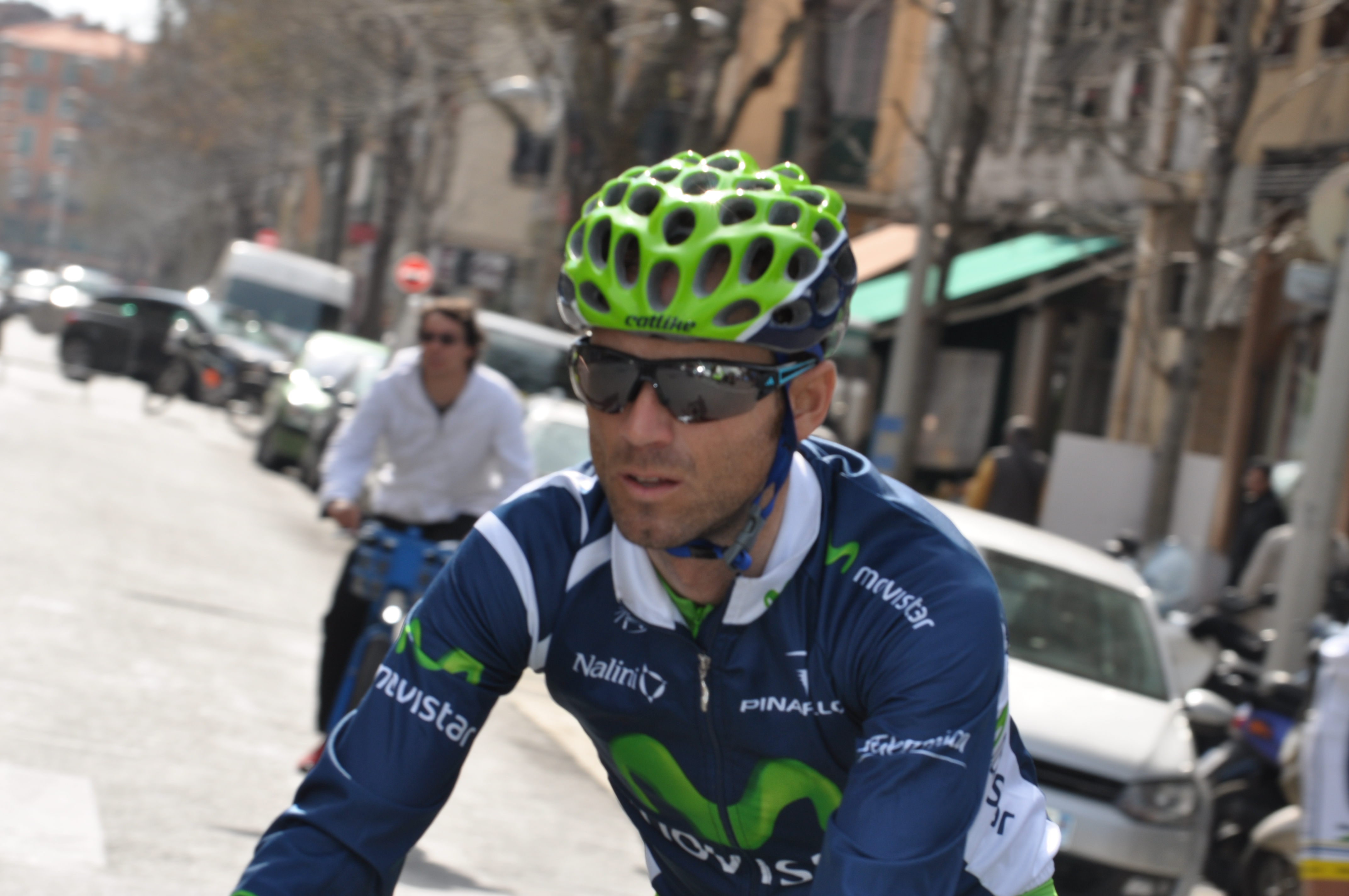
Stage 6 was, as predicted, the first selection on the GC albeit with an unexpected outcome. Alejandro Valverde may not be everyone’s favourite rider but the roads of southern Spain are what the Movistar joint team leader calls home and he took the stage while retaking the race lead he had held for a solitary stage earlier this week. At the time of this post Valverde has one more stage to contend with another summit finish if he’s to hold on to the number one spot on GC into Mondays rest day. The question of who leads the Movistar team at this years Vuelta has been one of the main back stories to the race with many commentators (including your correspondent) suggesting that Nairo Quintana would be the man to watch. Leaving aside the other contenders for a moment Valverde took 12 seconds out of Quintana on stage 6 and might have gained some more today as the younger rider got caught out in a crosswind effected stage. Valverde himself has said that we shouldn’t write Quintana off; he’s expecting him to “..strong in the high mountains.”
Tomorrows stage (with another summit finish) to Aramon Valdelinares with its 3,2,1 countdown of categorised climbs may mix the GC up again but it’s entirely possible we’ve already seen the protagonists for this years race when we look at the stage 6 top ten. Joining the Movistar pairing were Chris Froome, Alberto Contador, Joaquim Rodriguez, Fabio Aru and Robert Gesink. At one point it look as if Purito was going to claim the stage win, but it was Valverde who set the pace pretty much the whole way, shedding riders with GC pretensions all the way including Wilco Kelderman and Rigoberto Uran. Of course another ‘story’ that’s been cooked up for this race is the supposed re-match between Contador and Froome. The Sky rider has played down his own chances this week and while he possibly ‘only’ looked at 95% on the stage 6 finishing climb his condition doesn’t look like the issue. What is becoming a bit of a problem is Froome’s bike handling and he came off the bike again on yesterday’s stage. There’s some suspicion that the accidents that have befallen him are a result of his stem fetish; Froome’s constant glances at his power meter can mean that his eyes aren’t on the road (and the rider immediately in front of him) at crucial moments. It certainly looked like the Sky team leader was being carefully shepherded by his domestiques on today’s stage.
Contador as predicted has been low key, but more importantly never far from the action so far. With one stage to go until the rest day the Tinkoff rider lies in third place 18 seconds behind Valverde and two ahead of Froome. Rodriguez, Aru and Gesink also make the top ten with the current surprise package, Orica’s Jhoan Chaves in 5th place.
The early race lead, taking over from Valverde after winning stage 3 was Chave’s teammate Michael ‘Bling’ Matthews. He add’s the race leaders jersey from the Vuelta to the one he gained earlier this year at the Giro and in some way it might make up for his last minute withdrawl before the start of this years Tour. Matthews lead was set up by a typically strong team time trial performance from Orica, but the surprise package from the opening stage was Movistar who won against more fancied opposition. Matthews held the lead until stage 6 and has placed well on the other ‘flat’ stages. VCSE’s sprint pick John Degenkolb has two stage wins so far equalling FDJ’s outgoing sprinter Nacer Bouhanni who just pipped Matthews today. The only ‘surprise’ win in the first week was from breakaway specialist Alessandro De Marchi who gave Cannondale a nice sign off in the current incarnation with victory on stage 7.
VCSE doesn’t expect the top four to change in terms of riders tomorrow, but the order might do. The good news is that Froome and Contador both look as if they’re going to play their part in this years Vuelta to the full and that could mean a trio of grand tour winners on the podium in two weeks time.
What’s up with this picture?
Maybe a follower from the US can help out with this one? Why is it that so much coverage of US races falls over due to picture break up? During last weeks USA Pro Challenge in Colorado we lost coverage for most of one stage (at least the part that was meant to be televised) and large sections of others. This was blamed on weather conditions and the altitude, but picture break up is a feature at most of the races were coverage is picked up from a US host broadcaster. This is disappointing as much of the rest of the coverage (the on screen ‘ticker’ that shows race position etc.) is excellent. The racing too is very often exciting, save for the inevitable intermediate parts of the stage that have to use arrow straight highways.
Fortunately one of the stages that wasn’t overly effected by transmission difficulties had Jens Voigt in his farewell race in the kind of break that made his name and indeed his ‘Shut up legs’ catchphrase. We were denied a fairytale finish when Voigt was caught within the final kilometre but as may said at the time it was probably fitting that things didn’t quite come off. Voigt leaves the sport undiminished as a rider from the generation that has been most vilified for the doping that signified the period. Voigt, when asked, has always vehemently denied any involvement in PED’s and it’s to be hoped that the rider remains the exception rather than the rule in retirement. As someone who has been such a great marketing tool for Trek worldwide it wouldn’t be difficult to imagine how disappointed his fans would be he turned out to have feet of clay like his erstwhile Trek ambassador Lance Armstrong.
It was interesting to hear that Voigt apparently polarises opinion, with some fans critical of the way this years USA Pro Challenge had been trailed (at least in part) as a valedictory event for the rider. The VCSE standpoint is that Voigt is a character and in an increasingly anodyne sporting world cycling (any sport in fact) needs characters. Compare and contrast Bernard Hinault or Jacques Anquetil with today’s riders and you get the idea.
As the 2014 Tour de France entered its final week and the second of three days in the Pyrenees the GC looked increasingly nailed on for Vincenzo Nibali. By the time the next two stages had been completed his victory was all but assured and most people’s attention shifted to the competition for the podium places being contested by three French riders for the first time in 30 years. But first to the Shark of Messina, Nibali who dealt with the man who was arguably his last remaining rival by appearing to not focus on him at all. Movistar tried any number of combinations to provide Alejandro Valverde with the platform to take time back from Nibali, if not take an unlikely lead. Nibali, supposedly hamstrung by a weaker team in many pre-race assessments actually rode similarly to Chris Froome last year, able to look after himself when the stage entered the final act.
Vincenzo Nibali TDF 2014 winner
There is a clear stylistic difference between the two riders, but the way Nibali disposes of his rivals by putting on short, powerful bursts of acceleration is no different to Froome. The Sky riders exaggerated pedal stroke is more obvious than Nibali’s digs but the end result is the same. On stage 17, won by KOM winner Rafal Majka Nibali did what was necessary to maintain his advantage but on the following day he destroyed any lingering chances of the yellow jersey going elsewhere this year.
Nibali won the stage to the top of the Hautacam by more than a minute from Thibaut Pinot. Inextricably linked with doping the margin of victory on the climb led to a louder chorus of questions for the Maillot Jaune. Whatever anyone thinks of Nibali’s performance it’s worth noting that his time up the Hautacam was only good enough to make the top 30 of all time climbs of the peak. Some have argued that his time may well have been slower as the stage also had to cross the Tourmalet, but from the VCSE viewpoint the significance of the time gap owed more to the absence of the aforementioned Froome and (of course) Alberto Contador.
Nibali’s winning margin when the race entered Paris was nearly 8 minutes, but he gained much of his lead on the cobbles of stage 5 where one of the pre-race favourites crashed out and the other lost time. It was also lost on many that Nibali gained yet more time on the penultimate stage time trial when most cameras were focusing on the battle for second and third between Pinot and Jean Christophe Peraud. The attack, if it can be described as such (surely just better race craft) on stage 5 is the most obvious example, but throughout the race Nibali took maximum advantage from the chances that were presented to him. When these chances happened towards the end of a stage, as with the end of stage 2 in Sheffield, Nibali grabbed the win while others seemed to wedded to their own game plan to capitalise.
The doping questions have been less strident this year, although the presence of Alexander Vinokourov managing Nibali’s Astana squad meant that some saw no smoke without fire. Nibali seemed to deal with the questions in a dignified way, although it’s also true that doping questions in general tend to emerge from English speaking journalists so it’s always possible some things got lost in translation. If the assumption is that Froome’s 2013 win was clean, then there’s no reason why Nibali’s victory should be viewed any differently. Of the riders starting this years Tour Nibali, Contador and Froome are a class above and in the absence of the latter two surely it’s not that surprising that Nibali emerged as the winner?
Nibali’s victory, for all of the peaks of his stage wins was understated and classy and that’s typical of the rider. The fact that Nibali is already talking about returning to the Giro next year demonstrates his appreciation for the history of the sport. Of course, a cynic might say that in doing the Giro in 2015 Nibali will avoid a match up with 2014 Giro winner Nairo Quintana, not forgetting the likely return of Froome and / or Contador. The likelihood of Quintana and Nibali meeting for a GC contest next season is unlikely if the Scilian doesn’t defend his Tour title. The question of who is currently the greatest grand tour rider will have to wait a while longer.
30 years of hurt.. Over?
You wait 30 years for one French rider to get a Tour de France podium and then two come along. In our last post we had speculated whether AG2R could get a rider on the podium after Roman Bardet had lost his young riders jersey and third place to Thibaut Pinot on stage 16. With a time trial to follow the final mountain stages it seemed likely that Bardet would be the rider to lose out with the AG2R team, but as Alejandro Valverde’s hopes of a podium went a stage too far in the Pyrenees the French teams found themselves scrapping for second and third with two podium places on offer.
Peraud was often Nibali’s shadow in the mountains and that alone should dispel some of the speculation about whether or not Nibali is clean. Peraud the ex mountain biker is 37 and it’s hard to see his second place as anything other than a career high watermark. This isn’t to diminish his performance; Peraud finished ahead of stage race winners like BMC’s Tejay Van Gardaren as well as Valverde, Pinot and Bardet. Peraud leapfrogged Pinot as expected during the TT, but the FDJ rider was consoled by his own place on the podium as well as the young riders jersey.
The absence of Froome and Contador looms over this French renaissance however. It’s hard to see how the dual podium for Pinot and Peraud could have been acheived if Froome and Contador had been present. It’s more likely that a top ten result would have been possible, indeed this is where Pinot saw himself within the 2014 Tour contenders: “..no better than 5th to 8th”. The payoff for French cycling is a likely increase in interest and participation with the sport itself able to reflect that this is what a clean(er) race looks like.
While putting the Tour preview to bed this morning VCSE was missing the developing story on social media that two more British riders were being omitted from their respective Tour teams. David Millar, apparently inked in last week was binned after what his team determined to be a sub par performance at the British road nationals. Alex Dowsett was withdrawn due to what was described as ‘breathing problems’. At the time of writing there doesn’t appear to be any more to the Movistar riders withdrawal (Alex hasn’t commented) and it must be gutting for him after missing out on the Olympics in 2012 due to a broken leg.
Down and out of the Tour – David Millar (pic copyright James Start)
Movistar had obviously seen the benefits of including the Essex based rider when they announced their line up, especially as stage 3 would cover some of the roads that Dowsett trains on week in week out. As popular as riders like Mark Cavendish are (ironically another Essex roads rider) Dowsett would be have been guaranteed lots of support on his home roads.
The Millar scenario is different and has a whiff of Wiggins about it, although for entirely different reasons. Millar was the marquee rider on the Garmin team when they first joined the (now) world tour and won a stage at the Tour as recently as 2012. Long since cast in the role of domestique / sage Millar announced at the end of last season that 2014 would be his final year and he has made a number of valedictory appearances in races this year.
It was always unlikely that Millar would trouble the GC if he raced the Tour but the sheer bloody mindedness of the rider suggested that he would identify one or two stages to ‘go hard or go home’ in search of a breakaway stage win. He didn’t feature in yesterdays GB national road race and withdrew from his arguably stronger event, the TT, last week in an effort to be fit for the Tour. Millar had outed himself as part of the Tour team by accident a couple of weeks earlier when he tweeted that he was ‘packed’ for the Tour and was painfully prescient when he suggested that a lack of contact from his Garmin colleagues last night could signify that he had lost his Tour place. Whether or not his deselection has “killed” his relationship with his team remains to be seen, but it evidences that Garmin want to make a serious tilt at the Tour rather than allow Millar a sentimental journey.
Garmin had a disastrous start to the Giro earlier this year losing team leader Dan Martin before the first stage was even over. It’s entirely possible that there’s a commercial imperative for the team to put in a stronger showing at the Tour. The emphasis is on the team here. Ryder Hesjedal was able to put in a decent showing pretty much unsupported at the Giro. Millar could have delivered views of the Garmin jersey on television similarly, if by a slighty different route to Hesjedal but maybe the team and the sponsor want more. Maybe the 2014 Tour is all about the team delivering a result, even if ultimately it will be an individual (in this case Andrew Talansky) who takes the plaudits.
If that was the case though why wait until five days before the Tour starts to decide. Would Millar really have been such a deadweight to the team, particularly as the toughest stages are back ended on this years route? Burying bad news about another British crowd favourite not taking part in the Yorkshire Grand Depart is pretty difficult at a time when even the mainstream media start to take a proper interest in the sport.
With the emergence of a British team that has been incredibly successful on the world stage, two Tour wins and two huge hauls of Olympic gold medals since the last time the Tour visited the UK it seems perverse that there will only be three British riders at the start this weekend (and one of those flies under a flag of convenience). It’s likely that the organisers, ASO and the team in Yorkshire, didn’t think anything else could go wrong after Bradley Wiggins omission by Sky, but the absence of Millar in particular is the nasty tasting icing on that rather inedible cake.
Just as night follows day the winning the Dauphine has become part of the landscape for Sky on their way to winning the Tour a few weeks later. In 2012 it was Bradley Wiggins and a year later Chris Froome. For Froome victory would have been a strong indication of his form ahead of his July target, his race programme for 2014 had been extremely low key so far, although both times he had raced he had won the GC (Oman and Romandie). Backed by a team of domestiques deluxe who would make anyone’s Tour team Froome would be facing off against some of his key rivals for the yellow jersey when the Tour gets underway in Yorkshire and a few pretenders who would be troubling the top ten. Alberto Contador was looking back to his best form of 18 months ago when he captured the Vuelta and Vicenzo Nibali, who while not enjoying the same kind of results would be seen as threat to the Sky rider.
“Your name’s not down, you’re not coming in” Wiggins and Froome
Froome has a teflon like ability to rise above the ‘noise’ that follows the Tour de France champion although he could not avoid the fact that he was a big part of the story ahead of the race. Following the serialisation of his book in the Sunday Times (ghost written by ST journalist David Walsh) which had cherry picked the chapters that focused on the Froome / Wiggins ‘relationship’ (and lack there of), Wiggins had popped up on radio and TV to announce that he wouldn’t be riding the Tour. In itself this was a juicy narrative for the rotters of the press and social media to get stuck into (VCSE pleads guilty; see the previous post). The will he, won’t he selection of Wiggins for the Sky Tour roster was merely an apertif though. First, we had Froome looking vulnerable and falling out of the GC lead he had establish in the stage 1 prologue and then we had a rather messy spat between sections of the (French) press and Sky over a TUE.
For the casual follower of the sport a TUE can be explained as a ‘sick note’ that excuses the rider for using a banned substance if it is necessary to treat a particular condition. So far, so reasonable but TUE’s have a very murky past. It was a false and post dated TUE that Lance Armstrong used to explain the prescence of cortisoids in the ’99 Tour. Ironically and certainly unfortunately for Froome it was the same variety of banned substance that got him into hot water at the Dauphine.
After crossing the line ahead of Contador on stage 2 Froome was given an inhaler. No attempt was made to conceal its use and this is an important point. Sky handled the following furore with the typical cack handedness they display when the aren’t in control of the story (or indeed a race) and this certainly didn’t help the situation. Over the course of the week it emerged that Froome had previously stated he didn’t suffer from asthma, the reason given for the use of the inhaler and some commentators took things off on a tangent suggesting that Sky and their rider were somehow being ‘protected’ by the UCI. Perhaps the most damming criticism came from Walsh who had spent the previous year embedded with the team as well as writing the Froome tome. Walsh felt that Sky were backtracking significantly from the standards they had set for themselves at the team’s inception, that they wouldn’t race a rider that needed a TUE.
Things are so toxic because of Armstrong and the TUE use cannot help but remind people of cycling’s dark recent past. Sky’s whole reason for existence stems from a desire to race and win clean and the story of Froome’s inhaler shouldn’t be seen as history repeating. Much of the reason for this is what subsequently happened at the Dauphine. Over the final two stages of the race Froome lost his place and the leaders yellow jersey to Contador on Saturday and on the final day fell out of the top ten altogether.
Contador, point proven perhaps, lost the lead himself on stage 8 to Garmin’s Andrew Talansky an emotional victor hinting that Garmin may seek to do more than just go for stage wins at the Tour. Besides the collapse of their team leader Sky have a further headache in the loss of form that Richie Porte is going through. Porte has suffered a string of bad luck and non finishes since switching from Paris Nice to Tirreno Adriatico early on in the season. He will go to the Tour but it seems more likely that Froome will be reliant on Euskatel Mikel Nieve as his last man standing. Whether or not Froome will click with Nieve the way he does with Porte remains to be seen and Sky’s jangling nerves won’t have been soothed by Contador’s results with what was pretty much a Tinkoff Saxo B team supporting him.
Another rider dusting himself off after a poor week was Nibali who didn’t look like troubling the podium from the prologue onwards. There are a lot of noises off around Astana at the moment with Nibali and the Italian contingent seemingly at odds with the Kazakh management. It maybe too early for a parting of the ways, but it will take some of the bloody mindedness that Nibali displayed at the 2012 Tour in the face of Sky dominance for him to deliver another podium place in July.
Another young rider emerging with credit was Belkin’s Wilco Kelderman. With Belkin announcing that they are leaving the sport less than a year after coming Kelderman’s fourth place could prove timely. The team may yet survive as bike supplier Bianchi are keen to remain, but this will dependent on finding a title sponsor and results so far this year have been patchy at best. Orica’s Adam Yates delivered another strong finish in sixth, but will probably find himself squeezed into the top 20 or so, assuming the Aussies select him for the Tour. It’s possible they might be teeing up Simon Gerrans for a tilt at the points jersey if he can get over the climbs better than Peter Sagan this year and the Cannondale rider is squeezed out of the sprints by the three way battle between Cavendish, Kittel and Griepel.
Tour de Suisse 2014
The question for fans of Britain’s cycling knight ahead of the Tour de Suisse was would Bradley Wiggins use the race as an opportunity to stick a metaphorical finger up at Team Sky’s management in general and Chris Froome and Dave Brailsford in particular. Having announced that as far as he was concerned that he wouldn’t be part of Froome’s back up at the Tour a win in Switzerland seemed like the perfect risposte to the apparent snub delivered to the 2012 Tour de France winner. That Wiggins chose not to get on the pace, finishing more than 30 seconds down on the opening stage prologue, before losing more time on the subsequent stage and withdrawing from the race early is typical, although not for the reasons some would think.
Wiggins is goal driven and after riding Paris Roubaix and winning the Tour of California his stated aim was ride (in support of Froome) at the Tour. Having summised that he would be surplus to requirements in July Wiggins would not have felt the motivation to demonstrate his form in Switzerland while Froome rode in the Dauphine. The difference between the driven, target in mind Wiggins and the rider whose heart just isn’t in it is palpable and Wiggins was probably grateful in some strange way that the accident he was caught up in while loitering at the back of the peloton provided a platform for him to bow out early.
Some might say that Wiggins was doing the equivlent of taking his ball and going home and there is perhaps something in this. Now it’s clear that Wiggins never wanted to race the Giro last year it does go some way to explain his poor results and showing in the run up to that race. Wiggins may have felt that he deserved inclusion in the Tour team based on (delete as applicable) being a previous Tour winner and with the race starting in Yorkshire, but this ignores the fact that he merits inclusion based on form alone if you look at how he dominated the Tour of California.
The leader for much of the week was Omega Pharma’s Tony Martin who managed to hold on to the leaders jersey right up until the closing kilometres of the final stage. Martin had clung on through two mountain stages without much in the way of riders to support him; OPQS using the race to drill the Cavendish lead out train further ahead of the Tour. Martin took the lead after winning the prologue and cemented things further later in the week with victory in the TT also. He was eventually undone by world champion Rui Costa who is enjoying a better year than his predecessor in the rainbow stripes Philippe Gilbert.
Martin, lacking support, was powerless to stop a large break going away on the final stage that included Costa and he was able to distance his remaining companions in the break to claim victory over Belkin’s Bauke Mollema and IAM’s Mathias Frank who made out the overall podium as well.
With the Tour starting a week on Monday there’s a bit of a hiatus as the teams announce their shortlists and in some cases actual Tour line ups. We’re still waiting for the final Sky group but it seems likely that Wiggins won’t be a part of it with the rider announced as part of the England team for the Commenwealth Games. The party line remains that Wiggins will only be confirmed in terms of actual events if and when he isn’t selected for the Tour by Sky, but with the resurfacing of the fissure between him and Froome and the TUE controversy it seems more likely that Dave Brailsford will not wish to unsettle Froome further by including Wiggins in the squad.
Lets get this out of the way now; if Chris Froome doesn’t win the 2014 Tour de France VCSE will not be too bothered. This doesn’t mean that Froome won’t win in July. His performance during the coming week at the Criterium du Dauphine will be a good indictator of his form against two of his chief rivals Alberto Contador and Vincenzo Nibali.
No, what’s got the VCSE Froome voodoo doll out of its box is the omission of ‘teammate’ Bradley Wiggins from Sky’s Tour team and all the signs suggest that Froome is the architect of Wiggins non selection.
Thinking how much he hates Wiggins – Chris Froome
So why is this a problem? The relationship between the two has been well documented here and elsewhere and it’s hardly a secret that the two aren’t best of friends. But surely the selection of the Tour team should be based on form and on this basis alone it’s staggering that Wiggins hasn’t been picked. There hasn’t been much comment from Sky officially since Wiggins appeared to breakfast TV last week and announced he was “gutted” that he wasn’t doing the Tour despite being (in his view) “..in the form I was two years ago” when he won the 2012 Tour and the Olympic TT gold medal.
There was much speculation ahead of Wiggins announcement that he wouldn’t be at the Grand Depart in Yorkshire and VCSE predicted as much in the aftermath of his overall victory at the Tour of California. Much of the justification given for a potential Wiggins omission ahead of the riders confirmation that he wouldn’t be riding was based on Froome’s need for riders around him that would work for him. So far, so reasonable, but since the start of the year Wiggins has been clear that if selected he would ride for a Froome victory. Wiggins has been incredibly consistent about this and if we take his statements at face value he’s showed an incredible amount of humility for someone who dominated the race as recently as two years ago. In any other team, in current form, he would be an undisputed leader.
However this is not any other team and Dave Brailsford has painted himself into a corner with Froome. It’s fair to say that of the two riders Froome is perhaps by a small margin the better rider. The way he rode on the second Pyrenean stage in last years Tour demonstrated just what a talented rider he is, holding onto to the race lead in the face of concerted attacks from other teams and with no teammates left in support. But this is less about who is the stronger rider or the most likely to deliver a third Tour victory in a row for Sky, than what would be the best team. The way Wiggins destroyed the peloton by riding on the front alone and at pace on the Mount Diablo climb in the Tour of California would have made most people say (you would think) he should be in the Tour squad. After the debacle of the first half of 2013 Wiggins has won two week long stage races, been in contention for Paris Roubaix and dominated TT’s. Within weeks of finishing in the top ten and Paris Roubaix he had shed kilos to get into the kind of physical condition he was in at his best in 2012.
None of this seems to matter to Froome and Brailsford though. The suggestion is that Froome doesn’t want Wiggins in the Tour squad whatever his condition and despite the potential advantage that the 2012 winner could provide. It appears that Froome’s ‘issues’ with Wiggins goes back further from his short lived ‘rebellion’ at the 2012 Tour where he rode away from Wiggins in a demonstration of superiority on the climbs. The dislike apparently stems from a supposed lack of support from Wiggins to Froome when he was in danger of losing his place on Sky during the 2011 Vuelta. Ironically this proved to be Froome’s breakthrough race and some argue that he could have taken the overall if he had been allowed to ride, rather than support Wiggins who eventually finished third to Froome’s second place finish.
Froome then doesn’t forget a slight, perceived or real and it would seem from this point on Wiggins was in his sights and has been ever since. Whether or not this was (or is) reasonable behaviour requires better knowledge of what went on in that Spanish hotel room during that race. Wiggins is acknowledged as not the easiest person to get along with but as the undisputed figurehead of the Sky team (at the time) it might be suggested that those around him needed to adapt to his behaviour and not the other way around. It would be interesting to imagine history taking a divergent course at the end of 2012 where Wiggins was prepared to maintain the training regime that had brought such success and go for a follow up Tour win in 2013. Instead Wiggins was shunted to an ill fated attempt on the Giro after privately making clear to Sky that he couldn’t make the same sacrifices required to deliver a Tour win.
This was Wiggins downfall and where Froome fills the mould that Dave Brailsford looks for in a grand tour rider to back. For all of the jokes about ‘Chris Froome looking at stems’ it’s his metronomic approach that makes Froome the better fit for Brailsford in the Sky set up. No doubt Sky still recognise that Wiggins has the kind of reach (particularly in Britain) that Froome can currently only dream of. As personable as Froome can be on camera, it’s unlikely that people will be hanging on his every word. He will parrot the party line where Wiggins can go off message in way that would frustrate Brailsford but delight fans. There’s unlikely to be that much of a backlash against Sky when the Tour gets underway in Yorkshire. The team are pretty much ‘Team GB’ by proxy in the UK, but in a World Cup year and with Commonwealth Games competing for the back pages in addition to the rest of the summer sport Wiggins absence will not help the profile of the Tour. It speaks volumes for the arch pragmatism of Brailsford that he will put the (potential) result ahead of any marketing consideration.
This a relatively uninformed viewpoint on the whole Wiggins / Froome saga and VCSE is firmly in Team Wiggo. Reliant on the public statements of each rider the reality of the situation can be judged as much on what Wiggins has said and the absence of anything from Froome on the matter. Probably wisely he’s keeping schtum on a argument he won’t easily win. He’s also hamstrung by the fact that it’s very hard to find a classy way of saying he just doesn’t like Wiggins. If you’re inclined to take Wiggins statements at face value it does seem odd that Froome could argue that Wiggins shouldn’t be included on form or that he wouldn’t honestly fulfil a designated support role.
Wiggins will now, barring any accidents for Froome in the Dauphine (oh the irony if that happens!), concentrate on the Commonwealth Games and may ride the track as well as the road. It will be interesting to watch Wiggins in the Tour de Suisse and see if he uses it as an opportunity to stick the metaphorical finger to Froome and Brailsford.
So what now for Sky’s cycling knight. There’s already speculation about Wiggins going to Orica Green Edge and he has admitted he hasn’t got an offer from Sky for 2015. Orica’s free wheeling and relaxed (in comparison to Sky) atmosphere would probably suit. There are other possible destinations; a return to Garmin would tie in with Wiggins apparent desire to build his profile in the US but VCSE wouldn’t rule out a possible move to BMC if Cadel Evans hangs up his cleats at the end of this year.







 Velo Club Sud Eglise