The trouble with remembering Marco – Giro 2014 week 2 round up

Giro d’Italia 2014 week 2 (ish) – stages 10 through 16

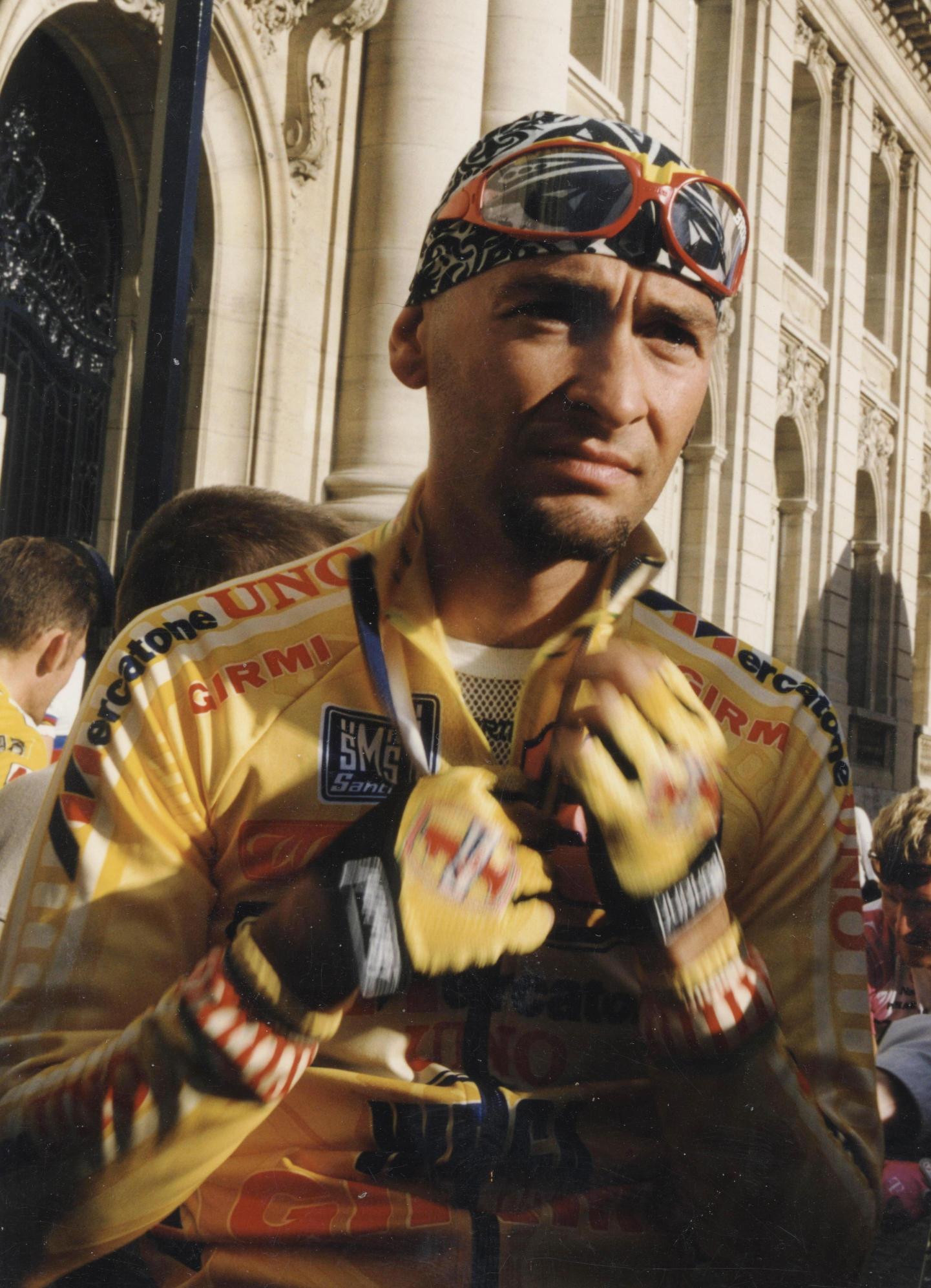
Before we look at the racing consider the unhappy anniversary that was ‘celebrated’ during the second week of this years Giro; Marco Pantani died ten years ago. If the circumstances surrounding Pantani’s death in a Rimini hotel room weren’t uncomfortable enough to remember the sense of awkwardness has been increased as todays riders and commentators have tried to walk the line between recognising his talent while acknowledging his doping.
Marco Pantani - Saint or Sinner?
Marco Pantani – Saint or Sinner?

Marco Pantani’s legacy seems to exist in an in between state, like some kind of lycra clad fallen angel. On the one hand a climber (albeit EPO fuelled) of verve and passion who, at least at the time, was the antithesis of Lance Armstrong. On the other a tragic case who struggled to cope with the literal and figurative come down of his ban (for a high hematocrit rating)  during the ’99 Giro. It might seem ghoulish to wonder how Pantani would be regarded now if he had lived, but it’s reasonable to assume he wouldn’t be venerated quite as much as he is by certain sections of cycling fans and the media. You only have to look back at last years Giro and the subsequent ban of Danilo Di Luca to see that there are no pedestals for the majority of grand tour winners who are Italian and have a chequered history of PED use.

Pantani’s death however tragic and some would argue avoidable has also provided his reputation with the kind of metaphorical cleansing that a Di Luca or Ballan would (if you will allow it) die for. Pantani remains a hero for many, particularly in his native land. Even if the organisers hadn’t pitched this years edition as a Pantani celebration the graffiti that adorns the climbs of the Giro would still have appeared. Not everyone has appreciated the retrospective however. Knowing Pantani’s past, it’s difficult to look at the footage that has been served up as an example of the rider at his best without asking “Could he have done the same thing clean?”. Certainly there are sections of fans out there that feel that Pantani isnt a rider that should be celebrated. Thus after criticism came their way after one Pantani ‘epic’ was shown, commentators had to admit that the celebration was at the very least dividing opinion.

In many ways Marco Pantani reminds VCSE of a (Paul) Gascoigne or (George) Best type figure. Undoubtably talented but how much more or less was achieved due to his substance abuse can never be known. He probably deserves his elevated status as cycling icon as much as he should be condemned as another rider who doped to win. In a Giro where it’s looking increasingly likely that a rider from the new generation will win, might the organisers reflect on the irony of 2014 being the year of Pantani.

This years race entered week two with Cadel Evans in the Maglia Rosa, closely followed by Rigoberto Uran and Rafal Majka around a minute or so further back. Stage 10 following the rest day didn’t offer much of interest for the GC but did see another win for Nacer Bouhanni who continued as the chief beneficiary of Marcel Kittel’s early exit. It was business as usual for the GC on stage 11 too, but in this Pantani year an interesting ‘doping’ (or not) vignette played out when Tinkoff Saxo’s Mick Rogers attacked off the final climb and managed to stay away for the stage win. Rogers has just returned to racing after being cleared of taking a banned substance following a positive test in last years Tour of Bejing. The story behind why Rogers left Sky at the end of 2012 for the then Saxo Bank squad is one we will leave for another day, but it was clear to see that the win meant a lot to the Australian and demonstrates that for many riders who were active in the 2000’s the act of winning has changed.

All of which took us to the individual TT and a change in the lead. Colombian riders have been known to surprise in TT’s and this year it was Uran’s turn to show he had the speed. Evans had a test to forget losing the over a minute on the stage and the GC lead to Uran. Diego Ulissi missed out on a third stage win so far in this years Giro after occupying the hot seat for much of the stage. Nairo Quintana, last years Columbian TT surprise package was further down the order and trying to shift a cold before the peloton reaching the mountains at the weekend.

After two stage wins for wild cards Bardiani, including a repeat stage win for Enrico Battaglin the peloton moved on to the Pantani stage to Montecampione. Winner here was Astana’s new team leader Fabio Aru, just going to show that being tipped for a low profile performance by this blog is the perfect ingredient for serving up a stage win. The curse of VCSE similarly struck Domenico Pozzovivo who dropped to 6th on GC after struggling on this stage and the one before. The home fans, eager to pin their hopes on someone, thus transferred the allegiance from Pozzovivo to Aru after the star performer of the previous weekend saw his form dip. Uran remained in the Maglia Rosa, but his grip seemed as unconvincing as Evans’ had done before him.

And so to today’s (Tuesday) stage. Featuring the Gavia and Stelvio passes that had proved so snow bound the previous year that the race enjoyed another (unscheduled) rest day, this year the peloton would be forced to negotiate not only these two, but a finishing climb to Val Martello, a 14% series of S bends.

The weather almost conspired to neuter the stage. The descent off the Gavia had proved difficult although (for such a injury strewn race) crash free. Snow falling at the top of the Stelvio led to confusion over a neutralised descent. What appeared to happen is that some riders wanted to race despite the conditions and did so. Notable among the hardest of the hard men (everyone was today) was Sky’s Dario Cataldo, first over the top and eschewing dry clothes and food to race away to the valley floor 25km below.

Behind Cataldo a split had developed between the Maglia Rosa group that included Evans and Pozzovivo and an elite selection that included Quintana, Pierre Rolland and Ryder Hesjedal. Quintana was always going to be the strongest climber out of this group and as Uran fell further behind and out of the race lead it was Rolland who cracked first. Hesjedal who had abandoned his decidedly retro eyewear somewhere in a Stelvio snow drift had seemed to be suffering back on the pass yet somehow managed to stay on Quintana’s wheel until almost the bitter end. For all of that, his reward was only to get back into the top 10, Rolland did better to jump from 8th to 4th at Aru’s expense.

So the lead has passed from one Columbian to another. VCSE suggested that Uran needed to prove his worth as a GC contender to his Omega Pharma team at this Giro and to an extent he has. Taking the jersey on the TT shows another side to his climbing and with another (uphill) TT to follow Uran may have another card to play. If he’s to have any chance of wresting the Maglia Rosa from Quintana however, his team need to do a much better job of protecting him. Uran is currently using too many matches trying to match the pace and tactics of his rivals who often have a rider to spare.

Evans somehow remains third and may yet stay there if he can continue to hold a wheel. This is pretty much the tactic he employed at last years race, but the suspicion has to be that he will be less succesful doing this with Quintana than he was with Uran. Uran, until today, managed to ride into the lead and keep it by riding conservatively and not losing much time. He has enough of a lead over Evans in third that suggests that a repeat of last years second place is possible if not the outright win. Quintana, over his cold, looks like the man to beat.

Third place is harder to call. There’s less than a minute between Evans in 3rd and Hesjedal in 9th. It’s easy to see Rolland, Majka or Aru having a good day or two and taking the final podium place, but for all that he has disappointed in week two Pozzovivo is well placed to strike at 3.49 in 7th place.

Tomorrow’s stage should be a bit of a rest day for the GC, but it’s followed by two mountain stages bookending the uphill ITT stage 19. We will see the final GC shake out on Saturday on Monte Zoncolan and if first and second places looked nailed on, the minor places are still wide open. But this is the Giro and the weather and the race may still have some surprises in store. The key stage may yet prove to be the TT on Friday.
500 channels and there’s nothing on – VCSE’s Racing Digest #21

It’s the beginning of the road racing season with the traditional (at least of recent years) season openers; the Tour Down Under (TDU) and the Tour de San Luis. It really doesn’t seem that long ago that VCSE was tuning into the Tour of Lombardy the last race of note each year. ‘The race of the falling leaves’ might be more accurately nick named ‘The race of the falling rain’. If 2013 was anything to go by it didn’t seem that a race could be held in Italy without an accompaniment of torrential rain. The UCI’s choice to stage the early world tour races in far from the european winter has less to do with a search for warm weather as a money making opportunity; witness the introduction of a stage race for Dubai this year. The ‘desert’ races in Qatar and Oman are worth a watch for the chance to see which sprint train is functioning the best and an early indicator of GC form respectively.

Simon Gerrans - TDU GC winner
Simon Gerrans – TDU GC winner

Before the peloton gets sand blown however they must journey south for the world tours solitary visits to the South American and Australian continents. Both races feature a mixture of stages with options for breakaway or sprint finishes. We say all this with the proviso that we haven’t actually watched any footage from either event! If you’re a cycling fan and want to watch races, either live or highlights, then it’s pretty much essential to have Eurosport. Whether that’s via some kind of TV or cable subscription or via the channels own web app Eurosport will have more coverage of more races than any other channel. Part of Eurosport’s charm is that they don’t just cover the races you expect like Paris Roubaix of the Tour. It’s often possible to tune in randomly and find that their live coverage of an obscure cat 2 race from some French back water. These are often the best races to watch if you yearn for a dominant team performance from FDJ or AG2R, who often appear to be there just to fill gaps in the peloton in the major races.

The TDU and San Luis aren’t covered by Eurosport so getting to see either race can involve some difficulties. Correction, getting to see the TDU is easy if you shell out further for Sky Sports. Sky seem to be taking a wait and see approach to snapping up the rights for the races that are currently covered by Eurosport. This might seem surprising considering their four year old and ongoing sponsorship of a world tour team, but for now at least, they have contented themselves with one or two races lower profile stage races shown live and highlights from the Giro. It may yet happen that Sky outbid ITV for their live rights to the Tour in 2015 and that may in turn have implications for those of us that rely on Eurosport. Sky don’t appear to be concerned at the likely loss of viewers if the Tour moves from its current terrestrial berth, no doubt reassured that they will recoup any investment via advertising revenues. It would be ironic if the one professional sport that doesn’t require a ticket to watch live would require an increasing level of subscription for the armchair fan.

So what are the options for the non Sky endowed to keep up with the action from down under? Ironically, the local broadcasters do offer a very good live web stream. The problem for the UK viewer is that accessing this directly from someone like SBS is blocked; this even applies to their YouTube highlights. Just as VCSE used to sit glued to teletext in the days before rolling 24 hour sports news, the (comparatively) low tech way to follow a race live is often via social media. Ironically Sky provide one of the best live feeds via their Twitter, if restricted to the races where they are competing. More of the world tour teams are starting to pick up on this idea of keeping the fans updated and it isn’t exclusive to the big outfits with smaller teams like Madison Genesis doing the same from the Tour series last year.

A constantly updated timeline from Sky works wonderfully when you can’t get closer to the action. It comes into it’s own when you’re actually at the side of the road during a race too, helping to work out when the race will flash by. The only time Sky’s regular Twitter updates during a stage can frustrate is when you are planning to watch ‘as live’ from a recording later in the day. VCSE’s evening in front of the telly has been ruined on more than once by inadvertently seeing a Sky tweet on our timeline. Less likely to appear for every race, but always around for the key ones is NYvelocity (@nyvelocity) if you want to laugh along with a race.

In race social media commentary from the riders might provoke controversy, although it would be interesting to have some open mics around to listen in to the conversations through the window of the team car. VCSE doesn’t claim to slavishly follow the output of every member of the peloton, but pre and post race some riders are better value than others. Jens Voigt and Taylor Phinney spring to mind as two that can be relied upon to say something a little less anodyne.

When it comes to stats there’s plenty to choose from. VCSE is never too many clicks from Steephill.TV during the season (see the links page) for details of who finished where and aggregation of the best reporting and video. Innrg (go to the links page again) does a regular feature about where the race was won. Cycling News is probably the best news source within the UK, but there are often (more) interesting perspectives from elsewhere in the world. Velonews (US) and Cycling Tips (Australia) are worth a bookmark.

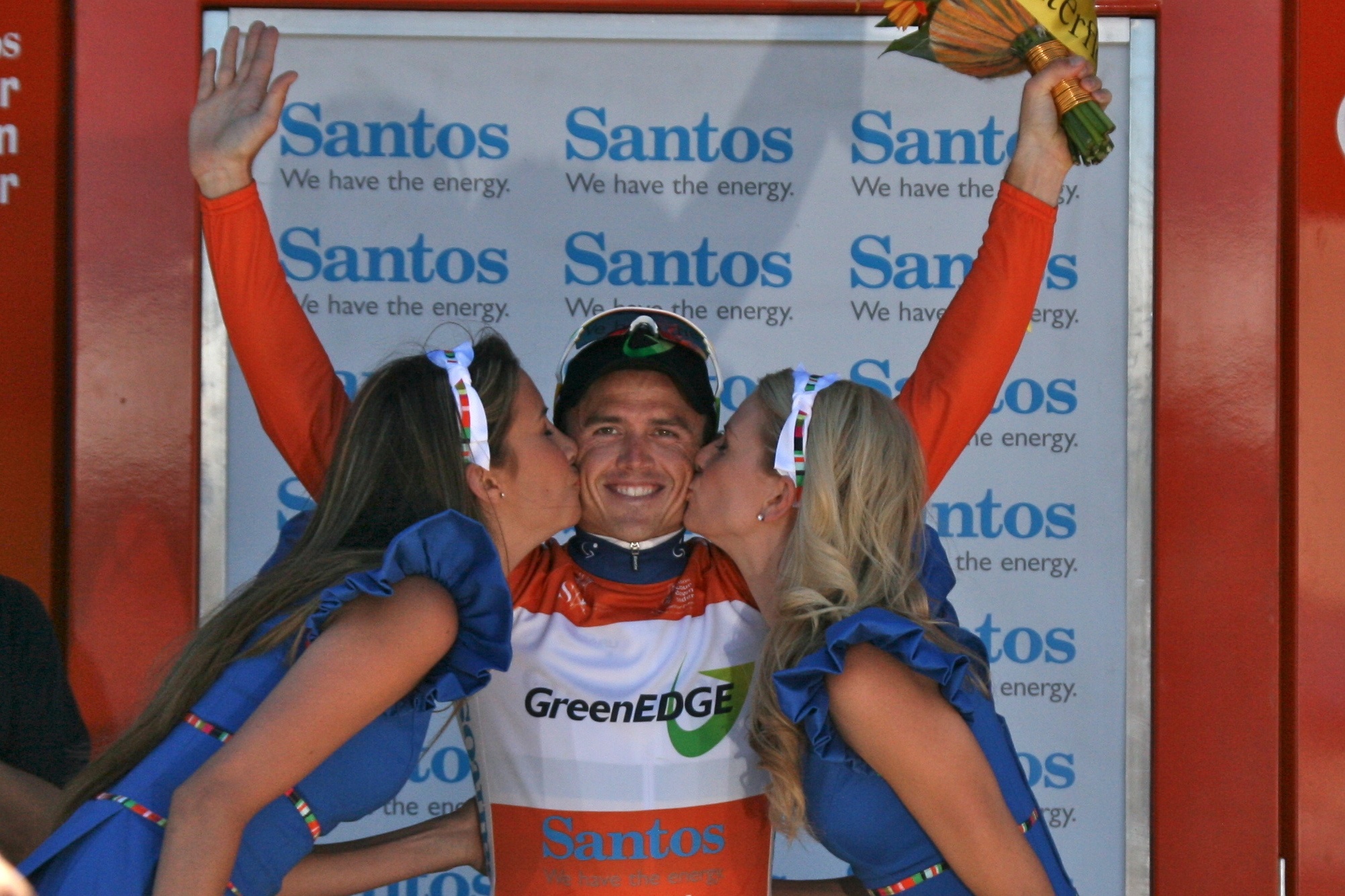
So, what is the VCSE take on the opening week of 2014 road race season? Orica’s Simon Gerrans won a record third TDU title to go with his second Australian road race jersey. The Aussie outfit had a bit of breakthrough year in 2013 with Gerrans wearing yellow at the Tour. That Matt White’s return as DS after his doping ban coincided with this suggests that the team could be one to watch in the classics this season. Gerrans is a previous winner at Milan San Remo and if his form continues could be worth a punt in 2014.

Five seconds off the GC and a stage winner during the week was Lampre’s Diego Ulissi. The Italians have under performed in the last few years but a management shake up in the off season might suggest that Ulissi’s podium could be the first of many. Lampre have the world champion Rui Costa on their Merida’s this season and he’s a rider capable of freelancing some wins in 2014. The fact that the new team uniform is less lairy than recent years (the fluro pink has been turned down) must help too surely! With a further stage win taken by Sacha Modelo on the final stage at San Luis Lampre start the year at the dizzy heights of 4th in the UCI team rankings.

Is Marcel Kittel’s misfiring sprint cause for concern? This early in the season; probably not and it isn’t as if Kittel hasn’t won already this year (at the TDU prequel). Andre Greipel took two stage wins but takes the VCSE award for the best team kit of this year in Lotto’s homage to Merckx and Molteni. Talking of sprinters Mark Cavendish wasn’t able to repeat a stage win in Argentina with Tom Boonen finishing the stronger in the bunch sprints. Last year Cav went from San Luis to the overall in Qatar. Last year was a disaster for Boonen. Cavendish has complained in the past that his Omega Pharma team need to make up the mind what kind of team they want to be. Could it be that everything will be focused on getting Boonen in top condition for the classics at the expense of early season wins for Cavendish?

In a nutshell then, the VCSE predictions for the early season; another tilt at Milan San Remo for Gerrans, Lampre resurgent and all for Boonen at Omega Pharma.

Should be an interesting watch..

Lance.. Are we done yet?

Have just finished reading Wheelmen (http://tinyurl.com/othmek6) the latest in a long series of books dealing with doping in cycling. The book was written by two Wall Street Journal reporters and while that doesn’t sound like the obvious place for cycling stories the paper does have its place in the timeline. It was the WSJ that published a copy of the email Floyd Landis wrote in 2010 revealing his own doping and the systematic use of performance enhancing drugs by the US Postal team. 

Lance Armstrong in the prologue of the Tour de...
Lance Armstrong in the prologue of the Tour de France in July 2004 in Liege, Belgium (Photo credit: Wikipedia)

Wheelmen isn’t the Landis story, but his is inextricably linked to the books main character Lance Armstrong. It was a question of sticking with Wheelmen initially as the first few chapters have been done before by many writers (including those directly collaborating with him) on Lance’s early life growing up in Texas and emerging as a talented junior cyclist. The book has also been edited to try and explain the sport to the lay reader. Would Wheelmen have any appeal to a non cyclist? The writers clearly think so as they believe that the Armstrong doping story is the ‘greatest sports conspiracy ever’. Considering that this is one the books key strap lines the premise isn’t that obvious when reading it. What underscores the narrative is Armstrong’s place as a cancer survivor as much as the fame he achieved as a cyclist. As a cycling fan the story of Lance the cancer survivor is more often secondary to the tale of the erstwhile 7 times TdF winner and in placing as much emphasis on his role within the cancer community it might explain the spoon fed cycling insights.

Wheelmen begins to come alive once you have read the early biographical chapters. As soon as the subject matter is doping the pace picks up and the book starts to read more like a police procedural. It’s not that much of what is told hasn’t been said before. There are however some insights that even if unsubstantiated provide more context and understanding of some of the allegations that remain, particularly about the UCI. Take for example the suggestion that Lance ‘paid’ for drugs tests to be covered up. In detailing Armstrong’s financial arrangements and the structure of the organisations built around the USPS team, the book reveals that Thom Weisel provided investment advice for Lance and Hein Verbruggen (UCI President at the time). The implication seems to be that a stock tip from someone in Armstrong’s inner circle could have given Verbruggen the potential for great returns. With profits described as 40% and higher elsewhere in the book it doesn’t take much to join the dots. Rather like saying that he had never failed a drugs test as opposed to saying I have never doped.

In unpicking the wreckage of Armstrong’s lost endorsements it also becomes clear that what seems most important to him is to be able to return to competitive sport. Over the last couple of weeks Lance has been back in the public eye dropping less than subtle hints about what he is prepared to offer up in order to get a reduction in his lifetime ban.

Obviously it would be good to see Armstrong confirm all of the stories that remain in the ‘believed to be true’ category. Wheelmen quotes Armstrong telling a friend “..I never ratted anyone out”. In this mindset it’s hard to see how progress can be made if Lance believes it isn’t for him to name names. While the situation would be better served by a ‘truth and reconciliation’ type process being established by the UCI under Brian Cookson it is hard to see Armstrong achieving the goal of a reduced ban if he remains equivocal about what he knows.

Although he has walked away from the sport Tyler Hamilton, arguably almost as divisive a character as Armstrong, achieved some kind of redemption in many people’s eyes by his warts and all approach in The Secret Race (http://tinyurl.com/qac7e9m). Hamilton has publicly encouraged Armstrong to take a similar path. although in Twitter exchanges the enmity between the two remains clear.

Another disgraced rider has just published his own tell all story from the darkest days of cycling. In a flurry of leaks and interviews Michael Rasmussen described his own doping while revealing several high profile past and present riders who he alleged had doped also. One, Ryder Hesjedal was quick to confirm that he had doped in the past and it was quietly slipped out that he had already spoken to the Canadian anti doping agency and would serve a six month ban.

In the absence of truth and reconciliation the possibility of riders having their previous or even current doping exposed by way of tell all book seems the most likely way that use of PED’s  will be exposed. There is cynicism that ex riders like Hamilton and Rasmussen are only telling their truth’s now as they have nothing left to lose. There is some irony in that the lies of their pasts stretch with fans their credibility now.

If we interpret Wheelmen a certain way Armstrong comes over as a man who will sacrifice everything to compete. Whether this was his morality when trashing the reputations of people like Betsy Andreu or Greg Lemond while doping his way to flawed victories in the Tour or accepting the losses of his endorsements now to compete in Triathlons. Perhaps he will go down the book route himself like his nemesis Hamilton.

The context for this post is not to be for or against a reduction in Armstrong’s lifetime ban. As things stand it seems appropriate that as he has reaped he has sown. Should that be reviewed in the event of Lance bringing something meaningful to the debate? Potentially yes. However, he is right about one thing; he was not the only rider to dope. Ultimately it needs to be some kind of truth and reconciliation process to allow the least savory aspect cycling’s recent history to be laid to rest.

As for Wheelmen, it’s possibly best read in a triumvirate with Hamilton’s The Secret Race and Jeremy Whittle’s Bad Blood (http://tinyurl.com/ptzhbvy) which sets the scene for the later revelations that followed nicely. Bad Blood conveys the Omerta that continues to exist in the peloton today and provides an insight into the scandal that shaped Armstrong’s first Tour win, the Festina affair.

A fourth grand tour

This is the starting line of the Amgen Tour of...
Tour of California – can two go into one? (Photo credit: Wikipedia)

A moment of clarity while watching the USA Pro Challenge this week; could the US hold a ‘fourth’ grand tour? Let’s deal straight away with the Tour of California. Now VCSE doesn’t think that the TOC refers to itself any more as the ‘fourth grand tour’, but it was certainly touted as such when the race was born a few years back. Even the organisers (the ASO are heavily involved too) have realised that particular joke (they weren’t joking) isn’t funny anymore and the grand tour nomenclature has slipped quietly from view.

This isn’t to say that California doesn’t possess some great roads to race over. This years parcours was no exception and the decision to race from south to north in the state paid dividends as far as the weather was concerned too. For a race supposedly taking place in the sunshine state, previous editions run in the opposite direction have often been subject to the kind of weather we would expect in northern Europe.. in winter! Delusions of (literal) grandeur have not been the only thing stacked against the TOC ambitious marketing. An obvious issue is that the race is a week long only; perhaps more Paris Nice than Tour de France. The TOC could reasonably describe itself as the second ‘race to the sun’. The key point is that what makes a grand tour grand is its length and the distance involved predicates a route that covers a whole country rather than one US state. California as evidenced by its changing scenery is bigger than many countries, but the US is bigger still and this is what provides a challenge but also perhaps an opportunity for that fourth grand tour.

There are more stage races in the US than the two that appear on this years UCI World Calendar; the TOC and the USA Pro Challenge. The latter takes place days after another week long stage race the Tour of Utah. For the sake of argument lets say that a case could be made for combining the TOC on the west coast and the USAPC in Colarado. Both races currently take in mountain and sprint stages and can feature TT and summit finishes very easily. Run over two weeks rather than one or stretched into a third week with rest / transfer days and additional stages in each state it’s not such a great leap of imagination to see that of all places the US is best placed to deliver a genuine grand tour status event, rather than an over ambitious marketing claim.

From an infrastructure perspective it’s hard to imagine a country better equipped to transfer riders and teams from one state to another. While host TV coverage is often characterised by its hyperbole it has to be said that the timings and on screen information often exceeds that of the other races on the world tour (Tour of Poland time gaps anyone?). Provided there is no interference on the satellite feed (Tour of Utah is a good example of this) the HD quality of the US races is generally superb also.

The final ‘tick’ in the box for VCSE is the racing. The US continental teams at the TOC and the USAPC are always motivated to race and more importantly win. There was a genuine possibility of a US based team winning the TOC this year. OK, so having this and that team ‘presented by’ so and so doesn’t exactly trip off the tongue, but these teams are producing riders who are capable of moving up to a world tour team. There a more riders like Joe Dombrowski, a Sky neo pro this year after riding with US conti outfit Bontrager last year than journeymen in the peloton. Even the US riders who for obvious reasons return home for these events are super motivated to race hard. If you hadn’t watched the US stage races this year you would have thought that the highlight of Tejay Van Garderen’s year was getting beaten on Alpe d’Huez in the Tour. At home he has looked if not super strong, then definitely the most consistent GC rider, although he totally buried himself to with the uphill TT in the USAPC last week.

Money is a huge consideration even looking at a week long event, but these US races are a marketeers dream for any bike manufacturer. The fans cannot get enough of riders like Jens Voight and Peter Sagan and it seems like a safe bet to suggest that a two week race would provide many more opportunities to promote your wares.

Timing could be the biggest stumbling block. The TOC overlaps with the Giro and the USAPC front ends the Vuelta. It feels like the right time to schedule a two week race would be around the time of the Tour of Utah / USAPC as this would at least guarantee the weather. ASO having a foot in both camps as far as the TOC and the Vuelta are concerned could actually turn out to be a good thing in terms of scheduling. Consider the riders not at the Vuelta who could have starred in a two week ‘Tour of the Wild West’. Froome, Porte, Sagan, Rogers, Millar, Schleck, Van Garderen and Voight. With proto grand tour status it’s hard to dispute that more world tour teams would be in attendance swelling the ranks of top pros further.

The somewhat fragile nature of cycling economics will probably mean it will never happen. VCSE would rather see additional investment from the likes of ASO and the teams going into funding expansion of women’s professional cycling. However this does feel like an idea that could take off purely on the marketing potential for the bike manufacturers and the chance for the US television networks to sustain the interest that spikes with the Tour in July. Will there be a fourth grand tour and will it be held in the US. Perhaps it’s not such a daft idea.

Classic climbs of the grand tours #2 – Puy de Dome

The Puy de Dome
The Puy de Dome – The view from the foot of the climb

It’s ironic that the a climb as storied as the Puy de Dome has such a short history of inclusion in the Tour de France. Included originally in 1952 at the suggestion of a rider it has not featured since 1988 and despite the wishes of Tour Director Christian Prudhomme is unlikely to do so again.

The climb is one of several extinct volcanoes (Puy’s) that characterise the Auvergne region and dominates the skyline to the west of the city of Clermont Ferrand. The volcanoes are long since extinct, none have erupted for more than 10,000 years.

That the Tour first visited in 1952 was thanks to Clermont native and professional Raphael Geminani. Born in Clermont to Italian immigrant parents, his father owned a bike shop in the city and Geminani was grew up in the shadow of his supposedly more talented brother Angelo. It was the younger brother who had the impact on the Tour however winning seven stages between 1949 and 1955, although it’s arguable that his strongest results came in the Giro.

Unlike the Col’s of the Tour the Puy de Dome couldn’t be included as anything other than a summit finish. The road leading to the radio mast at 1,415m (4,710′) has nowhere to go. Whichever direction was chosen to approach the Puy the final 11 kilometres spiraled around its sides like the markings on a snail’s shell. This road with no more than two cars width would be thronged with spectators up to the summit which had been home to a Roman temple dedicated to Mercury thousands of years earlier. Controversially, outside of the Tour, cyclists could be described as less than welcome at the Puy de Dome. Although cars were able to make the climb without too many restrictions, riders were limited to two days per week and two hours per day as recently as 2006. Since 2011 the default mode of transport up the Puy de Dome has been via a funicular tramway that was built with funding from local government and the EU. The Panorama de Dome began carrying passengers in 2012 after some initial mechanical teething problems and follows the original roads route to a redeveloped summit area with restaurant and bar. The road has been resurfaced but is suitable for one way traffic only, now that the railway has taken up half of the available space on the climb. The punishing ramps remain with nothing below 10% in the final 5k and an average of nearly 9%. Certainly approaching the Puy de Dome from the direction of Clermont it’s hard not to feel intimidated at the prospect of the climb. As a summit finish it perhaps ranks with Mont Ventoux as there is nothing remotely like it within the Region. Riders gazing up at the Puy following 200km in the saddle already would have been forgiven for questioning just how they could be expected to race up the mighty Dome.

View from the summit - the car park where the first picture was taken is at the centre
View from the summit – the car park where the first picture was taken is at the centre

Having persuaded the Tour to visit his home town climb in 1952, Geminani of course wanted to win that years third summit finish. He got into a break with 100km to go with Gino Bartali but they had been joined by the great Fausto Coppi at the base of the climb. Coppi looked at Geminani, decided that he probably didn’t have the legs and il campionissimo won the first race to the top of the Puy de Dome.

Arguably the most dramatic finish came in 1964. Jacques Anquetil, already a four-time winner of the Tour, was leading the race by less than a minute to Raymond Poulidor. Anquetil had put time into Poulidor on the previous stage’s time trial, long seen as his strongest discipline and recognised by his nickname as ‘Monsieur Chrono’. He and Poulidor where among a group of five as they approached the Puy de Dome, the penultimate stage. What happened next could only have been more dramatic if the two riders had been racing for the lead, but Anquetil ironically riding for Raphael Geminani and Poulidor were disputing third place.

For 9 of the 11 kilometres of the climb Anquetil kept a wheels length ahead of Poulidor as they rode side by side up the spiral. Then, with less than 2km left to ride Poulidor got ahead. Anquetil countered, but Poulidor nosed ahead again. Suddenly the gap was more than  one bike length. Then it was two; Anquetil had cracked! At the finish Anquetil had dropped another place to 5th, but although Poulidor was the victor on the road, Anquetil maintained enough of a gap to win his fifth and final Tour.

Poulidor continued to race well into the 1970’s his career overlapping that of the greatest cyclist Eddy Merckx. Like Poulidor before him, Merckx would be left with bittersweet memories of climbing the extinct volcano above Clermont Ferrand. Merckx had won the Tour in 1974 in less than perfect health and came into the ’75 Tour in the rainbow stripes of the world champion and wins in the classics under his belt. Merckx was in the yellow jersey when the race reached the Puy de Dome, in fact he didn’t lose it until later in the race, but debate still rages over whether what happened on the Dome caused Merckx to lose the race and with it his chance of a sixth Tour victory. The exact circumstances of the ‘punch’ that a spectator threw at Merckx as he rode up the climb have never been properly established. Merckx didn’t stop, although the contact between him and the spectator wearing a pale coloured raincoat is clear on archive footage of the incident. Merckx identified his assailant after the stage, but although the man was arrested he received the most minor of sanctions at the later trial.

As organisers considered where to route the 2013 centenary Tour it was inevitable that the most famous climbs like Alpe d’Huez and the Ventoux would find their was into the schedule. The fact that the Puy de Dome was considered for inclusion despite its absence from the race for many years is testament to its status as one of the most iconic in Tour, if not grand tour history.

The real heroes of cycling are the heroines

The surge in the popularity and reach of women’s cycling in the UK in recent years has been driven by the successes achieved in the velodrome by riders like Victoria Pendelton. A new generation of female track cyclists repaid the investment from lottery funding by taking home several golds at the London 2012 Olympics. Sixty years ago a pair of pioneering women were achieving greatness in very different circumstances.

A recent convert to the sport, perhaps inspired by the prominent results of a Cavendish or a Wiggins, could be forgiven for thinking that Britain has always  been a hotbed of road racing talent. The opposite is true, mainly as a result of the long standing ‘ban’ imposed on mass start racing by the predecessor of today’s British Cycling. Ever the improvisers, the early cyclists with sporting desires found new ways to vent their need for competition. In the absence of a stage race or criterium, the staple of the continental rider came the race against the clock. Time Trialing remains a staple of the club riders calender, although the long distance record attempts belong to a much earlier era.

In the age of lottery funding an athlete of potential might look forward to a lengthy sabbatical from the chosen profession without the anxiety of how to pay the bills. Many of the sportsmen and women competing in the events where Britain has become very successful (read Track Cycling) move seamlessly from education to competition without the need to consider a career elsewhere. This was not always the case. Outside of sports like football, becoming a professional in your chosen sporting pastime was an end to your chances of actually competing. This was certainly the case with cycle sport after the second world war and riders who were offered a professional contract needed to accept that they would earn their keep, at least within the UK outside of sanctioned competitions.

Eileen Sheridan
Eileen Sheridan

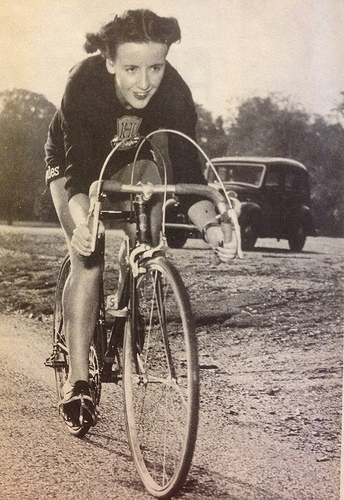
Eileen Sheridan was a successful time trialist or tester and track racer when, in 1951,  she was approached by the Hercules cycle company about becoming a professional. She won her first national title in 1945, aged 21 and had taken several titles and records in the years that followed both against the clock and for a set distance.

Hercules were something of a trendsetter, being the first British manufacturer to sponsor a professional men’s team as well as testers like Ken Joy. Unable to race in sanctioned events, Eileen Sheridan would target the long distance UK records in particular Lands End to John O’ Groats. She was not the first female professional to attempt this and not the first woman to ride professionally for Hercules. In fact Hercules had sponsored Marguerite Wilson  to do in 1939 what they wanted Eileen Sheridan to do now and it would be Wilson’s Lands End John O’ Groats record that Sheridan would attempt to beat. Wilson’s own professional career was short lived, with war intervening in the Autumn to curtail further record breaking. It’s tempting to think that the Hercules board were just waiting for the emergence of another talented woman to allow them to pick up where they had left off.

Certainly Eileen Sheridan had been thinking of the record. She preferred longer events and was a record holder for the ’12’, the amount of miles covered in a twelve hour period. Lands End to John O’Groats or LEJOG as it is shortened is the long distance place to place event that still resonates. It’s place within contemporary cycling is often as the epic route for a charitable cause. These rides generally allow a week to complete the distance and even this timescale represents a challenge for a seasoned rider. The record breakers look to achieve the distance in a little more than two days (women) and a little less than that (men).

The time that Eileen Sheridan was attempting to beat in 1953 was Marguerite Wilson’s; two days and nearly twenty three hours for the 871 miles distance (LEJOG covers less distance now since the Forth Road bridge was not built when both attempts took place). Sheridan had beaten the record by a matter of minutes in 1952, but this was not recognised due to an arcane ruling banning publicity for an attempt prior to the start. Her equipment for the race was a Hercules badged lightweight as even her sponsor recognised that riding a stock machine would have put the diminutive Sheridan at a disadvantage. Running three gears only, she would have been unable to keep up with the pedals on a descent whilst climbing remained more of a push than a spin. The ratios were the same as Wilson had used years previously.

With sports science in its infancy Sheridan,  who had already experienced the perils of sleep deprivation prepared as well as she could. This involved a regime of hardening her contact points with surgical spirit, while breaking in saddles and riding shoes. Her diet would consist of chicken breasts, bananas and Ribena.

The start was delayed as Sheridan and her support team waited for a favourable wind and weather forecast. As things turned out the forecast was wrong and she was battered by wind and rain within a few hours of leaving Lands End. By the end of the first day she was climbing the fearsome Shap Fell in Cumbria with over four hundred miles completed. Only now did she take a rest in the accompanying support caravan, for all of fifteen minutes. More than six hundred miles were down when she needed her lights for the second night of the attempt.

Now tiredness had Sheridan in its grip. She needed to stop twice more in the next hundred miles and had snatched only twenty five minutes sleep when she was woken at 7.30am to get back on the bike. She was going to complete the ride on another bike, with a slightly lower gear to help her over the hills to come. This was the slightest concession, fatigue was now forcing her to walk her bike over the steeper climbs.

Eileen Sheridan arrived at the John O’Groats hotel around 9pm. She had completed the ride in two days, eleven hours and seven minutes*. This wasn’t the end of her ride though. In addition to setting the LEJOG record in ’39 Marguerite Wilson had continued and set the benchmark for 1,000 miles also. With less than two hours sleep Sheridan was back on her bike. The lack of rest caused her to hallucinate; she saw people she knew and talked to them and polar bears. By the morning there were local supporters to keep her going, singing songs and running beside her. Completely exhausted she fell off her bike with 4o miles to go. Her support team cut up her breakfast and fed her like a baby and needed to lift her back on. She rode the last few miles weaving uncontrollably and lapsing from laughter to tears. She arrived back at the hotel an hour into the third day of riding.

It’s a testament to Eileen Sheridan’s achievement 60 years ago that the current record, set nearly 50 years later, is less than seven hours faster. Without seeking to diminish the mark set by L E A Taylor (also the mixed tandem record holder), what Sheridan achieved on a comparatively heavy steel bike (with three gears remember) was incredible.

Hercules made the most of it portraying her as an ordinary Coventry housewife and mother, when she was anything but ordinary. What was true was that she was a professional and the record she had beaten belonged to another professional rider. That record (Wilson’s) had already been beaten before Eileen Sheridan beat it again and further. Ironically, it was another Coventry housewife and mother of two who lowered the time by four hours in 1953, just ahead of Sheridan’s attempt. Edith (Edie) Atkins was an amateur however, starting her racing career a year later than Sheridan and still racing aged 76 in time trials. She was killed on her bike in 1999.

Britain’s next female cycling star arrived at the start of the sixties, although Beryl Burton won her first significant award a year after Sheridan retired as a professional in 1956. VCSE will cover Beryl’s story in the future.

There was article about Eileen Sheridan’s record breaking in issue 33 or Rouleur Magazine (details here) http://www.rouleur.cc/issue-33

Eileen Sheridan’s own biography is available as a reprint (details here) http://tinyurl.com/nvqo2j3

The writer who brought the story to life for VCSE in his own memoir ‘One more kilometre and we’re in the showers’ is Tim Hilton. The link to that book is available via our Facebook page (follow the link on the right hand side of the VCSE website).

And finally, there’s a very short clip of Eileen Sheridan on the VCSE YouTube channel (follow the links on the right hand side of the page).

* It seems appropriate to use (for example) twenty rather than 20 when listing Eileen Sheridan’s record breaking

You must remember this…

Huret shifter side
Huret shifter side (Photo credit: Joe Grand of the Monument)

Rather like a brand that disappears from the high street cycling has it’s own reference points for forgotten teams, bikes and components. A staple of the racing bikes of 30-40 years ago would have been derailleurs made by the french company Huret.

This should be qualified by saying that the bikes to which Huret gears were fitted were probably pitched and priced at a level of today’s Shimano 2300 to perhaps Tiagra. High end racing kit would feature Campagnalo or similar, but it seems odd that a brand that was once as ubiquitous as Huret was ceased to exist so suddenly.

Or perhaps not. From the research VCSE has carried out, we have learned that Huret didn’t just ride off into the sunset accompanied by the sound of un-indexed gears shifting. In 1980 Huret was bought out by the German manufacturer Sachs who rebranded the business Sachs Huret. Sachs is perhaps better known as an automotive company and a portion of the company continues in this sector.

The bike component element that swallowed Huret 30 plus years ago was in turn consumed by SRAM in 1997. SRAM purchased the business from Mannesman better known as a telecoms company in Germany. SRAM’s motivation for the buy out was that Sachs had something SRAM wanted, the suggestion being that SRAM preferred to buy companies that already had well developed product lines.

All of this is somewhat dry. Yet it does seem fitting somehow that rather than just disappearing the Huret heritage lives on with a company that still produces the same components. There isn’t loads of information out there about the brand but arguably the best information can be found at Velobase.com (link below)

Recalling the 5 speed Huret that VCSE owned and later on the 531 framed 10 speed Huret Carlton VCSE wonders if there’s the chance of a Huret revival as an entry level groupset for SRAM. Sadly VCSE doesn’t have any photo’s of these old bikes and a trip to the garden shed years later revealed that the Carlton was no longer mothballed, perhaps donated to a budding Brad Wiggins or connoisseur of classic steel frames.

Does anyone else remember Huret? Did you have any Huret gear on your bike? Tell us by adding a comment below.

For the Velobase.com Huret pages click below

http://tinyurl.com/cneontz


Always another side to the story

English: Scott Sunderland at 2009 Tour of Britain

A tale to tell – Scott Sunderland 

VCSE first read about Scott Sunderland’s short-lived tenure as a DS at Sky in Richard Moore’s updated ‘Sky’s the Limit’ book. As UK cycling writers go, Moore is fairly prolific with recent books about Robert Millar and the 1986 Tour de France rivalry of Bernard Hinault and Greg Lemond. He also seems to be the go to guy from British Cycling’s point of view with books about the track programme as well as STL.

‘Sky’s the Limit’ was written around the time of the teams inception taking into account the period leading up to last years success in the Tour. Certainly not the whole story but an interesting aspect was the period Scott Sunderland worked for the team. Sunderland’s take on the situation has to be interpreted but it does look as if he quickly became the square peg to Dave Brailsford’s round hole.

What does become clear from the original portion of the book is that some of the ‘best laid’ plans and assumptions that Sky made about joining the pro peloton didn’t come to pass. From Moore’s text Sunderland is protrayed as a ‘traditional’ style DS, whereas Sky perhaps wanted more of an emphasis on the director element. Dave Brailsford’s acknowledged control freakery occasionally shows through while never that far from the surface.

All of this remains a cameo in the overall tale, now updated with a chapter on Bradley Wiggin’s 2012 triumph. Perhaps never to repeated, that is a story for another day.

The reason for this article is from another one VCSE came across this week on Cycling Tips (link below). This site comes out of Australia so the guys behind it are well placed to tell the tale of the ex pro rider. Sunderland appears regularly on the SBS channel in Australia who carry most of the racing coverage down under and also made the ‘Hell of the North’ documentary shown on the VCSE YouTube channel.

Sunderland’s story is definitely a triumph over adversity and to an extent is not over yet, particularly in relation to an ongoing court battle with the erstwhile TVM team following a horrific accident involving Sunderland and the team car when he was riding for them in 1998.

With experience of riding grand tours and the big one day races Sunderland was a sought after super domestique and can claim to have helped a number of riders to their greatest results including Eurosport colour man Magnus Backstedt at Paris Roubaix in 2004.

For a rider who apparently once so disillusioned with doping practices in the peloton he considered quitting the sport it seems ironic that Sunderland ended up working for Bjarne Riis at CSC. The article doesn’t dwell on that contradiction but hired as a classics specialist Sunderland enjoyed plenty of success with CSC with victories for riders like Fabian Cancellara and compatriot Stuart O’Grady.

Sunderland has also had an element of ‘square peg’ syndrome while working with the UCI, but rather like his Sky experience it isn’t being charitable to suggest that the reality of the situation didn’t match the brochure. Now working with Cycling Australia in addition to his TV work, thanks to Cycling Tips for enlightening this northern hemisphere fan.

Read the article here 

http://tinyurl.com/bmkr6z7


New content on the Veloclub Sud Eglise YouTube Channel

We have been adding lots of new content to our YouTube channel over the last week or so. There are some new uploads including a brief clip showing Bernard Hinault winning Liege Bastogne Liege in appalling weather in 1980. Supposedly, Hinault has never regained the feeling in two fingertips after getting frostbite during this epic.

There’s another clip to inspire us to get up and get out during the cold and wet weather. It centres on a Triathlete preparing for an Ironman event but we think it hits home for cyclists too.

As part our mission to bring you more from the women’s scene we are seeking out the best stories and background articles from YouTube to give more of an insight into the sport. For starters there are a couple of videos from Specialized Lululemon rider Evelyn Stevens. Evie recounts how she left her career as a Wall Street banker to become a professional women’s cyclist in this short but inspiring clip.

We have also added the final two episodes from Beyond the Peloton series two. It was disappointing that it took the producers until the end of season two to bring anything from the women’s Cervelo Test Team. Ironically, it was the women’s team that preceded the men’s outfit. The footage here is from the World Championships in 2010. As we’re nearly three years on from this event, hopefully it isn’t too much of a spoiler to say that Cervelo swept the board.

We will continue to add to this playlist as we come across more great content, so stay tuned!

Staying on the Cervelo theme, albeit tenuously is Behind the Peloton. VCSE recently came across this series from the US. These guys are clearly steeped in cycling (particularly Flandrian) culture. This short series of films play with the Beyond the Peloton look with a tongue in cheek homage to the in race footage from that series (indeed any pro teams video content). Those of you who have seen the ‘S**t Cyclists Say’ video will appreciate this one.

All this and more great video content can be found by following the links on the homepage to the VCSE YouTube channel. Don’t forget to subscribe or comment!

Vanmarcke’s Haussler moment – VCSE’s Racing Digest #2

In 2009 Mark Cavendish was embarking on what would be his best year yet but ahead of that edition of Milan San Remo he would have been seen as an outside bet for victory on a parcours which doesn’t tend to favour sprinters.

2009 was also the debut season for the Cervelo Test Team with Thor Hushovd leading the team at a point in his career where he was seen a genuine sprint contender and a rival for Cavendish’s green jersey aspirations at the Tour de France. Part of Hushovd’s lead out at MSR was Heinrich Haussler and as the race entered its final moments he got the jump on the bunch expecting to pull Hushovd in to position to launch for the win. Instead, 300 metres out, Haussler was alone and realising that Hushovd had lost his wheel he began to sprint for the line.

The gap from the bunch grew and Haussler, perhaps in disbelief in finding himself in the lead, snatched looks over his shoulder to see who would be challenging him. The sight of Cavendish, low on the bike, winding on more and more speed is a familiar one now and looking at footage now the likelihood of a Cav victory just looks inevitable. Five years ago Haussler looked the favourite, Cavendish catching but surely not winning?

Anyone who has watched ‘Beyond the Peloton’ on VCSE’s YouTube channel will know that Haussler agonised about what happened next and probably will continue to do so. If only the line had been closer. Maybe less looks over the shoulder at the oncoming Cavendish. Haussler’s anguish at being caught on the line and missing victory by a bike length was apparent for the moment he realised he had been passed.

Gutted – Sep Vanmarcke – picture http://www.vandaag.be

VCSE was reminded of this watching today’s Paris Roubaix. In what were probably the best conditions enjoyed so far in this year’s monument classics Sep Vanmarcke was beaten on the line by Fabian Cancellara sealing a annus mirabilis for Spartacus and abject disappointment for Vanmarcke.

Cancellara played his hand beautifully as the race entered the final third. With Tom Boonen missing following his accident at the Tour of Flanders Cancellara was the favourite coming into the race but such is the lottery of the ‘Hell of the North’ he was unable to call on his Radioshack teammates to help to control the pace this week.

Vanmarcke had gone away from the leading group with Het Nieuwsblad runner-up Stijn Vandenbergh as Cancellara began to come through realising perhaps that attack was the best form of defence. Over the final few sections of pave there was speculation that Cancellara was struggling following crashes suffered in the previous week.

Cancellara had demonstrated his ability to break from a group and then time trial to victory already including last Sunday’s Tour of Flanders. As he dug in today and blew the group apart one rider failed to stick to the script; Zdenek Stybar. Stybar stuck to Cancellara’s wheel like glue as they reeled in Vandenbergh and Vanmarcke. This represented a potential reversal of fortune for Omega Pharma Quick Step, the chance of at least one rider on the podium at worst following Tom Boonen’s withdrawl, perhaps even a one two.

Fate intervened and heart-break for OPQS in the closing stages perhaps overshadowed only by what followed inside the Roubaix velodrome. First Vandenbergh last in line of the four crashed after hitting a spectator on the pave. Worse still Stybar, pinged pinball style from one side to the other of the next section of pave. He remained upright but lost time, momentum and arguably motivation to continue.

Cancellara’s often used complaint that rivals stay in his wheel could not be aimed at Vanmarcke who took his turn in the lead when many armchair fans, VCSE included, were pleading for him not to, favouring the underdog in the situation. The Cancellara Vanmarcke game of cat and mouse continued into the velodrome advantage swapped back and forth and speed reduced to the extent that the pursuers were able to catch up to within a lap by the end.

Vanmarcke, arguably the stronger in the sprint finish, wanted Cancellara to blink first but by the final corner decided he would have to go for it. Whether or not Cancellara gained some ‘draft’ from riders on the track a lap behind isn’t clear and  head on the victor wasn’t even clear until Cancellara threw his arms aloft. Replays showed things more clearly and Vanmarcke’s reaction on the line made his disappointment apparent.

Vanmarcke attempts to put a brave face on things on the podium were in vain as he blinked back the tears that showed the emotion he felt at missing out on career making victory. Cancellara becoming a three-time winner of Paris Roubaix and adding to the results that have made him the leader of the world tour should be celebrated but for VCSE Paris Roubaix 2013 will always be about Sep Vanmarcke.

For great racing choose the Basque country

Some of the best racing of the season so far took place in the Tour of the Basque Country this week. The weather deterioated as the climbs got steeper during the week. Spanish races tend to favour the steepness over height and these stages were no exception with three days of climbing and summit finishes following the early sprints won consecutively by Orica Green Edge.

Alberto Contador is looking fairly mortal this year and Saxo Bank will need to carry out a detailed post mortem after a relatively poor showing from a tour strength squad that included Nicolas Roche and Mick Rogers.

Sky should feel pleased with their return after only being able to field six riders. Joe Dombrowski looked the strongest he has done so all season although VCSE feels he is probably unlikely to be selected for the grand tours this year. Vasil Kiryenka looked super strong again all week as he led Richie Porte and Sergio Henao and generally bossed the peloton.

Team of the week however was Caja Rural. Amets Turruka’s breakaways to win the King of the Mountains and points jersey delivered the metaphorical finger to his erstwhile employers at Euskaltel Euskadi who had a week to forget.

Getting so very close to a win in stage five for Caja Rural was neo pro Omar Fraile. In every kind of the worst weather Fraile stayed away from the peloton until the final climb but unlike so many riders who get swallowed up in these situations he fought on and kept his place in the leading group to finish 15th.

Chapeau!