TUE be or not TUE be.. – VCSE’s Racing Digest #32

Criterium du Dauphine 2014

Just as night follows day the winning the Dauphine has become part of the landscape for Sky on their way to winning the Tour a few weeks later. In 2012 it was Bradley Wiggins and a year later Chris Froome. For Froome victory would have been a strong indication of his form ahead of his July target, his race programme for 2014 had been extremely low key so far, although both times he had raced he had won the GC (Oman and Romandie). Backed by a team of domestiques deluxe who would make anyone’s Tour team Froome would be facing off against some of his key rivals for the yellow jersey when the Tour gets underway in Yorkshire and a few pretenders who would be troubling the top ten. Alberto Contador was looking back to his best form of 18 months ago when he captured the Vuelta and Vicenzo Nibali, who while not enjoying the same kind of results would be seen as threat to the Sky rider.

"Your name's not down, you're not coming in" Wiggins and Froome
“Your name’s not down, you’re not coming in” Wiggins and Froome

Froome has a teflon like ability to rise above the ‘noise’ that follows the Tour de France champion although he could not avoid the fact that he was a big part of the story ahead of the race. Following the serialisation of his book in the Sunday Times (ghost written by ST journalist David Walsh) which had cherry picked the chapters that focused on the Froome / Wiggins ‘relationship’ (and lack there of), Wiggins had popped up on radio and TV to announce that he wouldn’t be riding the Tour. In itself this was a juicy narrative for the rotters of the press and social media to get stuck into (VCSE pleads guilty; see the previous post). The will he, won’t he selection of Wiggins for the Sky Tour roster was merely an apertif though. First, we had Froome looking vulnerable and falling out of the GC lead he had establish in the stage 1 prologue and then we had a rather messy spat between sections of the (French) press and Sky over a TUE.

For the casual follower of the sport a TUE can be explained as a ‘sick note’ that excuses the rider for using a banned substance if it is necessary to treat a particular condition. So far, so reasonable but TUE’s have a very murky past. It was a false and post dated TUE that Lance Armstrong used to explain the prescence of cortisoids in the ’99 Tour. Ironically and certainly unfortunately for Froome it was the same variety of banned substance that got him into hot water at the Dauphine.

After crossing the line ahead of Contador on stage 2 Froome was given an inhaler. No attempt was made to conceal its use and this is an important point. Sky handled the following furore with the typical cack handedness they display when the aren’t in control of the story (or indeed a race) and this certainly didn’t help the situation. Over the course of the week it emerged that Froome had previously stated he didn’t suffer from asthma, the reason given for the use of the inhaler and some commentators took things off on a tangent suggesting that Sky and their rider were somehow being ‘protected’ by the UCI. Perhaps the most damming criticism came from Walsh who had spent the previous year embedded with the team as well as writing the Froome tome. Walsh felt that Sky were backtracking significantly from the standards they had set for themselves at the team’s inception, that they wouldn’t race a rider that needed a TUE.

Things are so toxic because of Armstrong and the TUE use cannot help but remind people of cycling’s dark recent past. Sky’s whole reason for existence stems from a desire to race and win clean and the story of Froome’s inhaler shouldn’t be seen as history repeating. Much of the reason for this is what subsequently happened at the Dauphine. Over the final two stages of the race Froome lost his place and the leaders yellow jersey to Contador on Saturday and on the final day fell out of the top ten altogether.

Contador, point proven perhaps, lost the lead himself on stage 8 to Garmin’s Andrew Talansky an emotional victor hinting that Garmin may seek to do more than just go for stage wins at the Tour. Besides the collapse of their team leader Sky have a further headache in the loss of form that Richie Porte is going through. Porte has suffered a string of bad luck and non finishes since switching from Paris Nice to Tirreno Adriatico early on in the season. He will go to the Tour but it seems more likely that Froome will be reliant on Euskatel Mikel Nieve as his last man standing. Whether or not Froome will click with Nieve the way he does with Porte remains to be seen and Sky’s jangling nerves won’t have been soothed by Contador’s results with what was pretty much a Tinkoff Saxo B team supporting him.

Another rider dusting himself off after a poor week was Nibali who didn’t look like troubling the podium from the prologue onwards. There are a lot of noises off around Astana at the moment with Nibali and the Italian contingent seemingly at odds with the Kazakh management. It maybe too early for a parting of the ways, but it will take some of the bloody mindedness that Nibali displayed at the 2012 Tour in the face of Sky dominance for him to deliver another podium place in July.

Another young rider emerging with credit was Belkin’s Wilco Kelderman. With Belkin announcing that they are leaving the sport less than a year after coming Kelderman’s fourth place could prove timely. The team may yet survive as bike supplier Bianchi are keen to remain, but this will dependent on finding a title sponsor and results so far this year have been patchy at best. Orica’s Adam Yates delivered another strong finish in sixth, but will probably find himself squeezed into the top 20 or so, assuming the Aussies select him for the Tour. It’s possible they might be teeing up Simon Gerrans for a tilt at the points jersey if he can get over the climbs better than Peter Sagan this year and the Cannondale rider is squeezed out of the sprints by the three way battle between Cavendish, Kittel and Griepel.

Tour de Suisse 2014

The question for fans of Britain’s cycling knight ahead of the Tour de Suisse was would Bradley Wiggins use the race as an opportunity to stick a metaphorical finger up at Team Sky’s management in general and Chris Froome and Dave Brailsford in particular. Having announced that as far as he was concerned that he wouldn’t be part of Froome’s back up at the Tour a win in Switzerland seemed like the perfect risposte to the apparent snub delivered to the 2012 Tour de France winner. That Wiggins chose not to get on the pace, finishing more than 30 seconds down on the opening stage prologue, before losing more time on the subsequent stage and withdrawing from the race early is typical, although not for the reasons some would think.

Wiggins is goal driven and after riding Paris Roubaix and winning the Tour of California his stated aim was ride (in support of Froome) at the Tour. Having summised that he would be surplus to requirements in July Wiggins would not have felt the motivation to demonstrate his form in Switzerland while Froome rode in the Dauphine. The difference between the driven, target in mind Wiggins and the rider whose heart just isn’t in it is palpable and Wiggins was probably grateful in some strange way that the accident he was caught up in while loitering at the back of the peloton provided a platform for him to bow out early.

Some might say that Wiggins was doing the equivlent of taking his ball and going home and there is perhaps something in this. Now it’s clear that Wiggins never wanted to race the Giro last year it does go some way to explain his poor results and showing in the run up to that race. Wiggins may have felt that he deserved inclusion in the Tour team based on (delete as applicable) being a previous Tour winner and with the race starting in Yorkshire, but this ignores the fact that he merits inclusion based on form alone if you look at how he dominated the Tour of California.

The leader for much of the week was Omega Pharma’s Tony Martin who managed to hold on to the leaders jersey right up until the closing kilometres of the final stage. Martin had clung on through two mountain stages without much in the way of riders to support him; OPQS using the race to drill the Cavendish lead out train further ahead of the Tour. Martin took the lead after winning the prologue and cemented things further later in the week with victory in the TT also. He was eventually undone by world champion Rui Costa who is enjoying a better year than his predecessor in the rainbow stripes Philippe Gilbert.

Martin, lacking support, was powerless to stop a large break going away on the final stage that included Costa and he was able to distance his remaining companions in the break to claim victory over Belkin’s Bauke Mollema and IAM’s Mathias Frank who made out the overall podium as well.

With the Tour starting a week on Monday there’s a bit of a hiatus as the teams announce their shortlists and in some cases actual Tour line ups. We’re still waiting for the final Sky group but it seems likely that Wiggins won’t be a part of it with the rider announced as part of the England team for the Commenwealth Games. The party line remains that Wiggins will only be confirmed in terms of actual events if and when he isn’t selected for the Tour by Sky, but with the resurfacing of the fissure between him and Froome and the TUE controversy it seems more likely that Dave Brailsford will not wish to unsettle Froome further by including Wiggins in the squad.

“Gutted!”

Lets get this out of the way now; if Chris Froome doesn’t win the 2014 Tour de France VCSE will not be too bothered. This doesn’t mean that Froome won’t win in July. His performance during the coming week at the Criterium du Dauphine will be a good indictator of his form against two of his chief rivals Alberto Contador and Vincenzo Nibali.

No, what’s got the VCSE Froome voodoo doll out of its box is the omission of ‘teammate’ Bradley Wiggins from Sky’s Tour team and all the signs suggest that Froome is the architect of Wiggins non selection.

Thinking how much he hates Wiggins - Chris Froome
Thinking how much he hates Wiggins – Chris Froome

So why is this a problem? The relationship between the two has been well documented here and elsewhere and it’s hardly a secret that the two aren’t best of friends. But surely the selection of the Tour team should be based on form and on this basis alone it’s staggering that Wiggins hasn’t been picked. There hasn’t been much comment from Sky officially since Wiggins appeared to breakfast TV last week and announced he was “gutted” that he wasn’t doing the Tour despite being (in his view) “..in the form I was two years ago” when he won the 2012 Tour and the Olympic TT gold medal.

There was much speculation ahead of Wiggins announcement that he wouldn’t be at the Grand Depart in Yorkshire and VCSE predicted as much in the aftermath of his overall victory at the Tour of California. Much of the justification given for a potential Wiggins omission ahead of the riders confirmation that he wouldn’t be riding was based on Froome’s  need for riders around him that would work for him. So far, so reasonable, but since the start of the year Wiggins has been clear that if  selected he would ride for a Froome victory. Wiggins has been incredibly consistent about this and if we take his statements at face value he’s showed an incredible amount of humility for someone who dominated the race as recently as two years ago. In any other team, in current form, he would be an undisputed leader.

However this is not any other team and Dave Brailsford has painted himself into a corner with Froome. It’s fair to say that of the two riders Froome is perhaps by a small margin the better rider. The way he rode on the second Pyrenean stage in last years Tour demonstrated just what a talented rider he is, holding onto to the race lead in the face of concerted attacks from other teams and with no teammates left in support. But this is less about who is the stronger rider or the most likely to deliver a third Tour victory in a row for Sky, than what would be the best team. The way Wiggins destroyed the peloton by riding on the front alone and at pace on the Mount Diablo climb in the Tour of California would have made most people say (you would think) he should be in the Tour squad. After the debacle of the first half of 2013 Wiggins has won two week long stage races, been in contention for Paris Roubaix and dominated TT’s. Within weeks of finishing in the top ten and Paris Roubaix he had shed kilos to get into the kind of physical condition he was in at his best in 2012.

None of this seems to matter to Froome and Brailsford though. The suggestion is that Froome doesn’t want Wiggins in the Tour squad whatever his condition and despite the potential advantage that the 2012 winner could provide. It appears that Froome’s ‘issues’ with Wiggins goes back further from his short lived ‘rebellion’ at the 2012 Tour where he rode away from Wiggins in a demonstration of superiority on the climbs. The dislike apparently stems from a supposed lack of support from Wiggins to Froome when he was in danger of losing his place on Sky during the 2011 Vuelta. Ironically this proved to be Froome’s breakthrough race and some argue that he could have taken the overall if he had been allowed to ride, rather than support Wiggins who eventually finished third to Froome’s second place finish.

Froome then doesn’t forget a slight, perceived or real and it would seem from this point on Wiggins was in his sights and has been ever since. Whether or not this was (or is) reasonable behaviour requires better knowledge of what went on in that Spanish hotel room during that race. Wiggins is acknowledged as not the easiest person to get along with but as the undisputed figurehead of the Sky team (at the time) it might be suggested that those around him needed to adapt to his behaviour and not the other way around. It would be interesting to imagine history taking a divergent course at the end of 2012 where Wiggins was prepared to maintain the training regime that had brought such success and go for a follow up Tour win in 2013. Instead Wiggins was shunted to an ill fated attempt on the Giro after privately making clear to Sky that he couldn’t make the same sacrifices required to deliver a Tour win.

This was Wiggins downfall and where Froome fills the mould that Dave Brailsford looks for in a grand tour rider to back. For all of the jokes about ‘Chris Froome looking at stems’ it’s his metronomic approach that makes Froome the better fit for Brailsford in the Sky set up. No doubt Sky still recognise that Wiggins has the kind of reach (particularly in Britain) that Froome can currently only dream of. As personable as Froome can be on camera, it’s unlikely that people will be hanging on his every word. He will parrot the party line where Wiggins can go off message in way that would frustrate Brailsford but delight fans. There’s unlikely to be that much of a backlash against Sky when the Tour gets underway in Yorkshire. The team are pretty much ‘Team GB’ by proxy in the UK, but in a World Cup year and with Commonwealth Games competing for the back pages in addition to the rest of the summer sport Wiggins absence will not help the profile of the Tour. It speaks volumes for the arch pragmatism of Brailsford that he will put the (potential) result ahead of any marketing consideration.

This a relatively uninformed viewpoint on the whole Wiggins / Froome saga and VCSE is firmly in Team Wiggo. Reliant on the public statements of each rider the reality of the situation can be judged as much on what Wiggins has said and the absence of anything from Froome on the matter. Probably wisely he’s keeping schtum on a argument he won’t easily win. He’s also hamstrung by the fact that it’s very hard to find a classy way of saying he just doesn’t like Wiggins. If you’re inclined to take Wiggins statements at face value it does seem odd that Froome could argue that Wiggins shouldn’t be included on form or that he wouldn’t honestly fulfil a designated support role.

Wiggins will now, barring any accidents for Froome in the Dauphine (oh the irony if that happens!), concentrate on the Commonwealth Games and may ride the track as well as the road. It will be interesting to watch Wiggins in the Tour de Suisse and see if he uses it as an opportunity to stick the metaphorical finger to Froome and Brailsford.

So what now for Sky’s cycling knight. There’s already speculation about Wiggins going to Orica Green Edge and he has admitted he hasn’t got an offer from Sky for 2015. Orica’s free wheeling and relaxed (in comparison to Sky) atmosphere would probably suit. There are other possible destinations; a return to Garmin would tie in with Wiggins apparent desire to build his profile in the US but VCSE wouldn’t rule out a possible move to BMC if Cadel Evans hangs up his cleats at the end of this year.

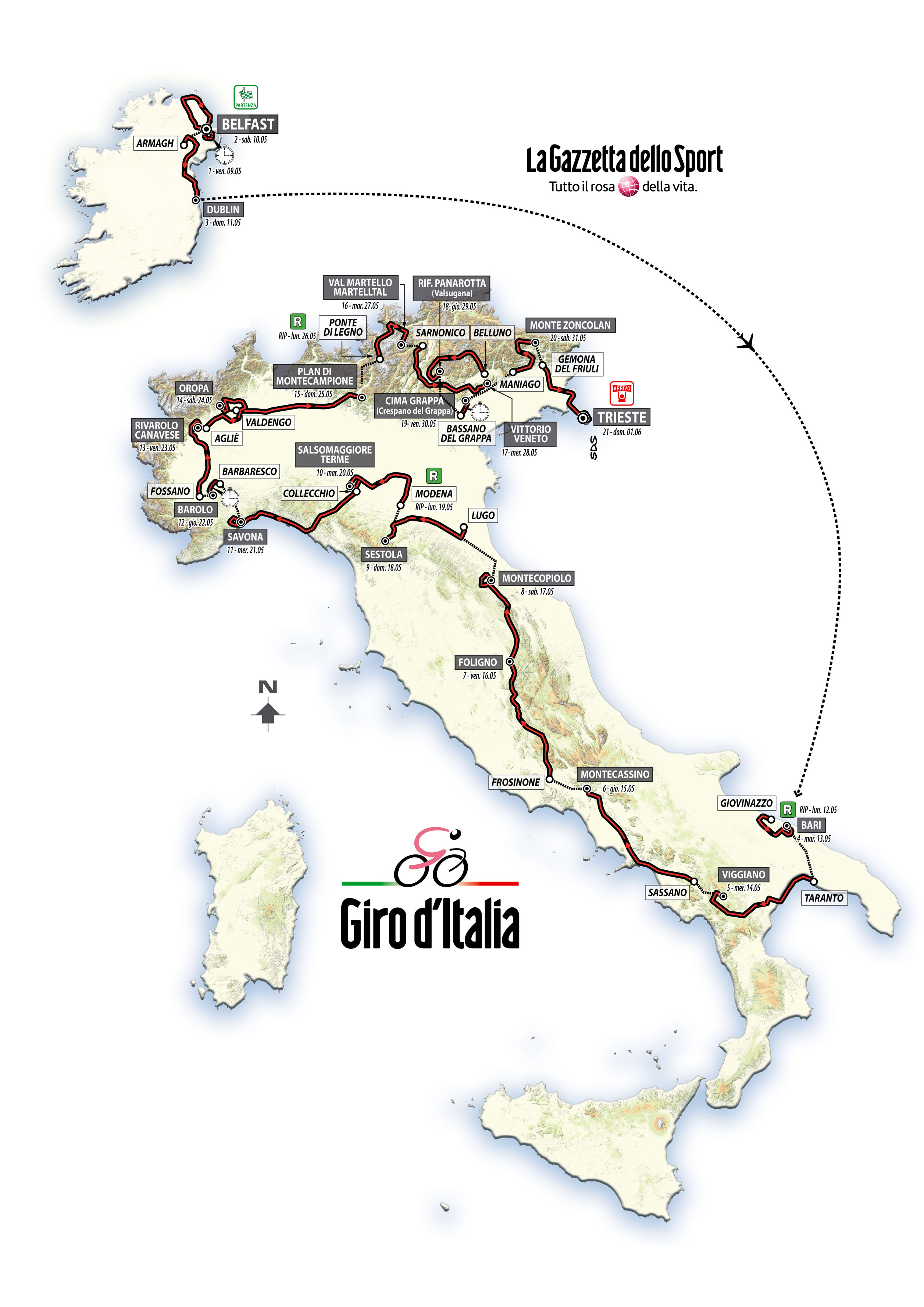
Giro d’Italia 2014 – final week and round up

Giro d’Italia 2014 week 3 – stages 17 through 21 

After the Stelvio ‘controversy’ the peloton awarded itself a fourth rest day on Wednesday’s stage to Vittorio Veneto. As riders placed their feet in bowls of hot water and nursed a Cup a soup overnight a collective hissy fit was aired officially (between the team’s organisation, the UCI and RCS) and unofficially on social media about the legitmacy of Nairo Quintana’s stage win and capture of the race lead from Rigoberto Uran. The likelihood of teams withdrawing enmasse was never that much of a possibility and by the end of the race any lingering indignation looked academic.

Grio d'Italia 2014 winner - Nairo Quintana
Grio d’Italia 2014 winner – Nairo Quintana

From VCSE’s vantage point on the sofa it seems that any suggestion that the race ‘coulda, woulda, shoulda’ be neutralised disappeared when Sky’s Dario Cataldo said ‘no thanks!’ to the offer of an extra layer of clothing and his musette and went charging off on the descent. Yes, riders did stop at the top of the Stelvio, but at random. VCSE didn’t see a single example of an entire group of riders coming to a halt. The apparent ‘smoking gun’ evidence against the Quintana group, that included other GC contenders like Ryder Hesjedal, was the photo of the Columbian descending behind a moto with the pillion holding a red flag. It wasn’t altogether clear what the flag signified but it certainly wasn’t to indicate that the race had been neutralised. Whether it was safe (or not) to continue to race the descent off the Stelvio seems a moot point. Were there any crashes? In the (undoubted) confusion that followed the sum up seems to be those that chose to race, did and anyone else suffered the consequences of that.

The lack of interest shown by the new Maglia Rosa and his GC rivals the following day bore testimony at the difficulty of the previous day however. No one watching, let alone taking part, could deny it hadn’t been a tough stage with the addition of the climb to Val Martello added a 14% insult to the Stelvio / Gavia injury. The peloton crossed the line more than 15 minutes down on eventual stage winner Stefano Pirazzi. Last years KOM winner had been out of contention for that prize since the carnage of the Cassino stage but he salvaged some pride for himself and further built on Bardiani’s success at this years race.

A break of sorts was allowed the win the following day as well as the Giro returned to the mountains for its penultimate summit finish. This years KOM and (yet another) Columbian, Trek’s Julian Arredondo took the stage from compatriot Fabio Duarte reinforcing the thought that the race was rapidly becoming some kind of South American benefit. Quintana arrived with Uran, but it was Cadel Evans who was the biggest loser of the day falling off the podium and almost out of the top ten.

This years edition of the Giro was well and truly back loaded with climbs and if the Stelvio / Gavia double wasn’t enough there was still the Zoncolan to look forward to and possibly shake the GC up further. Ahead of that an uphill TT, 27km in length of which more than two-thirds averaged nearly 8% maxing out at 14%. No TT bikes here then and the climbers and GC boys to the fore. Breakaway fixtures Cataldo and Lotto’s Tim Wellens performed well for their top ten placings but the podium spots went to the GC contenders. Very nearly the ride of the stage went to Fabio Aru, just missing out on the win, but claiming a podium place from Pierre Rolland. The home crowd showed partisan support to a home rider who was now in with the best chance of a repeat Italian victory, but Quintana was the expressionless asassin of local hopes as he put 17 seconds into Aru at the line.

And so to the ‘final’ GC stage; Zoncolan. Actually, the profile shared a reasonable amount with Tuesdays three peak extravaganza adding a cat 1 and 2 climb into the mix ahead of the summit finish. A decent sized break had got away here as well and the finale provided a race within a race as we waited to see who would take the stage and could anyone threaten Quintana’s lead. The latter really wasn’t ever in doubt. While Quintana rode much of the climb unsupported, Uran hasn’t really looked capable of attacking anyone over the three weeks and certainly not since he took the Maglia Rosa. It was an OPQS rider who did the damage to split the final group to pieces, but that was Wout Poels.

Up the road stage 11 breakaway winner was involved in a dual with emerging Bardiani (yes, them again) rider Francesco Bongiorno. In truth, Rogers looked the stronger of the two even if Bongiorno hadn’t lost out when an attempt to ‘help’ him hadn’t backfired and pushed him into Rogers wheel and out of his pedal. If Rogers first win had been unexpected then a second on this stage and this climb was perhaps even more so. Rogers had more help on this one, crucially Tinkoff Saxo had two experienced men in the break, but even so the win wasn’t universally accalaimed.

Five minutes behind and below, while Rogers was helped from his bike by team owner Tinkoff, Quintana was making serene progress up the Zoncolan in attendance with a trio of QPQS outriders. If there wasn’t going to be a fight between the two Columbian’s there wasn’t much of a battle between those riders contending for the final podium place. Aru had already done the damage to Rolland and stealing a few more seconds on the line was just proving a point. You almost hoped for a Hinault, Lemond style Alpe du Huez celebration by Quintana and Uran as the line approached but despite being awarded the same time the wasn’t any overt sign of cameraderie. In the final analysis it was the Zoncolan itself that provided the drama on the day with unruly fans and the riders fighting the climb more than each other.

The final day’s parade into Trieste was always likely to finish in a sprint, although quite a few riders had a stab at winning from a break. At one stage three time stage winner Nacer Bouhanni looked like he would be out of contention, but his stalwart lead out man Sebastien Chavanel managed to pull him back to the front only for Giant’s Luka Mezgec to show once again that the team have depth behind Degenkolb and Kittel.

Giro d’Italia 2014 wrap up 

So what does this years Giro tell us about the state of play in 2014 and looking ahead to the rest of this season and the next? Nairo Quintana justified his favourite status and everyone (in particular his rivals) admits he would have won the race without needing any advantage that might have been stolen on the Stelvio stage.

It’s a leap further to suggest, as Movistar have done, that Quintana was right to target the Giro over the Tour following his second place in France last year. Of course, having made the point that Quintana was an unknown quantity going into the Giro and thus wasn’t an automatic favourtite as a result the same could be said of Chris Froome going into this years Tour. If Quintana has been so strong at the end of May it does make you wonder how good he could have been at the start of July. Movistar look like the team best placed to control a race from the front too. Without taking anything away from Quintana’s win it does feel a little like the easier option has been taken in not pitting the Columbian against Froome this  year. Of course, the Tour lacks the really steep (in sections) parcours of the Giro but it’s a shame that we will have to most likely wait until 2015 to see a Froome, Quintana match up.

The VCSE view on Rigoberto Uran ahead of the Giro was (to paraphrase Eminem) that the real Uran needed to stand up. Uran had looked second best against established OPQS rider Michael Kwiatowski  so far this year and other than the stage win where he took the Maglia Rosa didn’t look as if team leadership sat well on his shoulders. Of course, there’s no shame in finishing on the podium at a grand tour but it does look as if Uran lacks the final few percent that separate the contenders from the champions. The OPQS team selection plays a part too though, lacking enough strong climbers to go with Poels and Pauwels to match up against Movistar and the distractions of the team management making too much of the Stelvio incident.

Perhaps a bigger disappointment, at least for the home fans, was Domenico Pozzovivo. The AG2R rider carried form into the race and at the end of the first week looked like the form rider. He flattered to deceive however and while a top ten was the VCSE prediction ahead of the race, Pozzovivo didn’t fulfil his own prophesy that he would “..attack”. Cadel Evans faded sharply in the final week, his strategy of sticking with the leader during each stage back firing completely on the Stelvio stage as he got caught with Uran as Quintana rode away. Once Quintana had taken the jersey Evans looked less and less likely to not lose time. This is likely to be his last time as a challenger for GC in a grand tour.

Fabio Aru had been touted as a climbing talent ahead of the Giro, but Astana had him in a supporting role to Michele Scarponi who had joined the team to become the number two GC rider behind Vincenzo Nibali. Third place, some strong climbing performances and his win on stage 15 puts Aru into ‘great white hope’ category for Italian GC hopes in the next five years and for now the heir apparent to Nibali. It will be interesting to see now if Astana give Scarponi another shot at a grand tour in this years Vuelta or will Aru be elevated to team leader without having the role handed to him by events. Of course, Aru isn’t the only young Italian rider who has grand tour credentials in the peloton, but he has looked the most convincing this week and everyone will always take notice of an apparent ‘surprise’ emergence, just as they did with a certain Columbian last year.

Nacer Bouhanni’s win of the points jersey is an interesting one. This blog lauded Mark Cavendish’s victory last year as a triumph in a contest that doesn’t tend to favour sprinters. Does Bouhanni’s win put him on a par with Cavendish or was the competition less this year? Certainly, as mentioned in the Giro preview the first rank of sprinters were largely missing (Kittel went home after the Irish stages). If nothing else Bouhanni, out of contract this year, has put himself in the shop window and if he can take Chavanel with him could bring some much needed sprint credentials to somewhere like Sky next year.

Perhaps the happiest team in terms of results would be Bardiani with three stage victories in this years Giro. Bardiani took a stage last year, but the team that featured most at the front of the race was Vini Fantini only for them to fall foul of positive drug tests. There’s been no such suspicion about the Bardiani team this year and with the emergence of riders like Aru it’s to be hoped that scandal doesn’t engulf what could be the start of a brighter era for Italian cycling that isn’t tainted by doping.

This years Giro will be remembered as a Columbian renaissance . Amongst the crashes and manufactured controversy Quintana’s win and strong showing from Columbian riders from teams throughout the peloton (as well as the ‘national’ team) it feels as if naturally talented riders are once again coming to the fore. The most numerous nation represented in the top 30 on GC outside of the hosts, Columbian riders took the KOM (Arredondo) as well as four stage wins (Quintana two, Uran and Arredondo one each). Quintana has made the leap in little over a year from a climber to grand tour winner and is the strongest evidence yet of a cleaner doping free peloton.

VCSE’s Giro 2014 Preview

The first of this year’s grand tours begins on Friday in Belfast. Unless you’re a resident of the Emerald Isle the 2014 edition of the Giro d’Italia feels a bit low key. Last year’s route promised epic stages with classic climbs like the Stelvio and Gavia and a match up between Vincenzo Nibali racing for his home tour against the 2012 Tour de France winner Bradley Wiggins. As things turned out Wiggins never really offered much of a challenge for the Maglia Rosa and mother nature intervened to curtail or even cancel the marquee stages.

Vincenzo Nibali - Giro 2013 Winner
Vincenzo Nibali – Giro 2013 Winner

There’s been something of a changing of the guard since then with Wiggins pretty much finished as a grand tour GC contender and with Chris Froome how seen as the man to beat Nibabli will not defend his title, choosing instead to race against Froome in the Tour. Giro organisers will miss Nibabli but will somewhat happier if they manage to avoid any positive drug tests this year (even posthumously). Last year’s wild card entry Vini Fantini had questionably included admitted doper Danilo Diluca in their line up and his subsequent positive for EPO suggested that this particular leopard couldn’t change it’s spots.

So this years race lacks much of a narrative outside of the three stages that will take place in Ireland over the coming weekend. The GC contenders aren’t from the first rank (with the possible exception of Joaquim Rodriguez) , but this could actually make for a more interesting race and the chance that the final GC positions could be decided in the final week.

Riders to watch at the 2014 Giro

With Nibali missing Astana have handed the team leadership to Michele Scarponi. He’ll be backed by a decent group of domestiques, but it’s hard to see him as the potential winner. VCSE is surprised to see Scarponi attracting stronger odds than Garmin’s Dan Martin, although this is probably due to Scarponi’s likely consistency which should see him safely inside the top 10. Martin is Garmin’s GC leader for this years race, even though 2012 winner Ryder Hesjedal is also present. Jonathan Vaughters wants Martin to step up and show he can be a feature in a three week stage race and the ‘Irishman’ seems to be taking some form into the race. VCSE suspects that Martin will fade early on, but may come back with a big stage win towards the end of the race.

The bookies favourtite is Movistar’s Nairo Quintana. The Columbian who swept up a podium place and the KOM and young rider jerseys at last years Tour still has to play second fiddle to Alejandro Valverde in the Spanish sponsored team so he leads at the Giro. The story unravels a little when you remember that Quintana hasn’t done anything much this season. Last year he could point to a stage race win in the Basque country. This year; nothing like that. It feels a little bit like Quintana is being promoted on the back of his results from last year. Undoubtably talented, VCSE just isn’t sure Quintana has the legs this year. He might be a rider that stays out of trouble until the big mountain stages and then come to the fore, but if Quintana doesn’t work it’s hard to see Movistar snatching stage wins the way they did in 2013.

We’ve already mentioned Joaquim Rodriguez who targeted the Giro early in the year in the hope that he could make the step from podium to winner in a grand tour. He’s collected a podium at all three grand tours now and feels that he has unfinished business at the Giro after going so close in 2012. Trouble is he’s carrying an injury from his classics appearances and unless he’s undergone some sort of miracle cure in the last two weeks he isn’t going to figure and might even be an abandon before the race is over. J-Rod isn’t attracting great odds, but the bookies money looks safe based on actual racing.

Another rider who targetted the race early is BMC’s Cadel Evans. Unlike Rodriguez, Evans has form too with a win in the Giro del Trentino in the last few weeks. Evans was a bit of surprise package in last years race, pretty much written off beforehand, but doggedly clinging on in the GC to finish a distant third to Nibabli. In the absence of stronger opposition and supposing VCSE has got it right so far with our predictions Evans should be disappointed if he doesn’t get a repeat appearance on the Giro podium and maybe even go one or two places better than 2013. Last years podium triumvate was rounded out with Rigoberto Uran, then of Sky now of Omega Pharma Quick Step. Subject of the OPQS ‘are we a GC team?’ schizo transfer policy Uran must have thought he had arrived when he joined the team. Unfortunately, for Uran it’s been ‘Mo’money.. mo’ problems’ as his form has dipped and he looks emasculated by Michael Kwiatowski. The saving grace for Uran is that Kwiatowski will race the Tour and Uran will lead in Italy. Can he forget that his team wonder why they spent the money and do something (maybe even remind them why they spent the money in the first place)? It will be interesting to see which Uran turns up on Friday.

There’s a few outsiders to keep a look out for; good bets for the top ten or a stage win or two. Tinkoff Saxo will be led by Nico Roche who came of age in last years Vuelta and who has really grown in stature since joing Bjarne Riis’ team. Roche kept up bravely when the climbs went into double digit inclines in Spain and unless he’s developed an extra gear in the off season he will probably come similarly undone in Italy. He’s a good shout for a medium mountain stage and top ten finish. Leading Roche’s old team AG2R is Domenico Pozzovivo an Italian in a French team, a possible KOM or stage winner and a likely top ten contender.

Last years points jersey was taken by Mark Cavendish, giving him a points victory in each of the grand tours. As with the Tour the points jersey in the Giro is not a shoe in for a sprinter and many expected Cavendish to abandon his attempt rather than take on the highest climbs. The fact that his nearest rival for the Maglia Rosso was Evans indicates how hard Cavendish had to work, right up until the final day, to win. It’s less likely that a sprinter will claim the prize this year unless Marcel Kittel decides that any Cav can do, he can do also. Rather like the GC, the remainder of the sprint pack are of the second rank, although Elia Viviani’s recent wins in Turkey suggest that he could do damage. Doing damage, if not actually winning anything the two wheel equivilant of hand grenades with their pins removed are FDJ’s Nacer Bouhanni and Lampre’s Roberto Ferrari.

VCSE’s Giro 2014 GC Tips 

1. Quintana 2. Evans 3. Uran 

Stages to watch at the 2014 Giro 

Stage 3 – Armagh to Dublin 

OK so this stage is proceeded by another sprint stage but when the race crosses the border into the south we’ll see how much the Giro has really been taken to Irish hearts. This is stage to be watched as much for the crowds as it will be for the actual result. Kittel could claim the Maglia Rosa ahead of the peloton’s return to Italy on Tuesday.

Stage 6 – Sassano to Monte Cassino

Scene of some of the bloodiest fighting of the second world war this is one of the longest stages in the race and finishes with a climb to the monastery. Mostly flat for the majority of the stage, it’s not much of climb so might fall to a puncheur or a late break.

Stage 8 – Foligno to Monte Copiolo

A cat 1 followed by a cat 2 with another cat 1 summit finish should see the first GC selection and round of the first week proper of this years Giro.

Stage 14 – Aglie to Oropa 

A week after stage 8 and another cat 1, 2, 1 combination and summit finish to further shake up the GC. If the race does follow a similar pattern to last year, we will know the winner at the end of this stage. If…

Stage 16 – Ponte di Legno to Val Martello Martelltal

The stage that never was from last year with the Stelvio and Gavia tackled in one day and a summit finish thrown in for fun. RCS will be praying for good weather.

Stage 19 – Bassano del Grappa to Cima Grappa

To get over the climbs of the Giro and lose the race in a time trial could seem unfair, but this TT is straight up. If some GC riders can take an advantage through a stronger team this stage is about one rider against the climb and the clock only. If stage 19 does decide the outcome of the 2014 Giro the winner will deserve his victory.

Stage 20 – Maniago to Monte Zoncolan 

The race may have already been one, but the finish will still be spectacular. Perhaps the only marquee climb that was missing from last years race and given star billing this year.

GeneralPlanGiro2014
Giro 2014 Route

Swift Returns – VCSE’s Racing Digest #25

Milan San Remo 2014

In exchange for a perfect ribbon of smooth tarmac it’s probable that residents living alongside the Poggio, the final climb of the Milan San Remo route, can leave with the inconvenience of the race one day in early spring each year. The road is deserving of it’s pristine status as it by the time reaches it’s summit with 6 kilometres to go the race is either won or about to be.

Winner MSR 2014 - Alexander Kristoff
Winner MSR 2014 – Alexander Kristoff

This is, depending on your point of view, the beauty or the problem with Milan San Remo. The longest classic at almost 300km in length and with a largely benign profile it’s the ‘monument’ that is seen as offering the best chance of a sprint finish. The Poggio and it’s predecessor climb on the route, the Cipressa have been included over the years to try and keep interest in a race that can see the winning rider take 7 hours to complete the distance. The idea is that the climbs will force a selection or provide a breakaway with the kind of gap they would need to stay away to the line. It’s true that each ascent has thinned out the peloton over the last couple of years, but even as the race has entered the final kilometre it’s been anyone’s race.

Last year through up a surprise winner in MTN Quebeka’s Gerald Ciolek. The race had been part neutralised after heavy snow had fallen on the route and the remainder of the race was run in the kind of conditions you might expect in Belgium, rather than hugging the Mediterranean. Ciolek was unfancied ahead of the race in MTN Quebeka’s first season racing in Europe. This might have been the deciding factor that allowed him to burst to the head of the race at the crucial point, producing a sprint that beat a high profile podium comprising Fabian Cancellara and Peter Sagan.

Milan San Remo receives live television coverage as the first of the five ‘monument’ one-day classics. It’s hard to imagine a broadcaster taking any more than the final couple of hours though as the first 200km are pretty dull viewing. Not quite as inclement as last year, the early part of this years race provided interest in deciding who has the worst helmet design in the peloton if nothing else. Trying to predict a winner from the riders showing themselves, even with 60km to go, is speculation at best.

The fancied riders this year were the pure sprinters like Cavendish, Degenkolb and Greipel. Sagan, of course, was in the mix too, but a later change to the route had much of the pre-race discussion centred on the likelihood of a bunch sprint finish. The first firm potential race winning attack came from Vincenzo Nibali who attacked ahead of the Poggio and overhauled the remains of the break ahead of the final climb. Can you imagine a GC style rider from Sky putting in attack like that? The Nibabli cameo lasted 15km and by the time the Poggio was reached the Sicilian was out the back suffering from a lack of legs or lack of support for the final push.

The group that was left was larger than last year and included Ciolek, hinting that he might not be a one hit wonder as far as the race was concerned. Sagan and Cancellara were in the mix too but so were the some of the sprinters, Cavendish included. There was much post race discussion on social media about eventual winner Alexander Kristoff who had odds that would have reflected Ciolek last year at 100-1. What sparked the discussion was that Kristoff had been tipped figuratively if not literally by some commentators as someone who “..loves long races”.

Led out for much of the finale by Luca Paolini, in truth Kristoff didn’t look to be in much difficulty of losing in the sprint to the line. The race was for the podium places, although judging from Cancellara’s reaction on the line he must have thought he was closing. The top 10 had some interest lines though. Ben Swift’s third place finish is the Sky riders biggest result for some time. Like a number of his teammates, VCSE hasn’t really been convinced of Swift’s chances against the world’s best sprinters, but yesterday’s result will probably be heralded as something of a breakthrough. It was the first time Swift has run MSR and it’s a race he has suggested he would do well in. Whether that’s based on more than just a feeling he has isn’t clear, but Swift was on the front of the peloton riding in support of Edvald Boasson Hagen late in the race and it was his supposed team leader that faded and not Swift. Following Ian Stannard’s win at OHN this podium will add to the theory that Sky are beginning to show more form in the classics, but at this stage the VCSE view remains that they’re just having a better year. Stannard was praised for his 6th place in last years MSR, so Swift can expect to get some favourable press and more importantly for the rider more chances to ride this year.

Sagan scraped into the top 10 and didn’t look like the rider described in pre-race discussions. Is he feeling the pressure to deliver this year? Cancellara picked up another podium and possibly one that was looking less likely. With Tom Boonen absent from MSR for personal reasons it’s not possible to draw to many conclusions about the match up to follow at E3 this Friday and looking further ahead to the Ronde and Paris Roubaix. Whether Boonen is able to put personal tragedy aside (will he want to?) may determine the direction of the remaining spring races.

Quick look ahead to the Tour of Catalunya

Dan Martin will defend his title but all eyes will be on Chris Froome in his first race back since missing Tirreno Adriatico with a back injury. The line up is pretty starry actually with Joaquim Rodriuez, Nairo Quintana, Alberto Contador and Chris Horner all riding. There will be lots of interestin sub plots including the Columbian match up between Quintana, Rigoberto Uran and Carlos Betancur.

Obviously, the race is a warm up for all involved, but with Betancur and Contador coming off strong wins in Paris Nice and Tirreno Adriatico respectively the prospects for some punches to be traded on the mountain stages on Wednesday and Thursday look good.

Froome will be supported by Sky’s normal roster of super domestiques with David Lopez and Mikel Nieve already lookin strong this year. Froome will also have Richie Porte, his closest ally from last years success at the Tour. Might Sky throw us all a curve ball this year and back Porte for GC? Porte hasn’t looked that strong yet this year and the Giro is nearer on the horizon. However, Froome will want to show that his injury is just a bump on the road if he’s to maintain the psychological advantage he enjoyed over his rivals last year.

Whatever happens, it’s looking like a good race to watch. It’s just a shame that Martin will probably be outgunned in his title defence. It’s hard to see him being allowed to escape and win the queen stage like he did last year and from there the overall.

It’s on… racing to the sun via the two seas – VCSE’s Racing Digest #23

Sky find form in the classics.. or do they?

Ian Stannard’s victory in the Omloop Het Nieuwsblad was Sky’s first victory in a one day race for more than 12 months but does his win mean that Sky can begin to dominate in the classics? Not necessarily. For starters Sky have ‘form’ where OHN is concerned, Juan Antonio Flecha winning the race in 2010 and standing on the podium in the next two editions.

Classics breakthrough for Sky? - Ian Stannard
Classics breakthrough for Sky? – Ian Stannard

Het Nieuwsblad is one of the one day races euphemistically described as a ‘semi-classic’ and along with Kuurne Brussel Kuurne run the following day it’s the curtain raiser for the cobbled classic season in Belguim. Last year’s race was held in freezing conditions that saw the following days race (KBK) cancelled due to snow. Katusha’s Luca Paolini was the opportunistic winner who after breaking from the peloton sheltered behind the only rider who you could fit two of Paolini into: Omega Pharma’s Stijn Vandenbergh. Vandenbergh would probably accept that he’s something of a diesel as a rider and it might have been the cold that fogged his mind last February as he dragged Paolini almost to the line. The Italian who held the Maglia Rosa early on in last years Giro is a sprinter of the old school (in other words, he’s not that fast) but he wouldn’t have needed much pace to overhaul Vandenburgh.

While this years edition didn’t suffer the same climatic conditions as 2013 a similar race was developing with two riders breaking away towards the finish with marked similarities to last years protagonists. Stannard definitely falls into the diesel category. He’s the kind of rider that the average recreational rider can identify with physically and is blessed with the kind of ‘never say die’ attitude that makes you want him to hang on for the win. He was up against BMC’s Greg Van Avermaet, a five time winner in 2013 and a second line sprinter in the Paolini mode. With British fans willing Stannard on, elsewhere and in the commentary boxes the discussion centered on the likely strengths of each rider if the race was decided in a last kilometre sprint.

Whether or not Stannard remembered the fate of Vandenbergh or just recognised that he would be at a disadvantage against van Avermaet in a sprint, he didn’t wait to find out. Winding up his speed over the final kilometre Stannard just managed to hold off Van Avermaet at the line and immediately sparked a debate about whether or not Stannard’s win represented a turnaround in Sky’s fortunes in the classics.

So does it? The VCSE view remains in the ‘no’ camp (we didn’t tip a Sky win ahead of the weekend) although perhaps we’re a bit more optimistic. Sky’s infamous choice of preparing for races in the wind, rain and snow of northern Europe in the sunshine of Gran Canaria was seen by many as the prime reason for Sky’s poor showing in the classics last year but it’s more accurate that they just don’t have a marquee one day rider (or riders) in the mould of a Cancellera or a Boonen. If Stannard winning OHN proves to be the high water mark for Sky in the classics this year then he will have been the teams best one day rider for the second year after his strong showing at Milan San Remo last year. He could yet trump what is being seen by many as his breakthrough win if and when he competes in Paris Roubaix later next month. Stannard seems to rise to the occasion when the weather is at its most biblical but Paris Roubaix has the kind of parcours that he could thrive on rain or shine. It’s still hard to be convinced that Edvald Boasson Hagen that can win any kind of race anymore and Stannard and maybe Geraint Thomas apart VCSE thinks that Sky have some way to go before they can be considered in the first rank of one day teams.

Boonen’s back

Tom Boonen had a disappointing OHN but he and his Omega Pharma team were in dominant form the following day at Kuurne Brussel Kuurne. While the race features some of the fabled Flandrian bergs it’s one of the sprinters classics with Mark Cavendish winning the last race in 2012 as last years edition was lost to the weather.

We’ve become used to seeing teams dominate stages during the grand tours but the unpredictable nature of one day races tends to preclude this from happening. Yet, KBK saw Omega Pharma managing to get five riders into the break, including Boonen and this allowed them to control the race to an extent that a Boonen victory was all but assured with over 50 kilometres to go.

Boonen is running out of time to become the outright ‘greatest of all time’ if he wins at Paris Roubaix or the Tour of Flanders this year, but he achieved a less heralded milestone by winning KBK. If becoming the rider with the most victories in KBK is an omen then Boonen may yet to go on to be the star of this years classics the way that Fabian Cancellara was last season. Neither Boonen nor Cancellara is getting any younger, but the sense is that Boonen is the man running out of time. Another year on may see riders like Peter Sagan and Sep Vanmarcke take over the crown, but in 2014 the momentum seems to be with Omega Pharma and Tom Boonen.

His teams early season dominance was reinforced with a win in Strade Bianche for Michael Kwiatowski the Polish road race champion. Kwiatowski is seen as a potential grand tour winner, although this isn’t always the best thing to be in a team that already struggles to balance the competing priorities of Mark Cavendish and the classics outfit. Kwiatowski beat no less a rider than Sagan who had ridden away from the leading bunch, including Cancellara, with ease. When it came to final climb, Kwiatowski rode past Sagan like he was going backwards. It remains to be seen if his team wonder why the invested heavily in Rigoberto Uran if there was already a climber like Kwiatowski under their noses.

Sky upset the ASO applecart

With the two one day races in Italy last weekend and the start of Paris Nice and Tirreno Adriatico this week it really feels that the road race season has started. For the armchair fan there’s some juggling to be done to try and see both of the week long stage races as the events overlap from the middle of the week. Both events had compelling stories last year with Richie Porte achieving his biggest victory to date in Paris Nice and Sky’s third win in a row while Vincenzo Nibali beat Chris Froome in their only match up of the year in Italy.

The story this year at least so far is Sky’s decision to move Porte from the Paris Nice squad where he would have defended his title to replace the injured Froome at Tirreno. Froome has injured his back and while his withdrawl is being justified for greater things to come later this year it’s tempting to wonder what might happen if Sky’s main rider becomes sidelined by a persistent injury this season. Porte is earmarked for the Giro but would Sky shift him to the Tour in Froome’s absence?

In the short term Sky have upset Paris Nice (and Tour de France) organisers ASO by appearing to prioritise Tirreno over their race. Both races feature markedly different parcours to last years and Sky’s view is that Tirreno is better suited to Porte’s talents. If that is the reason, then why didn’t Sky race him there from the outset? Traditionally seen as preparation for Milan San Remo, there’s no reason why the race should be seen as essential to Froome’s Tour presentation. If anything Froome might have scored some useful psychological points over Nibali if he had raced Paris Nice like the Sicilian.

With Froome’s injury all of this is academic but it will be interesting to see just how personally ASO have taken Sky’s decision to withdraw Porte as the year goes on. Might they take a different view if there’s a repeat of Froome’s gel incident from last years Tour this year?

Valverde – pas normale?

After his dominant performance at the Ruta del Sol Alejandro Valverde continued to raise eyebrows with his performances at Strade Bianche and Roma Maxima last weekend. The Movistar rider featured in both races. Commentators referred to Valverde’s form many times over the weekend, but whether it’s credible is something else again. The fact that he was the only rider to feature as strongly in both races is undeniable. Lance Armstrong used to refer to the performances of riders he believed were using PED’s as “not normal”. Should the absence of any repentance from Valverde over previous drug bans mean that his performances will be subject to scrutiny? Well, yes and comparing and contrasting Valverde’s performance over two consecutive days and races with Boonen provides more food for thought in the ongoing debate about cycling’s credibility.

“That’s a bit of a turn up…” – The (inevitable) VCSE 2013 season review

Team of the Year 

When the BBC shows (what for it) is a minority sport like cycling on the annual Sports Review of the Year the coverage tends towards the lowest common denominator. The assumption is that most viewers will have a vague idea of a race around France each summer although that is possibly based on the arrogant view that if the BBC don’t cover it then people won’t find an alternative way to watch the event. In this environment there’s a certain amount of inevitability that Team Sky would be discussed (and nominated) as Team of the Year.

From a (slightly) more informed position it’s hard to imagine why Sky could be considered the team of this year, although last year’s was perhaps a reasonable choice. They retained their ability to set a tempo at the head of the peloton in stage races, up until the Giro seemingly able to impose this tactic on the supplicant opposition. Increasingly though those teams and riders who wanted to bring the fight to Sky began to find ways of overcoming the British team’s game plan. There were early hints that the Sky train could be derailed at Tirreno Adriatico when Astana and Vincenzo Nibali ganged up on Chris Froome to deny him victory for the only time in a major stage race this year. Sky didn’t have things their own way at the Tour either when it seemed like the entire peloton had decided it was payback time on Sunday’s stage in the Pyrenees. Forced to defend attacks from the outset, Sky had burnt their matches long before the days live TV coverage began.

In shorter stage races Sky had already demonstrated that if they didn’t have the strongest team they could easily fall prey to other teams (often) superior racecraft. They were even more exposed in the classics where their ‘protected’ riders couldn’t even deliver the squads best result. The criticism that followed the lack of results in one day races was fuelled by the fact that Sky had invested so much in a training program based at altitude in Tenerife rather than the ‘traditional’ preparation of early season stage races.

So if not Sky, then who? Certainly not fellow moneybags team BMC. Other than the quiet resurgence of Cadel Evans at the Giro BMC achieved little before the mid point of the season and their lacklustre performance was characterised by their attempt to back two riders at the same time in the Tour and have neither achieve. Perhaps the most significant event of BMC’s season was the shake up of their back up team with Allan Peiper taking over as race director after the Tour. The start of Peiper’s reign coincided with the team beginning to win again. A team to watch in 2014 maybe?

Vincenzo Nibali’s decision to move to Astana gave the Kazakh team the kind of marquee rider to deliver grand tours it had been lacking since Alberto Contador left. Dominant at the Giro, they were less involved at the Tour in Nibali’s absence. Reunited with ‘The Shark’ at the Vuelta the teams tactics on the penultimate stage were supposed to deliver Nibali victory on the day and the overall. Astana had riders in the break and in poor weather they had managed to stay away on the final climb to the top of the Angrilu. The strategy seemed telegraphed; as the peloton caught the break Nibali’s domestiques would be in the perfect position to support their leader as he went for the win. The script didn’t quite go as planned and the third grand tour went instead to Chris Horner riding for VCSE’s pick for the team of 2013, Radioshack.

RadioShack-Nissan - Eneco Tour 2012
Team of the Year – Radioshack (Photo credit: Wouter de Bruijn)

Horner’s squad began the year arguably as a lame duck team. The team’s association with Johan Bruyneel and Lance Armstrong hung over the 2013 outfit like a bad odour and then there was the announcement that title sponsor Radioshack would be pulling out at the end of the season. Would Fabian Cancellara have been as dominant in the classics if he had been up against a fit Tom Boonen? Academic now, but at the start of the year no one would have known that Boonen would have been struggling for form following his off season injury or that his year would have ended just as it was starting thanks to a crash in the early miles of the Ronde. The manner of Cancellara’s wins in E3 Harelbeke, the Ronde and Paris Roubaix might not have been quite so emphatic with an in form Boonen against him, but just as 2012 was the Belgian’s year so 2013 belonged to the Swiss.

Cancellara faced competition, in particular with the emergence of Peter Sagan as a real threat in the classics. At an individual level there were times when Sagan was maybe the stronger rider, but Cancellara was able to make an impact in races when it counted thanks to the tireless work of the Radioshack domestiques like Hayden Roulston who covered every attack and were never far from the front if in fact they weren’t heading the peloton.

Thanks to Cancellara then Radioshack were the team of the classics. Figuring at the grand tours was probably not part of the plan and this might have remained the case but for the intervention of the Orica Green Edge team bus on stage one of the Tour. Confusion surrounding where the stage would finish extinguished Mark Cavendish’s chances of taking the yellow jersey but left Radioshack’s Jan Bakelants in a position where he would inherit the jersey the following day in Corsica. Bakelants put Radioshack on the map at the Tour but it took the final grand tour to provide a triumphant end to the team’s season. Absent since Tirreno Adriatico where he had delivered a top five finish Chris Horner arrived at the Vuelta with a stage win on home soil as an indicator that he was coming back into form following injury.

A stage win early in week one was news enough for a rider about to celebrate his 42nd birthday but as the race progressed and Horner began to take more time out of the race leaders people began to realise he might actually win the whole thing. Once again the team leader was ably backed by his domestiques, including for part of the race Cancellara and Croatian champion Robert Kiserlovski. For many onlookers a Horner victory was not something to be celebrated and it’s fair to say doubt remains that a rider of 42 can win a three week grand tour ‘clean’. In the absence of a revelation that Horner’s victory actually was unbelievable, writing now it cements Radioshack as VCSE Team of the Year based on team and individual performances in the classics and grand tours.

Honourable mentions go to Movistar for delivering some memorable stage wins in the Giro and Tour and Orica for the irreverent custody of the maillot jaune during the first week of the Tour. Argos Shimano threaten to become the number one sprint team with Marcel Kittel and John Degenkolb. They have some of the leading young talent on their roster with double Vuelta stage winner Warren Barguil.

Rider of the Year

After dismissing Team Sky as a contender for Team of the Year it might seem contrary to pick Chris Froome as VCSE Rider of the Year. Froome deserves his place as the year’s top rider for the way he was able to surpass anything his team were able to do collectively, even when riding in support of him.

Christopher Froome at the prologue of the Tour...
Christ Froome (Photo credit: Wikipedia)

This couldn’t have been made any clearer than on stage nine of this year’s Tour. The previous day it seemed as if Sky’s rival teams and Froome’s GC opposition had run up metaphorical white flags as the British team delivered a crushing one two as the race entered the Pyrenees. With his closest rival over a minute behind Froome had taken over the Maillot Jaune and the discussion was not would he win the Tour, but how big would his winning margin be. The following day as the peloton continued to traverse the cols of the Pyrenees the script was ripped up as first Garmin and then Movistar attacked Sky from the outset. By the time live TV coverage began Froome was alone at the head of the race. In truth, the sting had probably gone out of the stage by this point. Nevertheless Froome had no option other than to cover any attempt made by Movistar to attack the race lead.

Sky recovered the composure after the rest day and Froome survived another collapse in his teams inability to deal with the unexpected in the winds on stage thirteen. It was no coincidence that he came under greater scrutiny on the stages that he won in the Alps and the Pyrenees but the trajectory Froome followed in 2013 was in many ways similar to that of Bradley Wiggins in 2012 with victories in the Tour de Romandie and Criterium du Dauphine. Froome was in dominant form from the outset and VCSE speculated as early as the Tour of Oman (his first ever overall stage race victory) that the pattern for the season could be emerging. The only rider who looked able to unsettle Froome on the road in 2013 was Vincenzo Nibabli but other than their early season encounter in Tirreno Adriatico they did not meet head to head until the world championships at the end of the racing year. It could be argued that Wiggins unsettled Froome also, particularly with his interview ahead of the Giro where he speculated that he wanted to defend his Tour title. With hindsight it’s clear that Wiggins was never going to be allowed to do this and the axis of power has definitely shifted within Sky now with Wiggins unlikely to renew his contract after 2014.

While VCSE suspects an on form Nibali would edge Froome (we will have to wait for next years Tour to find out) the Sicilian was the nearly man this year as his tilt at a second grand tour victory and the world championships ended in anticlimax. Fabian Cancellara dominated the northern classics, but maintained a lower profile after that. The most successful rider in terms of outright wins was Peter Sagan. Judged purely on his ability to put bums on seats Sagan had a successful year. He won the points competition at the Tour with weeks to spare, reminding everyone that the green jersey is awarded not to the best sprinter but the most consistent finisher. Sagan is probably the closest rider in the current pro peloton to an all rounder. He is a factor against all but the quickest sprinters, yet is able to mix it in the classics.

If someone had to finish runner up to Froome this year VCSE would go for Tony Martin. His heroic failure to win stage six of the Vuelta after a monster solo break was VCSE’s moment of the year. Martin was possibly forgotten about at the world TT championships as Cancellara and Wiggins seemed like the form riders, but it was the Omega Pharma rider who dominated.

Race of the Year 

The early season stage races Paris Nice and Tirreno Adriatico got things off to a great start. Richie Porte emerged as possible third GC contender for Sky at Paris Nice and it will be interesting to see how he goes at the Giro this year. Sky backed Sergio Henao at the Vuelta but his performance as a team leader was in inverse proportion to his effectiveness as a domestique. If Sky hadn’t been so abject in the classics, their GC performance in Spain could have been the teams low point, soothed only by a Kiryenka stage win. Of the two, it was the Italian race that captured the imagination with a taste of the Giro to follow with punishing climbs and equally punishing weather. As the team’s Giro build up continued the Tour of the Basque country highlighted the decline of Euskatel as riders like Amets Txurrucka offloaded for mercenary ‘talent’ showed what we will miss about the riders in orange next year. The race also heralded the arrival of the latest crop of Columbian riders with Movistar’s Nairo Qunitana (the eventual winner) and AG2R’s Carlos Betancur featuring alongside Sergio Henao. As the season wound down it was hard not to enjoy a return to form (and happiness?) for Bradley Wiggins in the Tour of Britain.

Biblical weather disrupted Milan San Remo forcing the neutralisation of part of the race and the withdrawal of many of the peloton. Sky’s Ian Stannard demonstrated why he is one of the teams best hopes for a classic win as the race entered the final few kilometres, but it was Gerald Ciolek’s win that had the greatest impact, catapulting MTN Quebeka onto the world stage with a massive win for the African squad. Paris Roubaix had it all with spectacular crashes (search FDJ’s Offredo on YouTube) and Sepp Vanmarcke’s tears as he was beaten by the wilier Fabian Cancellara. In the Ardennes classics Garmin showed their tactical ability again (how Sky must want some of this magic to rub off on them) with Ryder Hesjedal providing the platform for a Dan Martin win.

Each of the grand tours had a claim for the race of the year crown. Marcel Kittel ursurped Mark Cavendish in the Tour, but perhaps more impressive was Cav’s win in the points competition at the Giro meaning he had one this contest in all three grand tours. Seeing Bradley Wiggins undone by bad weather and sketchy descents at the Giro and Nibali looking head and shoulders above all comers provided the character stories a three week race needs, although some of the drama was lost as stages were truncated if not cancelled altogether due to snow. Add in another British rider to cheer in Alex Dowsett (winner of the TT) and the Giro probably edged the Vuelta as the VCSE grand tour of 2013.

VCSE’s races of 2013

One day classic – Paris Roubaix                                                                                                                                                                                                                                  

Stage Race – Tirreno Adriatico                                                                                                                                                                                                                                      

Grand Tour – Giro d’Italia                                                                                                                             

The all encompassing end of season round up – World Championships and UCI Election

2013 World Championships – Tuscany 

It’s been a while since our last post where Wiggo and Cav were leaving home shores to support Chris Froome in his tilt at the world championships in Tuscany. Ahead of that Sir Brad was heading for his seasons goal (if we all forget about the Giro) of the individual time trial. Would he assist Froome in the road race a few days later and what exactly would Cavendish be doing, other than proudly representing his country.

Individual Time Trial

VCSE isn’t aware if there was a representative from every nation on the globe at this years world championships, but in the category for ‘country with quite a lot going on at the moment..’ Syria managed to enter a rider in the men’s Elite TT on the fourth day of the week long cycling festival in the Tuscan hills. Nazir Jaser propped up the field in 77th place, which isn’t the point really. While you ask, “How does he manage to train?”, if not where it’s worth noting that last place was only a shade over 15 minutes behind the winning time of Tony Martin and his average speed over the 57.86km course was nearly 43kph. We will never know if would have beaten the two Ugandan entrants as unfortunately they did not start.

English: 2011 UCI Road World Championships – M...
World Champion – Tony Martin (Photo credit: Wikipedia)

The much trailed match up between the (relative) elder statesmen of the test, Wiggins and Cancellara, was won by the Englishman. This was the undercard though; Tony Martin was the man to beat from the earliest of time checks and Wiggins second place suggested both riders were peaking at just the right time. Cancellara had opted not to take time information (neither had Wiggins), but the battle for second and third places seemed to come down to his fast out of the starters hut approach verses Wiggins slow(er) build to a peak in the final quarter.

Wiggins has been less bullish as the sands of this years racing have ebbed away and seems more comfortable with the fact that he has been beaten by the better man, at least in terms of performance on the bike by Martin and perhaps psychologically earlier this year by Froome as he lost his number one status at Sky.

Cancellara had bested Martin in the Vuelta as Wiggins in turn had beaten the Radioshack rider in Poland shortly after the Tour. The edge that each protagonist sought over his rivals ebbed and flowed as the main event approached. There is a sense of drama, even in what is to some people the dullest of cycling disciplines when watching Wiggins or Cancellara. Martin however is a metronome, even if below the skinsuit and aero helmet the physical and mental toll is playing just as viscerally for him.

As Martin took more than 15 minutes out of our Syrian friend Jaser so he took the best part of a minute out of Cancellara and Wiggins. The Sky rider who had gone to Tuscany to win announced that he was “..happy with second”. Watching Tony Martin that day who could have doubted he meant it.

Women’s Road Race 

As it must have been when Eddy Merckx was at his peak Marianne Vos’ name on the start sheet casts a long shadow over the rest of the field. That she began the Elite Women’s Road Race as favourite was unsurprising. Of more interest as the race started was the race strategy of some teams to deploy almost their entire teams to try and beat the dominant rider in the field.

First the Americans and as the race reached the final stages the Italian team attempted to set a pace to try and split the field and tire out, if not Vos then her Dutch teammates. The climbs that suggested the possibility of a GC contender taking the men’s race the following day played their part in the womens’s race also as the sole remaining US rider Evelyn Stevens attacked on the penultimate climb. This wasn’t the final ascent of the Mur de Huy in the 2012 Fleche Wallone and the small advantage gained was soon gathered in by the remaining group.

Arguably it was the Italians who held the most cards, with three riders the largest group by nationality in the selection. But it was Vos who attacked on the final Salviati climb a short, straight and steep ribbon of freshly laid tarmac covered in so many fan’s messages they had become almost indecipherable. The ease with which Vos reached, overtook and then rode away from her rivals left you wondering if you had just seen every other rider drop the heads and concede the race there and then. There had been no shortage of effort thus far and the selection contained some of the greatest female riders currently racing. Did the fact that she made it look so easy, so effortless sow an immediate seed of self doubt that Vos could not be beaten.

You cannot dislike Marianne Vos, despite her dominance. Her joy as she crossed the line was not because of the margin or nature of her victory. In her mind this was another milestone, a back to back world title. Her search for the next milestone may take her into other disciplines next year (mountain biking is rumoured), but surely the next challenge for the road would be a hat-trick of rainbow jerseys on the road.

Men’s Road Race

Helicopter and wide angle tracking shots were not in evidence or in fact possible for Sunday’s Elite Men’s Road Race. The heavy rain that had characterised much of the Giro created conditions that meant that the selections and abandonments from the peloton came on each of the ten laps of the Florentine circuit the women had raced the day before.

Mark Cavendish’s role was of hare to the hounds of the peloton the strategy of the British team and those countries protecting a GC type rider to try and exhaust the classics specialists like last years champion Philippe Gilbert and Fabian Cancellara. The pace, perhaps more so the weather, led to the early abandonment of many of the field as riders got dropped and decided it was infinitely preferable to be inside and wearing something other than sodden cycling gear. Chris Froome’s tilt at the title was possibly not as serious as he suggested, although he hadn’t shown much form on his return to racing in the continental US. Ultimately, the entire GB squad got off their bikes and the suggestion afterwards that the race had been used as preparation for the Olympics two years hence was as welcome as the Italian weather. A Froome in better form might have been able to freelance to a better place, even if a win was unlikely.

The win was taken by this years medium mountain specialist, the winner of the Tour de Suisse and two stages at the Tour Rui Costa. He had been in a the select group of riders left contesting the race on the final lap that also included his Movistar teammate Alejandro Valverde (Spain), Italy’s Vincenzo Nibali and Valverde’s compatriot Joaquim Rodriguez. There was almost an even split of GC to classics riders with Gilbert and Cancellara joined by Peter Sagan and Simon Clarke.

As with the women’s race the day previously the Italian’s had some strength in numbers as the finish approached and Nibali seemed well placed if not in a position to dominate the selection. If anything there was an echo of his performances in the Vuelta where he seemed to lack that final 5% that had made him so strong in the Giro. Would this have told at the line? No, Nibali slipped off in the wet and was left to contest a placing. Ahead Rodriguez had attacked and was doing his approximation of time trialing to the finish with Costa in pursuit. Purito might have expected fellow countryman Valverde to cover Costa. Although they were trade teammates at Movistar, Costa had already announced a one year deal with Lampre. Surely, Valverde wouldn’t be complicit in letting Costa catch Rodriguez? Costa had shown his strength in the final kilometres of a race in France in July and he reached Rodriguez’s wheel with time to spare. The little Spaniard and the Portuguese engaged in conversation. It’s not unknown for one rider to offer an inducement (read bribe) at this point to throw the race. Purito may just have enquired if Valverde had put up any fight at all to prevent Costa from getting away.

Based on the relative ease with which Costa had caught him it wasn’t much of a surprise that the seemingly perennial runner up Rodriguez continued his run of podiums while Costa took the win. Purito, who can seem happier with a second or third than many race winners was more subdued this time, a mixture of bafflement and frustration with third place man Valverde. Nibali was an anticlimatic fourth with a “disappointed” Cancellara rounding out the top ten, one place behind last years winner Gilbert.

Brian Cookson wins UCI presidency

The world championships coincided with the UCI presidential elections, also held in Tuscany so delegates could be reminded of what it’s all meant to be about. VCSE hasn’t covered much of the political side of the sport and won’t subject you, the dear reader, to much more than a summary here.

Incumbent Pat McQuaid had been on shaky ground ever since the USADA ‘reasoned decision’ that led to Lance Armstrong’s lifetime ban and stripping of his Tour titles. Even if McQuaid’s handling of the Armstrong affair in particular and the wider question of doping in the sport had been blemish free he couldn’t escape his associations with the Armstrong era. His position was further undermined by the impressive grassroots campaign to overturn his presidential nomination in Ireland and the subsequent messy attempts to get an endorsement from other nations.

Brian Cookson had emerged as his rival after initally endorsing McQuaid. Cookson’s campaign looked well managed in comparison to McQuaid’s, but concerns surfaced about Cookson’s tactics as the contest drew closer. Ultimately, cycling decided on at least the appearance of a break from the past. The rise in prominence of the sport in the UK during Cookson’s time at the helm of British Cycling would be good news for potential sponsors if he is able to raise the profile of cycling in an equally positive way in the next few years.

Like McQuaid, he will be judged first and foremost by how he deals with the legacy, if not the current issues of doping within the sport. Early signs are good with the promise of a closer relationship with WADA and suggestions of some kind of ‘truth and reconciliation’ process. Cookson has shown himself to be a pragmatist by offering to reduce Armstrong’s lifetime ban in return for him lifting the lid on his doping (Armstrong, at least publically, has so far refused to name names). While Armstrong is the tip of the iceberg, it’s the lack of a coherent approach to previous and existing dopers like Danilo Di Luca that cause concern.

Should anyone caught doping get a lifetime ban? Precedent in other sports suggests not, although multiple offences equaling a life ban seem to be accepted as an appropriate response. The standards applied to ‘irregularities’ also seem inconsistent and many riders can be misplaced into the category of dopers where there can be other reasons for this. It’s interesting to compare the current situation of Sky’s Jonathan Tiernan Locke with that of Charly Wegelius for example.

If Cookson is unable to make progress on lifting the Omerta that still exists around doping during his presidency he may end up being viewed as much of poor steward of the sport as McQuaid. He will require the cooperation of the riders and the teams along with the former players, but earning that is what being a politician and administrator is all about surely?

He has at least shown signs of increased support for women’s cycling with the appointment of Tracey Gaudry to Vice President. The introduction of a 2.1 category women’s Tour of Britain from 2014 offers the prospect of a more equal footing for the women’s professional peloton, but more needs to be done to deliver marquee events alongside the men, with a high profile stage race in France being the obvious example.

A victory for old men and baldies – VCSE’s Racing Digest #19

Vuelta a Espana final week

What a difference a week makes. In our last post we wondered whether or not Chris Horner would have be able to continue to bring the fight to (at that time) race leader Vincenzo Niblai in the final week of Spain’s grand tour. Horner was lying in second place, 50 seconds behind as the race entered its final week and its final day in the Pyrenees. 

Français : Christopher Horner au Tour de Calif...
Christopher Horner (Photo credit: Wikipedia)

The weekend stages from week 2 suffered the misfortune of poor weather in proportion to how much they had been built up by the organisers and in previews. Inclement weather had a similar impact on the high mountain stages in the Giro earlier this year also and there was a slight feeling of anticlimax as the Vuelta entered its final week. The second week of the race had lacked some of the drama of the first week too. With one stage to go before the second rest day Nibali looked comfortable and unlike the earlier stages when the leaders jersey had seemed like a burden he was unwilling to shoulder by the end of the second week the Sicilian and his Astana teammates were geared to defend the lead.

If the wheels didn’t completely fall off for Nibali on stage 16 they were severely loosened. Horner far from fading was showing signs of being the stronger of the two GC rivals as Nibali cracked for the first time.

But first we had more signs of potential renaissance for French Cycling as Warren Barguil won a second stage. In the break again as with his earlier stage victory Barguil was caught as the ramps of the final climb steepened. It’s perhaps crediting Barguil with the experience of, say, a Chris Horner to suggest that his second win was planned that way. Maybe Sky’s Rigoberto Uran burnt to many matches catching the Frenchman. Whatever the tactics, or sheer good fortune on display it was Barguil that outsprinted everyone to the line, if you can sprint up a 10% ramp.

As Barguil crossed the line to yet more ‘the new Hinault’ comparisons there was drama unfolding in the GC further down the climb. Joaquim Rodriguez attacked and only Horner could respond. Nibali found himself on the back of the small group of remaining GC riders. As Horner extended the gap the Astana rider was being overhauled by the lower reaches of the top 10 like Net App’s Leopold Konig. In what would become a bit of a theme for the race Alejandro Valverde, unable to match the sharp bursts of acceleration of a Rodriguez or Nibali, often got back on as normal speeds resumed. He and Thibaut Pinot, having something of a grand tour rehabilitation on the Vuelta, were with Horner as he crossed the line. As Nibali finished the stage Horner was 22 seconds closer to the man that, for now at least, retained the race lead.

The final ‘flat’ stage came on Wednesday and the last chance for the sprinters before the finale in Madrid on Sunday. However, another theme of this years race has been the unexpected happening and stage 17 was no different. With so many of the first line sprinters missing from the race a winner emerging from an unheralded source or a win for someone less recognised for their fast leg was a distinct possibility. As the teams tried to get themselves organised with all of the coordination of herding cats a Belkin rider sprang clear from the bunch with some way still to go. There seems to be a collective blink from the peloton when this happens along the lines of “He didn’t? Did he?”. That the man going clear was Tour top 10 finisher and sometime GC contender Bauke Mollema explains the collective surprise of the bunch. By the time the peloton had pinched themselves and got into gear the damage had been done and Belkin had their prize to take home from Spain.

The GC would be decided on the next three stages that all featured summit finishes. Sky were another team who had quickly shed their GC ambitions with Sergio Henao looking exposed pretty much as soon as the race started going uphill on stage 2. With his compatriot (and probably the better hope for GC) Rigoberto Uran bound for Omega Pharma Sky refocused their ambitions towards stage wins. Sky’s domestiques have looked a bit more human since the Tour and it was surprise Tour withdrawl Vasil Kiryenka that delivered a consolation for Sky at the Vuelta. Kiryenka at least looked as if he found the going harder than he seemed to while riding like a metronome on the the front of the peloton in the early season races. Teams don’t hire riders like Kiryenka for stage wins and he actually smiled as he crossed the line. Nibali’s race was beginning to fall apart in a repeat of stage 16 as the GC approached the finish. As Horner rode away from him again the cushion that had lost a significant amount of stuffing on Monday was left almost empty by the end of stage 18.

Further down the GC Saxo’s Nicolas Roche was enjoying the sort of positive press the English speaking media often transfer to the Irish in the absence of a homegrown rider to cheer. Roche did a lot to generate this goodwill by being a willing and very open interviewee even when he had lost time during the second week. He was engaged in his own battle with Domenico Pozzovivo, riding for Roche’s old team AG2R, for 5th place. Vying with Roche for most cooperative with the media was Horner, always ready with something quotable, homespun or both. Inevitably for Horner, his age, the fact that he’s an ex teammate of Lance Armstrong and most importantly his performance led to questions about whether or not his race was something we should believe in. Unfortunately for the American this is where he has been less at ease in front of the microphone. Jens Voight commentating on ITV’s coverage suggested that Horner was perhaps “..less tired” than his rivals but the questions and doubts will probably continue to run parallel to the plaudits that have come Horner’s way.

Horner overhauled Nibali’s 3 second advantage on stage 19 and took the same margin into the penultimate day on the Alto de L’Angliru. Rodriguez had taken a few seconds back on Valverde by winning the previous day and the race to decide the podium positions would be the under card for the battle for the red jersey between Horner and Nibali. In the current issue of Pro Cycling magazine Nibali and his teammates talked about how they had upset the science of Sky’s attempt to win Tirreno Adriatico for Chris Froome by old fashioned tactics. This resonated during the stage as Astana put so many riders in the break an observer could have been forgiven for thinking that Nibali had already thrown in the towel. The Angliru represented less than 10% of the total distance of the stage but all the action took place on its unforgiving gradients. As riders from the break began to come back to the leaders Nibali attacked. Initially Horner and the others appeared to have nothing in response but slowly they were able to get back on to Nibali’s wheel. Nibali put in a number of accelerations as the climb went on but he never had the same distance he took in his first attack. At this point his teammates who had gone in the break should have come into play. Sean Kelly commented that he expected the Astana domestiques to “..stop and wait” for their team leader. No doubt part of the Astana post race inquiry will be to ask why they didn’t play their cards in hand better but the moment and advantage was lost.

The Angliru shrouded in fog represented something of war zone, sheer numbers of fans and the gradient preventing the camera bikes from keeping up with the action. As another French rider, FDJ’s Kenny Elissonde claimed the win and France’s best grand tour performance at least in terms of stages wins since 1990 we waited to see who would emerge from the clouds for the GC. Horner wasn’t able to maintain his out of the saddle for the entire climb but he was able to put 30 seconds plus into Nibali and all but confirm his victory in the Vuelta 2013.

Horner entered the race without a contract for next year; given his age this was not surprising. He has apparently been offered a year by Trek now and it’s not hard to imagine that they will want to milk the marketing opportunities that a ‘farewell’ race program for Horner and Voight could bring. This assumes that there won’t be any skeletons in the cupboard. Horner wants is to savour something that “…you may never see again”. Some commentators already see this as hubris. It says so much about the a current levels of trust in the sport that a ‘surprise’ win cannot be enjoyed as just that. Horner has won one of the premier events in the cycling calendar and the questions that come with that are inevitable. It’s also probably incumbent on anyone winning a major race these days to set out their position on doping. This may yet come, but VCSE suspects that questions will remain, sadly, about the provenance of the victory of the oldest ever grand tour winner.

Tour of Britain begins 

The week long Tour of Britain has begun and VCSE will be at the race again this year. There’s a really strong line up this year, surpassing even last year’s when the country was basking in Bradley Wiggins Tour victory and gold medals at the Olympics. Wiggins features again and is supposedly “motivated” for this years race. Sadly, Wiggins has been quoted similarly for his other ‘comeback’ races this year and he treated last years event with  a certain amount of disdain, riding back down the route at one point in search of a teammate before climbing off and abandoning.

The teammate that Wiggins was seeking to round up on that stage last year was Mark Cavendish and he is present again this year with Omega Pharma. Cav’s attempts to win opening stages of races hasn’t been going well of late and today’s finish in Scotland was no different. Omega Pharma’s latest incarnation of the Cavendish sprint train was present with Alessandro Petacchi. The misfires that have effected the squad all year were present too unfortunately and Cavendish had given up the chase long before the line. Petacchi was second and may expect to be reminded of what he’s been hired to do if Cav isn’t in the philosophical mood he was in after losing the last stage of the Tour.

Last years winner Jonathan Tiernan Locke is absent, Sky have selected him for the races currently taking place in Canada and JTL is in a team including Froome and Porte. They will no doubt argue that putting him in that squad is an indication of the importance of that series to them but for VCSE it’s perhaps another example of Sky’s PR mismanagement. Surely they can’t suggest that given the choice Tiernan Locke wouldn’t rather be in the UK. It wouldn’t be a surprise if the rider leaves the team at the end of his contract, if not sooner.

An interesting match up for the GC and certainly the time trial at the TOB will be Wiggins verses Movistar’s Alex Dowsett. Much is being made of the TT stage being run over the same 10 mile distance that is used by cycling clubs across the land. Dowsett attacked towards the end of today’s stage and VCSE suspects that he’s up for the challenge of beating the illustrious Sky team leader in their home race.

We will be at the race for the start of the penultimate stage on Saturday and will look to bring you pictures, video and comment from the day in our next post.

Curses! – VCSE’s Racing Digest #18

Finally! - Philippe Gilbert lifts the curse on stage 12
Finally! – Philippe Gilbert lifts the curse on stage 12

He got away with it; despite those pesky kids! (apologies for the Scooby Do reference). After losing out by a tyre’s width to Zdenek Stybar last week Philippe Gilbert finally managed to do what has so far eluded him this season and win something in the world champion’s rainbow jersey. Gilbert had shown real class last week by not having a dig at Stybar who hadn’t exactly worked for his win, so it did feel like there was some karma chi love in the air for the Belgian in Tarragona. Staying with the whole ‘curse’ theme, the guy that Gilbert beat to the line was erstwhile Norwegian champ Edvald Boasson Hagen. Sky, who give the impression of a team that have pretty much given up on sprinters have allocated (or should that be allowed) EBH a bit of a roving brief for the flatter stages at the Vuelta. This was also the case at the Tour and if the opportunity presents itself then Boasson Hagen can freelance a bit in search of a win. Gilbert of course had other ideas, but he needed to bury himself to first catch and then overhaul the Sky rider at the line. It says a lot about the last gap nature of the BMC team principal’s win that there were no time gaps shown for the first 40 riders over the line.

Philippe Gilbert’s win is probably one of the biggest victories that BMC will take this year. The team have shown more form in recent months with only Cadel Evans podium at the Giro as the early season highlight. Since the Tour we have seen a return to form for Thor Hushovd in addition to Taylor Phinney’s maiden win and Tejay van Garderen’s second US victory of the season at the USA Pro Challenge. Gilbert won a stage at last years Vuelta, the uphill finish to Montjuic in Barcelona and of course the world champs in Valkenburg offered a similar profile. BMC have thrown their efforts in this years race behind Gilbert and it’s clear that he is great form in Spain. In addition to last weeks near miss he also featured in yesterdays stage to Andorra finishing 15th having been in second place at one point on the final climb. There’s talk now of a possible defence of his world champions jersey but VCSE suspects the course will not suit him as much as current Vuelta leader Vincenzo Nilbali or Chris Froome.

VCSE’s own curse of hyperbole struck this week as the racing has felt a little lacklustre after the excitement of the first week. A rest day followed by the individual TT probably didn’t help things. The TT saw Chris Horner lose the lead to Nibali again, although this time the Italian was happier about taking it over with the prospect of some heavy mountain stages at the weekend. Nibali rode a decent time trial as did GC rival Nico Roche who was a similar vein of confidence to Gilbert. Horner was the big loser on GC and while pre TT he might have seen the benefit of being able to see everyone else’s times on the stage itself he was the rider who was stopping everyone from being able to go home. Part of this was down to the contest for the win being decided by two riders well down on GC; Fabian Cancellara and Tony Martin. In the sparring between the rivals for the world TT champs this was a convincing victory for Cancellara. Although some are now questioning Martin’s solo break training ride as not quite the best practice for defending his world crown VCSE predicts that the German will probably hold sway in Italy.

Friday’s stage was likely to be the sprinters last chance of a win before the race entered the high mountains. Unfortunately for them the peloton did not get organised in time to chase down a quality and numerous break away that included Bauke Mollema, Benet Intxausti and Michele Scarponi. Unfortunately for the break they seemed to forget just who and how many were in their escape and as the course wound its way through a series of bends on the way to the line Argos Shimano domestique Warren Barguil slipped off the front. As he dug for victory the remainder of the break were busy looking at one another and metaphorically saying “No.. I insist.. You go first..”. End result a win for the 21 year old Barguil. By the time Mollema and co’ had realised the error the damage was done and the victory sealed.

The first of a double header of high mountain stages came on Saturday with the race due to cross the highest point of this years Vuelta over the Port de Envalira and into a summit finish in Andorra. Bad weather had closed in earlier than expected and Vincenzo Nibali was asked how he would cope. He described conditions “..like everyday in the Giro” but the stage took a heavy toll of riders with 14 abandoning including Cannondale’s Ivan Basso who was dropped and then succumbed to the cold. Such are the difficulties for the host broadcaster that much of what would have been seen as prime stage for TV was lost due to low cloud over the climbs, the Envalira being described to pictures from a fixed camera at the finish line.

When live pictures were restored we were greeted by the prospect of a remarkable solo win by Cannondale rider Daniele Ratto. Just 23 Ratto joins the list of first time winners from this years Vuelta, that if nothing else highlight the unpredictable nature of the race. Ratto’s face was a picture as he crossed the line and savoured the win, particularly as he made the final kilometre look incredibly hard such was his exhaustion by this stage. Alejandro Valverde who had lost key lieutenant Pablo Lastras the day before was dropped at one stage but he staged an amazing fight back on the last climb that saw him overhaul many of his GC rivals who had been shelled, including Nico Roche. At the head of the leaders group it was Chris Horner and Vincenzo Nibali going toe to toe. At one stage Horner looked as if he could put some time into Nibali but as the line approached it was the Italian who was stronger gaining a time bonus as putting a couple of seconds into the American. Horner definitely had the appearance of the one who blinked first and with similar weather forecasted for today’s race it was going to be interesting to see if he had anything left to throw at the race leader.

As it was the weather didn’t do much and the leaders played nicely with one another. With a finish across the border in France it was a French rider on a French team who took the win; FDJ’s Alexandre Geniez. After the televisual anticlimax of the previous days stage, today’s didn’t offer a lot of drama either. Nibali at this point seems to be only looking at Horner and it was interesting to hear the American interviewed confirming that he is more anxious about attacks from Joaquim Rodriguez and Valverde. Horner didn’t look troubled today, but neither did he look able to put in an attack that would unsettle Nibali. Nico Roche gained some time back on the stage and is now a few seconds of 5th after tumbling out of his podium place yesterday.

As the race enters its final week there’s another day to come in the Pyrenees before the second and final rest day. The penultimate stage on Saturday on the Angliru may yet perform the task that the race organisers always wish and decide who ultimately wins the 2013 Vuelta a Espana.