As the 2014 Tour de France entered its final week and the second of three days in the Pyrenees the GC looked increasingly nailed on for Vincenzo Nibali. By the time the next two stages had been completed his victory was all but assured and most people’s attention shifted to the competition for the podium places being contested by three French riders for the first time in 30 years. But first to the Shark of Messina, Nibali who dealt with the man who was arguably his last remaining rival by appearing to not focus on him at all. Movistar tried any number of combinations to provide Alejandro Valverde with the platform to take time back from Nibali, if not take an unlikely lead. Nibali, supposedly hamstrung by a weaker team in many pre-race assessments actually rode similarly to Chris Froome last year, able to look after himself when the stage entered the final act.
Vincenzo Nibali TDF 2014 winner
There is a clear stylistic difference between the two riders, but the way Nibali disposes of his rivals by putting on short, powerful bursts of acceleration is no different to Froome. The Sky riders exaggerated pedal stroke is more obvious than Nibali’s digs but the end result is the same. On stage 17, won by KOM winner Rafal Majka Nibali did what was necessary to maintain his advantage but on the following day he destroyed any lingering chances of the yellow jersey going elsewhere this year.
Nibali won the stage to the top of the Hautacam by more than a minute from Thibaut Pinot. Inextricably linked with doping the margin of victory on the climb led to a louder chorus of questions for the Maillot Jaune. Whatever anyone thinks of Nibali’s performance it’s worth noting that his time up the Hautacam was only good enough to make the top 30 of all time climbs of the peak. Some have argued that his time may well have been slower as the stage also had to cross the Tourmalet, but from the VCSE viewpoint the significance of the time gap owed more to the absence of the aforementioned Froome and (of course) Alberto Contador.
Nibali’s winning margin when the race entered Paris was nearly 8 minutes, but he gained much of his lead on the cobbles of stage 5 where one of the pre-race favourites crashed out and the other lost time. It was also lost on many that Nibali gained yet more time on the penultimate stage time trial when most cameras were focusing on the battle for second and third between Pinot and Jean Christophe Peraud. The attack, if it can be described as such (surely just better race craft) on stage 5 is the most obvious example, but throughout the race Nibali took maximum advantage from the chances that were presented to him. When these chances happened towards the end of a stage, as with the end of stage 2 in Sheffield, Nibali grabbed the win while others seemed to wedded to their own game plan to capitalise.
The doping questions have been less strident this year, although the presence of Alexander Vinokourov managing Nibali’s Astana squad meant that some saw no smoke without fire. Nibali seemed to deal with the questions in a dignified way, although it’s also true that doping questions in general tend to emerge from English speaking journalists so it’s always possible some things got lost in translation. If the assumption is that Froome’s 2013 win was clean, then there’s no reason why Nibali’s victory should be viewed any differently. Of the riders starting this years Tour Nibali, Contador and Froome are a class above and in the absence of the latter two surely it’s not that surprising that Nibali emerged as the winner?
Nibali’s victory, for all of the peaks of his stage wins was understated and classy and that’s typical of the rider. The fact that Nibali is already talking about returning to the Giro next year demonstrates his appreciation for the history of the sport. Of course, a cynic might say that in doing the Giro in 2015 Nibali will avoid a match up with 2014 Giro winner Nairo Quintana, not forgetting the likely return of Froome and / or Contador. The likelihood of Quintana and Nibali meeting for a GC contest next season is unlikely if the Scilian doesn’t defend his Tour title. The question of who is currently the greatest grand tour rider will have to wait a while longer.
30 years of hurt.. Over?
You wait 30 years for one French rider to get a Tour de France podium and then two come along. In our last post we had speculated whether AG2R could get a rider on the podium after Roman Bardet had lost his young riders jersey and third place to Thibaut Pinot on stage 16. With a time trial to follow the final mountain stages it seemed likely that Bardet would be the rider to lose out with the AG2R team, but as Alejandro Valverde’s hopes of a podium went a stage too far in the Pyrenees the French teams found themselves scrapping for second and third with two podium places on offer.
Peraud was often Nibali’s shadow in the mountains and that alone should dispel some of the speculation about whether or not Nibali is clean. Peraud the ex mountain biker is 37 and it’s hard to see his second place as anything other than a career high watermark. This isn’t to diminish his performance; Peraud finished ahead of stage race winners like BMC’s Tejay Van Gardaren as well as Valverde, Pinot and Bardet. Peraud leapfrogged Pinot as expected during the TT, but the FDJ rider was consoled by his own place on the podium as well as the young riders jersey.
The absence of Froome and Contador looms over this French renaissance however. It’s hard to see how the dual podium for Pinot and Peraud could have been acheived if Froome and Contador had been present. It’s more likely that a top ten result would have been possible, indeed this is where Pinot saw himself within the 2014 Tour contenders: “..no better than 5th to 8th”. The payoff for French cycling is a likely increase in interest and participation with the sport itself able to reflect that this is what a clean(er) race looks like.
As the 2014 Tour de France entered its first rest day speculation turned to who would be the next rider to bring a challenge to Vincenzo Nibali’s reclaimed race lead. Nibali had handed off the yellow jersey that he had claimed with his stage 2 victory in Sheffield to Lotto’s Tony Gallopin for a whole day before he took it back with an emphatic win atop the La Planche de Belle Filles.
Can he overtake Nibali? – Alejandro Valverde
Alberto Contador’s exit, like that of Chris Froome beforehand, had removed the Tour of its pre-race favourites and potentially leaves this years edition in search of a narrative beyond a seemingly locked on Nibali overall victory in Paris on Sunday. Sky touted Richie Porte as their new team leader, but this was a rider who had seemed out of sorts ever since he was switched from a defence of his 2013 Paris Nice title. That decision was an early indicator that Sky would be backing a solitary horse this season in Froome, although Porte was unfortunate to miss a further opportunity to lead when he missed the Giro through illness. Dave Brailsford has a reputation as a straight talker, however it’s hard to see that continue if he suggests that a rider is “..climbing better than ever” and said rider (Porte) folds on the first day of alpine climbing. The Tasmanian looked as if he knew he was a folorn hope as he was the first of the depeleted GC contenders to loose the wheel on the stage to Chamrousse.
Porte fell from second place to sixteenth and with more than ten minutes lost to Nibali conceded that he wouldn’t be a factor in this years race any longer leaving Sky looking for a plan C. As Nibali took his third stage win the GC shake up saw Alejandro Valverde move into second place and three French riders in the top ten. Valverde still occupies second place and perhaps more in search of story than a basis in reality it’s been suggested that he will challenge Nibali in the Pyrenees. With one Pyrenean stage down Nibali the Movistar attack has looked toothless so far. It’s certainly true that Nibali’s Astana teammates are seen as the chink in his otherwise impressive armour, but the truth is they haven’t performed any better or worse than domestiques on the other squads. Valverde had supporters in hand as the peloton climbed the Porte de Bales while Nibali had none, but by the time the latter crested the summit Valverde had been dropped. The two were back together at the finish, won in fine style from the break by Mick Rogers, but the chance for Valverde to take back some seconds had been missed.
Another rider leaving the Tour in the Alps was Garmin’s Andrew Talansky. The American had suffered a number of crashes including a spectacular coming together with Simon Gerrans at the finish of stage 7. In pain ahead of stage 11 Talansky was unable to make it back into the peloton and at one point was being gapped further by his teammates drilling the pack on the front. He made the time cut, just, after a period sat on the roadside where he either begged to continue or was persuaded to carry on. The truth of that isn’t clear, but if Talansky ever does a biography there’s a chapter that could write itself. He finished the stage, but was gone the next day.
Yesterday’s stage saw a twist to the developing story of the French GC challenge. AG2R have two riders in the top ten at opposite ends of the age scale. Leading the young riders classification at the start of the day was Roman Bardet and he was in the last of the podium places also. His teammate Jean Christophe Peraud was in sixth place, but post stage moved to fourth. It hasn’t always been clear who is leading the team, perhaps the plan was to see who could rise to the challenge across a three week grand tour. Peraud had been very unlucky last year with crashes and broken bones. His stated aim is to finish on the podium in Paris, but that is the goal of the younger rider too. The chances are that this particular story has a few more changes of direction in it yet, but Peraud is the stronger time trial rider and he could end up heading the two.
It’s perhaps less clear if there will be an AG2R rider on the podium. Bardet lost third place and the young riders jersey to FDJ’s Thibaut Pinot yesterday.The story of his descending travails have been repeated ad infinitum this year, but it was his climbing that did for Bardet yesterday. It would be interesting to know if Pinot’s motivation for attacking on the climb to Port des Bales yesterday was too gap Bardet or to build an advantage on the descent against riders (like Bardet) who are still stronger going downhill. Perhaps it was both? Outside of the Nibali / Valverde contest, it’s the battle for supremacy among the French riders that creates the most interest.
While the VCSE predictions have been pretty poor this year with neck stuck firmly out it’s got to be a Nibali win on Sunday. You have to suspect that Valverde will be happy with second and he has the teammates to protect his second place over the last of the mountain stages before his superior time trial ability will cement the position in place for Paris. Of the French riders it’s less clear. It seems likely that there will be a Frenchman on the podium in 2014,it’s just a question of who. There might yet be another reversal of fortune if Tejay Van Garderen can take back some time today and tomorrow, but that seems like a long shot. A repeat of his 2012 fifth place seems the best to hope for.
Best of the Plan B’s
Tinkoff Saxo have given an indicator of just how strong they would have been in support of Alberto Contador with two stage wins since his withdrawal on stage 10. Mick Rogers win yesterday was proceeded by a victory for Rafal Majka on stage 14. Both of the wins have come from breaks, but the crucial thing is that the Tinkoff riders have beens strong enough to stay away. In contrast Sky have struggled to really be a factor since the demise of Froome and Porte. Garmin had Jack Bauer come within metres of a stage win on Sunday after another long break that had echoes of Tony Martin’s glorius failure at last years Vuelta.
AG2R lead the teams classement built on the platform of Bardet’s and Peraud’s high placings, but perhaps the team that’s managed a high profile through improvising results this year is Lotto. Andre Greipel has taken a stage win, but Tony Gallopin’s day in yellow was followed by the same rider taking a stage win. Another rider having a good Tour is Katusha’s Alexander Kristoff who now has two stage win’s under his belt from the lumpier stages. Marcel Kittel has struggled with the climbs, but will no doubt come good for the main event in Paris on Sunday. Greipel should be in second, but Kristoff is in the form of his life and may scramble to the next best title after Kittel.
The final week
Two more stages in the Pyrenee’s including the iconic climbs of the Peyresourde, Tourmalet and Hautacam should provide some interesting viewing. Expect Europcar to get into the breaks as the team don’t have anything to show for the race so far in their first year on the world tour. VCSE predicts a breakaway win for both stages as Nibali will probably have his hands full covering Valverde. Movistar may yet go for it on the Hautacam stage tomorrow, but it feels more likely that Valverde will want to be conservative and protect his second place.
This years race has been full of surprises though and none the worse for it. It feels like it could only be misfortune that could rob Nibali of his first Tour de France win and that would make him one of a select band to have won all three grand tours. The excitement is likely to come from the French GC battle and the final day’s fireworks on the Champs Elysee.
The Tour de France’s organisers expected a lot from their visit to the Vosges region for this years race and that’s exactly what they got. What the peaks of the Vosges lack in outright height they made up for in drama as the peloton were taken over multiple climbs over the French holiday weekend. The weather that might have been expected in Yorkshire during the opening weekend was firmly entrenched and compounded the riders suffering. Racing for ten days straight including a stage over the Paris Roubaix cobbles had robbed this years edition of the Grand Boucle of two of it’s leading protagonists by the peloton’s first ‘day off’ and left Vicenzo Nibali in pole position.
No yellow in 2014 – Alberto Contador
The crash that led to Alberto Contador’s withdrawl during the Bastille Day’s stage 10 took place off camera, such was the fast moving nature of the day that saw the peloton ride into heavy rain as they began the days climbs. In the confusion it was initially suggested that Contador had suffered a catastrophic failure of his Tinkoff Saxo Specialized. The absence of pictures left viewers in the dark as to what had happened to the race favourite until the end of the stage where interviews provided some insight. In the information vacum that proceeded that everyone watching indulged in a little bout of conspiracy theory and speculation wondering if talk of not one, but two crashes was an attempt to paint the riders bike supplier in the best light. The facts, with the benefit of hindsight, are rather more prosaic but have the same tragic outcome for the rider. Contador slipped from the bars while riding downhill one handed with the result that he has suffered a likely season ending knee injury. It’s a testament to the rider and confirmation that road cycling is the worlds toughest sport that Contador actually road 20 kilometres with a fractured tibia before abandoning.
We’ll never know if different circumstances would have seen Contador take the fight to his GC rivals on stage 10. He had finished second on Saturday’s stage but was yet take much time back from Nibali. Nibali had relenquished the lead to Lotto’s Tony Gallopin on Sunday, seemingly relaxed enough that he would be able to take it back at will if the status quo was retained time wise with his key competitors. While the final climb (and first summit finish of the race) on Saturday wasn’t a long one, it was steep. Last years winner of Strade Bianche Blel Kadri took the stage and the essential French victory, the only member of the break to stay away. Contador looked the strongest of the GC taking second, but Nibali was with him wheel for wheel. Much as people are now touting Richie Porte as Nibali’s biggest competition in the aftermath of Contador’s exit, he still looks like he doesn’t have the legs. Ultimately if it is a battle between Porte and Nibali it may be decided by the relative strengths of their respective Sky and Astana teammates.
French riders resurgent
In addition to Kadri’s stage win France has strong representation in the top ten with Kadri’s AG2R teammates Roman Bardet & Jean Christophe Peraud, Gallopin and FDJ’s Thibaut Pinot. While Gallopin and Peraud aren’t exactly veterans it’s more heartening to see the strong showing from Bardet and Pinot. Whether Pinot has got over all of his descending fears should become clear when the race enters the Alpes, but Bardet is looking like a strong contender for the young riders prize if not a podium place at this point.
The presence of French riders doing well also points to the likelihood that the sport is getting cleaner. While there remain some noises off about riders seeming to come into form unexpectedly the undercurrent is the emergence of some very talented young riders in the peloton across all disciplines. There was speculation from some quarters that Tony Martin, who won stage 9 from a breakaway on Sunday, would have been a possible GC rider during the last decade when doping was rife in the professional ranks. This was less a remark about Martin himself, than his physiology. In some ways Martin was the rider of the weekend as he was responsible for much of the animation on stage 10 too. The way that the Omega Pharma Quick Step rider hit the wall towards the end of the stage demonstrated what should happen when a 85 kilo rider hits a double digit ramp. It feels a lot better to celebrate the way his stage ended than having to watch in disbelief as a muscle bound rider climbed without appearing to breathe with any difficulty.
The Tour now enters its second half. The first has served up enoough drama for a three week race already, but such has been the ebb and flow of riders fortunes so far in this race can it be possible that the next 11 stages won’t be just as exciting.
The biggest story of the week had to be Chris Froome’s abandon on the ‘Paris Roubaix’ stage on Wednesday. Froome had crashed heavily the previous day as the Tour returned to home shores. Running at the front on what should have been a comparatively easy day for the GC contenders, Froome touched a wheel and was down. The crash seemed fairly innocuous at the time; hardly anyone else was effected and Froome sprang up pretty quickly to get back on his bike. He spent a lot of time with the on course doctor however and there was speculation that he might have fractured his wrist. Although this was dispelled by the team following x-rays it was subsequently revealed on Friday long after his exit that he had in fact sustained two fractures (revealed by an MRI scan).
Can I win the Tour? – Vincenzo Nibali
The chances are that Froome would have wanted to start the next day whether he was in acute pain or not. As much as he (and to be fair Sky) has lost support in some sections as a result of Bradley Wiggins non selection for this years race, Froome was undoubtably extremely motivated to defend his title. He had already shown his appetite by his performances during the opening two stages and the look on his face when he shook his head in response to the mechanic who asked if he could continue after his second crash on stage 5 spoke volumes. Sky pretty much admitted that they had their concerns about Froome when they committed some of the squad to protect Richie Porte, their ‘Plan B’, during the stage and the teams efforts looked divided from the moment that the erstwhile leader had his first crash of the day.
While a number of riders, both in and out of this years race, team managers and other interested observers opined that cobbles had no place on the Tour, the facts are that only one rider abandoned on stage 5; Froome. Sections of the Paris Roubaix course have been included in previous Tours but this stage had the misfortune to be run in pretty awful weather, unlike the last few years of the actual race that has enjoyed dry and sunny conditions in April. With the unexpectedly huge crowds that lined the route in the UK causing a few spills combined with the slippery nature of the weather effected stages since the race has returned to France this years Tour has had its fair share of abandons and retains quite a few walking (or should that be riding?) wounded.
While Chris Froome faltered Vincenzo Nibali has prospered. The Astana rider enjoyed almost the polar opposite of fortunes on stage 5 finishing 3rd on the stage and pulling out over a minutes lead on his nearest GC rival. The easy assumption when the route of this years Tour was announced was that the GC contenders would view stage 5 as one to be endured and hopefully completed without too many mishaps. There wasn’t a slew of articles trumpeting Nibali (or anyone else) as the GC rider most likely to do something on the stage. The cliche that Nibali is a ‘great descender’ is almost a bit of a joke these days, but like a number of riders in the peloton, he is an ex mountain biker and on that basis is less fazed by sketchy conditions. After springing a surprise to take stage 2 in Sheffield (what were the odds for that one?) it almost feels as if Nibali has taken advantage of the fact that no one really tapped him as a serious contender for this years race. His first win this year had been just a week before the Tour at the Italian nationals, but in seven stages of the Tour he has taken the Maillot Jaune, a stage win and a podium.
Contador’s confusion
The question of whether of not Nibali can hold onto the lead is not quite as clear writing this ahead of the first stage (8) that involves some serious climbing. Wrapping up the opening stages we suggested that Nibali could hold on to the jersey if he didn’t suffer any mishaps on stage 5 (done!). However, we further speculated whether Nibali’s stage 2 win was just a bit of opportunism, scraps from the table of the forthcoming Froome / Contador match up. The next three days in the Vosges should provide some if not all of the answers as to if this is a serious tilt at the GC by Nibali. He has looked good so far, but to win the race from stage 2, to hold the lead for that length of time, is something that hasn’t been done since 1961 with Jacques Anquetil.
Alberto Contador appears to be a man in confusion at the moment. He started the Tour with the strategy he had employed during the Dauphine; marking Froome. Now that Froome is absent, Contador seems bereft of ideas, thrown by the prospect of combating a rider with a completely different riding style. Contador had a torrid time of the cobbles too, losing nearly 3 minutes to Nibali. Although Contador has lost a key domestique (to concussion on stage 6) riders like Nico Roche and Mick Rogers are in great form and it’s going to be really interesting to see how the two teams Astana and Tinkoff Saxo and their respective team leaders trade punches over the next few days. When you examine the facts, Contador has enjoyed a fantastic year so far and Tinkoff look like a very well drilled outfit. Nibali and Astana in comparison have had a tough time and the team have been rife with bitching between the Italian and Kazakh components. The sense is that Contador needs to get his head right as Nibali may just have rediscovered his will to win.
Sagan consistent but winless
Quote of the day was from the rider missing from this years race who speculated if Peter Sagan was “..receiving instructions over his team radio or just Metallica at full blast”. Sagan has been there or there abouts on every stage so far and it’s pretty hard to see anyone else claiming the points jersey from him. A third win in this competition in as many years is obviously some achievement, but the stage win tally is falling. Missing out on the victory by inches yesterday hurt much more than the placings gained while sprinting against Marcel Kittel. Sagan will continue to have a go, but he’s another rider who looks a little short on confidence at the moment despite the jersey he’s wearing.
Marcel Kittel enters every sprint stage knowing that they are his to lose. Mark Cavendish’s accident and subsequent abandonment of this years Tour has denied the Giant Shimano rider of his most potent competitor. VCSE’s view is the in the bare knuckle environment of the last kilometre of a bunch sprint Kittel currently is just about impossible to beat and for all the work Cavendish has done this year to counter the Kittel threat, he has been undone himself by riders that a year or two ago would have been in his wheel tracks.
Kittel can be beaten. Andre Greipel won his obligatory stage win the day before yesterday after Kittel and his teammates had been exhausted by the cross winds that effected stage 6. Similarly Kittel wasn’t always a feature in last years race for the same reasons. For him though, he has already achieved the first part of the important Tour double; yellow after stage one. It’s pretty difficult to imagine that he will fail in his quest for the second; a consecutive victory on the Champs Elysee.
Stages 1 & 2 – Leeds to Harrogate & York to Sheffield
Long before their son Marcel was a glint in Herr and Frau Kittel’s eye another German from different time said “No battle plan survives contact with the enemy”. If the script (if not the plan) had been followed yesterday we would have seen Mark Cavendish claim his first ever maillot jaune on the finishing straight in Harrogate on stage 1 of the 2014 Tour de France. Instead his Omega Pharma Quick Step team are trying to come up with a plan B for the riders left in their squad after Cavendish withdrew from the race ahead of today’s stage as a result of the injury he suffered in the final moments of yesterdays sprint.
Everything had been going so well up until then. If there was one thing that couldn’t be guaranteed for the second grand tour opening weekend to take place in the British Isles in 2014 it would be the weather. There was much at stake to show that Yorkshire was going to prove to be the right choice for the opening stages of this years race. The greatest risk came from the possibility that the dales and moorland that much of the race would be run over during the weekend could be shrouded in mist and rain if we were ‘enjoying’ typical British weather conditions. This years Giro d’Italia ‘Big Start’ in Ireland was beset with wet conditions pretty much from start to finish and while this didn’t dampen the enthusiasm it did impact on the spectacle. It was extremely fortunate that any rain that was forecast had pretty much disappeared by the time stage 1 got underway yesterday.
The crowds that gathered ahead of the start in Leeds for the signing on ceremony where the shape of things to come and both stages have been characterised by huge crowds wherever there was a climb, town or village for the Peloton to pass through or over. And these weren’t just crowds or two, three or even four deep at the roadside. Any vantage point or bank that afforded a view over the heads at the side of the route was packed out with fans. Sure, many of them would have been asking their neighbour “Where’s Wiggo?” but that wasn’t the point, Yorkshire had turned out for their very own version of a grand day out. The waves of people that crowded onto the parts of the stage that went up, particularly the few categorised climbs were incredible, an almost perfect copy of an Alpe d’Huez or Angliru but with a British twist. There were few of the fancy dress runners sprinting alongside the riders yesterday, the way through the crowd was narrow but not bad tempered as it had been in the Giro earlier in the year.
If the Yorkshire Grand Depart is going to be judged a success for one reason it should be for the sheer number of people who felt engaged to come and stand by the road and watch the race go by. Will it encourage more cyclists? Will it inspire a young boy or girl to become a racer? Who knows. What is clear is that there’s an appetite to watch road racing on British roads at the highest level and if it makes it easier to stage races on closed roads in the UK that can only be a good thing.
As far as the actual racing goes, yesterdays stage might have seemed a little dull if it had been held during the middle of the race in a dull French department. The three man break that went off the front pretty much from the get go yesterday contained the oldest man in the race Jens Voigt. As far as breakaways go Jens is the perfect rider and in this situation he was a gift for the commentators as they can get maximum mileage out his catchphrase, career longevity and the fact this is his retirement year. It might have been a harder race to call if the other two riders in the break, two Frenchman who’s names escape me, had made it stick and Jens had slipped back into the clutches of the peloton. As it went the Trek rider stayed away long enough to claim the KOM jersey as well as the most aggressive rider award.
There was almost another surprise in store from Trek as the peloton tackled the final drag uphill in Harrogate. Fabian Cancellara broke away on the right hand side of the road as OPQS led the bunch on the left. If Cavendish’s team had thought they could impose some discipline on the opposition in the final kilometres, Cancellara’s attack that was followed quickly by one from Cofidis exposed them. By now Kittel’s Giant Shimano train was moving their rider to the front and Cavendish was losing momentum as the sprinters got tangled with some of the one day specialists like Orica’s Simon Gerrans and Cannondale’s Peter Sagan. As Cavendish tried to get onto a wheel he butted heads with Gerrans. Gerrans moved left but was blocked by Europcar sprinter Bryan Coquard who sent Gerrans back into Cavendish’s path. In a moment both riders were down, Cavendish heavily and the perfect start that most of the fans had wanted was denied.
The heart would have wanted a Cavendish win. Christian Prudhomme probably wished for one too; he’s given him two bites at this particular cherry now. The head said Kittel though* and it seems likely that he would have claimed a second opening day win and another over Cavendish even without the accident. The 2014 Tour had got off to a fairytale start but it had, for one rider anyway, had a nightmare finish.
Mark Cavendish never looked likely to start stage 2 and despite the combined cross fingers of the OPQS squad he announced his withdrawal from the Tour, further depleting the already meagre British rider pool at this years race. The stage promised much, seven categorised climbs including one with just 5km to go as the race came through the back streets of Sheffield.
There was a bigger break today and one or two might have fancied their chances of staying away, but in the end the catch was made and we began to anticipate a Peter Sagan victory. The preceding climbs along with some ill timed mechanicals had taken their toll and there were one or two riders who lost time on the day, Richie Porte’s miserable 2014 continued as he fell behind after a crash. But it was the final climb up the Jenkin Road in Sheffield where the stage came alive. The GC contenders had decided that the best place to be was at the head of the race and Alberto Contador was the first to show his wheel at the head of the bunch. If Chris Froome spends his time looking at his stem, Contador only has eyes for Froome and he may come to regret climbing with his head twisted around to look at the Sky rider. Froome looked in trouble on Jenkin Road, not anything serious but another example of how he can suffer on a double digit gradient.
As the ‘summit’ was reached Froome steadied and attacked. This time it was Contador who was caught, seemingly unable to respond and it was the Sky rider who might have achieved the victory in today’s GC mindgames. This wasn’t the end though. If the script was going to be followed now was the time for Sagan to strike out for home. As AG2R’s Peraud made a bid for victory, Sagan stayed back, allowing the potentially dangerous Greg van Avermaet to go clear.
No one expected Vincenzo Nibali to spring an attack though; script torn up! With hindsight VCSE was reminded of Niki Terpstra riding away from the bunch at this years Paris Roubaix, everyone else looked at one another and by then it was too late. So Nibali goes into yellow and barring (literally) accidents on stage 5 he could hold onto it for at least the next week. Whether or not the Astana team leader has the legs to contend for the GC for three weeks is another thing entirely however. It remains to be seen whether this was Nibali taking an opportunistic win to set up a tilt at the race or was he just claiming the scraps that he feels he must go for from the the Froome Contadaor battle to come.
The opening stages of this years Tour have deviated from the predicted outcomes and have been all the better for it. Whether or not the rest of the race continues to be unpredictable remains to be seen, but it would be impossible to argue that Yorkshire hasn’t delivered as promised the greatest of Grand Departs.
This time a year ago the talk was not so much of who would win the Tour but the margin of victory. With the exception of Tirreno Adriatico Chris Froome had been victorious in everything he had entered and he was the firm favourite ahead of the opening stages in Corsica. This year the pre-race chatter has been dominated by the will they, won’t they (non) selection of Bradley Wiggins for Sky’s Tour team.
In yellow again this year? – Alberto Contador
In some ways this has been a welcome distraction for Froome as his season to date has been punctuated by injury, illness and being found wanting by some of his chief rivals for the GC this year, most recently Alberto Contador in the Criterium du Dauphine. As defending champion and undisputed leader of the Sky team Froome is of course among the favourites for the 101st edition of the Tour. The key here is that he is merely among the favourites, rather than being the outstanding candidate to take the general classification. Sky’s domination of the race in recent years does allow this rivals to remain somewhere below the radar however. Contador, who gave the impression of a rider clinging on by his fingernails in last years race has looked back to his best this year, showing his best form when he has wanted to demonstrate his superiority of a rival like he did to Alejandro Valverde at this years Pais Vasco.
Contador looks most likely to break the Sky hold over the GC, but there are other riders waiting in the wings who may yet cause an upset on the way. The aforementioned Valverde has looked other worldly at times, particularly in the early season. It’s hard to imagine that the Spaniard will be any more than a podium contender though. If Movistar had wanted to win this year they should have picked Nairo Quintana, last years runner up and this years Giro victor. Last years Giro winner Vicenzo Nibali should arguably have been the man cast in Contador’s role this year. Utterly dominant in the 2013 Giro and Tirreno Adriatico (where he crucially had the beating of Froome) Nibali began to fray around the edges at the Vuelta and he hasn’t looked anywhere near his 2013 best this season. Nibali was often a thorn in Sky’s side at the 2012 Tour though and he has the ability to hurt the GC riders in the mountain stages. A podium is a possibility, but VCSE suspects that a stage win or two may prove to be the goal for the Astana leader.
In Quintana’s absence the young guns should be well represented by US pairing Tejay van Garderen and Andrew Talansky. BMC struggled last year trying to accomodate two leaders in Cadel Evans and van Garderen. Evans’ absence this year should help Tejay but he would have to be an outside bet for a podium place. A top ten is more likely. Talansky’s Garmin team have demonstrated their mastery of in race tactics, particularly when targeting a stage win as with Dan Martin in the Pyrenees last year. Talansky was in the right place at the right time in the Dauphine when he stole the race lead from Contador on the last stage to win the overall. He’s a stronger candidate for the podium than van Garderen but once again a top 10 feels more likely. This is Talansky’s opportunity to improve on his result from last years Tour and to become the rider around who future Garmin Tour efforts are built now that Martin’s year has been disrupted by injury.
Aside of the main contenders Joaquim Rodriguez was a fairly late addition for the Tour after his plans for the Giro were upset by injury in the Ardennes. Rodriguez took a stealthy podium last year but it’s harder to see him repeating that result 12 months later. Belkin, in the form of Bauke Mollema and Laurens Ten Dam were a bit of surprise package last year. The Dutch outfit have the motivation (if not pressure) of the announcement that their team sponsor are withdrawing at the end of this season and Mollema has looked in good form in recent weeks. Again it’s an unlikely podium, but with the teams sponsor difficulties a headline grabbing stage win could be the target for the either rider.
World champion Rui Costa was successful with stage wins last year but his goal this year will be a stronger showing on GC. He’s managed a win in the rainbow stripes this season which deals with any superstitious fears that may have existed for the rider about the supposed ‘curse’ but it’s unlikely he will be looking to repeat wins in 2014. France demands at least one stage win in the race it gave to the world. Last year we had a long wait for Christophe Riblon to come good for AG2R. VCSE offers the following names to look out for at this years Tour for GC contention and / or a stage win; Roman Bardet (AG2R) and Kevin Reza (Europcar).
With the loss of Vacansoleil and the elevation of Europcar to the world tour it’s meant that we have a bit more variety in the wildcard invitations this year. Anglo-German Net App Endura have a decent shout of a top 10 with Leopold Konig after the teams ‘dry run’ at last years Vuelta. IAM cycling were in contention for the overall at the Tour de Suisse and will bring a strong squad to the Tour with previous stage winners in Chavanel and Haussler. Stage wins may well be the target for the team, but they have riders that could prove to be contenders on GC also.
So who will actually win? Putting aside the fact the Froome is hard to like because of the Wiggins non-selection he remains the rider most likely to win this years Tour, albeit with more caveats than last year. Contador looks super strong and if Valverde and Nibali both bring their A game the Sky rider will face more assaults than he did a year ago. Also Froome’s most trusted helper Richie Porte is struggling for form and it remains to be seen if Mikel Nieve can establish a similar bond with his leader. Sky have assembled a very experienced unit with a good mix of riders who can shepherd Froome through the tricky stages like Arenberg as well as the type of stage that saw him cut adrift by cross winds last year. This is Contador’s best chance of a repeat Tour victory, but he has lost a key helper in Roman Kreuziger due to bio passport irregularities just days ahead of the grand depart. Will this upset the Tinkoff Saxo applecart? Unlikely, but anything that chips away at Contador’s confidence will be to Froome’s benefit. Every GC rider faces the difficult stages in Yorkshire and on the Roubaix cobbles and this could lead to some riders going out of contention before the peloton reaches the Vosges for the start of the climbing proper.
Mark Cavendish will have another go at claiming the maillot jaune for the first time in his career. Cavendish could place some of the blame for missing out on yellow on last years first stage on the Orica team bus getting stuck at the finish line, but as the race went on it became clear that he’s no longer the man to beat in sprint stages. Marcel Kittel may have ‘stolen’ Cav’s jersey on that first stage in Corsica but by beating the Omega Pharma Quick Step rider in Paris it looked as if the crown and sceptre for the king of the fast men was going to the younger man. Even if Cavendish wasn’t targeting the win into his Mum’s home town of Harrogate on Saturday he can rely on a partisan UK crowd and the media to make it ‘his’ goal. In some ways there’s more pressure on Cavendish to win this stage than their will be to beat Kittel on the Champs Elysee in three weeks time. Both riders have reconnoitered the opening stages and while Kittel may respect his rival he won’t be sentimental about handing the win to Cavendish. Much as VCSE would like to see Cavendish take yellow it seems more likely that Kittel will take the lions share of the stage wins and will lead the GC into the second stage.
Can he wear yellow? – Mark Cavendish
Peter Sagan only managed a single stage victory at last years Tour but should see a third straight win in the points competition. Sagan could target a victory as early as stage 2 which has been described as a Yorkshire version of Liege Bastogne Liege. He will also be among the favourites for the stage that takes in part of the Paris Roubaix cobbled route on stage 5. Sagan could have a rival this year in Orica’s Simon Gerrans, a rider in good form who while unable to match Sagan in a sprint is as least as good if not better over the climbs.
Andre Greipel is reduced to playing second, if not third fiddle to Cavendish and Kittel these days and will need some kind of mishap to befall the leading riders to be in with a chance of stage win at this years Tour. FDJ’s Arnaud Demare has won the internal battle to become lead rider and could be another outside bet for a win, but is more likely to contest stage podiums.
KOM is harder to predict this year. It’s possible that we might see a repeat of 2012 where the rider in the break secures the points and the jersey and this seems more likely than a repeat of last year where Quintana took a sweep of the KOM and young riders jerseys on his way to second place.
Key stages of the 2014 Tour de France
Armchair fans can watch the race live on ITV4 and British Eurosport again this year. Who you choose may depend on your choice of television provider but it’s a shame that Eurosport won’t repeat their pairing of Rob Hatch and Sean Kelly like they did at the Giro. Hatch seemed to get the best out of Kelly and their commentary is preferable to the prospect of Carlton Kirby in the lead chair. Kirby is as eccentric as Phil Liggett is predictable but ITV4 will probably win out thanks to a stronger presentation team in Gary Imlach and Chris Boardman outweighing Liggetts spoonerisms.
With a UK grand depart it’s also a lot easier to go and see the race in person although the peloton will disappear in a bit of flash on the flat stage 3 into London. The fan parks in Yorkshire and London may be better places to watch the action before heading to the finish line to see the final sprints.
Stages 1 thru’ 3 – Leeds to Harrogate, York to Sheffield, Cambridge to London Sat, Sun, Mon 5,6,7th July
The UK based stages will be worth a watch to see if Mark Cavendish can claim his first ever yellow jersey on stage 1 and to see if there are any early GC casualties on the challenging stage 2 that has 9 catergorised climbs.
Stage 5 – Ypres to Arenberg Porte du Hainaut Weds 9th July
The stage that takes in 15 kilometres of the Paris Roubaix cobbles is otherwise a flat, transitional stage. GC riders will be looking to stay out of trouble and it’s likely to be a chance for the rouleurs from each team to grab some glory with a stage win.
Stage 10 – Mulhouse to La Planche des Belles Filles Mon 14th July
The summit finish where Froome won the stage in 2012 and Wiggins took the maillot jaune revisits in 2014 after a testing stage the previous day where the Tour takes in the first cat 1 climb of the race and the highest peak in the Vosges the Grand Ballon. Stage 10 has three other cat 1 climbs besides the Belle Filles along with a pair of cat 2 and a single cat 3 climb over its 162kms.
Stage 14 – Grenoble to Risoul Sat 19th July
The toughest day the peloton will face in the Alps this year. The stage includes the Col d’Izoard one of the most iconic climbs that the Tour uses and home to some of its most dramatic scenery. The stage has a cat 1 summit finish at Risoul
Stage 17 – St Gaudens to St Lary Pla D’Adet Weds 23rd July
Three cat 1 climbs including the Peyresourde before finishing with a HC summit finish of just over 10km at slightly more than 8%. It’s the shortest stage outside of the TT stages but should be a tough one.
Stage 18 – Pau to Hautacam Thurs 24th July
The final day of climbing in this years Tour takes in the famed climbs of the Tourmalet and finishing atop the Hautacam. Both climbs are HC and account for roughly 20% of the stages entire distance. If the GC isn’t decided by now it’s still possible that the TT on Saturday could provide a final shake up.
Stage 19 – Bergerac to Perigueux Sat 26th July
The penultimate stage has the potential to be a TT that’s actually worth watching live or merely be the icing on the GC cake for the holder of the maillot jaune. If there are still small time gaps between the leading contenders then riders will be looking over the shoulders as the strong testers take back time on them. If Froome is leading at this point, this stage is likely to increase the gap. If it’s Contador he will have to hope that he has built up enough of a cushion in the Pyrenees.
Just as night follows day the winning the Dauphine has become part of the landscape for Sky on their way to winning the Tour a few weeks later. In 2012 it was Bradley Wiggins and a year later Chris Froome. For Froome victory would have been a strong indication of his form ahead of his July target, his race programme for 2014 had been extremely low key so far, although both times he had raced he had won the GC (Oman and Romandie). Backed by a team of domestiques deluxe who would make anyone’s Tour team Froome would be facing off against some of his key rivals for the yellow jersey when the Tour gets underway in Yorkshire and a few pretenders who would be troubling the top ten. Alberto Contador was looking back to his best form of 18 months ago when he captured the Vuelta and Vicenzo Nibali, who while not enjoying the same kind of results would be seen as threat to the Sky rider.
“Your name’s not down, you’re not coming in” Wiggins and Froome
Froome has a teflon like ability to rise above the ‘noise’ that follows the Tour de France champion although he could not avoid the fact that he was a big part of the story ahead of the race. Following the serialisation of his book in the Sunday Times (ghost written by ST journalist David Walsh) which had cherry picked the chapters that focused on the Froome / Wiggins ‘relationship’ (and lack there of), Wiggins had popped up on radio and TV to announce that he wouldn’t be riding the Tour. In itself this was a juicy narrative for the rotters of the press and social media to get stuck into (VCSE pleads guilty; see the previous post). The will he, won’t he selection of Wiggins for the Sky Tour roster was merely an apertif though. First, we had Froome looking vulnerable and falling out of the GC lead he had establish in the stage 1 prologue and then we had a rather messy spat between sections of the (French) press and Sky over a TUE.
For the casual follower of the sport a TUE can be explained as a ‘sick note’ that excuses the rider for using a banned substance if it is necessary to treat a particular condition. So far, so reasonable but TUE’s have a very murky past. It was a false and post dated TUE that Lance Armstrong used to explain the prescence of cortisoids in the ’99 Tour. Ironically and certainly unfortunately for Froome it was the same variety of banned substance that got him into hot water at the Dauphine.
After crossing the line ahead of Contador on stage 2 Froome was given an inhaler. No attempt was made to conceal its use and this is an important point. Sky handled the following furore with the typical cack handedness they display when the aren’t in control of the story (or indeed a race) and this certainly didn’t help the situation. Over the course of the week it emerged that Froome had previously stated he didn’t suffer from asthma, the reason given for the use of the inhaler and some commentators took things off on a tangent suggesting that Sky and their rider were somehow being ‘protected’ by the UCI. Perhaps the most damming criticism came from Walsh who had spent the previous year embedded with the team as well as writing the Froome tome. Walsh felt that Sky were backtracking significantly from the standards they had set for themselves at the team’s inception, that they wouldn’t race a rider that needed a TUE.
Things are so toxic because of Armstrong and the TUE use cannot help but remind people of cycling’s dark recent past. Sky’s whole reason for existence stems from a desire to race and win clean and the story of Froome’s inhaler shouldn’t be seen as history repeating. Much of the reason for this is what subsequently happened at the Dauphine. Over the final two stages of the race Froome lost his place and the leaders yellow jersey to Contador on Saturday and on the final day fell out of the top ten altogether.
Contador, point proven perhaps, lost the lead himself on stage 8 to Garmin’s Andrew Talansky an emotional victor hinting that Garmin may seek to do more than just go for stage wins at the Tour. Besides the collapse of their team leader Sky have a further headache in the loss of form that Richie Porte is going through. Porte has suffered a string of bad luck and non finishes since switching from Paris Nice to Tirreno Adriatico early on in the season. He will go to the Tour but it seems more likely that Froome will be reliant on Euskatel Mikel Nieve as his last man standing. Whether or not Froome will click with Nieve the way he does with Porte remains to be seen and Sky’s jangling nerves won’t have been soothed by Contador’s results with what was pretty much a Tinkoff Saxo B team supporting him.
Another rider dusting himself off after a poor week was Nibali who didn’t look like troubling the podium from the prologue onwards. There are a lot of noises off around Astana at the moment with Nibali and the Italian contingent seemingly at odds with the Kazakh management. It maybe too early for a parting of the ways, but it will take some of the bloody mindedness that Nibali displayed at the 2012 Tour in the face of Sky dominance for him to deliver another podium place in July.
Another young rider emerging with credit was Belkin’s Wilco Kelderman. With Belkin announcing that they are leaving the sport less than a year after coming Kelderman’s fourth place could prove timely. The team may yet survive as bike supplier Bianchi are keen to remain, but this will dependent on finding a title sponsor and results so far this year have been patchy at best. Orica’s Adam Yates delivered another strong finish in sixth, but will probably find himself squeezed into the top 20 or so, assuming the Aussies select him for the Tour. It’s possible they might be teeing up Simon Gerrans for a tilt at the points jersey if he can get over the climbs better than Peter Sagan this year and the Cannondale rider is squeezed out of the sprints by the three way battle between Cavendish, Kittel and Griepel.
Tour de Suisse 2014
The question for fans of Britain’s cycling knight ahead of the Tour de Suisse was would Bradley Wiggins use the race as an opportunity to stick a metaphorical finger up at Team Sky’s management in general and Chris Froome and Dave Brailsford in particular. Having announced that as far as he was concerned that he wouldn’t be part of Froome’s back up at the Tour a win in Switzerland seemed like the perfect risposte to the apparent snub delivered to the 2012 Tour de France winner. That Wiggins chose not to get on the pace, finishing more than 30 seconds down on the opening stage prologue, before losing more time on the subsequent stage and withdrawing from the race early is typical, although not for the reasons some would think.
Wiggins is goal driven and after riding Paris Roubaix and winning the Tour of California his stated aim was ride (in support of Froome) at the Tour. Having summised that he would be surplus to requirements in July Wiggins would not have felt the motivation to demonstrate his form in Switzerland while Froome rode in the Dauphine. The difference between the driven, target in mind Wiggins and the rider whose heart just isn’t in it is palpable and Wiggins was probably grateful in some strange way that the accident he was caught up in while loitering at the back of the peloton provided a platform for him to bow out early.
Some might say that Wiggins was doing the equivlent of taking his ball and going home and there is perhaps something in this. Now it’s clear that Wiggins never wanted to race the Giro last year it does go some way to explain his poor results and showing in the run up to that race. Wiggins may have felt that he deserved inclusion in the Tour team based on (delete as applicable) being a previous Tour winner and with the race starting in Yorkshire, but this ignores the fact that he merits inclusion based on form alone if you look at how he dominated the Tour of California.
The leader for much of the week was Omega Pharma’s Tony Martin who managed to hold on to the leaders jersey right up until the closing kilometres of the final stage. Martin had clung on through two mountain stages without much in the way of riders to support him; OPQS using the race to drill the Cavendish lead out train further ahead of the Tour. Martin took the lead after winning the prologue and cemented things further later in the week with victory in the TT also. He was eventually undone by world champion Rui Costa who is enjoying a better year than his predecessor in the rainbow stripes Philippe Gilbert.
Martin, lacking support, was powerless to stop a large break going away on the final stage that included Costa and he was able to distance his remaining companions in the break to claim victory over Belkin’s Bauke Mollema and IAM’s Mathias Frank who made out the overall podium as well.
With the Tour starting a week on Monday there’s a bit of a hiatus as the teams announce their shortlists and in some cases actual Tour line ups. We’re still waiting for the final Sky group but it seems likely that Wiggins won’t be a part of it with the rider announced as part of the England team for the Commenwealth Games. The party line remains that Wiggins will only be confirmed in terms of actual events if and when he isn’t selected for the Tour by Sky, but with the resurfacing of the fissure between him and Froome and the TUE controversy it seems more likely that Dave Brailsford will not wish to unsettle Froome further by including Wiggins in the squad.
After the Stelvio ‘controversy’ the peloton awarded itself a fourth rest day on Wednesday’s stage to Vittorio Veneto. As riders placed their feet in bowls of hot water and nursed a Cup a soup overnight a collective hissy fit was aired officially (between the team’s organisation, the UCI and RCS) and unofficially on social media about the legitmacy of Nairo Quintana’s stage win and capture of the race lead from Rigoberto Uran. The likelihood of teams withdrawing enmasse was never that much of a possibility and by the end of the race any lingering indignation looked academic.
Grio d’Italia 2014 winner – Nairo Quintana
From VCSE’s vantage point on the sofa it seems that any suggestion that the race ‘coulda, woulda, shoulda’ be neutralised disappeared when Sky’s Dario Cataldo said ‘no thanks!’ to the offer of an extra layer of clothing and his musette and went charging off on the descent. Yes, riders did stop at the top of the Stelvio, but at random. VCSE didn’t see a single example of an entire group of riders coming to a halt. The apparent ‘smoking gun’ evidence against the Quintana group, that included other GC contenders like Ryder Hesjedal, was the photo of the Columbian descending behind a moto with the pillion holding a red flag. It wasn’t altogether clear what the flag signified but it certainly wasn’t to indicate that the race had been neutralised. Whether it was safe (or not) to continue to race the descent off the Stelvio seems a moot point. Were there any crashes? In the (undoubted) confusion that followed the sum up seems to be those that chose to race, did and anyone else suffered the consequences of that.
The lack of interest shown by the new Maglia Rosa and his GC rivals the following day bore testimony at the difficulty of the previous day however. No one watching, let alone taking part, could deny it hadn’t been a tough stage with the addition of the climb to Val Martello added a 14% insult to the Stelvio / Gavia injury. The peloton crossed the line more than 15 minutes down on eventual stage winner Stefano Pirazzi. Last years KOM winner had been out of contention for that prize since the carnage of the Cassino stage but he salvaged some pride for himself and further built on Bardiani’s success at this years race.
A break of sorts was allowed the win the following day as well as the Giro returned to the mountains for its penultimate summit finish. This years KOM and (yet another) Columbian, Trek’s Julian Arredondo took the stage from compatriot Fabio Duarte reinforcing the thought that the race was rapidly becoming some kind of South American benefit. Quintana arrived with Uran, but it was Cadel Evans who was the biggest loser of the day falling off the podium and almost out of the top ten.
This years edition of the Giro was well and truly back loaded with climbs and if the Stelvio / Gavia double wasn’t enough there was still the Zoncolan to look forward to and possibly shake the GC up further. Ahead of that an uphill TT, 27km in length of which more than two-thirds averaged nearly 8% maxing out at 14%. No TT bikes here then and the climbers and GC boys to the fore. Breakaway fixtures Cataldo and Lotto’s Tim Wellens performed well for their top ten placings but the podium spots went to the GC contenders. Very nearly the ride of the stage went to Fabio Aru, just missing out on the win, but claiming a podium place from Pierre Rolland. The home crowd showed partisan support to a home rider who was now in with the best chance of a repeat Italian victory, but Quintana was the expressionless asassin of local hopes as he put 17 seconds into Aru at the line.
And so to the ‘final’ GC stage; Zoncolan. Actually, the profile shared a reasonable amount with Tuesdays three peak extravaganza adding a cat 1 and 2 climb into the mix ahead of the summit finish. A decent sized break had got away here as well and the finale provided a race within a race as we waited to see who would take the stage and could anyone threaten Quintana’s lead. The latter really wasn’t ever in doubt. While Quintana rode much of the climb unsupported, Uran hasn’t really looked capable of attacking anyone over the three weeks and certainly not since he took the Maglia Rosa. It was an OPQS rider who did the damage to split the final group to pieces, but that was Wout Poels.
Up the road stage 11 breakaway winner was involved in a dual with emerging Bardiani (yes, them again) rider Francesco Bongiorno. In truth, Rogers looked the stronger of the two even if Bongiorno hadn’t lost out when an attempt to ‘help’ him hadn’t backfired and pushed him into Rogers wheel and out of his pedal. If Rogers first win had been unexpected then a second on this stage and this climb was perhaps even more so. Rogers had more help on this one, crucially Tinkoff Saxo had two experienced men in the break, but even so the win wasn’t universally accalaimed.
Five minutes behind and below, while Rogers was helped from his bike by team owner Tinkoff, Quintana was making serene progress up the Zoncolan in attendance with a trio of QPQS outriders. If there wasn’t going to be a fight between the two Columbian’s there wasn’t much of a battle between those riders contending for the final podium place. Aru had already done the damage to Rolland and stealing a few more seconds on the line was just proving a point. You almost hoped for a Hinault, Lemond style Alpe du Huez celebration by Quintana and Uran as the line approached but despite being awarded the same time the wasn’t any overt sign of cameraderie. In the final analysis it was the Zoncolan itself that provided the drama on the day with unruly fans and the riders fighting the climb more than each other.
The final day’s parade into Trieste was always likely to finish in a sprint, although quite a few riders had a stab at winning from a break. At one stage three time stage winner Nacer Bouhanni looked like he would be out of contention, but his stalwart lead out man Sebastien Chavanel managed to pull him back to the front only for Giant’s Luka Mezgec to show once again that the team have depth behind Degenkolb and Kittel.
Giro d’Italia 2014 wrap up
So what does this years Giro tell us about the state of play in 2014 and looking ahead to the rest of this season and the next? Nairo Quintana justified his favourite status and everyone (in particular his rivals) admits he would have won the race without needing any advantage that might have been stolen on the Stelvio stage.
It’s a leap further to suggest, as Movistar have done, that Quintana was right to target the Giro over the Tour following his second place in France last year. Of course, having made the point that Quintana was an unknown quantity going into the Giro and thus wasn’t an automatic favourtite as a result the same could be said of Chris Froome going into this years Tour. If Quintana has been so strong at the end of May it does make you wonder how good he could have been at the start of July. Movistar look like the team best placed to control a race from the front too. Without taking anything away from Quintana’s win it does feel a little like the easier option has been taken in not pitting the Columbian against Froome this year. Of course, the Tour lacks the really steep (in sections) parcours of the Giro but it’s a shame that we will have to most likely wait until 2015 to see a Froome, Quintana match up.
The VCSE view on Rigoberto Uran ahead of the Giro was (to paraphrase Eminem) that the real Uran needed to stand up. Uran had looked second best against established OPQS rider Michael Kwiatowski so far this year and other than the stage win where he took the Maglia Rosa didn’t look as if team leadership sat well on his shoulders. Of course, there’s no shame in finishing on the podium at a grand tour but it does look as if Uran lacks the final few percent that separate the contenders from the champions. The OPQS team selection plays a part too though, lacking enough strong climbers to go with Poels and Pauwels to match up against Movistar and the distractions of the team management making too much of the Stelvio incident.
Perhaps a bigger disappointment, at least for the home fans, was Domenico Pozzovivo. The AG2R rider carried form into the race and at the end of the first week looked like the form rider. He flattered to deceive however and while a top ten was the VCSE prediction ahead of the race, Pozzovivo didn’t fulfil his own prophesy that he would “..attack”. Cadel Evans faded sharply in the final week, his strategy of sticking with the leader during each stage back firing completely on the Stelvio stage as he got caught with Uran as Quintana rode away. Once Quintana had taken the jersey Evans looked less and less likely to not lose time. This is likely to be his last time as a challenger for GC in a grand tour.
Fabio Aru had been touted as a climbing talent ahead of the Giro, but Astana had him in a supporting role to Michele Scarponi who had joined the team to become the number two GC rider behind Vincenzo Nibali. Third place, some strong climbing performances and his win on stage 15 puts Aru into ‘great white hope’ category for Italian GC hopes in the next five years and for now the heir apparent to Nibali. It will be interesting to see now if Astana give Scarponi another shot at a grand tour in this years Vuelta or will Aru be elevated to team leader without having the role handed to him by events. Of course, Aru isn’t the only young Italian rider who has grand tour credentials in the peloton, but he has looked the most convincing this week and everyone will always take notice of an apparent ‘surprise’ emergence, just as they did with a certain Columbian last year.
Nacer Bouhanni’s win of the points jersey is an interesting one. This blog lauded Mark Cavendish’s victory last year as a triumph in a contest that doesn’t tend to favour sprinters. Does Bouhanni’s win put him on a par with Cavendish or was the competition less this year? Certainly, as mentioned in the Giro preview the first rank of sprinters were largely missing (Kittel went home after the Irish stages). If nothing else Bouhanni, out of contract this year, has put himself in the shop window and if he can take Chavanel with him could bring some much needed sprint credentials to somewhere like Sky next year.
Perhaps the happiest team in terms of results would be Bardiani with three stage victories in this years Giro. Bardiani took a stage last year, but the team that featured most at the front of the race was Vini Fantini only for them to fall foul of positive drug tests. There’s been no such suspicion about the Bardiani team this year and with the emergence of riders like Aru it’s to be hoped that scandal doesn’t engulf what could be the start of a brighter era for Italian cycling that isn’t tainted by doping.
This years Giro will be remembered as a Columbian renaissance . Amongst the crashes and manufactured controversy Quintana’s win and strong showing from Columbian riders from teams throughout the peloton (as well as the ‘national’ team) it feels as if naturally talented riders are once again coming to the fore. The most numerous nation represented in the top 30 on GC outside of the hosts, Columbian riders took the KOM (Arredondo) as well as four stage wins (Quintana two, Uran and Arredondo one each). Quintana has made the leap in little over a year from a climber to grand tour winner and is the strongest evidence yet of a cleaner doping free peloton.
Before we look at the racing consider the unhappy anniversary that was ‘celebrated’ during the second week of this years Giro; Marco Pantani died ten years ago. If the circumstances surrounding Pantani’s death in a Rimini hotel room weren’t uncomfortable enough to remember the sense of awkwardness has been increased as todays riders and commentators have tried to walk the line between recognising his talent while acknowledging his doping.
Marco Pantani – Saint or Sinner?
Marco Pantani’s legacy seems to exist in an in between state, like some kind of lycra clad fallen angel. On the one hand a climber (albeit EPO fuelled) of verve and passion who, at least at the time, was the antithesis of Lance Armstrong. On the other a tragic case who struggled to cope with the literal and figurative come down of his ban (for a high hematocrit rating) during the ’99 Giro. It might seem ghoulish to wonder how Pantani would be regarded now if he had lived, but it’s reasonable to assume he wouldn’t be venerated quite as much as he is by certain sections of cycling fans and the media. You only have to look back at last years Giro and the subsequent ban of Danilo Di Luca to see that there are no pedestals for the majority of grand tour winners who are Italian and have a chequered history of PED use.
Pantani’s death however tragic and some would argue avoidable has also provided his reputation with the kind of metaphorical cleansing that a Di Luca or Ballan would (if you will allow it) die for. Pantani remains a hero for many, particularly in his native land. Even if the organisers hadn’t pitched this years edition as a Pantani celebration the graffiti that adorns the climbs of the Giro would still have appeared. Not everyone has appreciated the retrospective however. Knowing Pantani’s past, it’s difficult to look at the footage that has been served up as an example of the rider at his best without asking “Could he have done the same thing clean?”. Certainly there are sections of fans out there that feel that Pantani isnt a rider that should be celebrated. Thus after criticism came their way after one Pantani ‘epic’ was shown, commentators had to admit that the celebration was at the very least dividing opinion.
In many ways Marco Pantani reminds VCSE of a (Paul) Gascoigne or (George) Best type figure. Undoubtably talented but how much more or less was achieved due to his substance abuse can never be known. He probably deserves his elevated status as cycling icon as much as he should be condemned as another rider who doped to win. In a Giro where it’s looking increasingly likely that a rider from the new generation will win, might the organisers reflect on the irony of 2014 being the year of Pantani.
This years race entered week two with Cadel Evans in the Maglia Rosa, closely followed by Rigoberto Uran and Rafal Majka around a minute or so further back. Stage 10 following the rest day didn’t offer much of interest for the GC but did see another win for Nacer Bouhanni who continued as the chief beneficiary of Marcel Kittel’s early exit. It was business as usual for the GC on stage 11 too, but in this Pantani year an interesting ‘doping’ (or not) vignette played out when Tinkoff Saxo’s Mick Rogers attacked off the final climb and managed to stay away for the stage win. Rogers has just returned to racing after being cleared of taking a banned substance following a positive test in last years Tour of Bejing. The story behind why Rogers left Sky at the end of 2012 for the then Saxo Bank squad is one we will leave for another day, but it was clear to see that the win meant a lot to the Australian and demonstrates that for many riders who were active in the 2000’s the act of winning has changed.
All of which took us to the individual TT and a change in the lead. Colombian riders have been known to surprise in TT’s and this year it was Uran’s turn to show he had the speed. Evans had a test to forget losing the over a minute on the stage and the GC lead to Uran. Diego Ulissi missed out on a third stage win so far in this years Giro after occupying the hot seat for much of the stage. Nairo Quintana, last years Columbian TT surprise package was further down the order and trying to shift a cold before the peloton reaching the mountains at the weekend.
After two stage wins for wild cards Bardiani, including a repeat stage win for Enrico Battaglin the peloton moved on to the Pantani stage to Montecampione. Winner here was Astana’s new team leader Fabio Aru, just going to show that being tipped for a low profile performance by this blog is the perfect ingredient for serving up a stage win. The curse of VCSE similarly struck Domenico Pozzovivo who dropped to 6th on GC after struggling on this stage and the one before. The home fans, eager to pin their hopes on someone, thus transferred the allegiance from Pozzovivo to Aru after the star performer of the previous weekend saw his form dip. Uran remained in the Maglia Rosa, but his grip seemed as unconvincing as Evans’ had done before him.
And so to today’s (Tuesday) stage. Featuring the Gavia and Stelvio passes that had proved so snow bound the previous year that the race enjoyed another (unscheduled) rest day, this year the peloton would be forced to negotiate not only these two, but a finishing climb to Val Martello, a 14% series of S bends.
The weather almost conspired to neuter the stage. The descent off the Gavia had proved difficult although (for such a injury strewn race) crash free. Snow falling at the top of the Stelvio led to confusion over a neutralised descent. What appeared to happen is that some riders wanted to race despite the conditions and did so. Notable among the hardest of the hard men (everyone was today) was Sky’s Dario Cataldo, first over the top and eschewing dry clothes and food to race away to the valley floor 25km below.
Behind Cataldo a split had developed between the Maglia Rosa group that included Evans and Pozzovivo and an elite selection that included Quintana, Pierre Rolland and Ryder Hesjedal. Quintana was always going to be the strongest climber out of this group and as Uran fell further behind and out of the race lead it was Rolland who cracked first. Hesjedal who had abandoned his decidedly retro eyewear somewhere in a Stelvio snow drift had seemed to be suffering back on the pass yet somehow managed to stay on Quintana’s wheel until almost the bitter end. For all of that, his reward was only to get back into the top 10, Rolland did better to jump from 8th to 4th at Aru’s expense.
So the lead has passed from one Columbian to another. VCSE suggested that Uran needed to prove his worth as a GC contender to his Omega Pharma team at this Giro and to an extent he has. Taking the jersey on the TT shows another side to his climbing and with another (uphill) TT to follow Uran may have another card to play. If he’s to have any chance of wresting the Maglia Rosa from Quintana however, his team need to do a much better job of protecting him. Uran is currently using too many matches trying to match the pace and tactics of his rivals who often have a rider to spare.
Evans somehow remains third and may yet stay there if he can continue to hold a wheel. This is pretty much the tactic he employed at last years race, but the suspicion has to be that he will be less succesful doing this with Quintana than he was with Uran. Uran, until today, managed to ride into the lead and keep it by riding conservatively and not losing much time. He has enough of a lead over Evans in third that suggests that a repeat of last years second place is possible if not the outright win. Quintana, over his cold, looks like the man to beat.
Third place is harder to call. There’s less than a minute between Evans in 3rd and Hesjedal in 9th. It’s easy to see Rolland, Majka or Aru having a good day or two and taking the final podium place, but for all that he has disappointed in week two Pozzovivo is well placed to strike at 3.49 in 7th place.
Tomorrow’s stage should be a bit of a rest day for the GC, but it’s followed by two mountain stages bookending the uphill ITT stage 19. We will see the final GC shake out on Saturday on Monte Zoncolan and if first and second places looked nailed on, the minor places are still wide open. But this is the Giro and the weather and the race may still have some surprises in store. The key stage may yet prove to be the TT on Friday.
Just as he said he would Bradley Wiggins won the Tour of California yesterday. Although his lead had been seconds rather than minutes a Wiggins victory hadn’t really looked in doubt after he took a convincing TT win on stage two. The expected challenger for the stage BMC’s Taylor Phinney had finished a disappointing (for him if not the race) 52 seconds down and two places down on the Team Sky rider. Second place on the day had gone to Garmin’s Rohan Dennis and it was the Australian who was expected to provide the competition for Wiggins for the GC. There’s a changing of the guard at Garmin now as some of the team’s aging roster head into retirement and new younger riders come to the fore. Dennis had gone out fairly early on the stage and set a time, but Wiggins destroyed the field and was the only rider to go sub 24 mins over the 20.1km course.
AToC 2014 winner – Bradley Wiggins
If Wiggins looked impressive over a short TT stage it wouldn’t be much of a surprise. There was a similar outcome in the last TT stage in a week long stage race he targeted; last years Tour of Britain. Confirmation of just how strong Wiggins was riding came 24 hours later as the race headed to Mount Diablo in a repeat of one of the 2013 editions summit finishes. For everyone that was saying how lean Wiggins was looking in pursuit of the GC (he reputedly lost five kilos between finishing Paris Roubaix and starting the race) there would be someone else, including pointedly BMC DS Max Sciandri, saying that Sky would struggle to support Wiggins on the climbs. On the climb of Mount Diablo Wiggins showed that he wasn’t going to need supporters, he would make the selection himself. For much of the climb on a gradient that suited him Wiggins rode off the front at high tempo shelling riders easily. Only in the final few hundred metres did he begin to lose out as riders, notably Dennis, took up the pace. Dennis took seconds out of the lead, but crucially Wiggins still held it and once the euphoria of the stage win for Dennis died down it was hard to see how Wiggins could be toppled.
Dennis, the closest of his rivals, and the others could attack the lead on stage 6 to Mountain High but if anything Wiggins was stronger at the end as he managed to gap the Garmin rider and add another couple of seconds to his advantage. With two stages left, both of which were likely to end in a bunch sprint Wiggins looked safe and indeed that proved to be the case. He won the Tour of California by less than a minute, but his margin of superiority was far greater than the time gap showed.
So, mission accomplished then. Naturally, post race questions wondered if the win would have implications for Wiggins’ plans come July. The question was inevitable, even if it was just viewed as a US interviewer aggrandising their race. The so called ‘fourth grand tour’. Wiggins answered with a straight bat; if he was going to do the Tour it would be in support of Froome. The significant part of his answer was the ‘if’. Let’s indulge in fantasy for a second and state that Wiggins looks like the rider who one the Tour in 2012 and based on that why not let him lead Sky in the Tour. From a marketing perspective this would make total sense as Wiggins is far more popular than Froome with the wider (non-cycling) audience. Only Wiggins has the reach that could push the World Cup off the back pages.
However, Team Sky management have a strategy that is centred on Froome and everything else has to take second place to that. If Froome stamps his feet and says he doesn’t want Wiggins at the Tour then Wiggins will not be selected. Shrewder heads, like erstwhile Sky insider Shane Sutton have already indictated that could be the case even though it would seem inexplicable to many. An understanding of the thinking behind a decision like this is required. Based on performances so far this year Wiggins is arguably the stronger rider of the two. But, but Sky made their choice last year. Both riders need careful handling, but Froome has the kind of single mindedness that Wiggins can’t maintain, particularly in a team which, even if it was once, is no longer centred on him.
It will take a massive drop in form and or fitness by Froome for Sky to look again to Wiggins for the Tour as leader, even if he could be a favourite again. Everything that Sky have done so far indicates that they have bet the house on Froome to defend his title. Wiggins may yet be selected as a superdomestique for the Tour, but VCSE suspects that there will be a few more twists yet.
The Tour of California feels like there are races within the race as it always seems to manage to throw up an unusual result or two besides the GC battle and the sprint stages. This years edition was no different. In fact stages 4 and 5 provided two different outcomes that wouldn’t have been predicted ahead of the race. Stage 4 was a bit of a comedy of errors as the sprinters teams miscalculated the catch for the break and it was left to the third division US based teams to duke it out for the win. Taylor Phinney redeemed himself from the TT by soloing off the front on the final climb of stage 5 to take the win in Santa Barbara. Phinney’s only other stage win came in similar, if less relaxed, circumstances last year in Poland. He had the time to bow theatrically this time around and it’s no surprise that a win for a marquee US rider goes down very well at this race.
The leftovers were divided between Mark Cavendish and Peter Sagan. Cavendish appearing at the race for the first time in Omega Pharma Quick Step colours bookended the race with a win in the first and then the final stages. Cannondale probably breathed a huge sigh of relief that Sagan was able to take at least one stage. As good as he is, in an out and out sprint with Cavendish it’s really no contest. Cavendish’s first win has been replayed more than normal following the release of video from the on bike camera of runner up John Degenkolb. The UCI have suggested that cameras could be allowed in some races and based on the footage below it should be adopted as quickly as possible, albeit on a similar delay to the radio clips used on F1 coverage.
Giro d’Italia 2014 – week one stages 4 through 9
One word to sum up the Giro so far; attritional. After losing Dan Martin before the first (TTT) stage had even finished, Marcel Kittel was gone as well and we weren’t even in Italy yet. The first stage on Italian soil in the far south of the country and finishing in the port city of Bari good weather might have been expected. Instead with the race visiting the area for the first time in thirty years we had rain, the difference being that this was as unusual in Bari as it was common in Ireland. Cue a pretty much neutralised stage that was eventually taken by FDJ’s Nacer Bouhanni after the Giant team, trying to win in the absence of team leader Kittel, suffered a mechanical.
With Kittel gone it’s almost worth Bouhanni staying on at the race as it’s hard to see who will offer much opposition in the sprints. Bouhanni, to use a football analogy is a Europa league rider with ambitions to join the Champions league with Cavendish, Kittel and Griepel. Now that the Giant rider has abandoned he’s facing the equivalent of the lower divisions, although it’s strange that Elia Viviani hasn’t challenged more.
That story is a bit part as far as week one of the Giro is concerned. The big story has been the decimation of the field; a combination of bad weather and accidents (caused by the bad weather) robbing the race of contenders and / or key support riders. Biggest victims of misfortune are Katusha who have lost Joaquim Rodriguez, Giampolo Caruso and Angel Vicioso. It emerged that Rodriguez had started the race with tow broken ribs, sustained during Ardennes week. Added to that a broken finger during stage 7 to Monte Cassino and J Rod was out. If that was bad news and the accident that caused Caruso to abandon looked worse during prolonged camera shots in the aftermath of the crash what happened to Vicioso is truly tragic. He has been forced to retire, not just from the race but from the sport after suffering a triple fracture of his femur on the same stage.
Orica’s Michael Matthews won the stage in the Maglia Rosa having held the lead since the race left Ireland the previous weekend. Matthews had fancied his chances the previous day, but had managed to avoid the carnage on stage 7 and get away with a select group for the climb to Cassino. The key beneficiary as far as the GC was concerned was Cadel Evans. There was some mutterings that Evans shouldn’t have pressed the advantage with so many riders effected by the crash, but wiser heads dismissed it as a racing incident. It wasn’t as if Matthews teammates weren’t impacted either; Orica lost two riders on the stage due to the crash.
Evans takes a lead of around a minute into week two. At this point in the race it’s probably not enough of a lead, particularly with the final weeks climbs to come. Evans at least has a strong rider in support inside the top 10 and this could pay dividends if the likes of Rigoberto Uran or, more likely, Nairo Quintana decides to attack. Quintana has the most time to make up, 1.45 back on Evans and if the places were reversed you would suspect that the Movistar rider would feel more comfortable defending that lead than the Australian who will suffer on the steeper climbs to come. Uran will probably fulfil a watching brief for now, although a similar attack to the one that brought his stage win in last years race could really shake up the GC. Like Evans, Uran has some strong domestiques who he can use to cover attacks if they come.
For home fans the top ten has three Italians who might well feature on the podium if not the top step. Of the three the one with the most to celebrate on todays rest day is Lampre’s Diego Ulissi who has already taken two stage wins. He’s a versatile rider and both of his wins have come from late surges in the last few hundred metres. He’s unlikely to be given the chance to attack for a breakaway win, but if he can hang with the best climbers in the next couple of weeks he might nick another win or two, even if the top prize is likely to elude him. Fabio Aru has inherited the Astana team leadership now that Michele Scarponi has lost time following the week one carnage. He’s least likely of the three in VCSE’s view. Which leaves AG2R’s Domenico Pozzovivo. Tipped in the VCSE Giro preview, Pozzovivo looked strong is yesterdays stage and put time into Evans to move within a minute and a half of the lead. What he lacks however is a really strong set of domestiques to back him and this could be the difference between a podium finish or just a stage win or two this year. Like Aru, Rafal Majka has ‘benefited’ from the demise of his team leader at Tinkoff Saxo Nico Roche. Majka currently sits third and could build on a strong performance in last years race.
The week ahead has a 42km TT and two mountain stages over the weekend. With another (uphill) TT and three more mountain stages to come it’s unlikely that this week will see the final selection as far as GC is concerned but any pretenders will be eliminated by the time the race reaches Montecampione on Sunday afternoon.


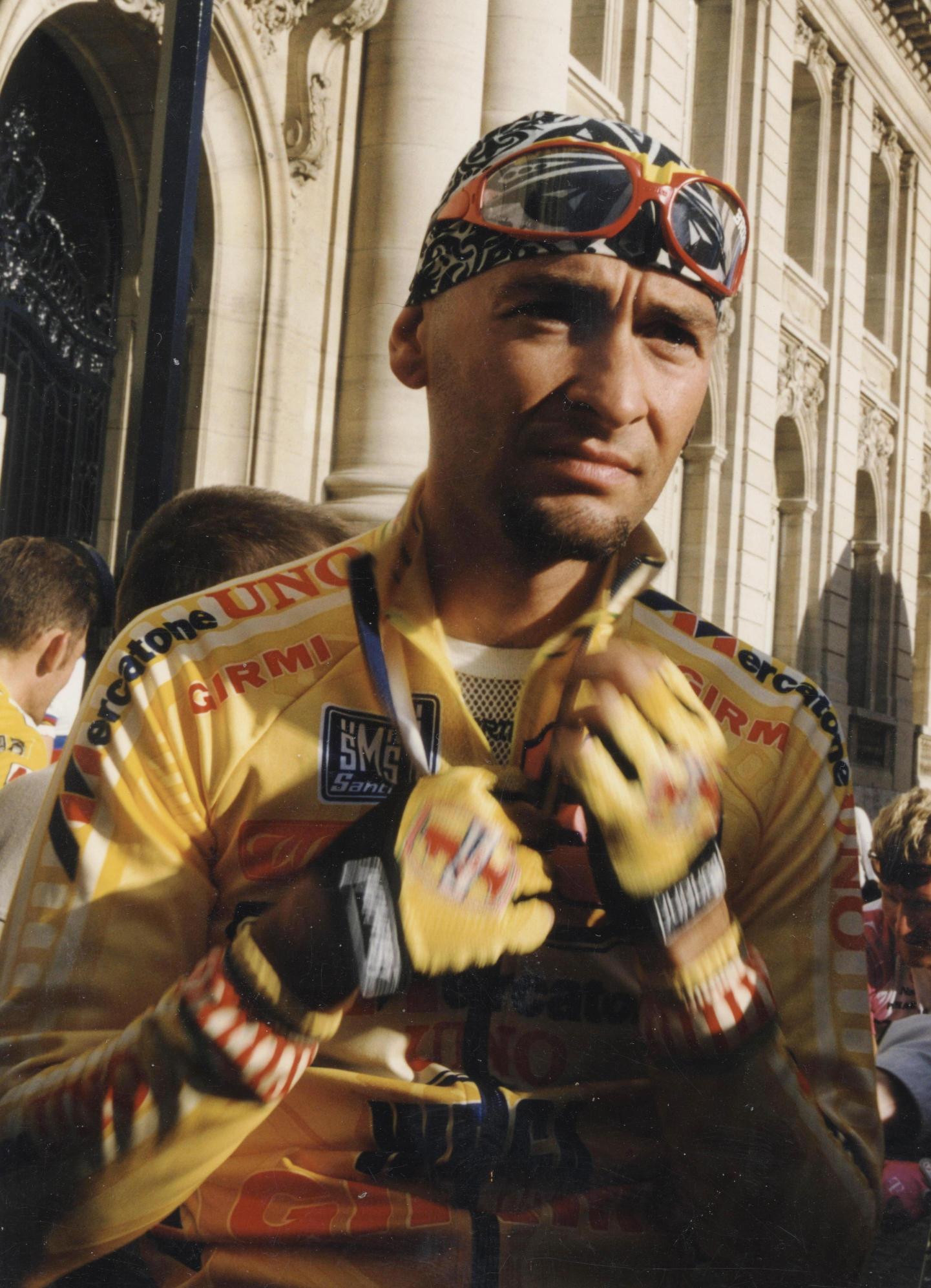

 Velo Club Sud Eglise